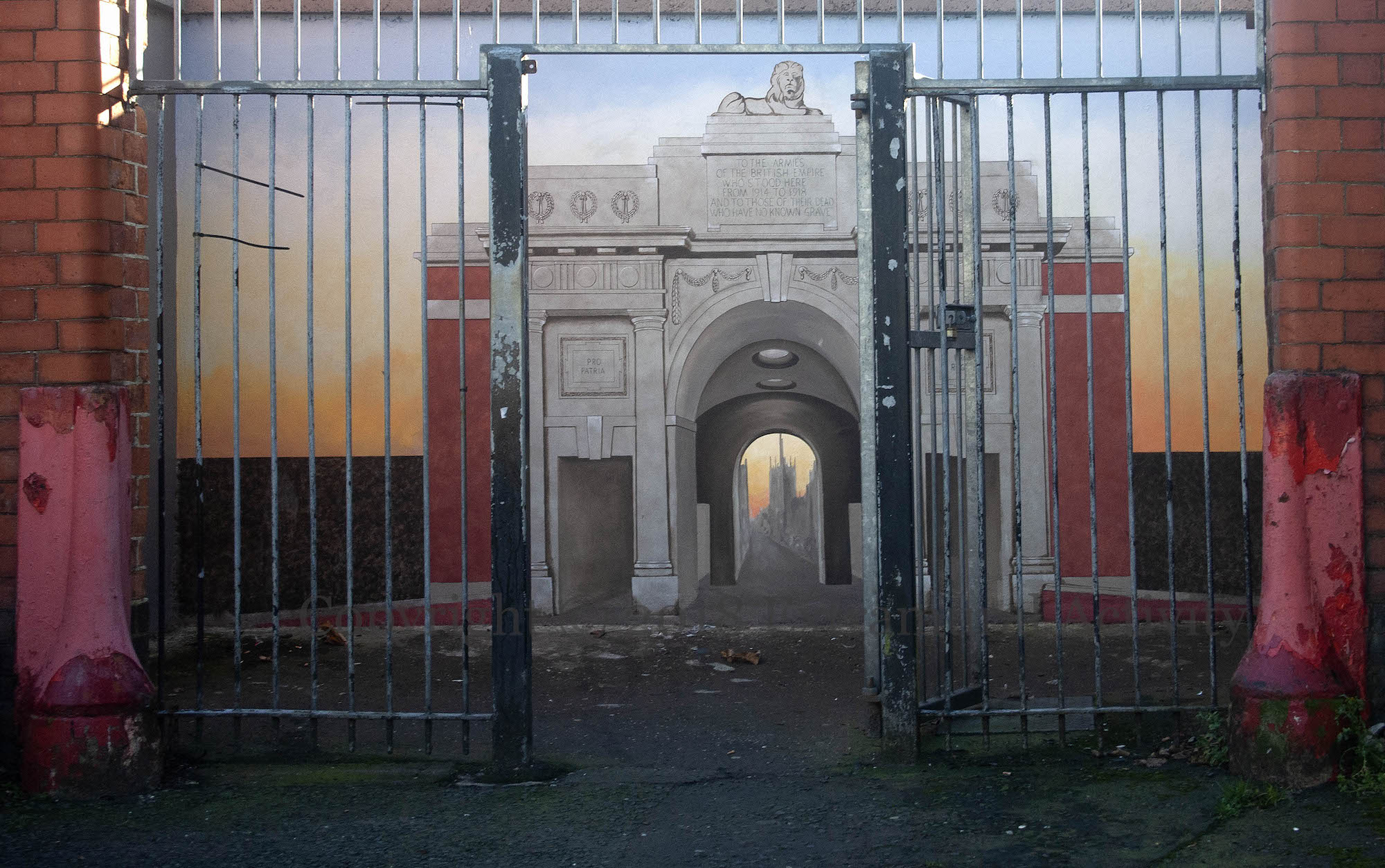
The Menin Gate memorial, at the eastern edge of Ypres, Belgium, commemorates 54,896 Commonwealth soldiers who died in the area during WWI and whose bodies were not recovered. “To the armies of the British Empire who stood here from 1914 to 1918 and to those of their dead who have no known grave.” The gates in the image above are off Bond’s Street, Londonderry, leading to the Ebrington Centre car park.
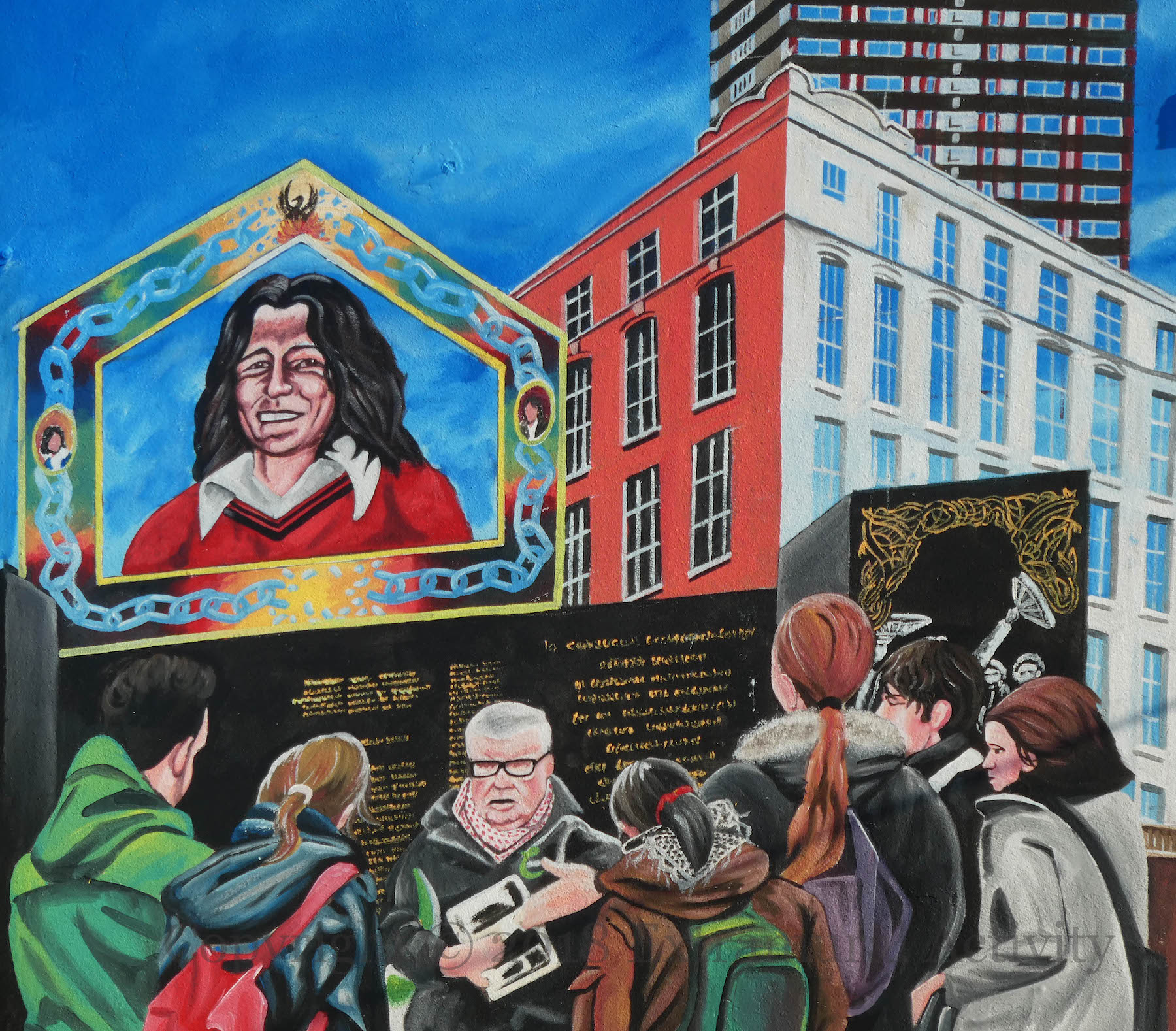
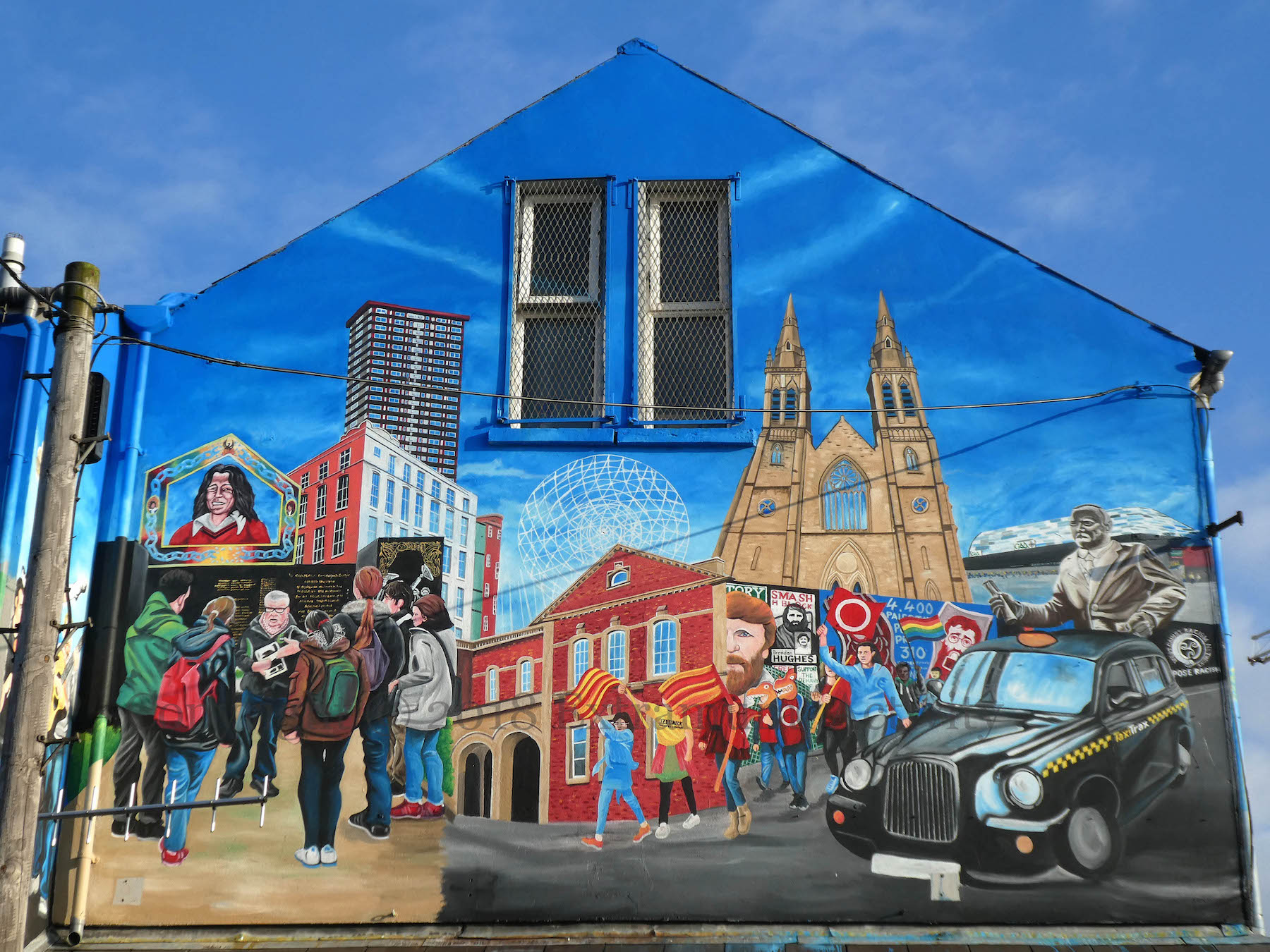
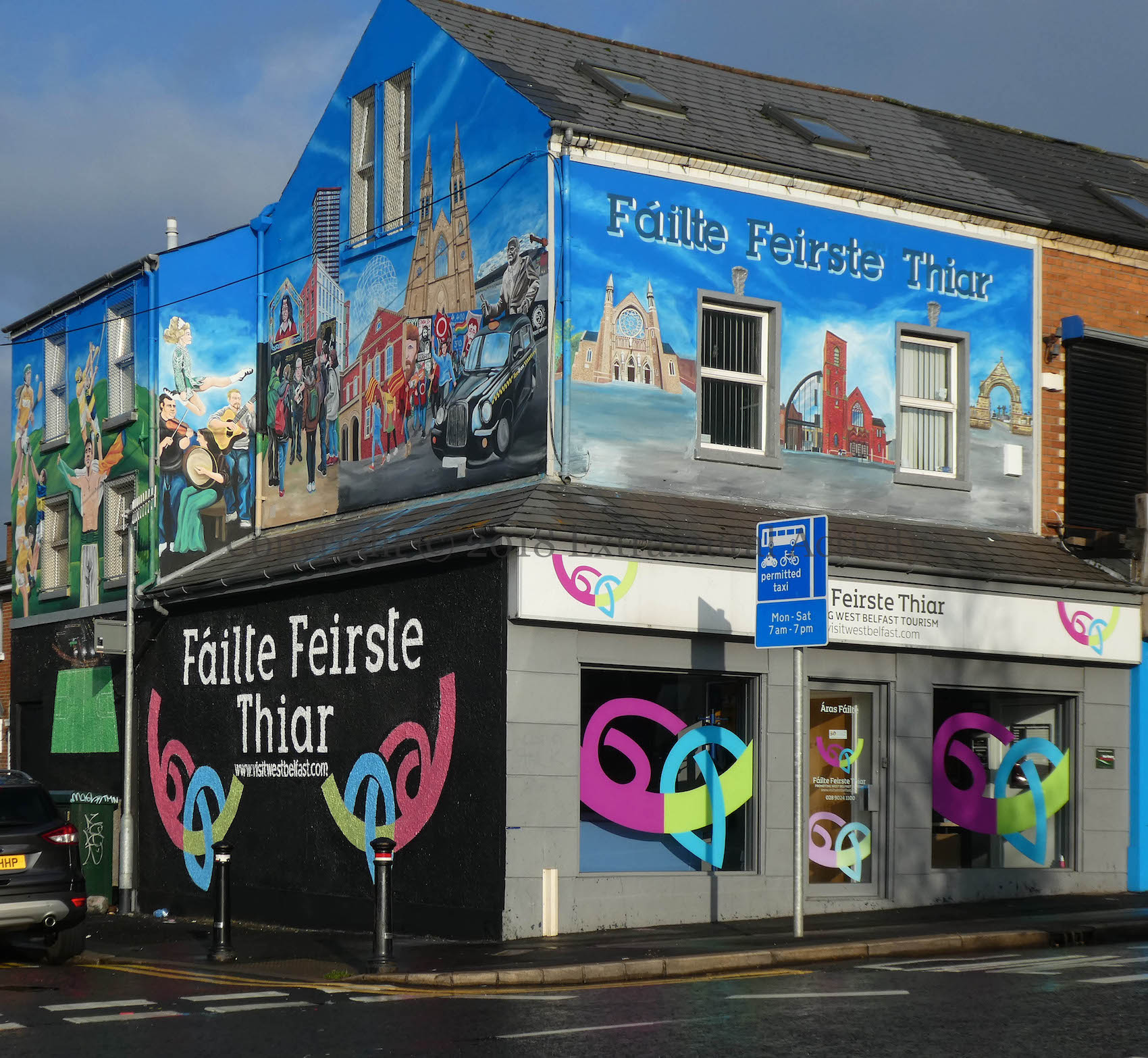
“Welcome to West Belfast.” The sights of nationalist west Belfast are depicted in (part of) a new mural by Mickey Doherty and Marty Lyons on the side wall of the tourist office. From left to right: The (2015) Bobby Sands mural in Sevastopol Street, tourists being introduced to the IRA D Company memorial garden on the lower Falls by Peadar Whelan, Conway Mill, Divis tower, RISE at the bottom of Broadway (better known as the “Balls on the Falls”), the Falls library, the “international wall” in 2012 (with marchers in support of a nondescript international cause, crocodiles for the Irish language, and gay rights), St Peter’s pro-cathedral, a black taxi, the Connolly statue outside Comhaırle Phobaıl an bhFál, and the model for the new Casement Park stadium.
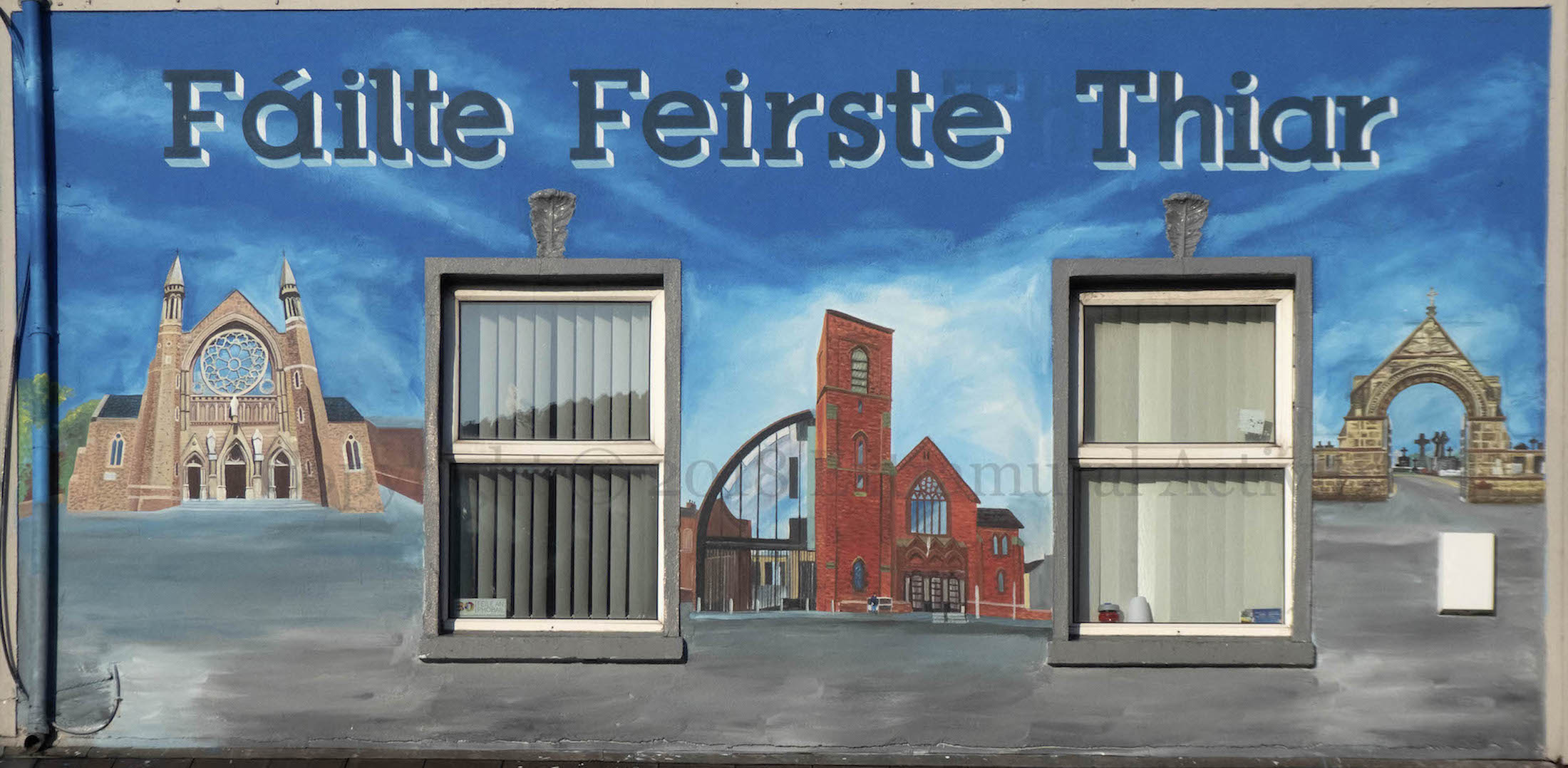
As you head west along Falls Road, you will pass by the three landmark buildings depicted in the mural above: Clonard Monastery, Cultúrlann McAdam-Ó Fıaıch (opposite this mural and the offices of Fáılte Feırste Thıar), and the entrance to Milltown Cemetery at the edge of Andersonstown. For the parts of the mural in Brighton Street, see The Conlan Revolution and Fáılte Feırste Thıar.
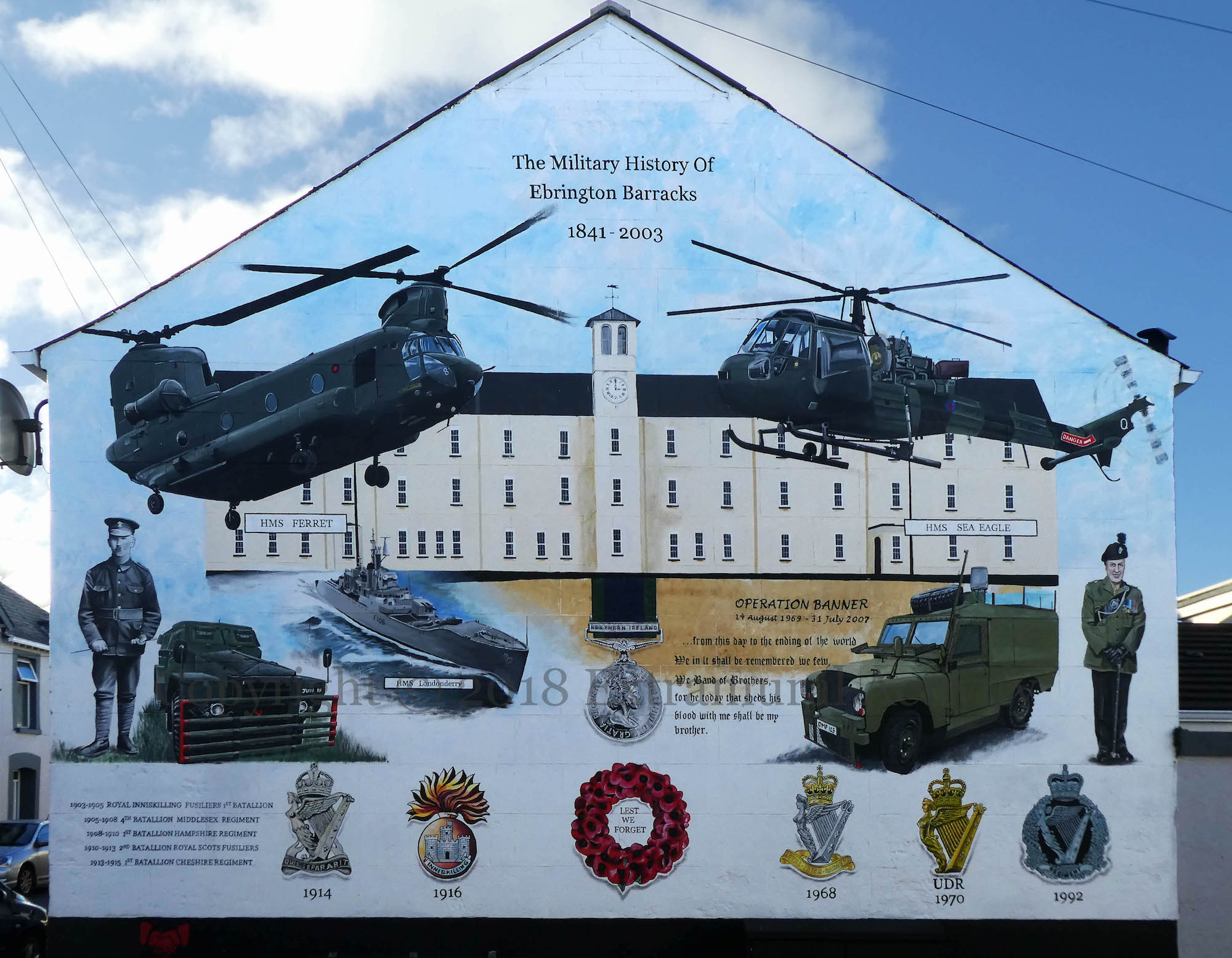
Between its construction in 1841 and decommissioning in 2003, Ebrington Barracks served as a home to many military units, including those whose emblems are at the bottom of the mural above (from left to right): the Royal Irish Rifles, Royal Inniskilling Fusiliers, Royal Irish Rangers, UDR, and the Royal Irish Regiment.
HMS Ferret and HMS Sea Eagle are not in fact ships but a part of Ebrington barracks given to the navy to serve as a “stone frigate” during (Ferret) and after (Sea Eagle) WWII. HMS Londonderry was an anti-submarine frigate but does not appear to have a particular connection to Ebrington (please comment if you know otherwise).
The Northern Ireland General Service medal – in the middle of the mural – was awarded to any soldier who served at least 30 days during Operation Banner, the deployment of British troops in Northern Ireland from 1969 onwards.
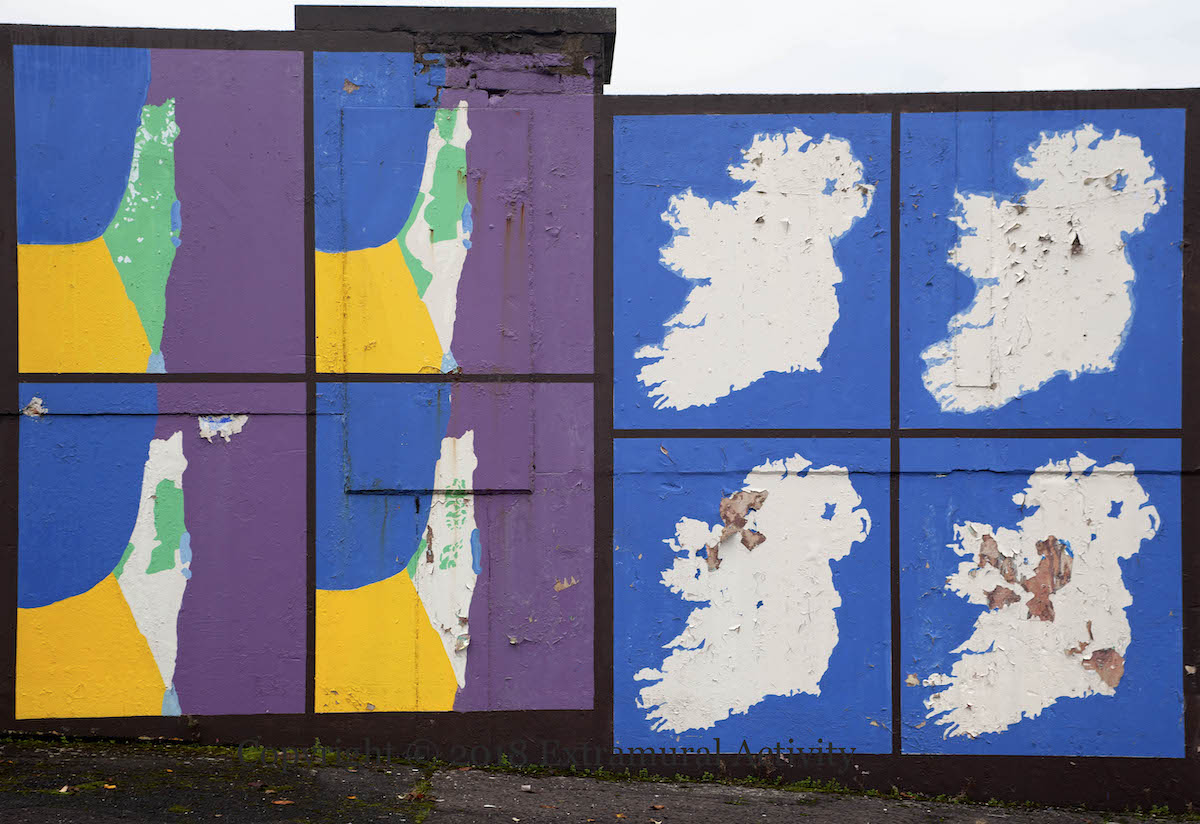
These two pieces in the gallery of pro-Palestinian murals at the top of Springhill Avenue were never finished. On the left is the diminishing territory of Palestine while on the right would probably have been the diminishing territory of the Gaeltacht.
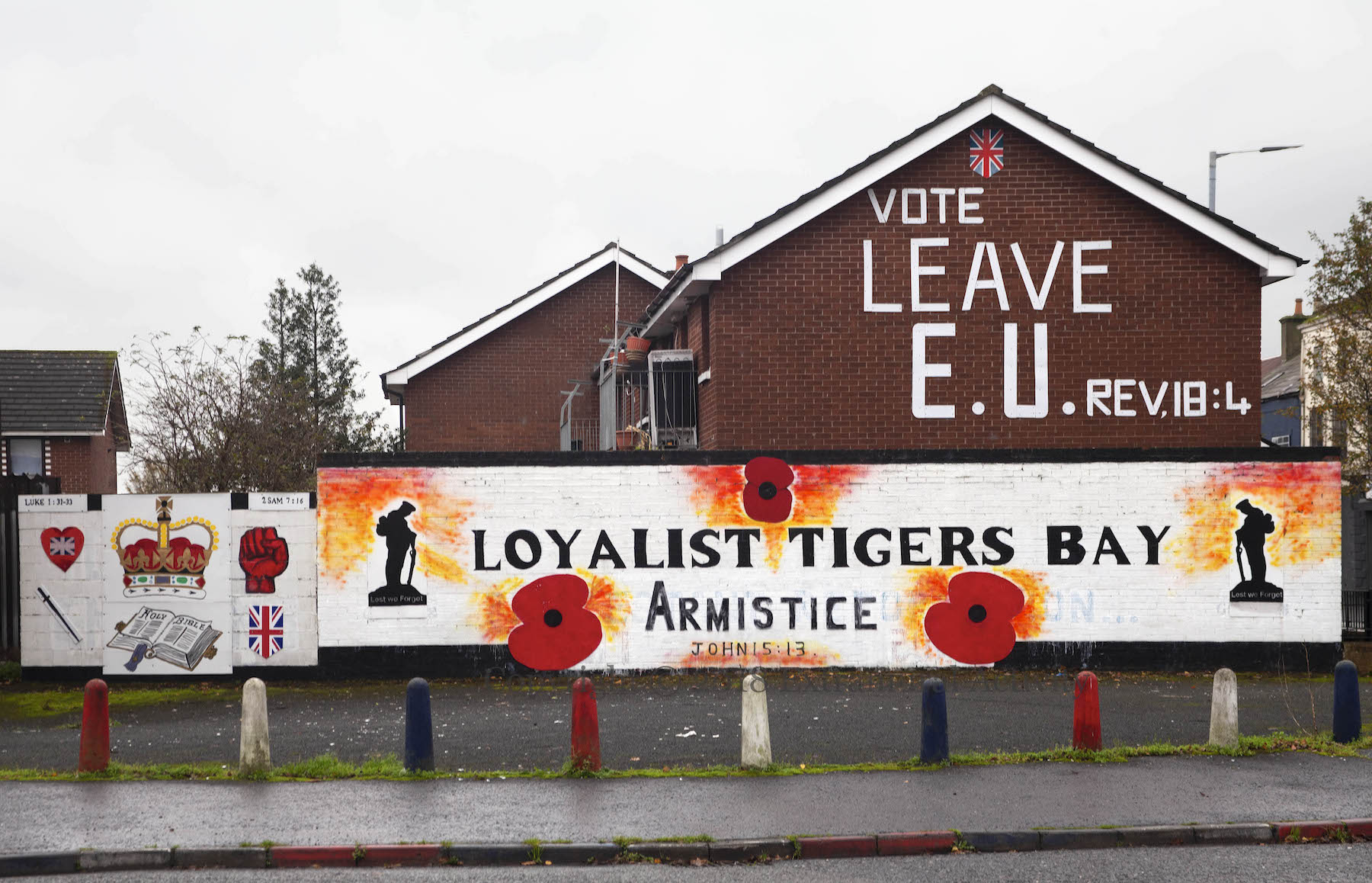
John 15:13 reads “Greater love hath no man than this: to lay down his life for his friends.” Fighting in the Great War ceased at 11 a.m. on November 11th, 1918, after approximately 10 million military deaths, 10 million civilian deaths, and another 20 million injured.
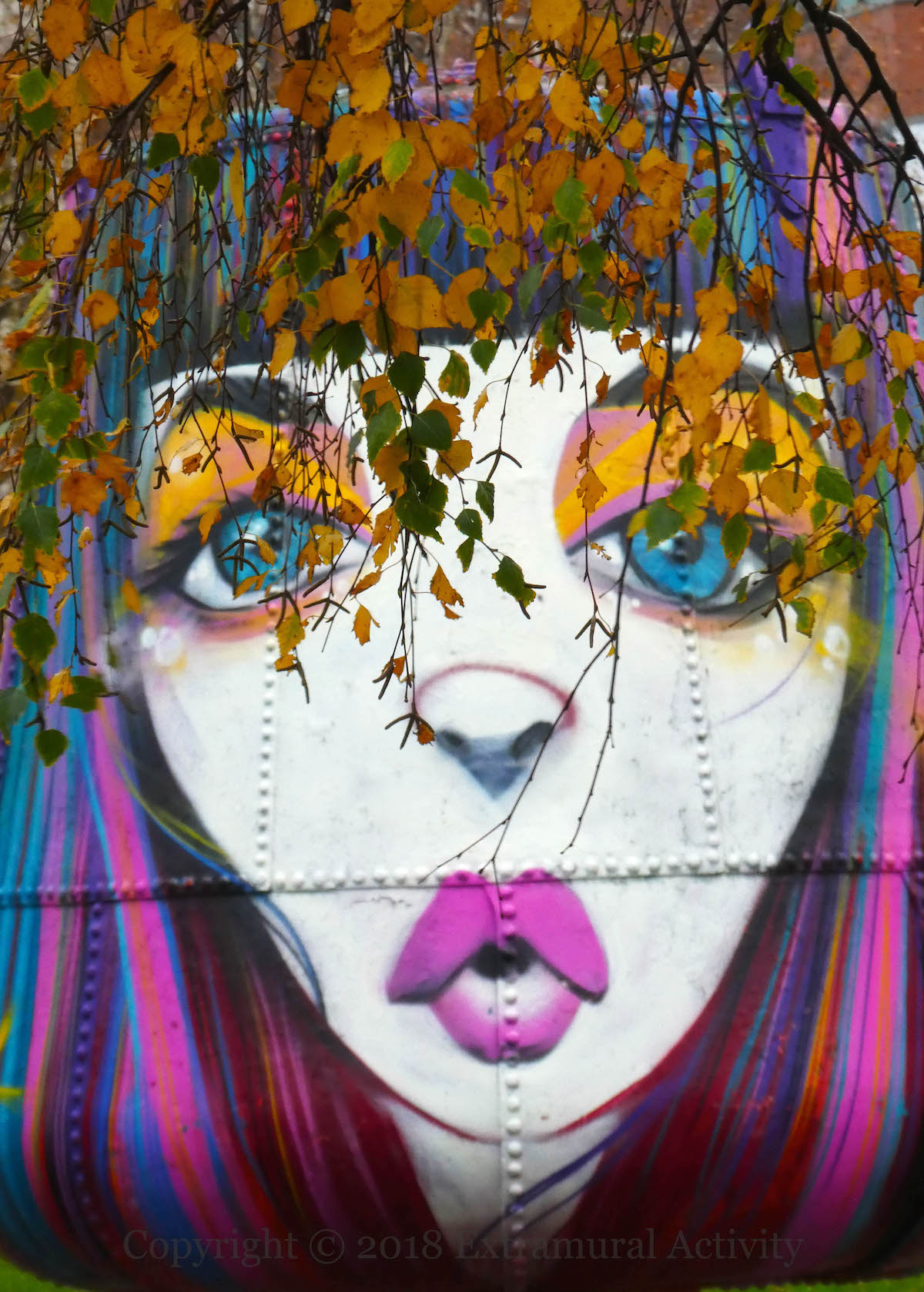
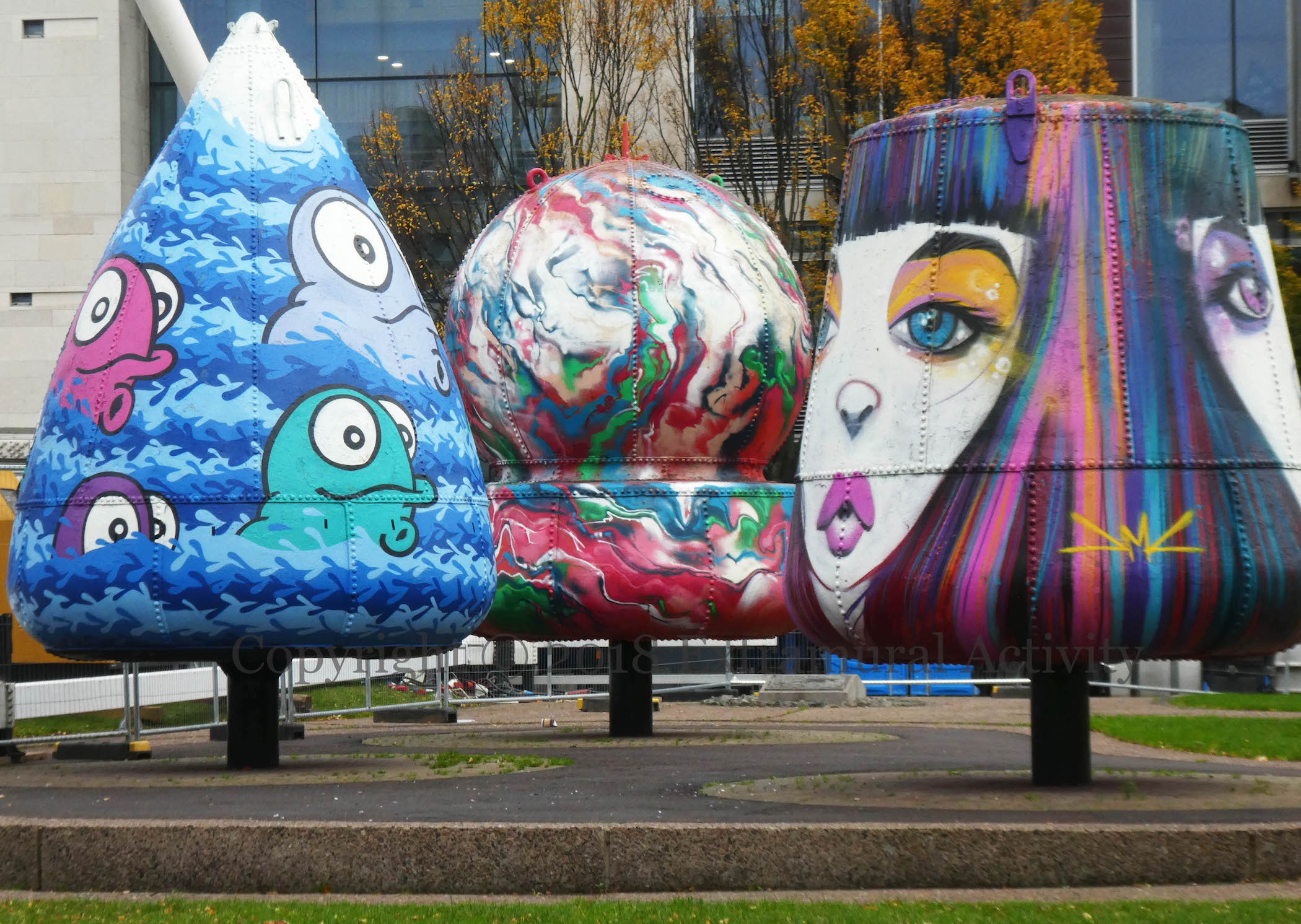
Since the 1980s (BBC | BelTel), Belfast’s maritime history has been celebrated in the form of three buoys outside the Belfast School of Art (known to all as “the art college) in York Street. They were given a face-lift during CNBX/HTN18 by DMC (ig) (above) and (in the middle, below) KVLR and (on the left) Nol (web | ig | Fb).
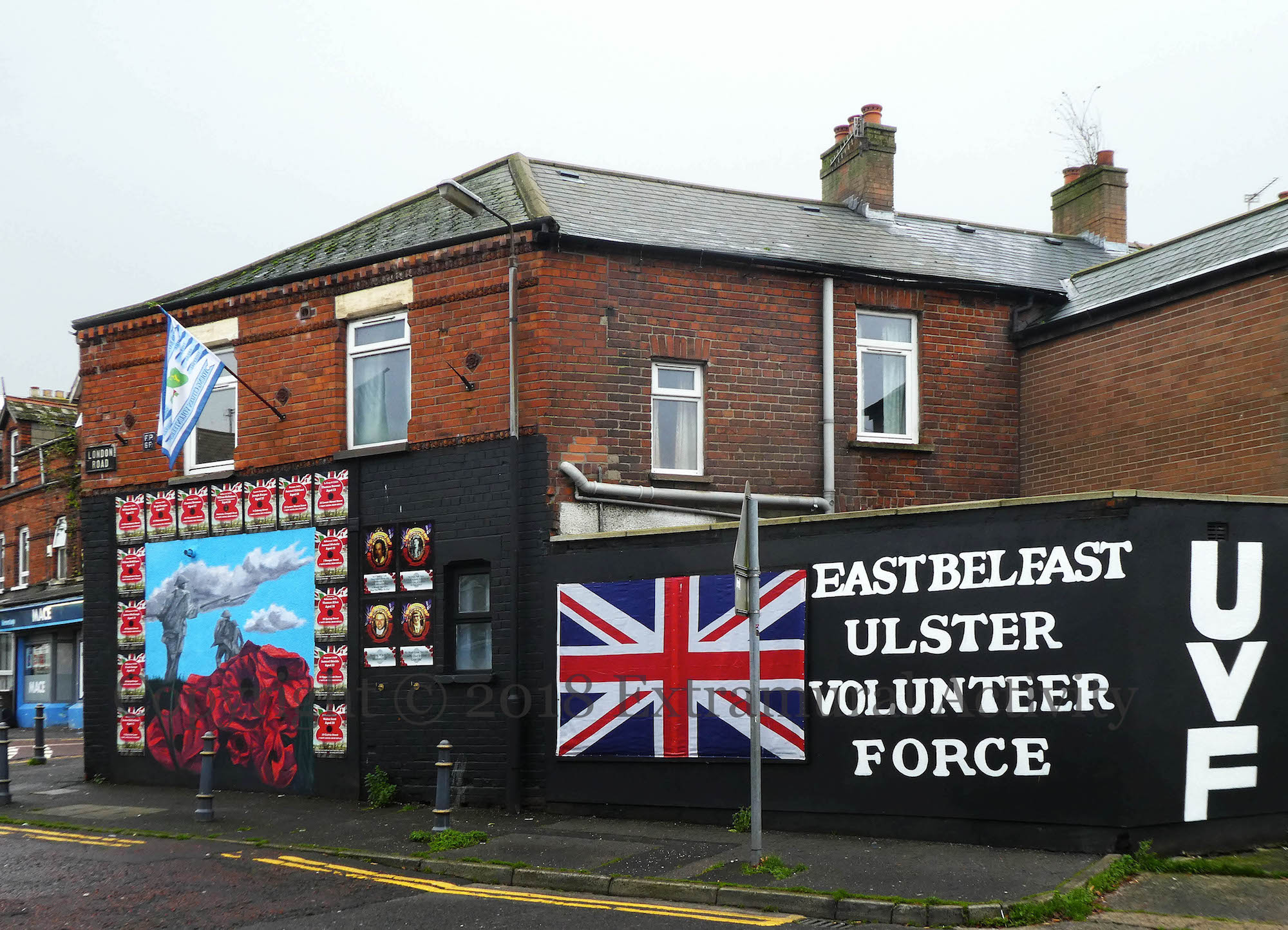
The Union Flag/UVF side-wall is a new addition to the Ulster Volunteers/UVF memorial in London Road, east Belfast. The main panel shows WWI soldiers going over the top (see Between The Crosses) while the four portraits to its right are of deceased UVF volunteers of the 70s and 80s – Seymour, Long, Cordner, and Bennett – (see Ulster’s Brave).
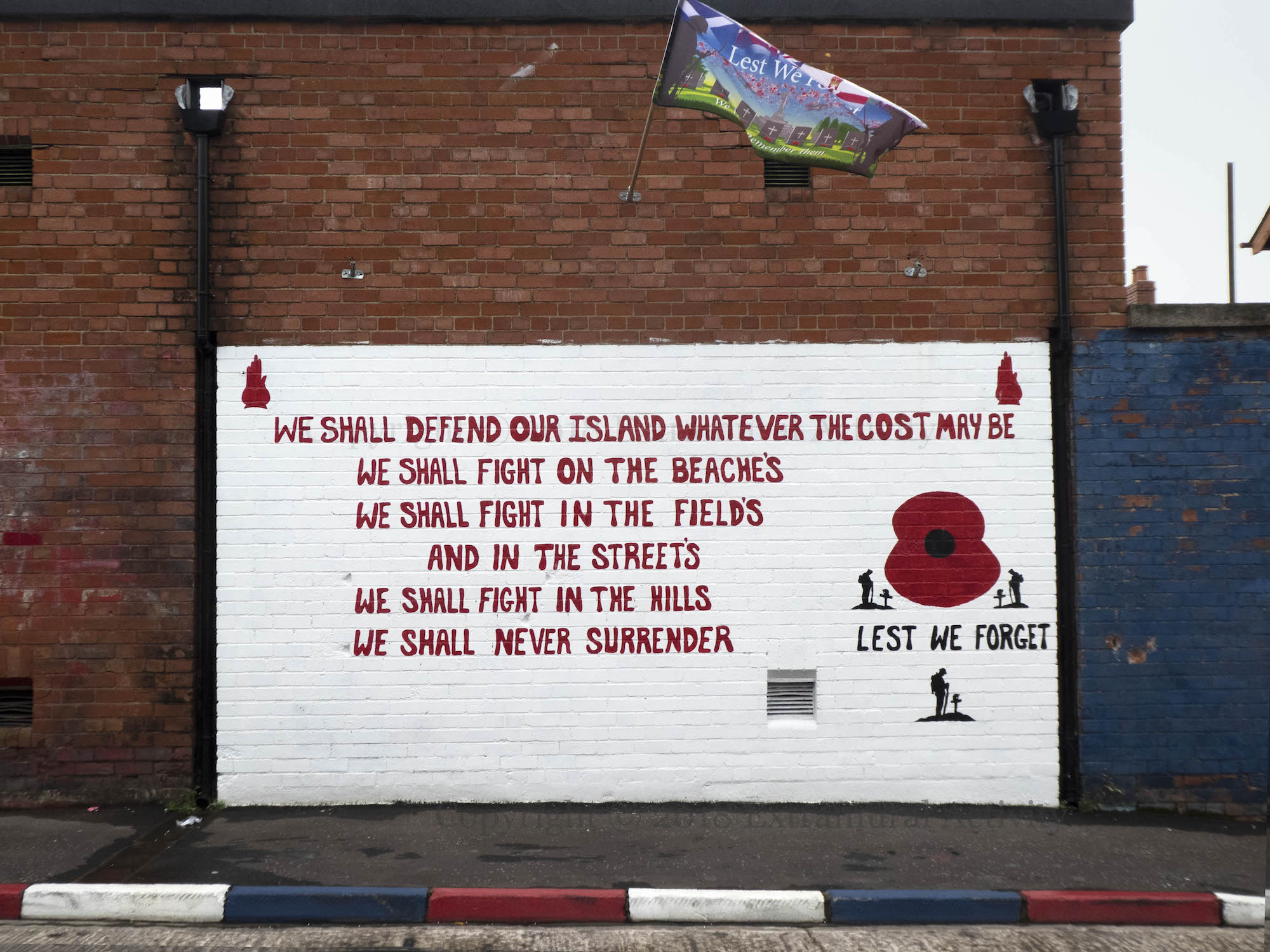
The mural in Castlereagh Parade has been repainted for the centenary of the end of WWI, but with some notable differences. Three flag-holders have been added above. On the right are now a poppy and mourning soldiers. The quote comes from a speech by Winston Churchill on 1940-06-04 – “We shall defend our island whatever the cost may be. We shall fight on the beaches. [We shall fight on the landing grounds.] We shall fight in the fields and in the streets. We shall fight in the hills. We shall never surrender.” – but the current first line was previously omitted in favour of another Churchill quote: “We have nothing to offer but blood, tears, and sweat.” See: Whatever The Cost May Be.
 Seosamh Mac Coille Collection