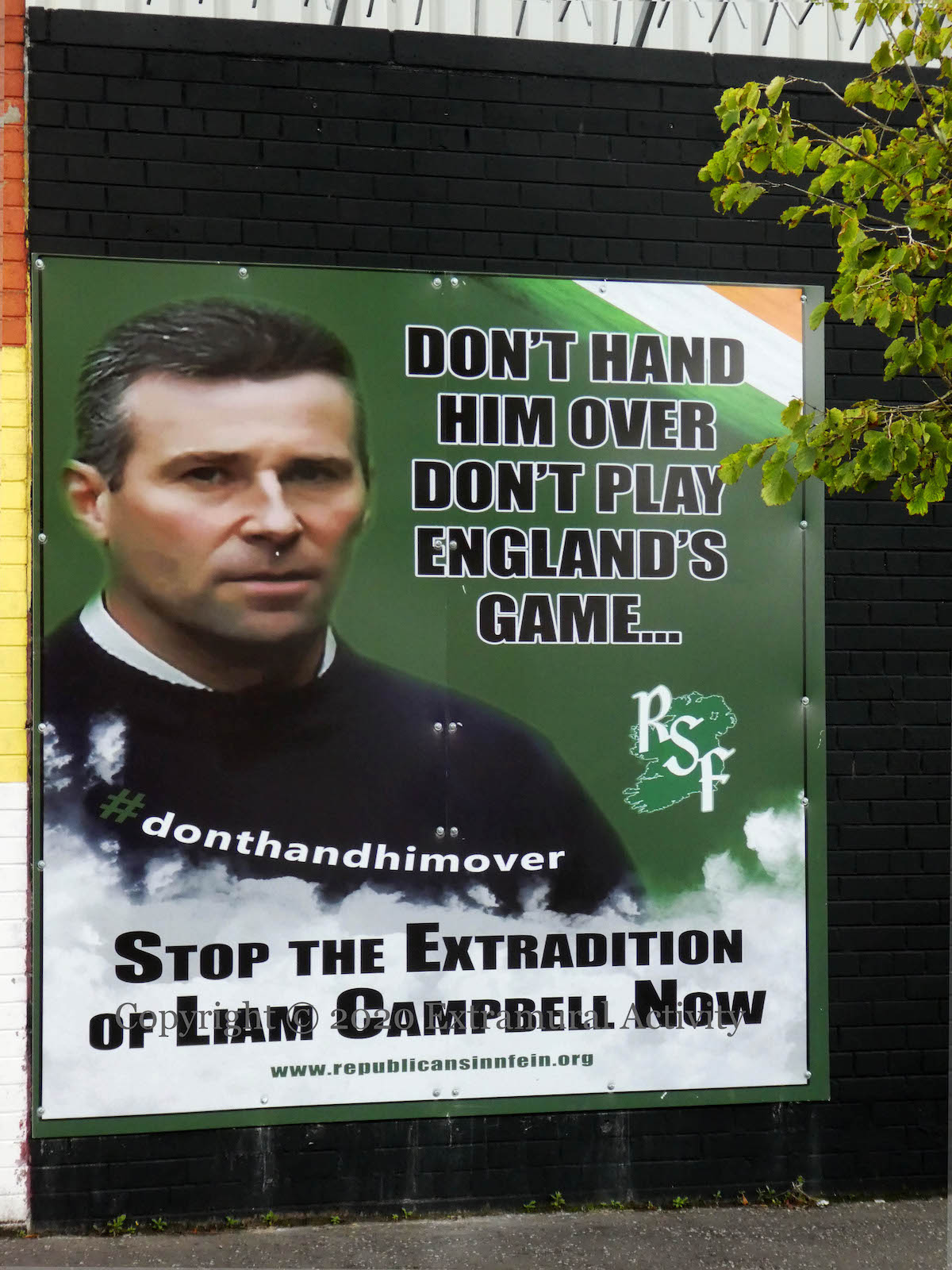
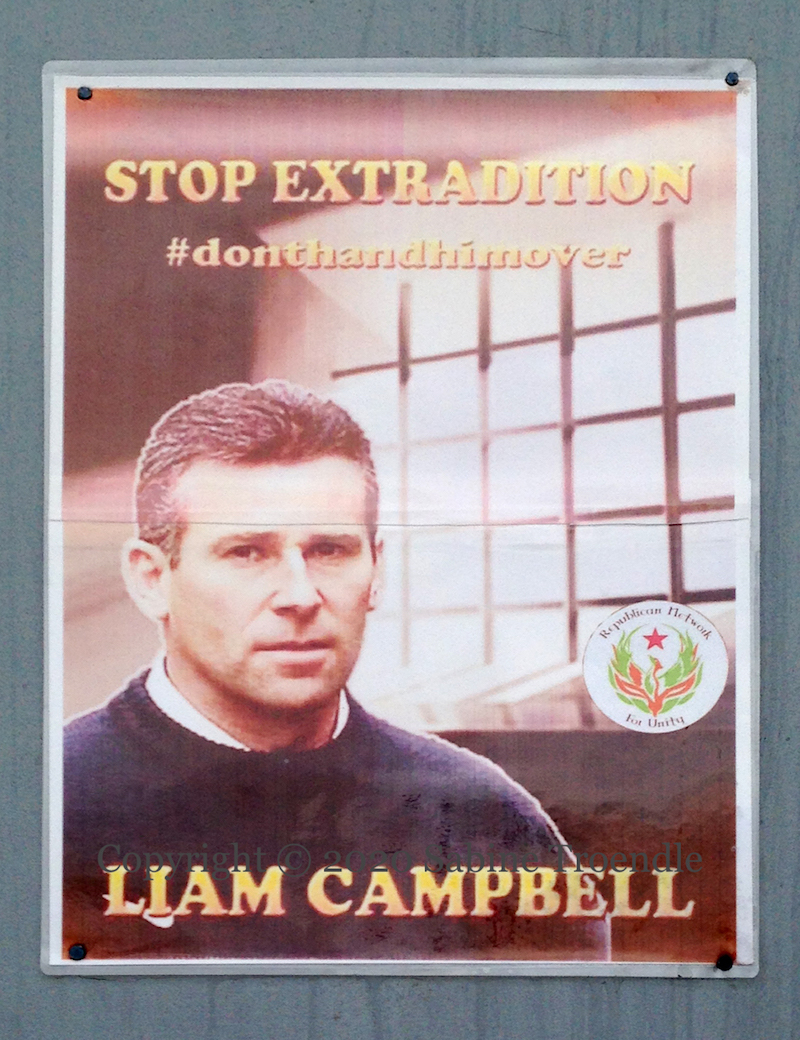
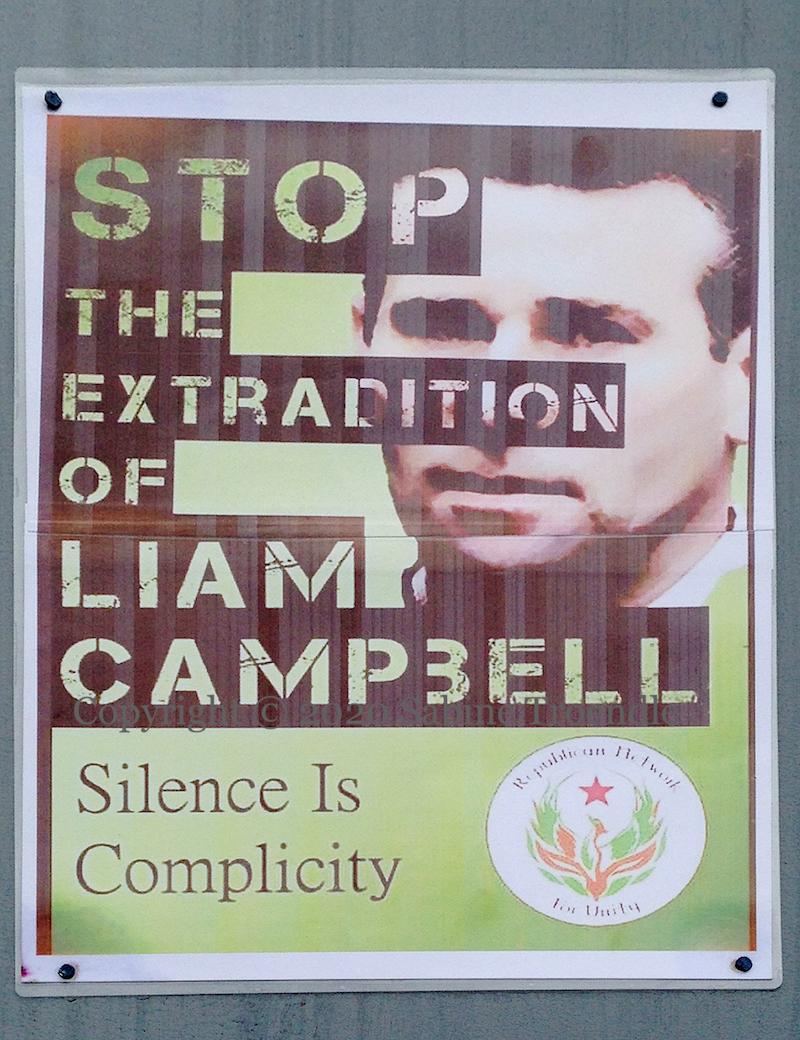
“Don’t hand him over. Don’t play England’s game. Stop the extradition of Liam Campbell now.” Liam Campbell is wanted, for a second time, in Lithuania on charges of running guns to the Real IRA in 2006-2007. He was arrested in Dundalk in December 2016 and will appeal his extradition in January next year (Irish Times). The posters of support are from Republican Sinn Féin and the Republican Network For Unity.
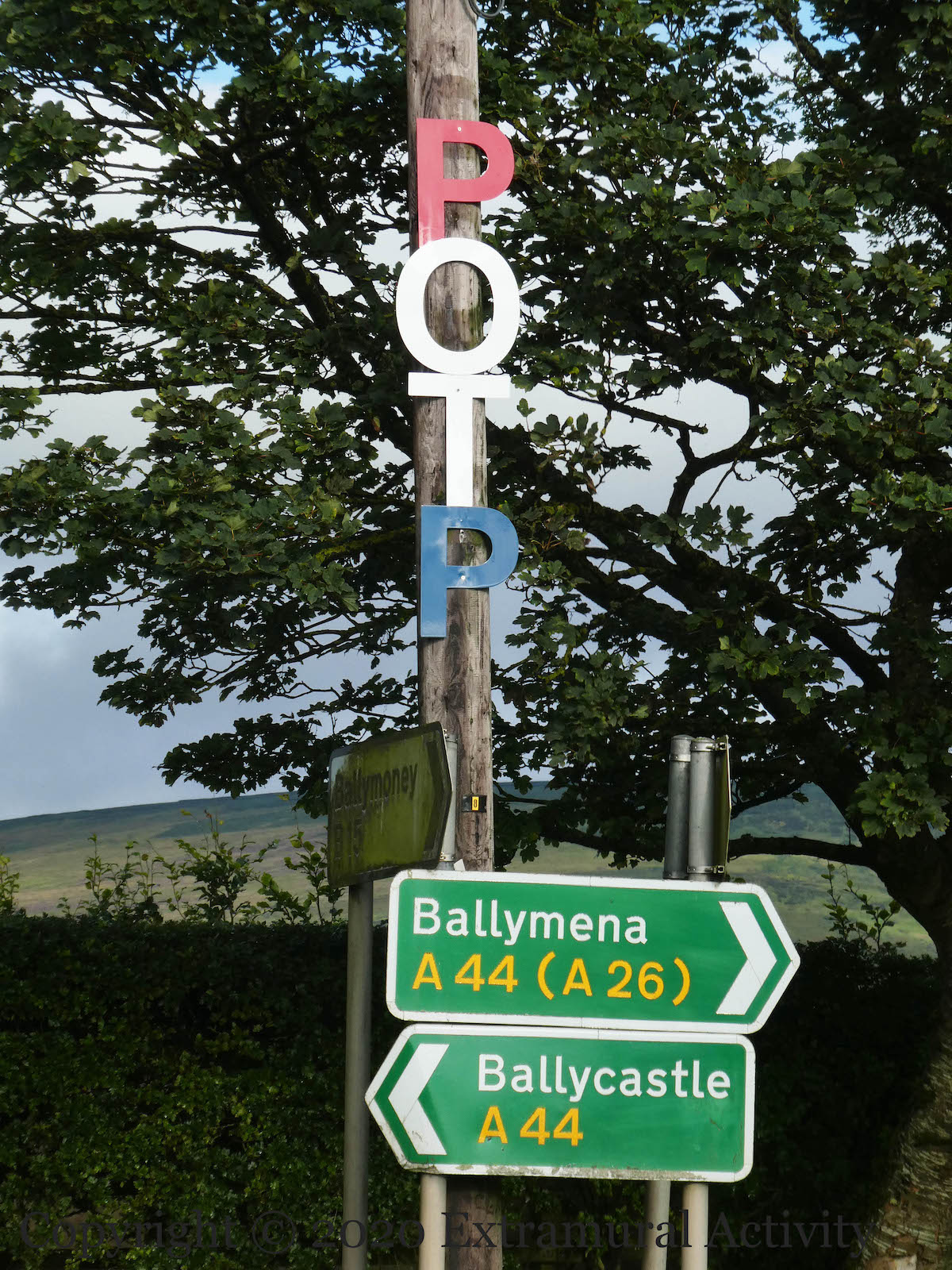
Pride Of The Park (Fb) is the local flute band in Armoy. Practices are usually on Monday nights in Park Orange Hall. The lettering is at the junction of Gracehill and Drones roads.
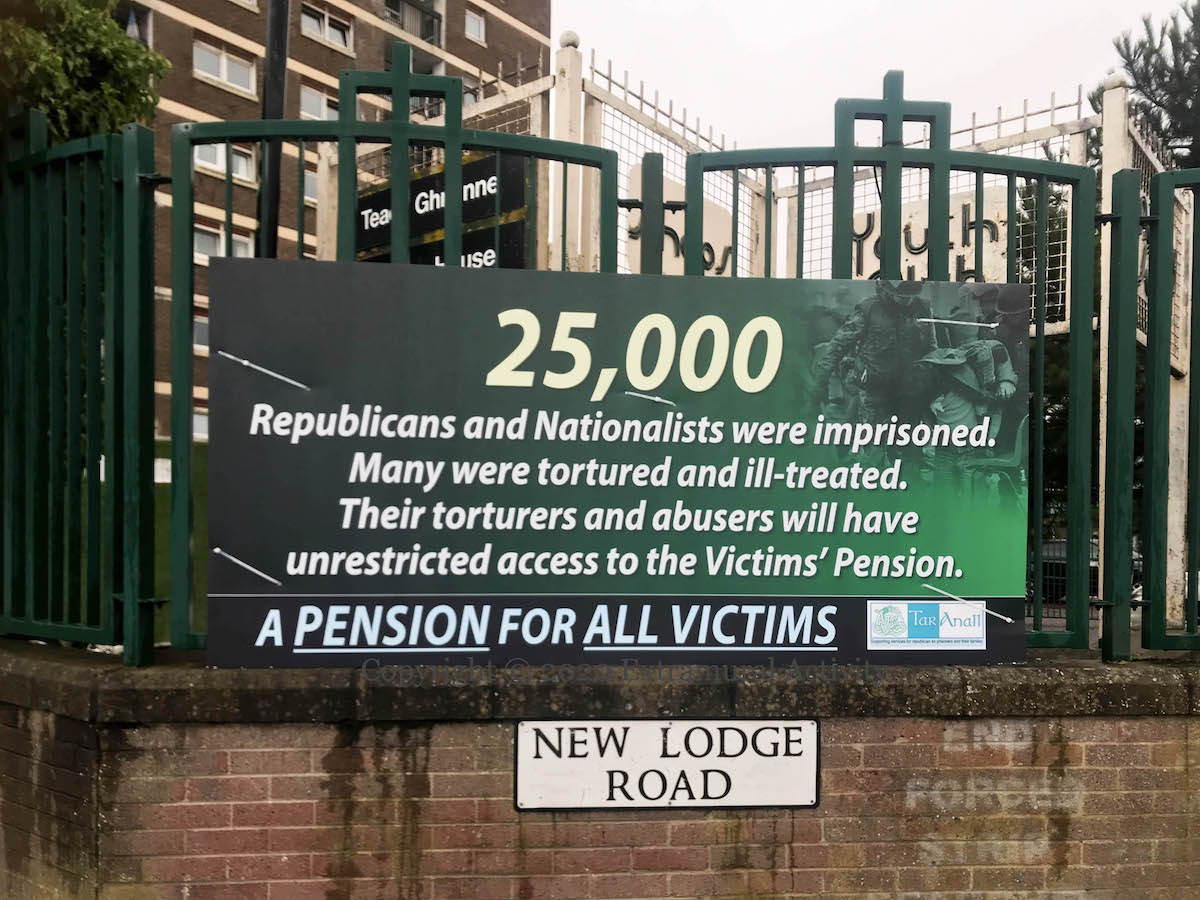
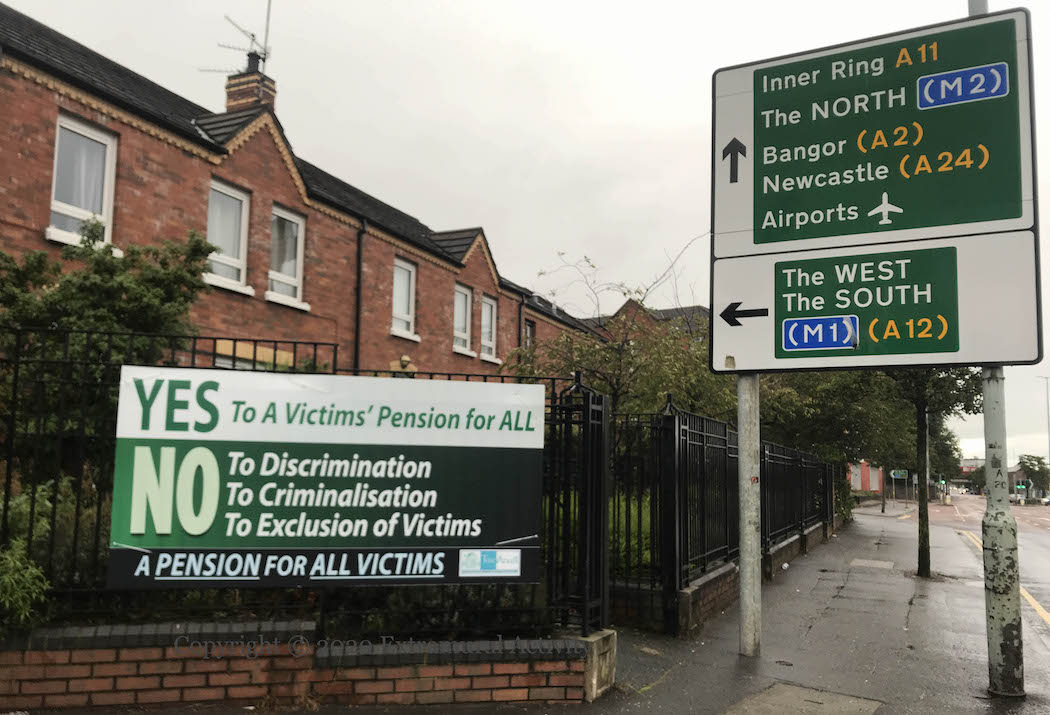
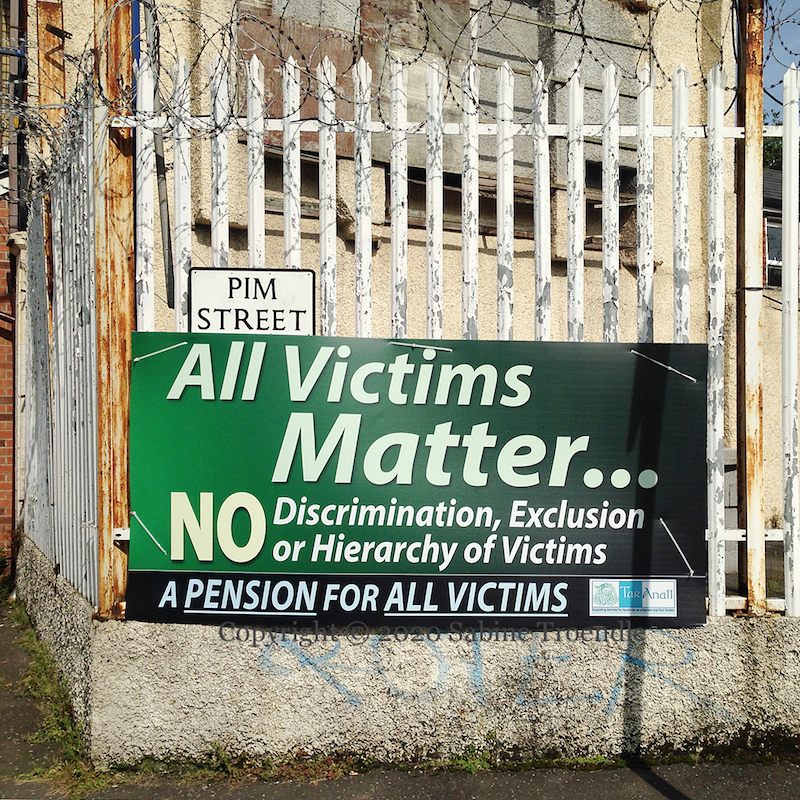
The pension plan for the injured of the Troubles was scheduled to open at the end of August, rather than the end of June, because of a dispute over the eligibility of those who suffered at their own hand. The Tar Anall boards shown here (in N Queen St and the Antrim Rd) recommend “a pension for all victims” but in the end, they were considered not to be eligible. Another source of the delay was the dispute over how the scheme would be funded (Irish Times | BelTel).
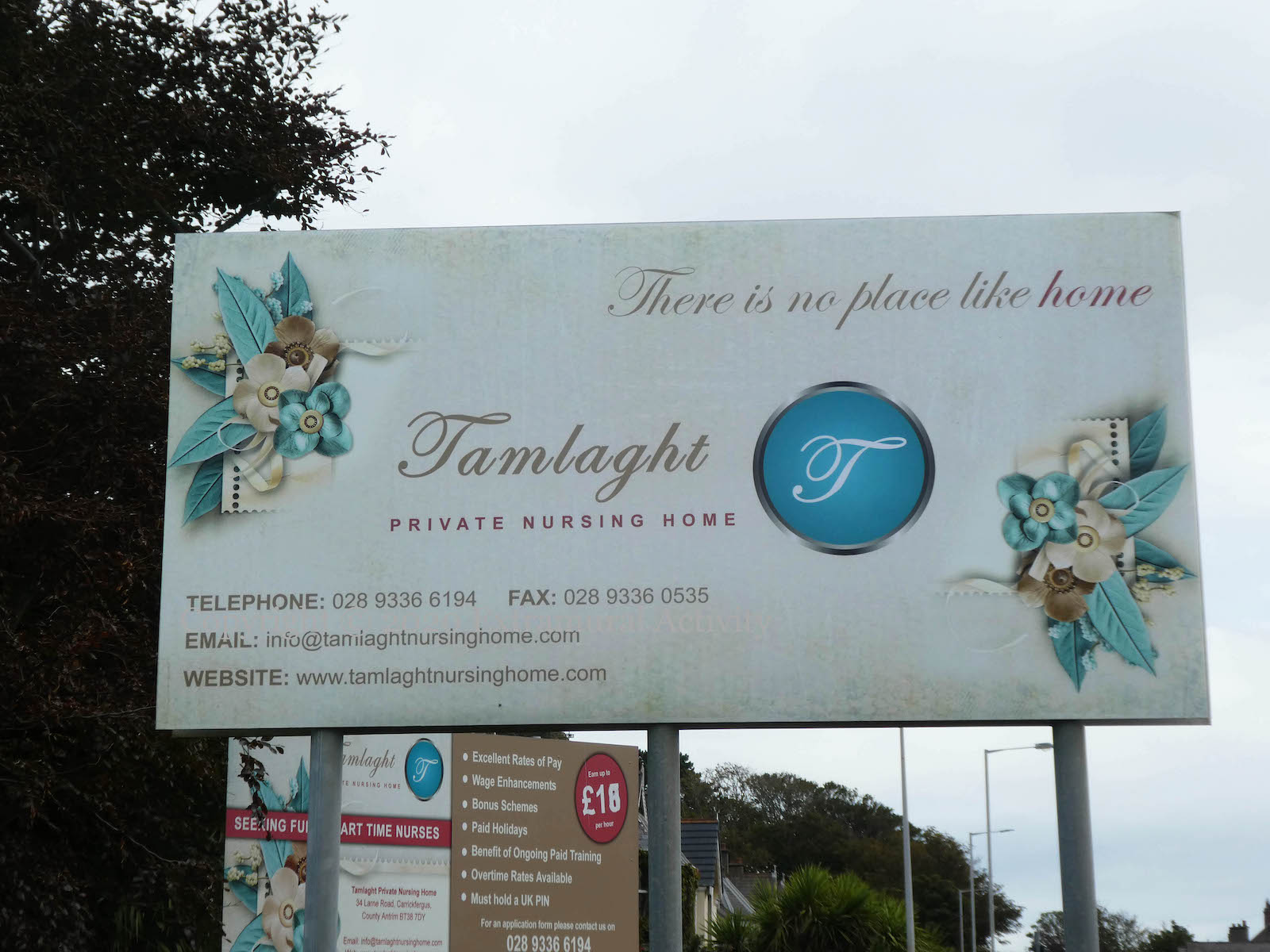
Care homes accounted for about 50% of the early coronavirus deaths in both Northern Ireland (WP) and the Republic (Irish Times). This Carrickfergus facility is named “Tamlaght” which comes from the Irish támh = plague and leacht = grave. Ireland suffered various plagues throughout history, including the Yellow Plague Of 644 and the Black Death in 1348 with “unheard of mortality” from recurring waves lasting until 1370. PlaceNamesNI states there 25 townlands bearing the name (and many other places too).
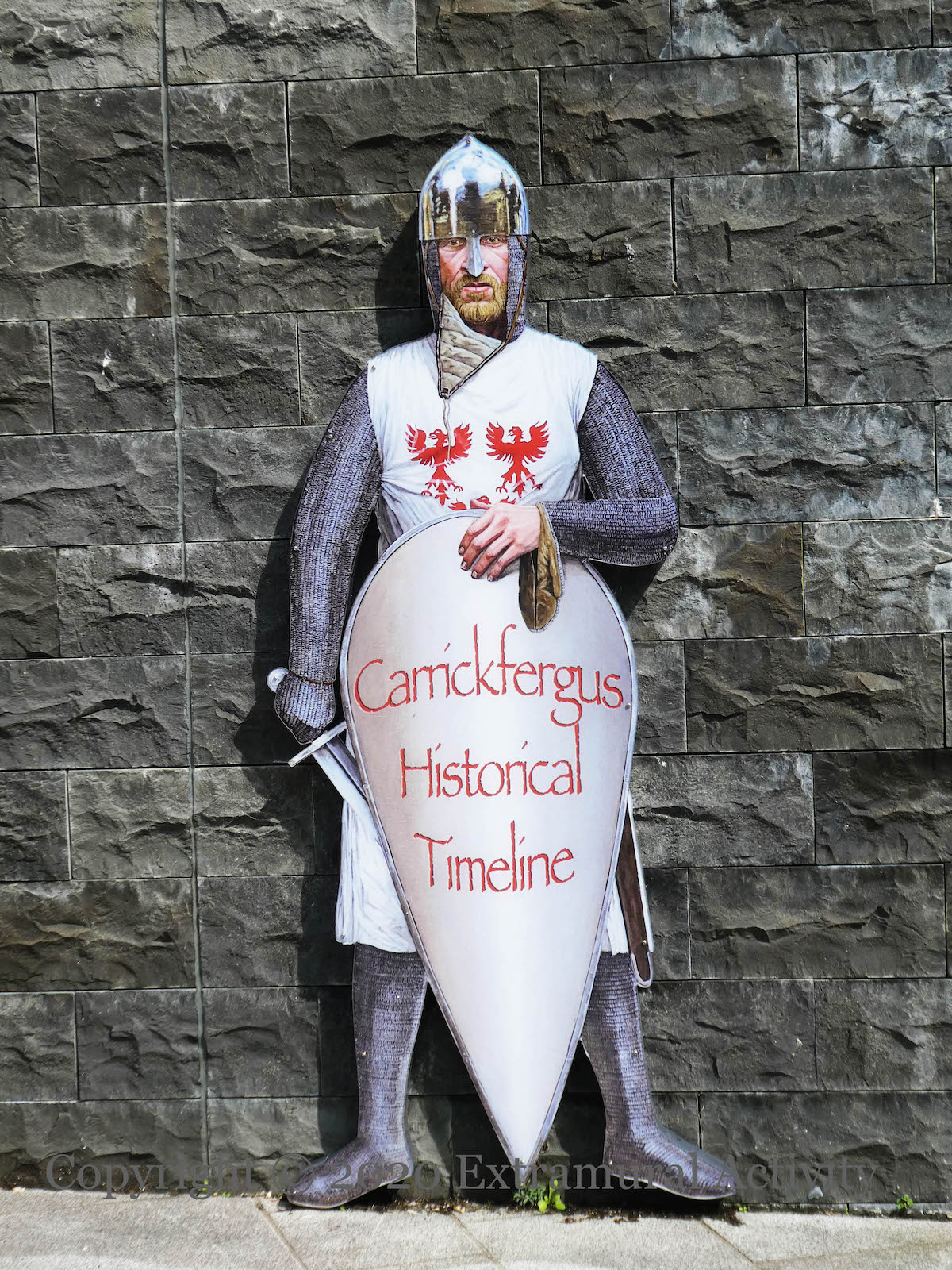
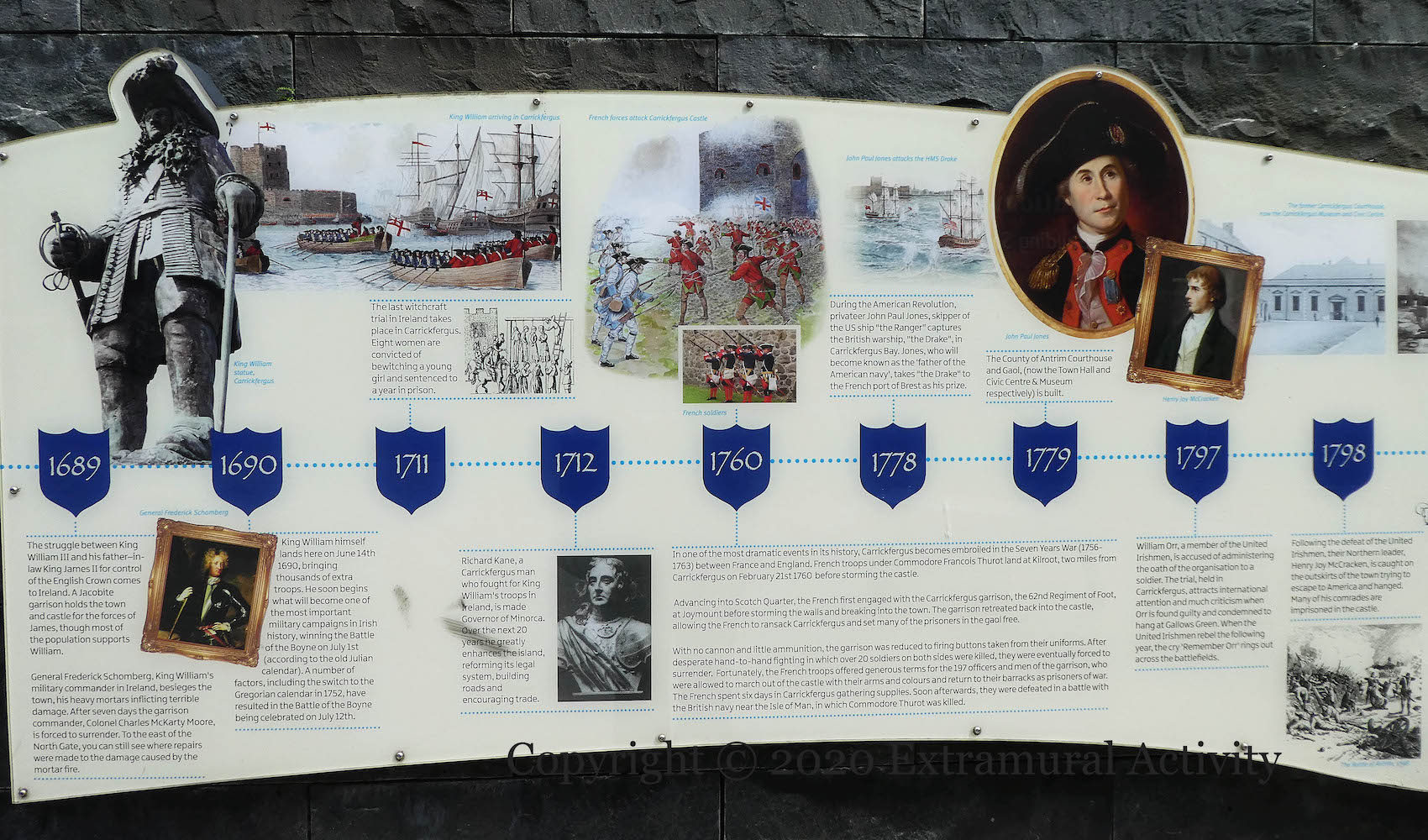
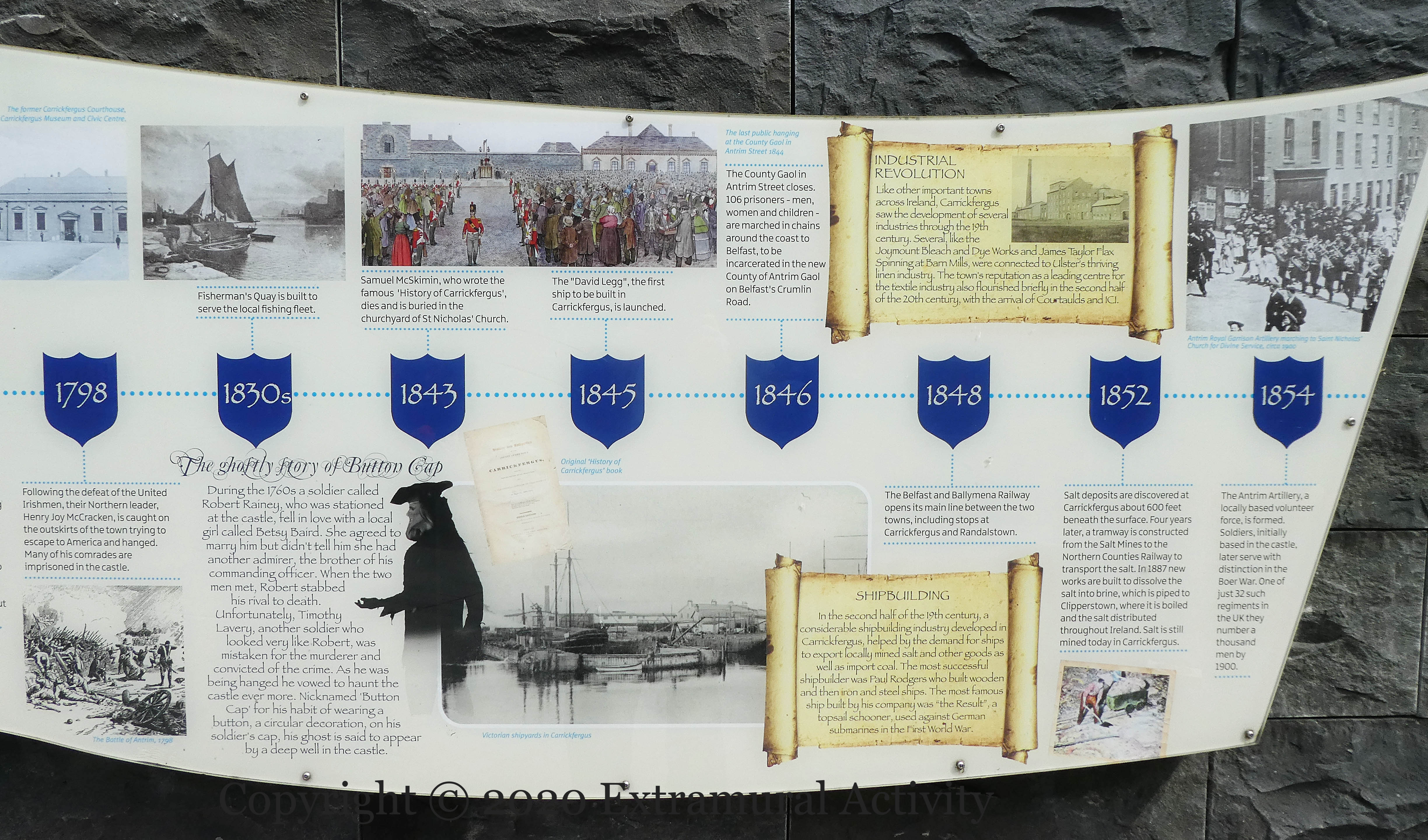
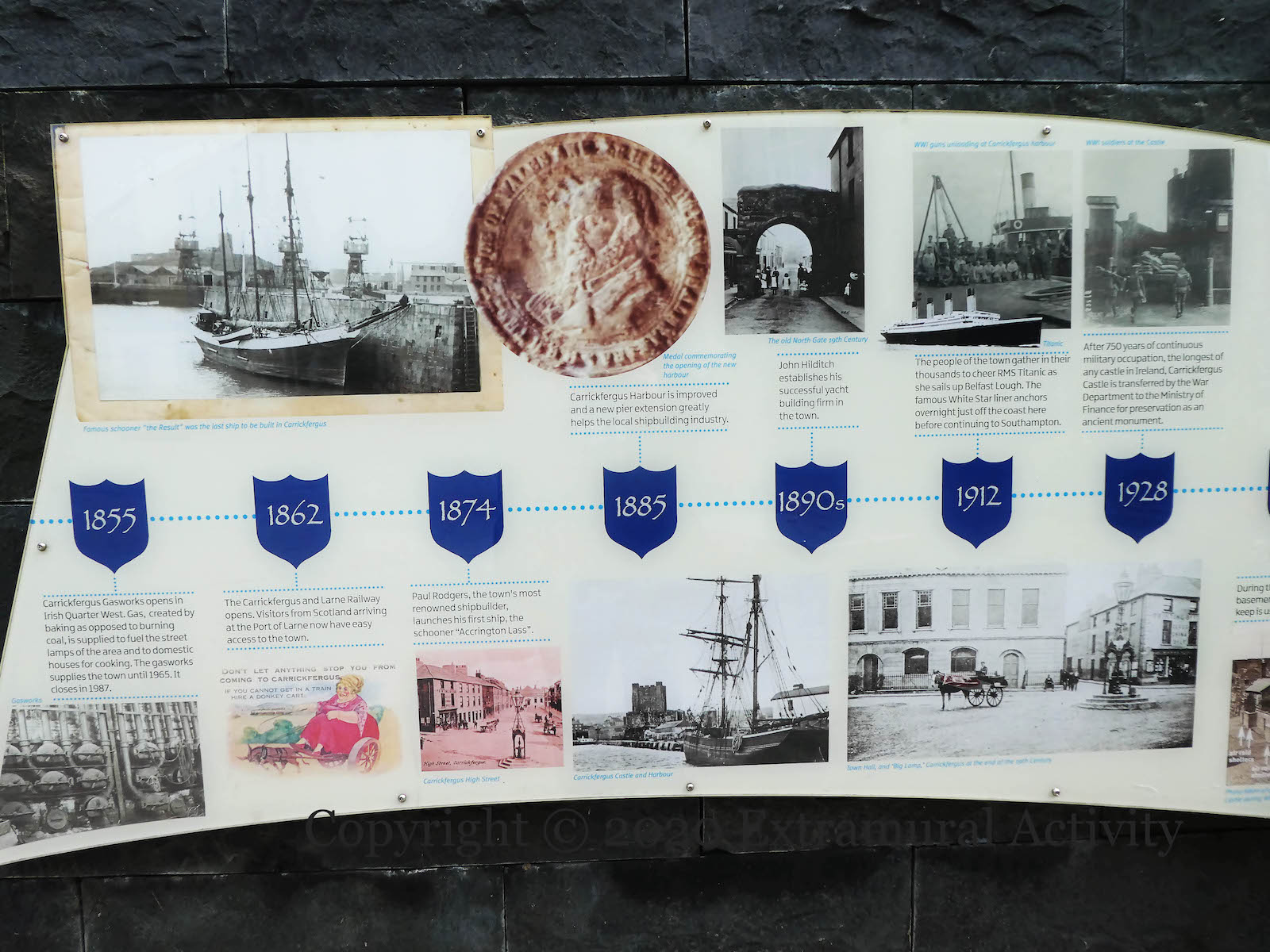
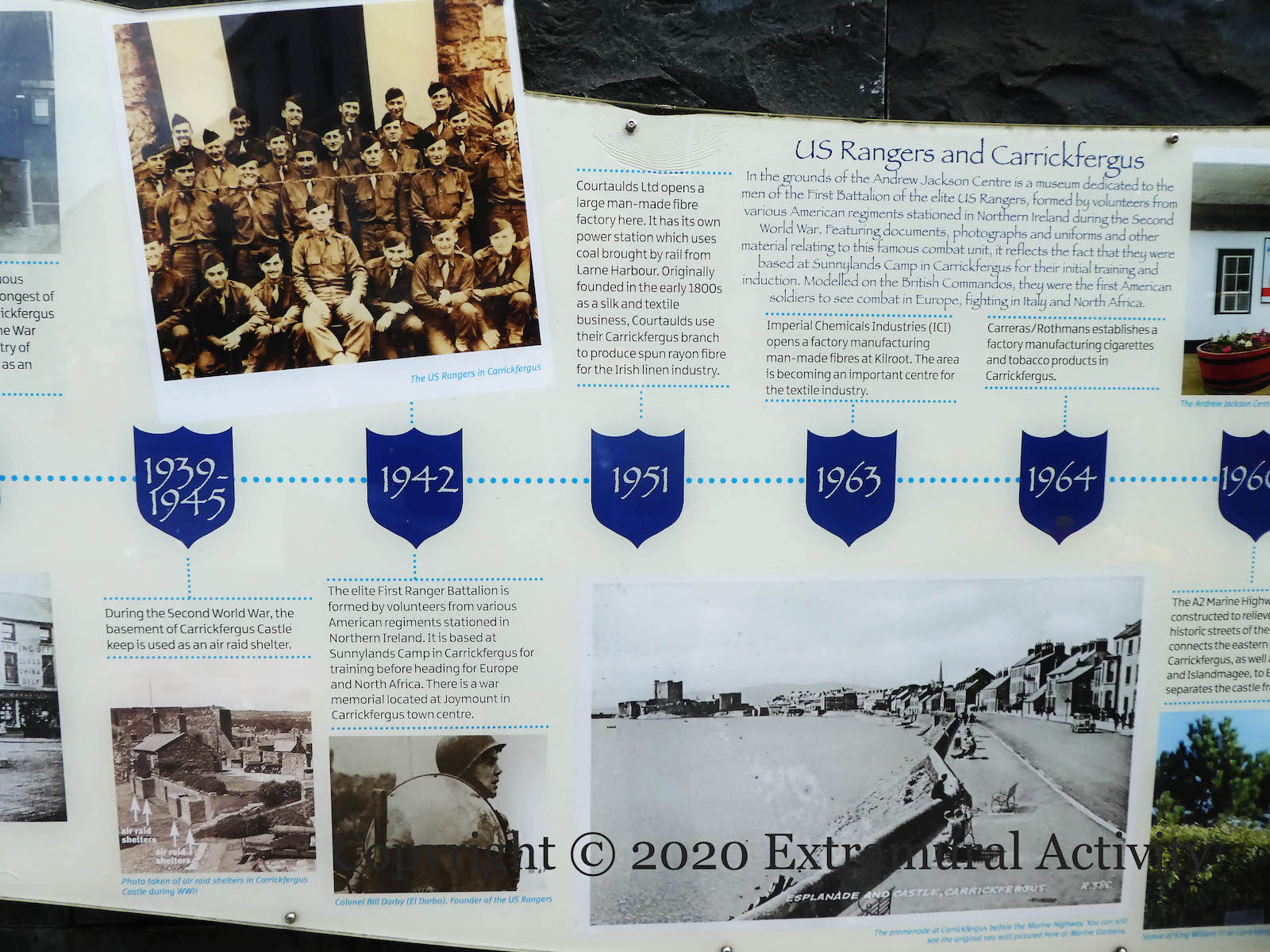
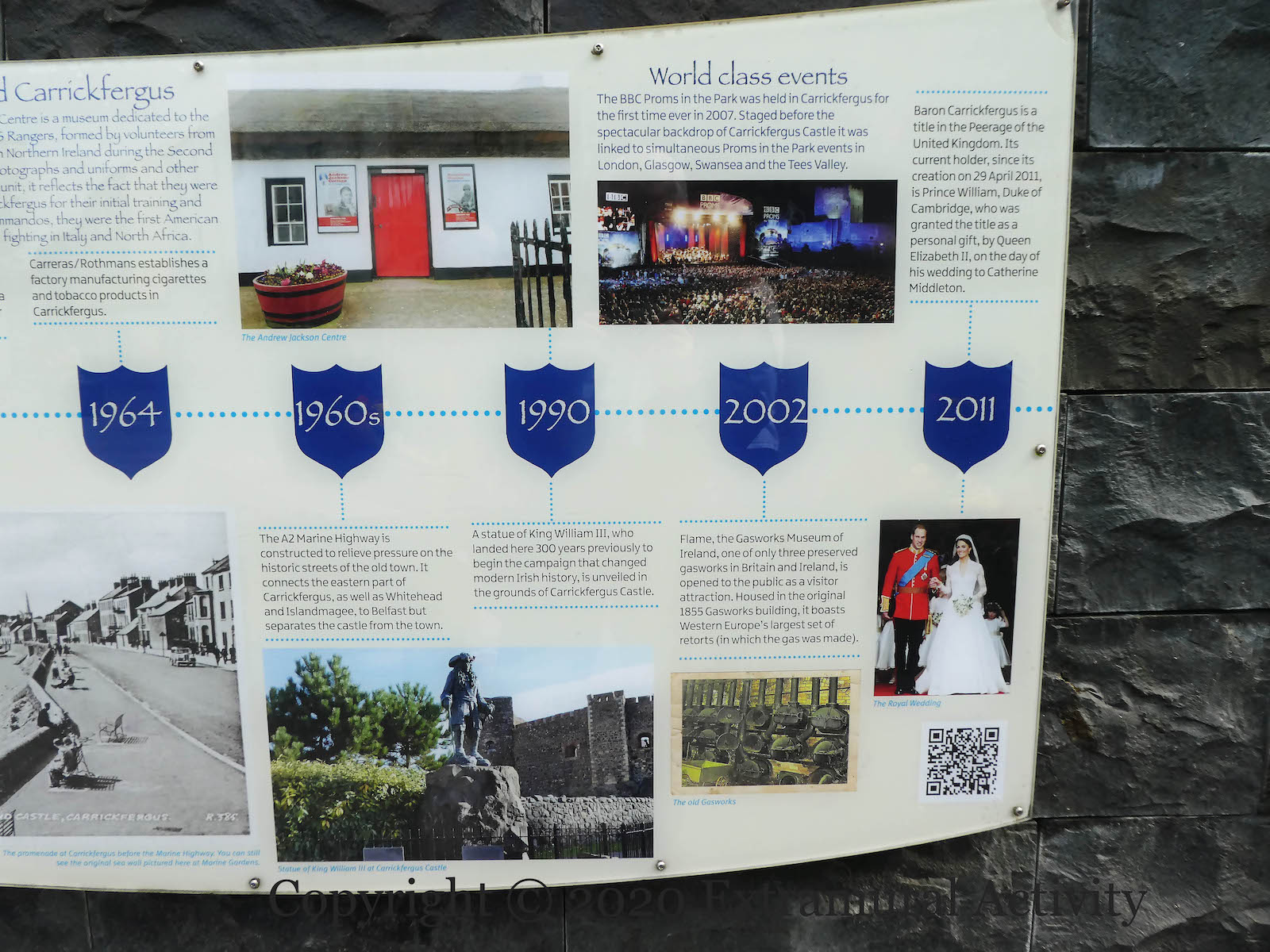
This is the second half of the Carrickfergus Timeline in Market Place, covering the history of the town from arrival of King William and General Schomberg to the modern day, including the last witch trial in Ireland and the construction of a railway allowing tourists sailing into Larne to reach the town easily: “Don’t let anything stop you from coming to Carrickfergus – if you cannot get on a train, hire a donkey cart”. The panels were written by Seth Linder.
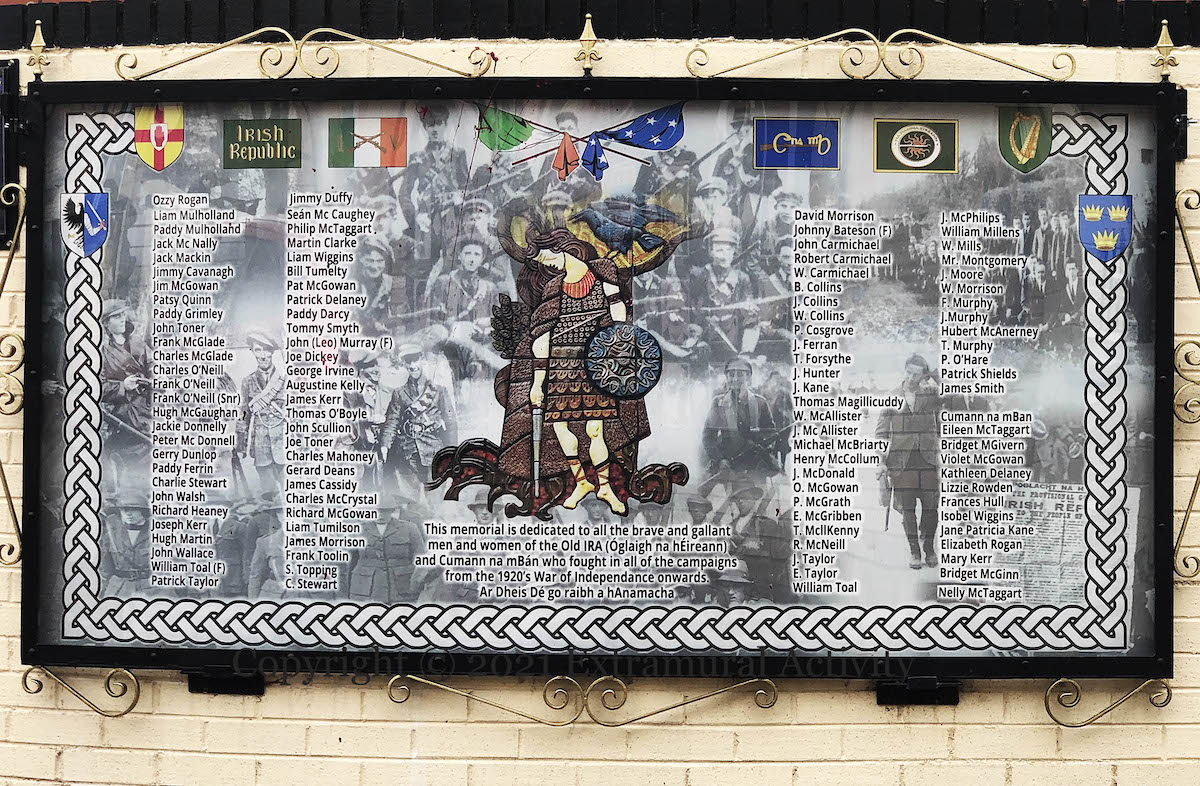
Cú Chulaınn stands dying; the raven on his shoulder will signal his death. “This memorial is dedicated to all the brave and gallant men and women of the Old IRA (Óglaıgh na hÉıreann) and Cumann Na mBán who fought in all of the campaigns from the 1920s War of Independence onwards.”
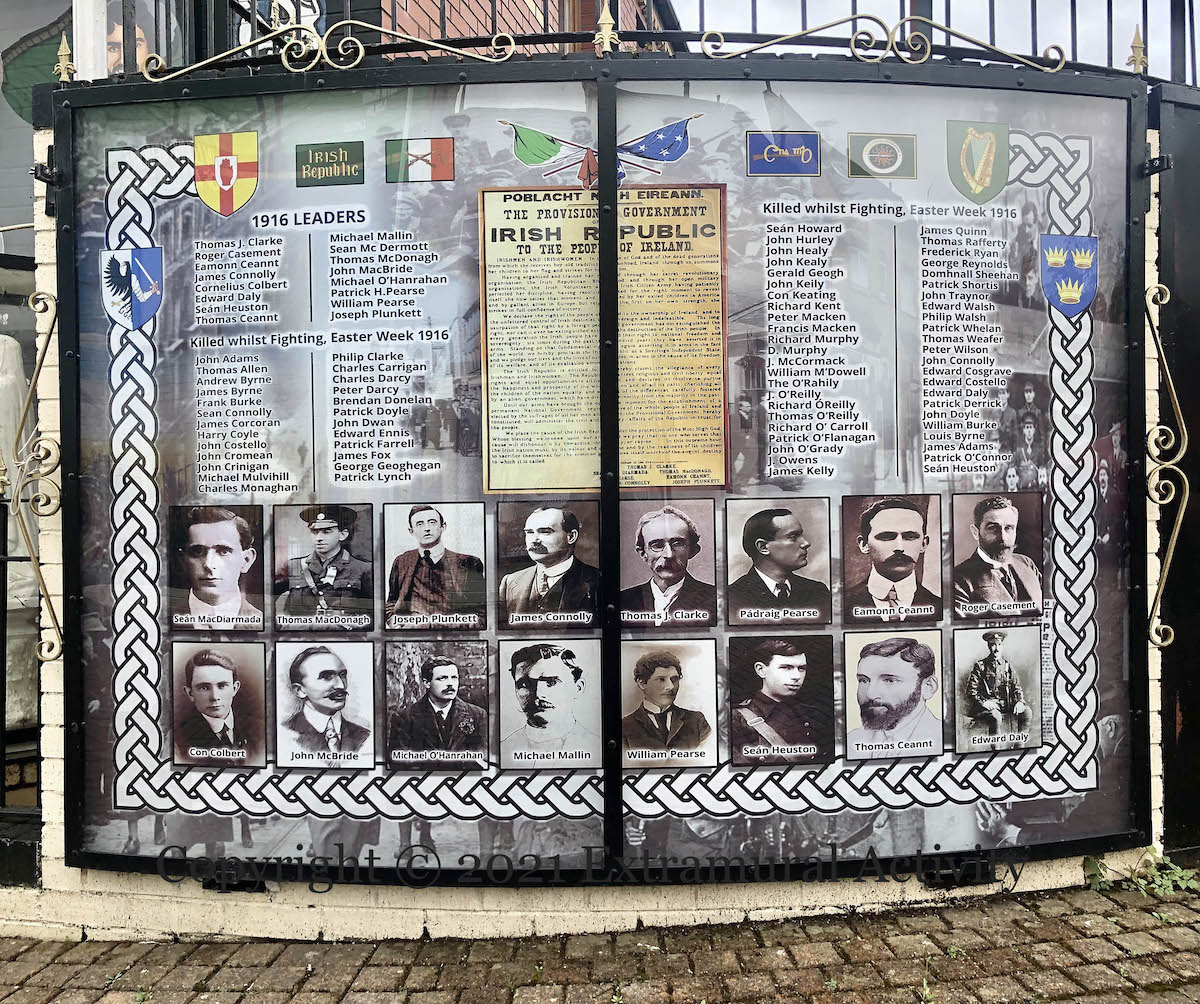
The Irish tricolour with crossed rifles was the flag of the Irish Volunteers (Óglaıgh na hÉıreann), the splits in which gave rise all the subsequent IRAs.
For a roll of honour 1916-1966, including some profiles, see Treason Felony.
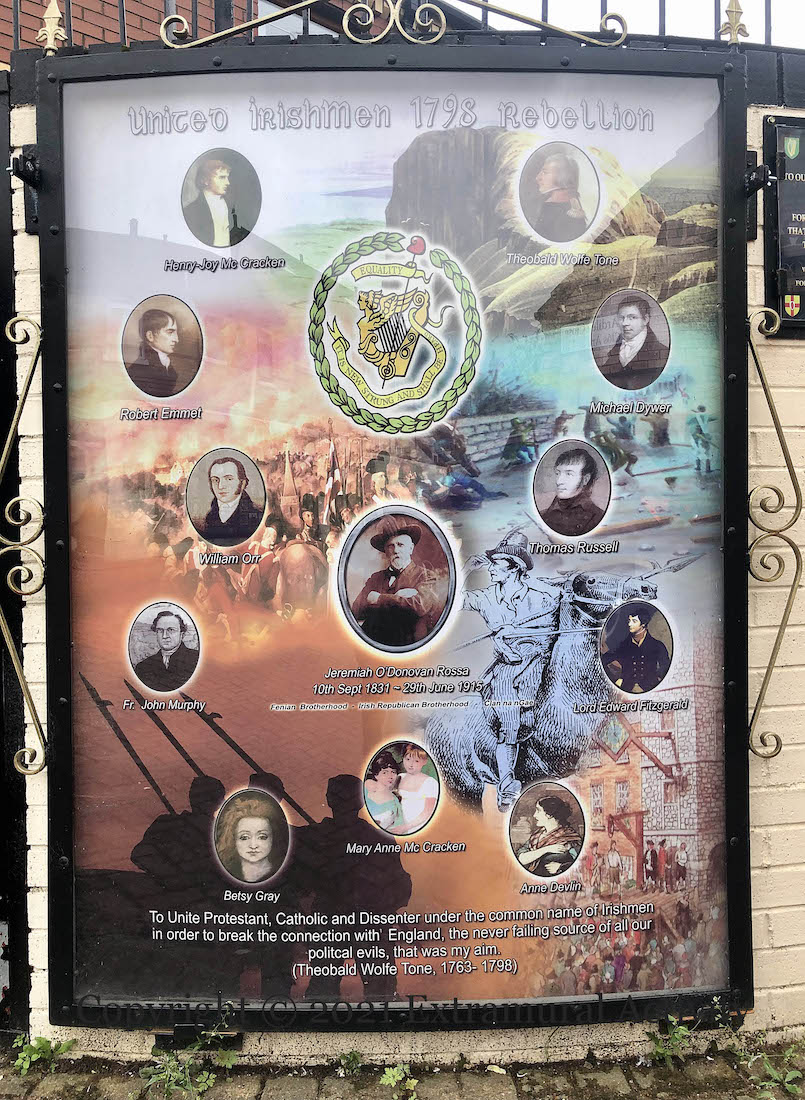
“‘To unite Protestant, Catholic and Dissenter under the common name of Irishmen in order to break the connection with England, the never failing source of all our political evils, that was my aim’ (Theobald Wolfe Tone, 1763-1798)”. As the dates suggest, Tone was captured and sentenced to death; his exact cause of death is uncertain – perhaps a self-inflicted knife to the throat, or a bullet to the throat. The other portraits are of Michael Dywer [should be “Dwyer”], Lord Edward Fitzgerald, Anne Devlin, Mary Anne McCracken, Betsy Gray, Fr. John Murphy, William Orr, Robert Emmet, Henry-Joy McCracken, and Jeremiah O’Donovan Rossa.
Ard An Lao/Ardilea, Machaıre Botháın/the Bone, Ard Eoın/Ardoyne
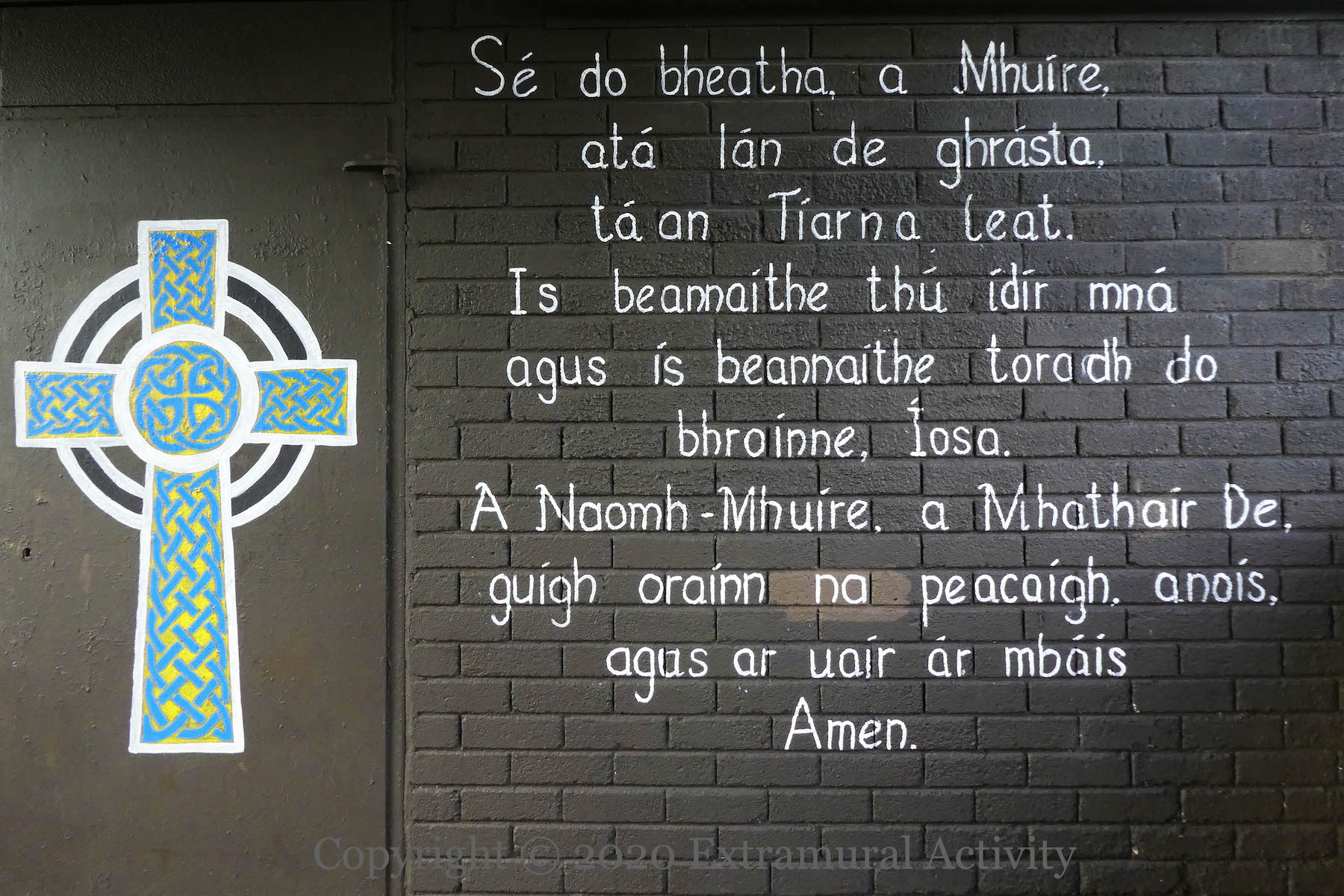
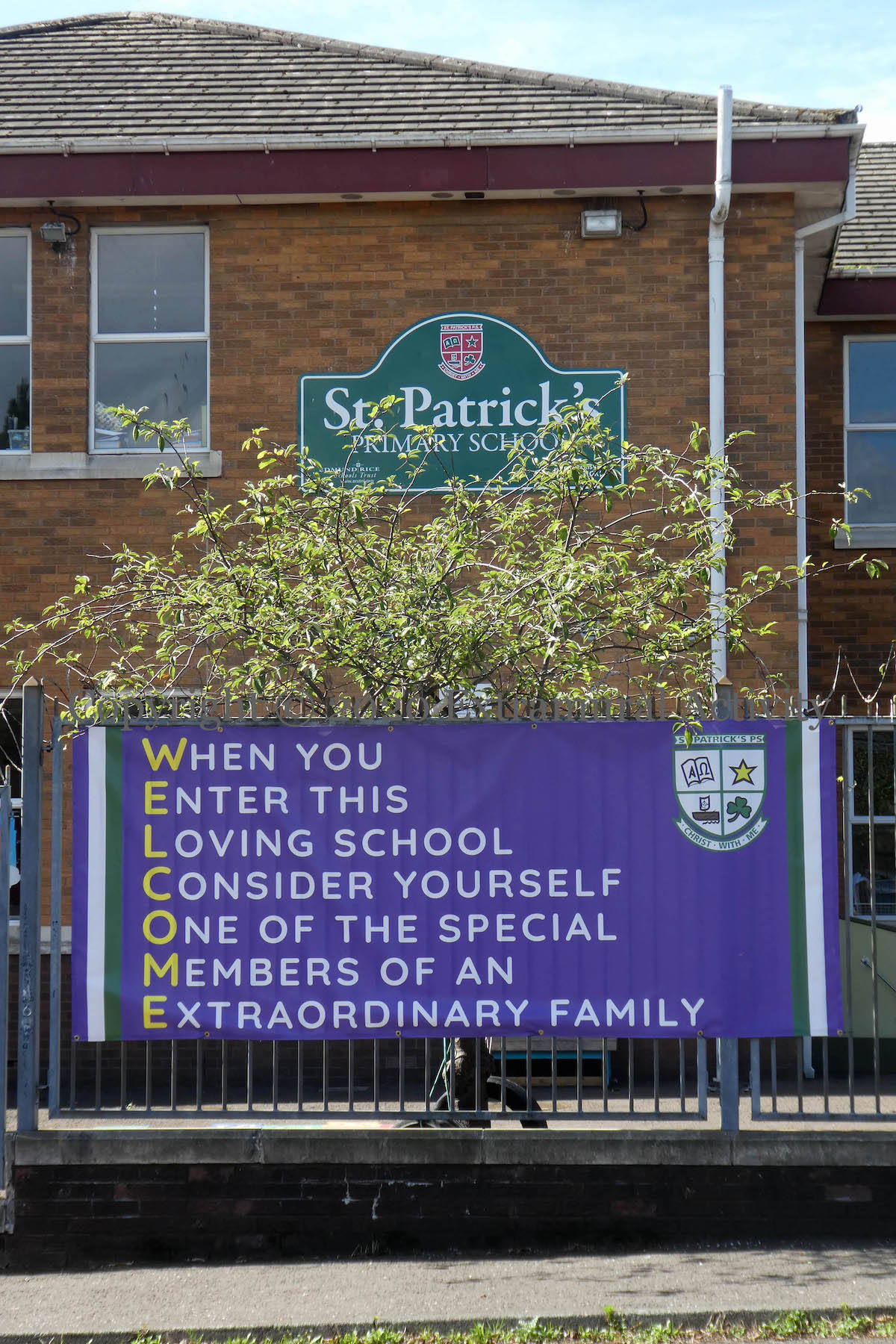
“Welcome: When you Enter this Loving school Consider yourself One of the special Members of an Extraordinary family”. Two images from St Patrick’s primary on the edge of the New Lodge. The “Hail Mary’ is written in Irish
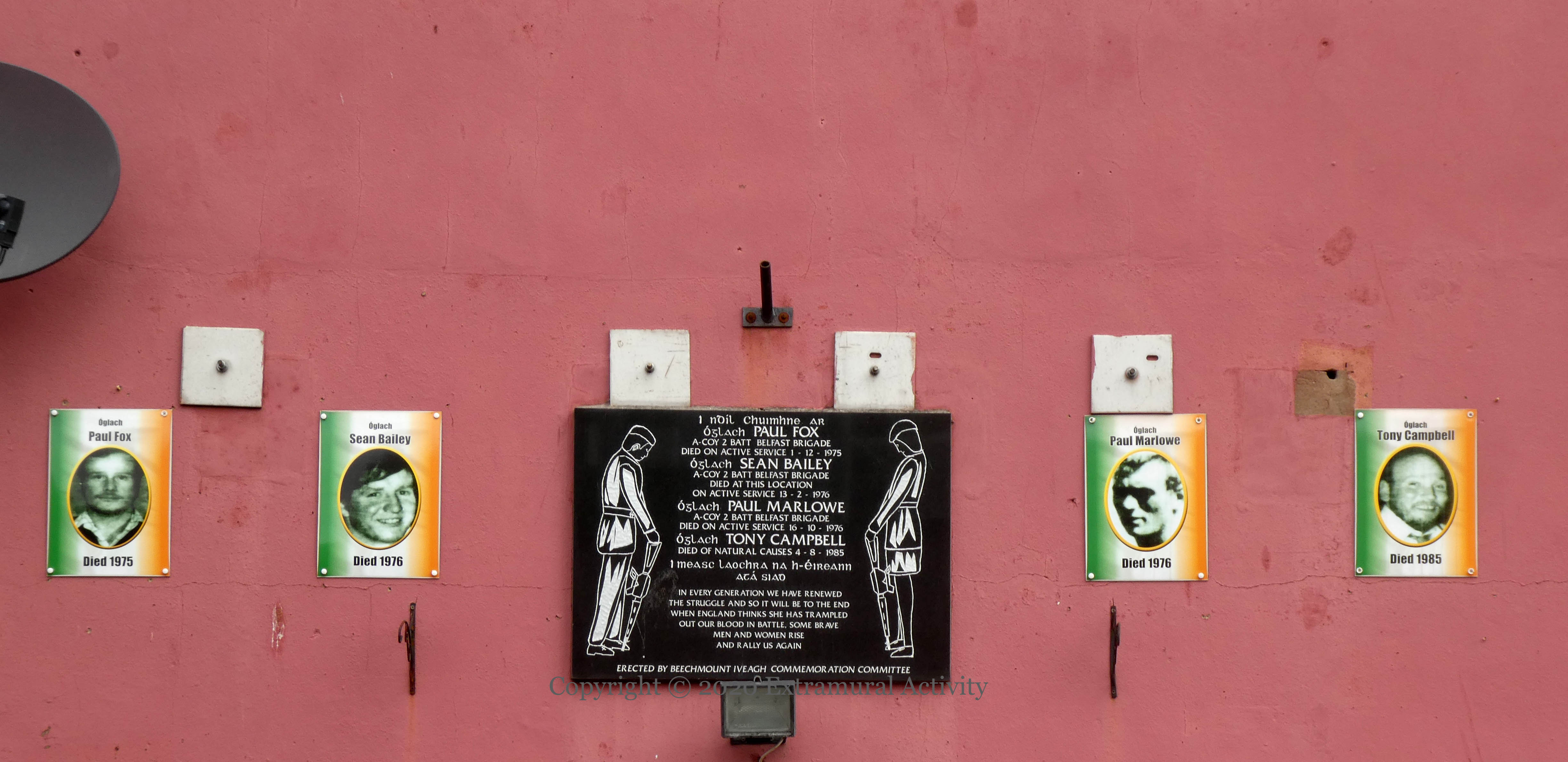
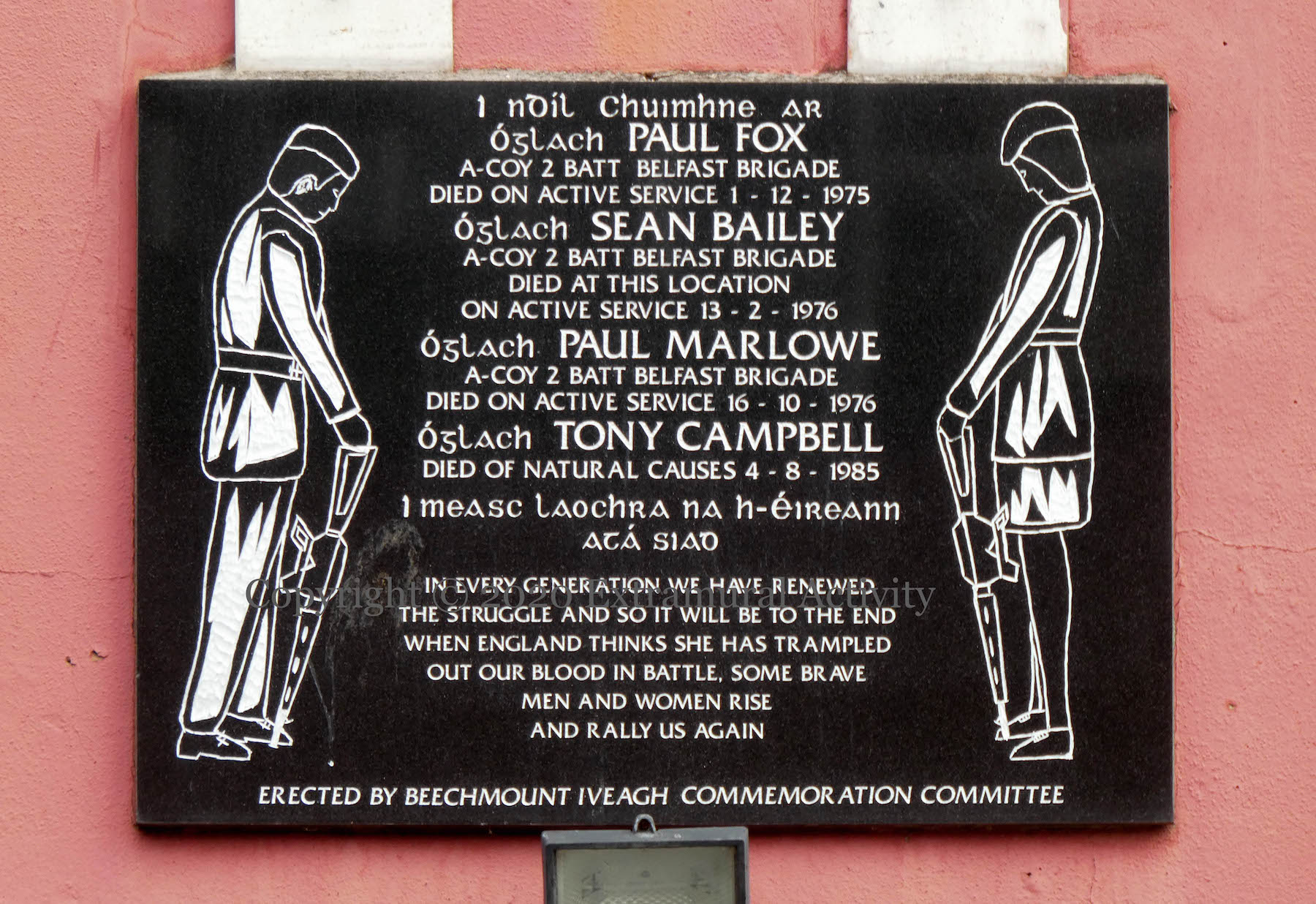
“Active service” on paramilitary plaques means death by a premature bomb explosion rather than at the hands of enemy forces. All three of the IRA volunteers named here died in this way: Paul Fox in King Street in 1975, Sean Bailey in nearby Nansen Street in 1976, and Paul Marlowe on the Ormeau Road later that same year (Sutton). The central plaque (shown below) has been in place since at least 2006 but was augmented last year with portraits. The fourth is Tony Campbell, also from the 2nd battalion, dead by natural causes in 1985.
“I ndíl [ndıl] chuımhne ar Óglach Paul Fox A-Coy 2 Batt Belfast Brigade, died on active service 1-12-1975, Óglach Sean Bailey A-Coy 2 Batt Belfast Brigade, died at this location on active service 13-2-1976, Óglach Paul Marlowe A-Coy 2 Batt Belfast Brigade, died on active service 16-10-1976, Óglach Tony Campbell died of natural causes 4-8-1985. I measc laochra na hÉıreann atá sıad. In every generation we have renewed the struggle and so it will be to the end. When England thinks she has trampled out our blood in battle, some brave men and women rise and rally us again.”