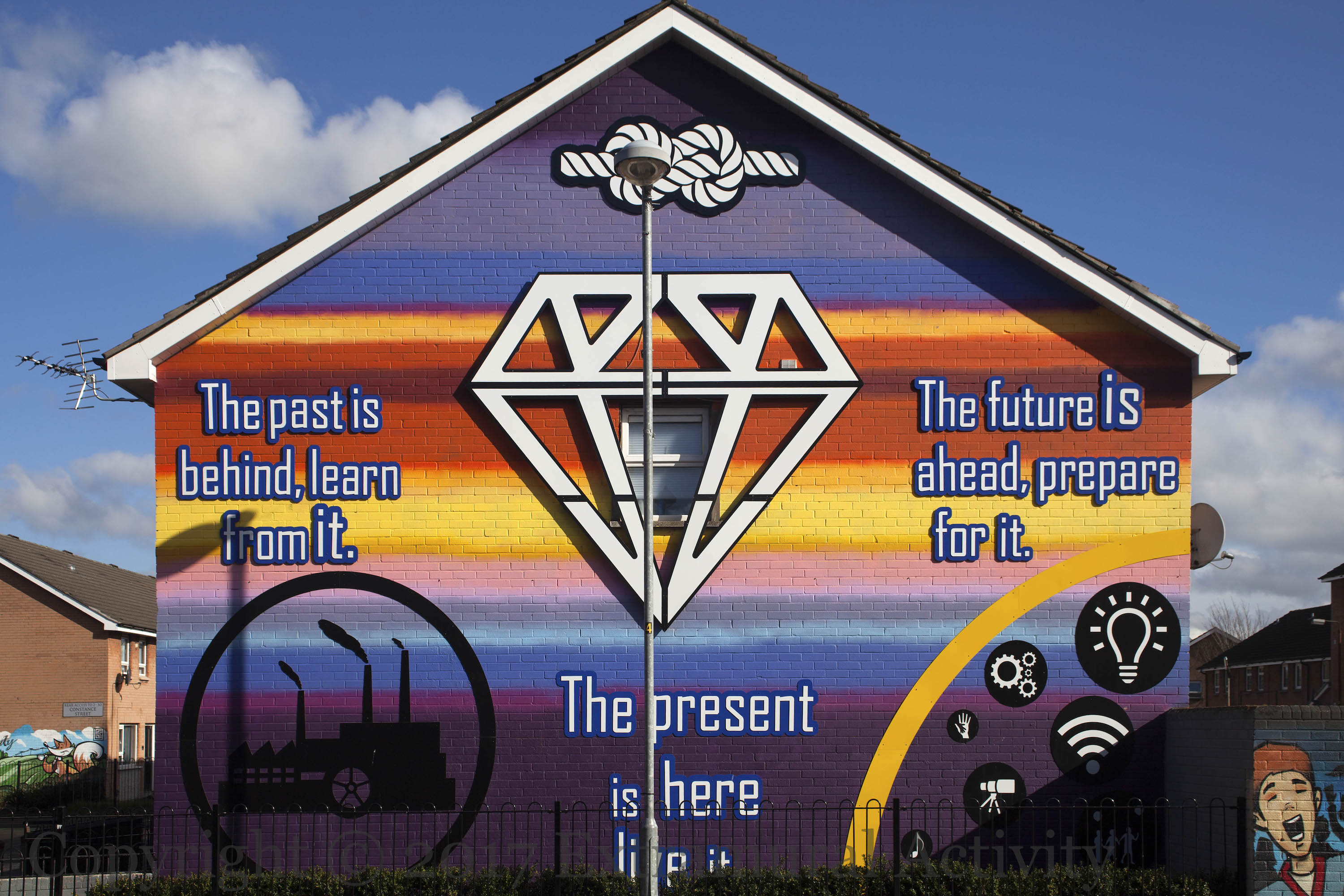
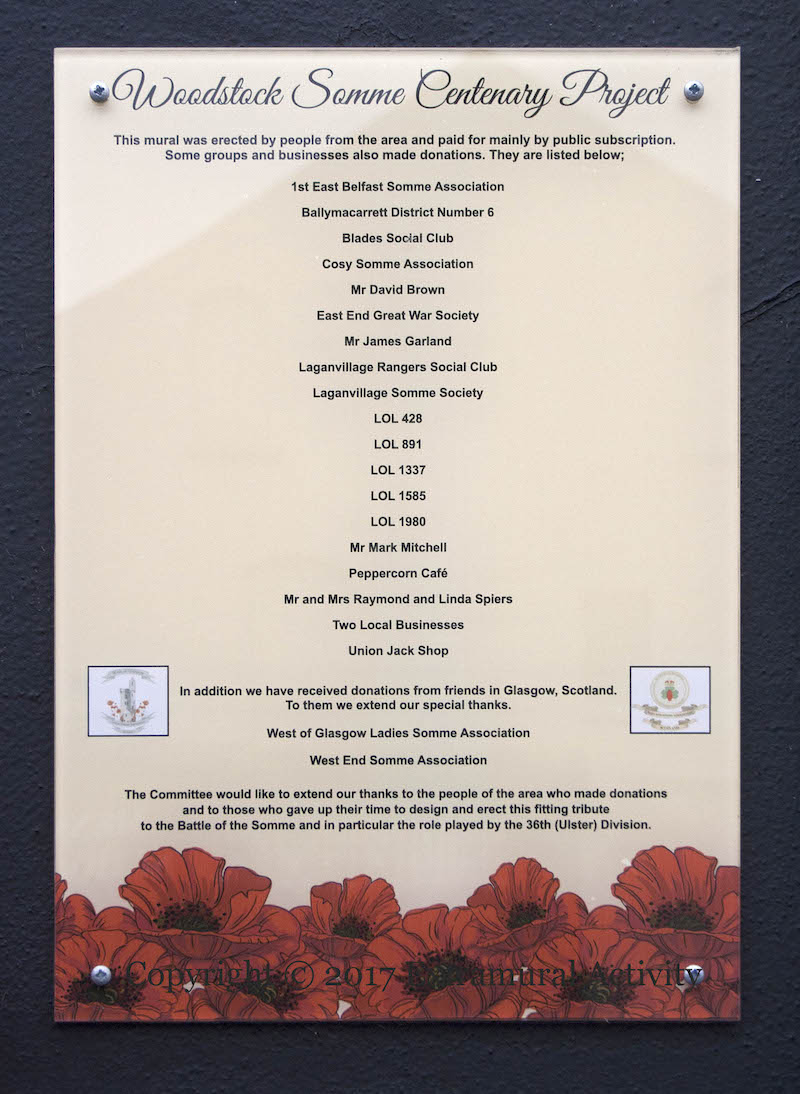
“The past is behind, learn from it. The present is here, live it. The future is ahead, prepare for it.” 2016 mural and board-cut diamond (which is lit from behind at night) in Lord Street, replacing the old LPA mural which lasted from 1997 to 2015.
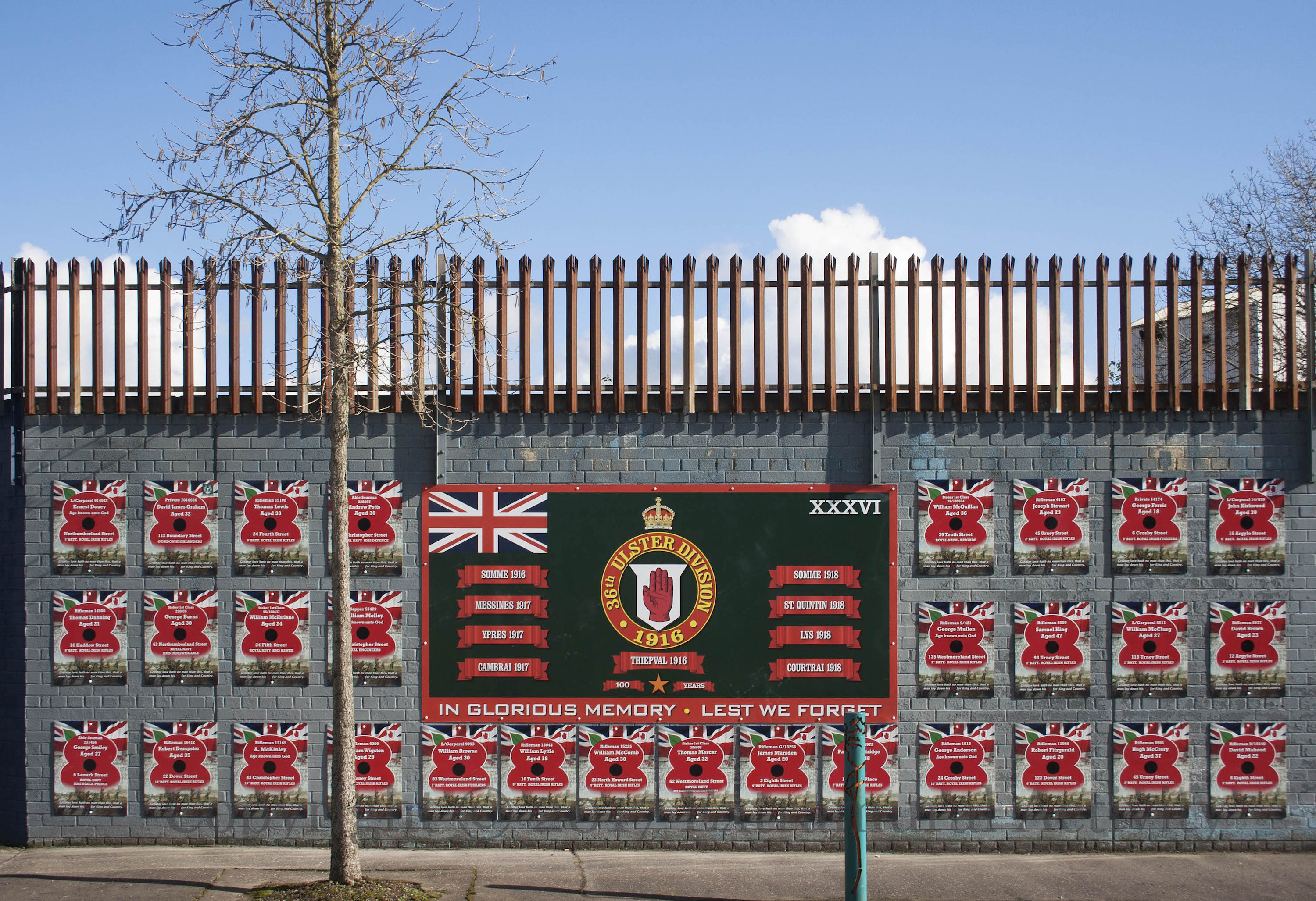
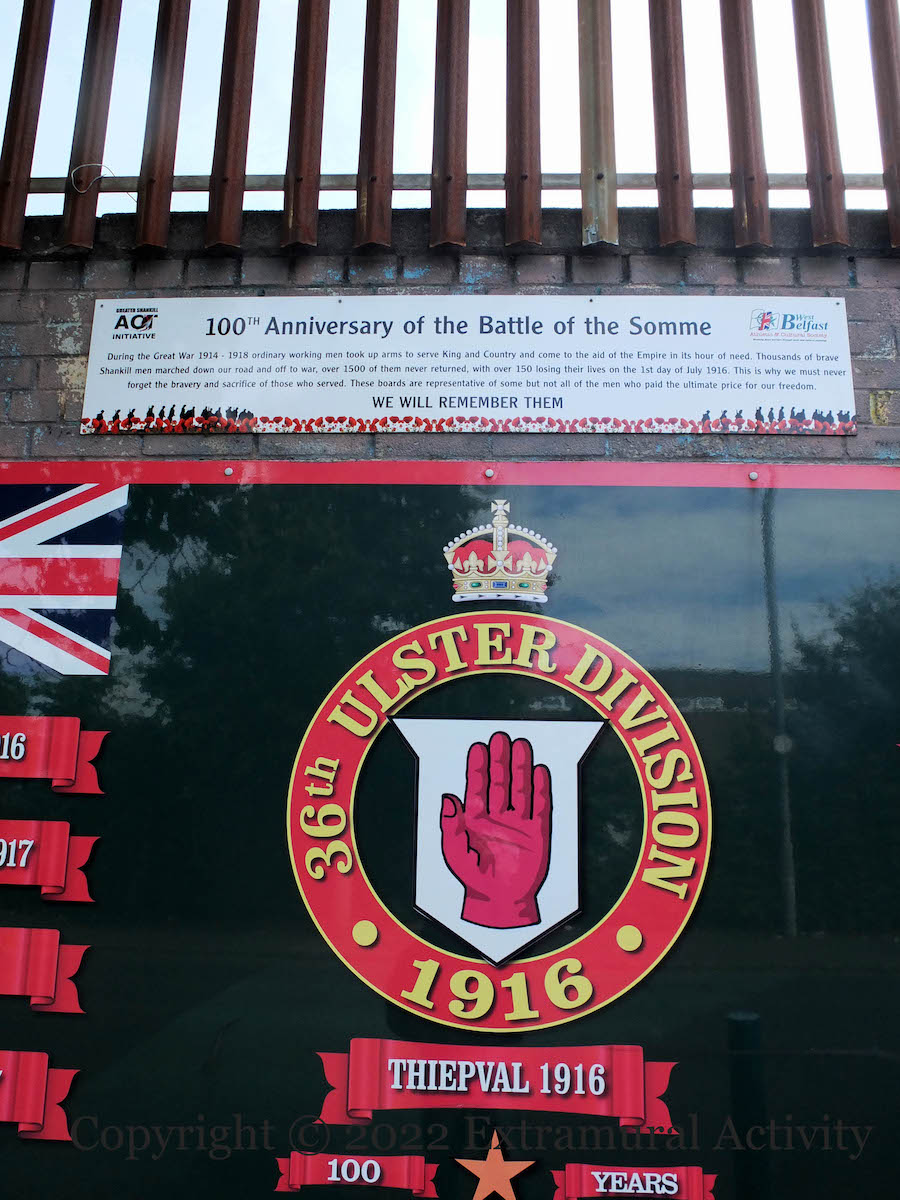
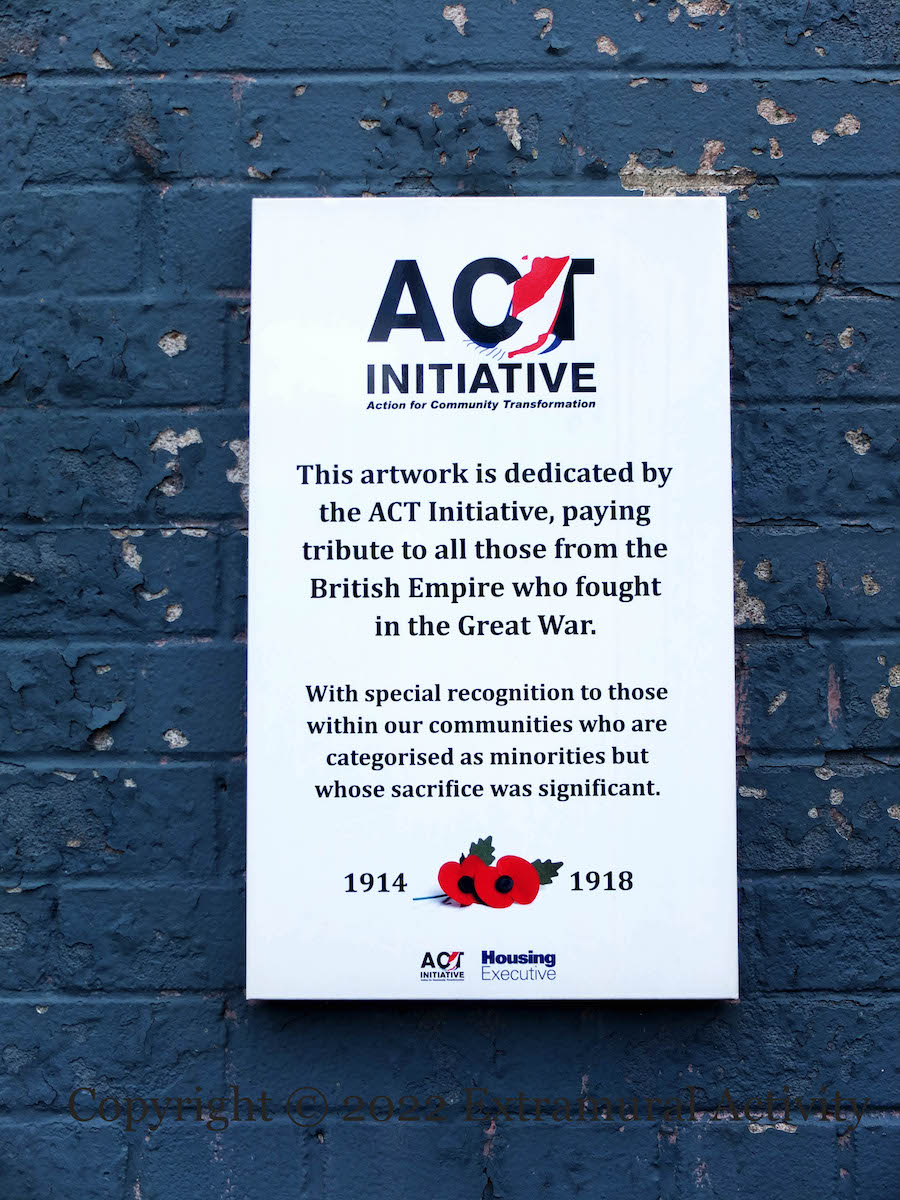
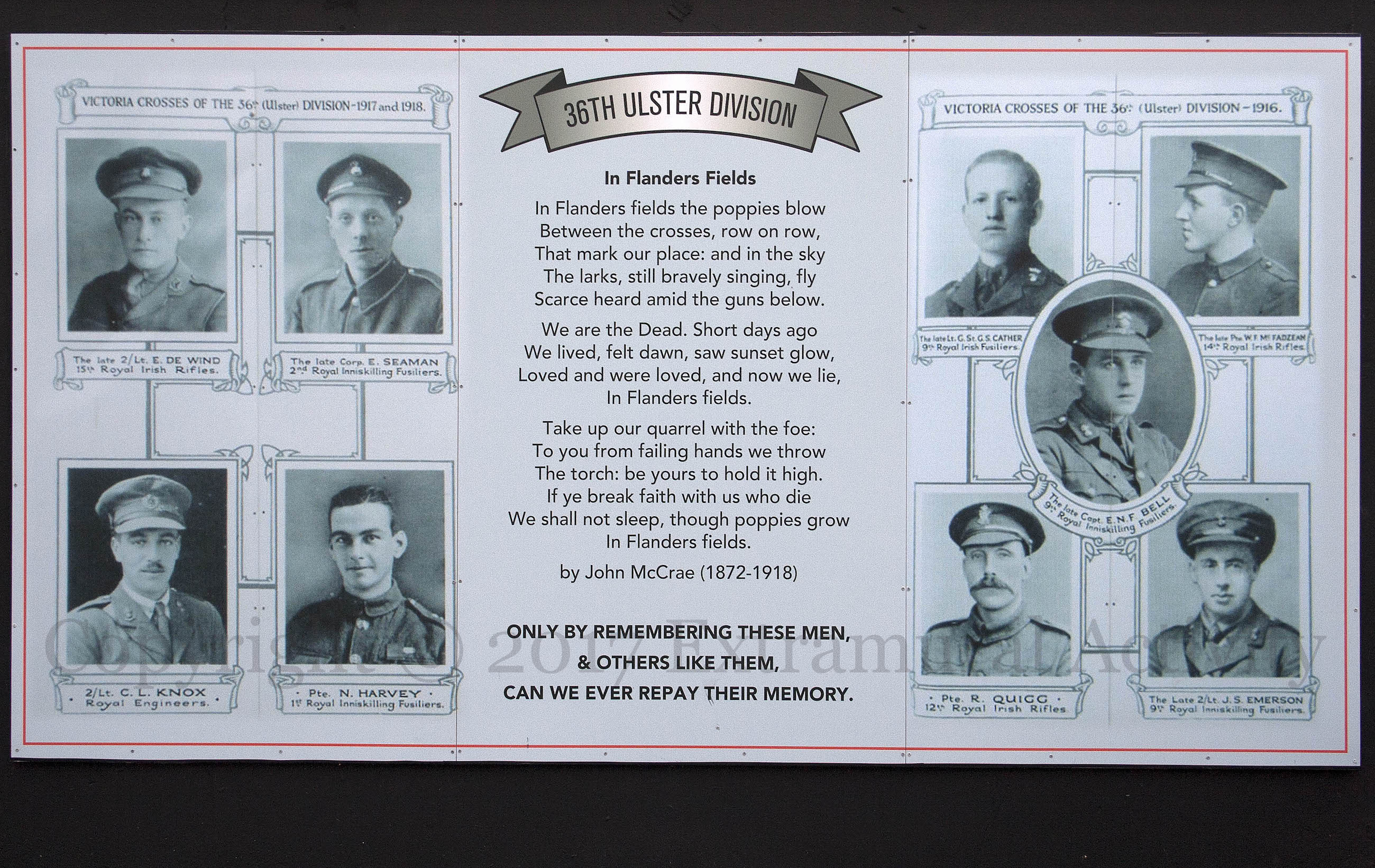
The main battles of the 36th (Ulster) Division (“XXXVI”) are listed – Somme, Thiepval, Messines, Ypres, Cambrai, Somme (1918), St. Quintin [St. Quentin], Lys, Courtrai – and those who died are commemorated on this new board. The main board is surrounded by smaller boards, part of the Poppy Trail, bearing the names, ages, addresses, ranks, and units of deceased soldiers. For example: William Lyttle, aged 18, 16 Tenth Street, 9th batt. Royal Irish Rifles, Rifleman 13044.
Update: info board added “Thousands of brave Shankill men marched down our road and off to war, over 1500 of them never returned, with over 150 losing their lives on the 1st day of July 1916.”
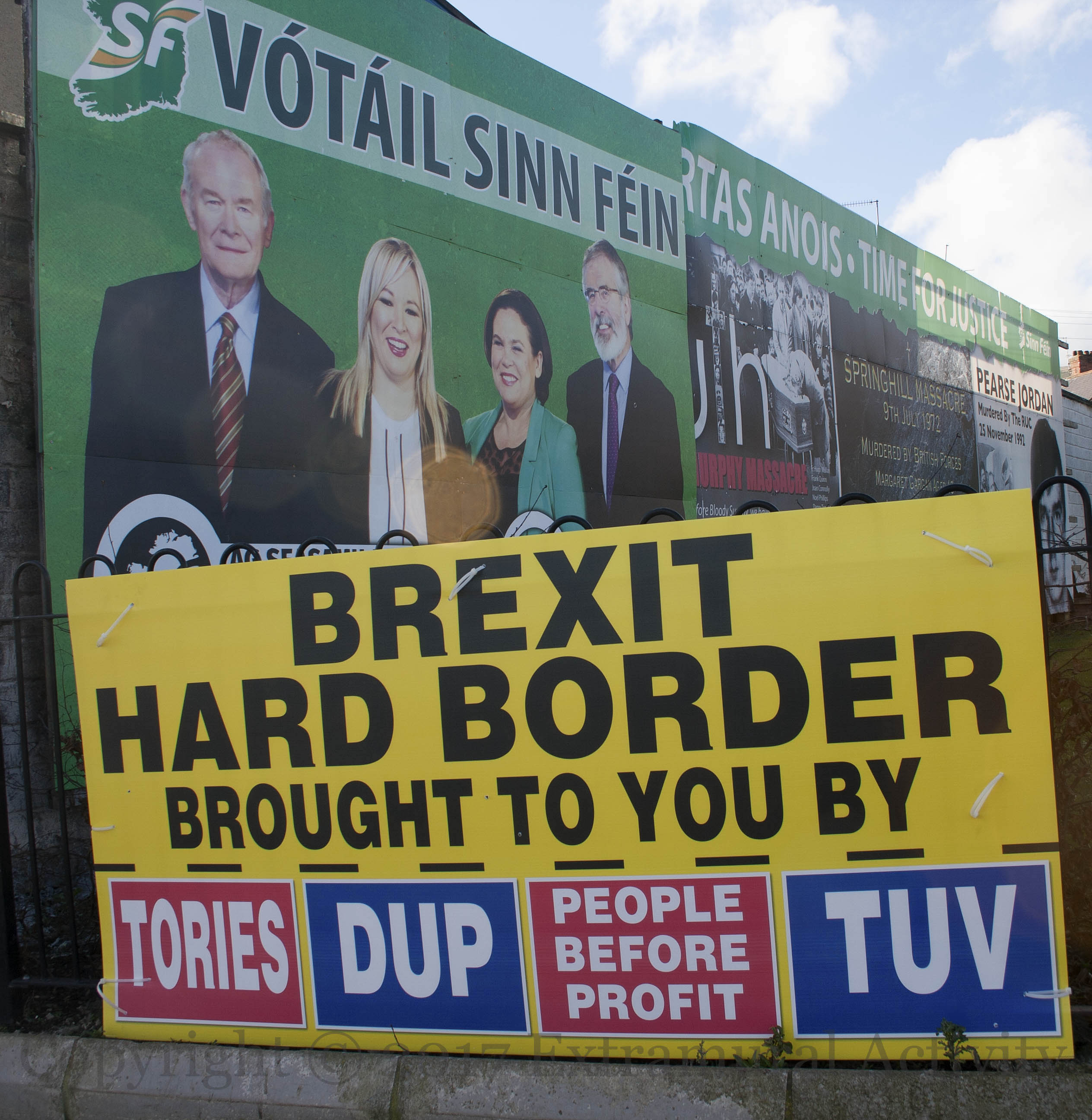
The UK’s vote to leave the EU (“Brexit”) might mean the return of the “hard” border between Northern Ireland and the Republic. The board shown above lists the Tories, DUP, TUV, and (west Belfast rivals) People Before Profit as supporters of Brexit. PBP supported the exit on anti-austerity grounds.
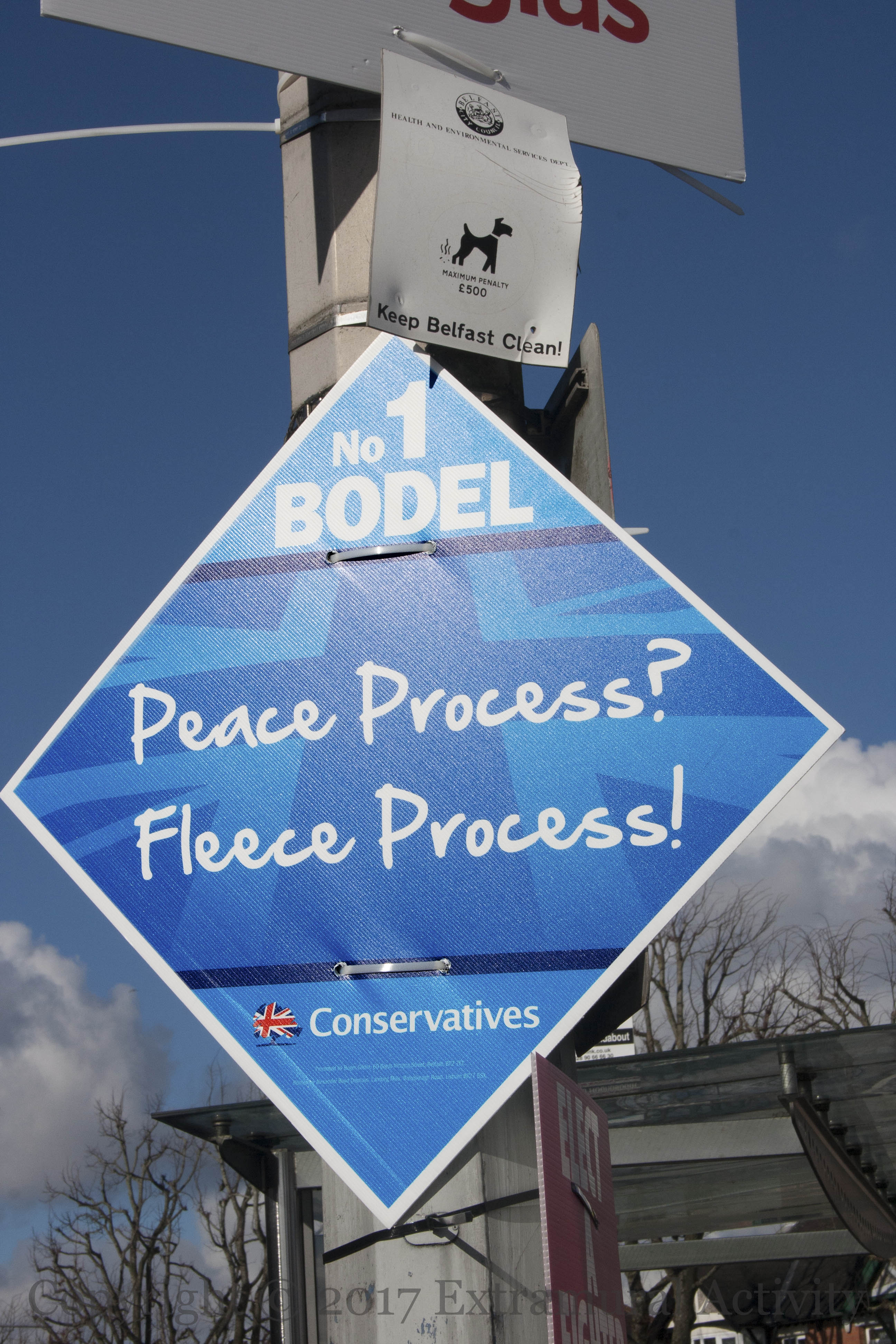
Voters go to the polls on March 2nd and among the candidates in East Belfast is Northern Ireland Conservative (web | Fb) Sheila Bodel. The party placard above in Grand Parade suggests that the peace process has been a “fleece process”.
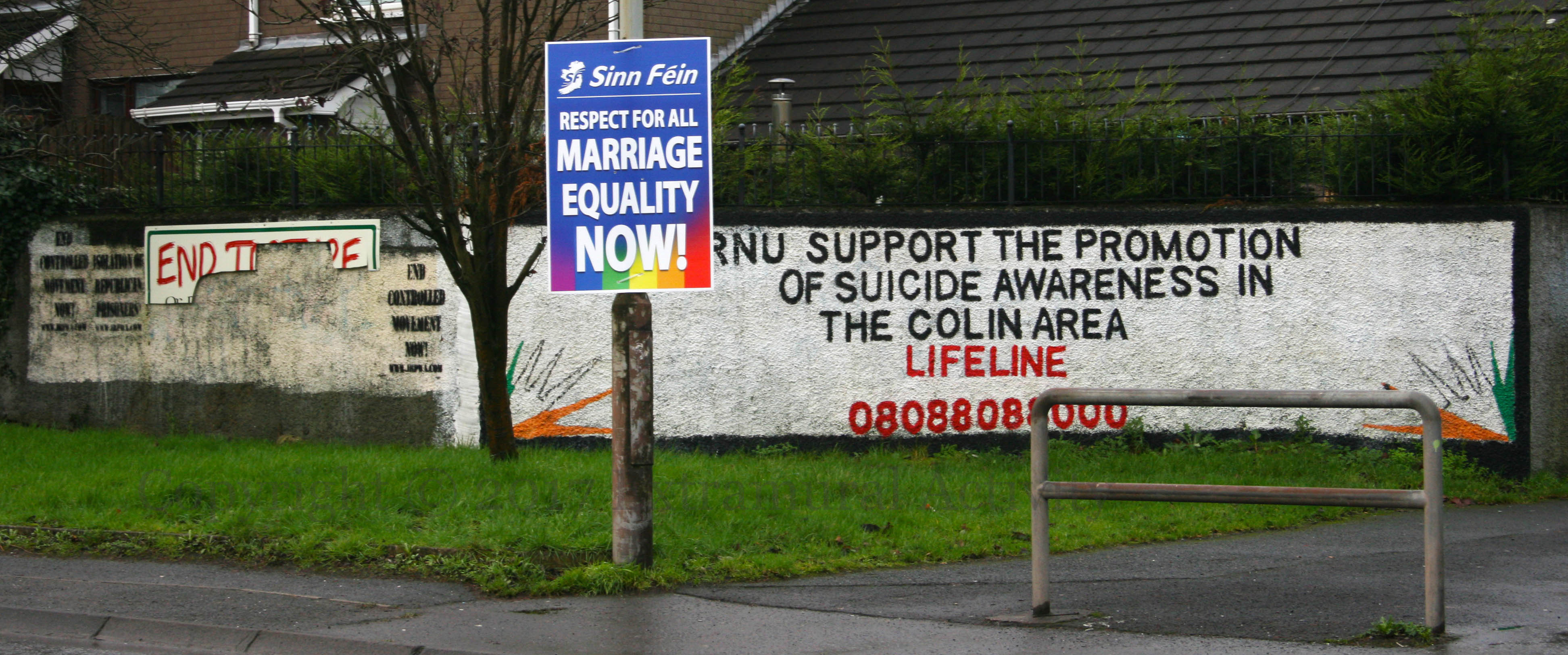
In the background, an RNU suicide awareness stencil (with tricoloured sunbursts) – “RNU support the promotion of suicide awareness in the Colin area”; in the foreground, a Sinn Féin poster – “Respect for all – marriage equality now!” At the pedestrian entrance to Old Colin.
(And to the left, a broken End Torture board can be seen.)
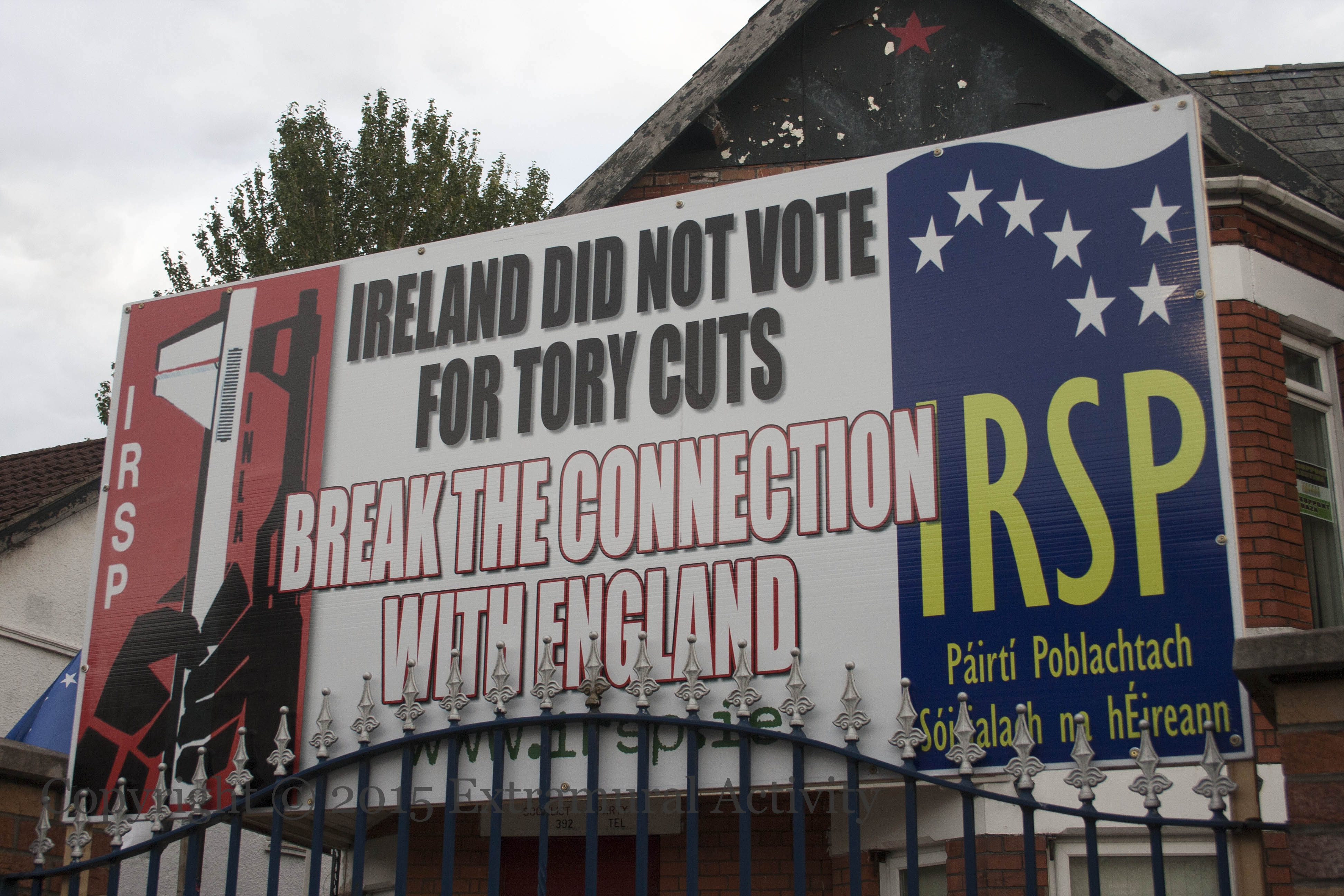
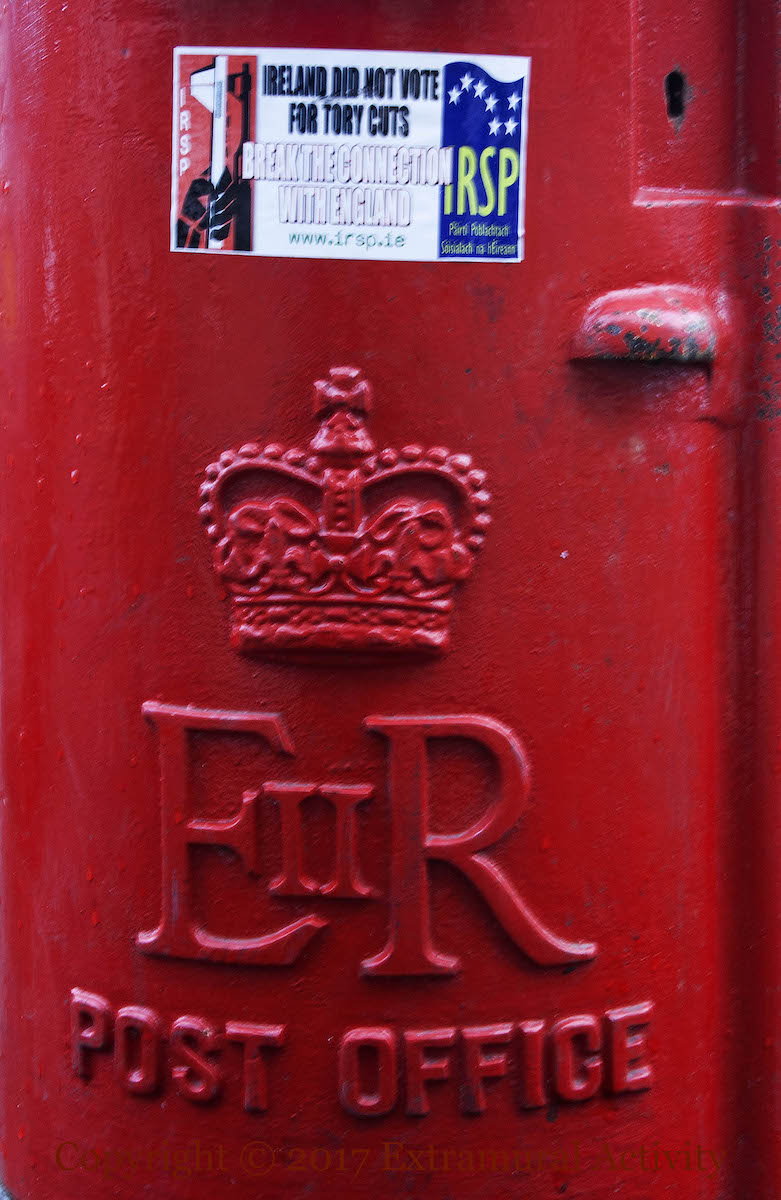
“Ireland did not vote for Tory cuts. Break the connection with England. www.irsp.ie. Páırtí poblachtach sóısıalaıgh na hÉireann.”
This IRSP/INLA board outside the party offices on the Falls Road protests policies coming from the Westminster parliament and specifically the Conservatives. On the left-hand side of the board are an adjustable pipe-wrench (for IRSP) and a rifle (for INLA). The sticker on a post-box is in Cavendish Street.
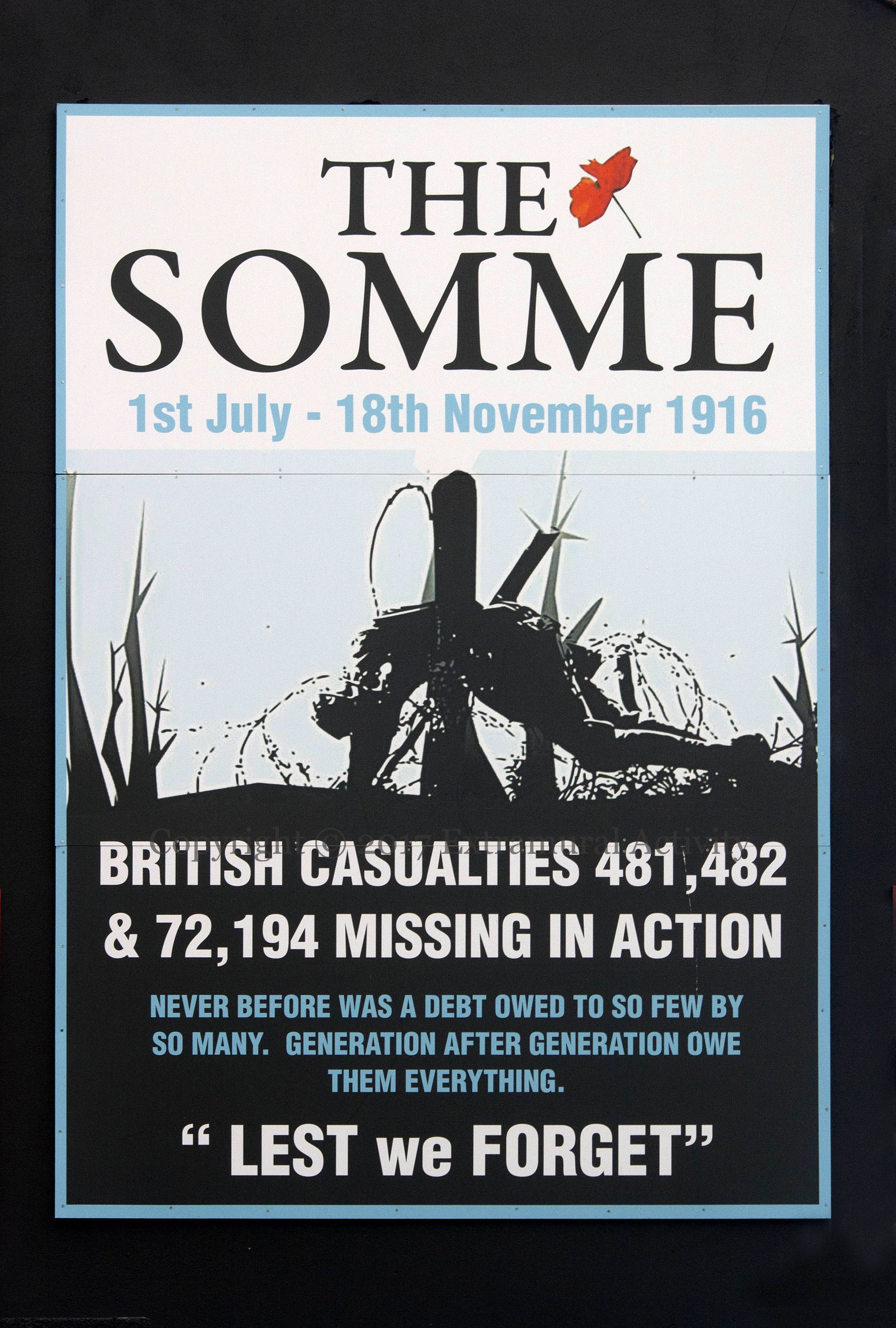
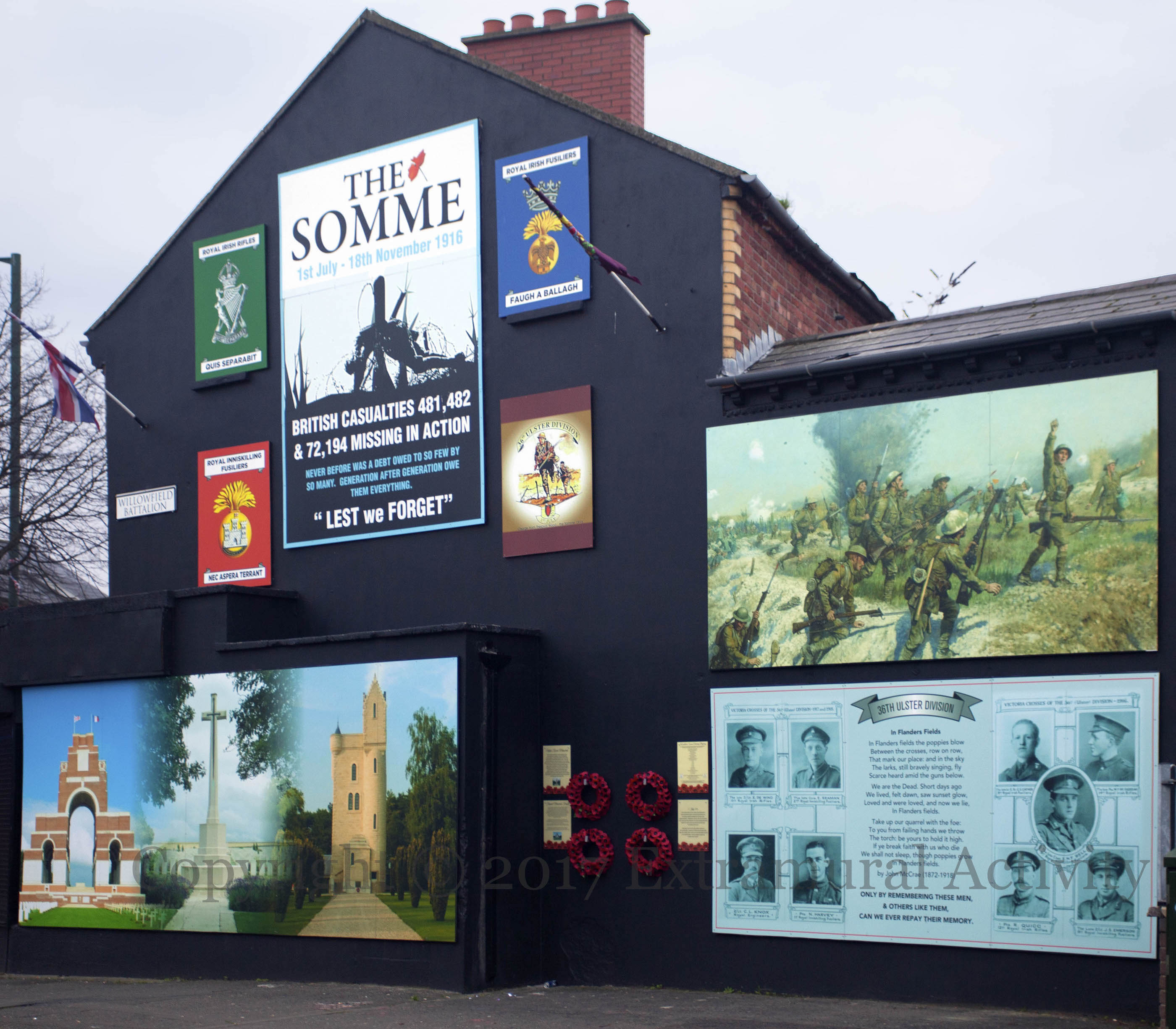
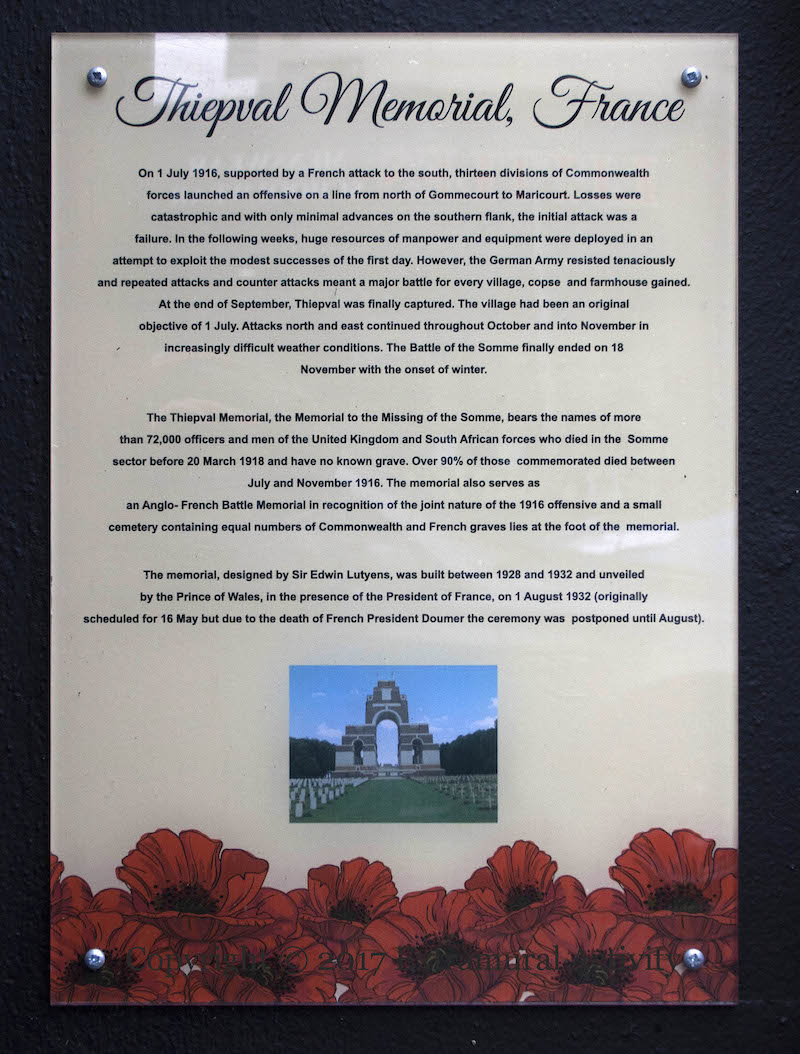
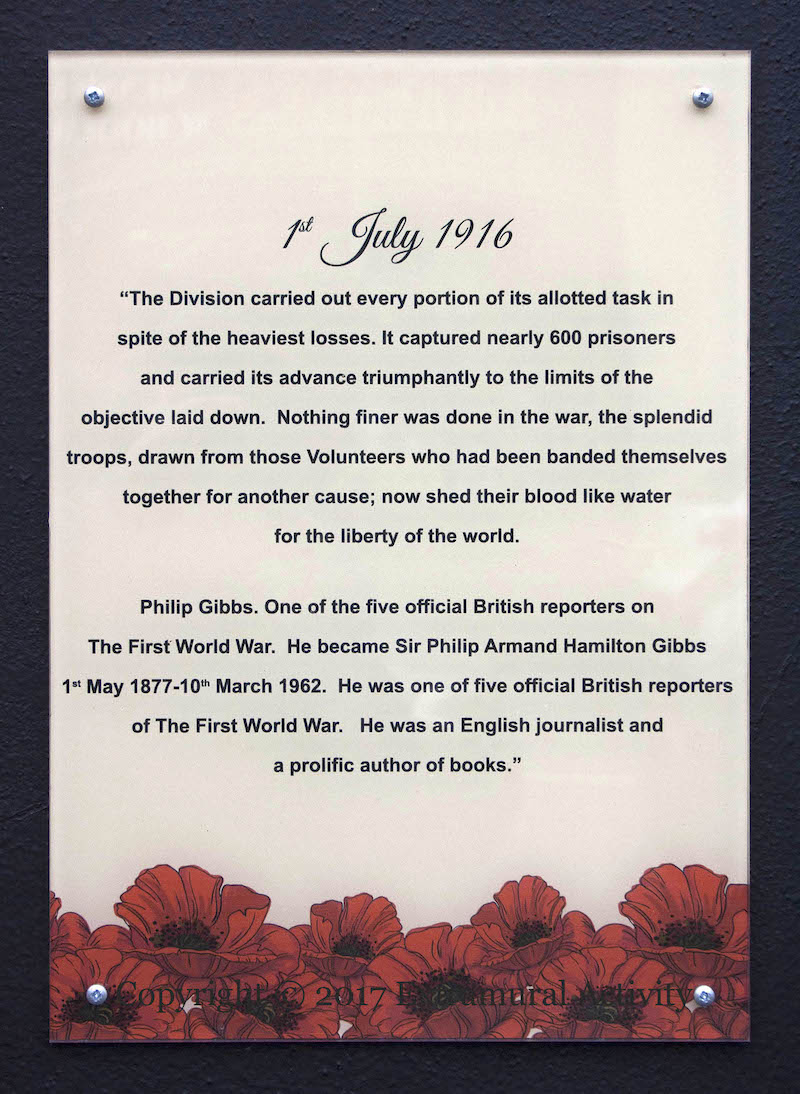
Winston Churchill’s line about the British Air Force in WWII, that “Never in the field of human conflict was so much owed by so many to so few“, is echoed in this WWI board about the battles at the Somme between July 1st and November 18th, 1916. “The few” in this case, however, number nearly half a million dead and more than 72,000 missing. “Never before was a debt owed to so few by so many. Generation after generation owe them everything. Lest we forget.”
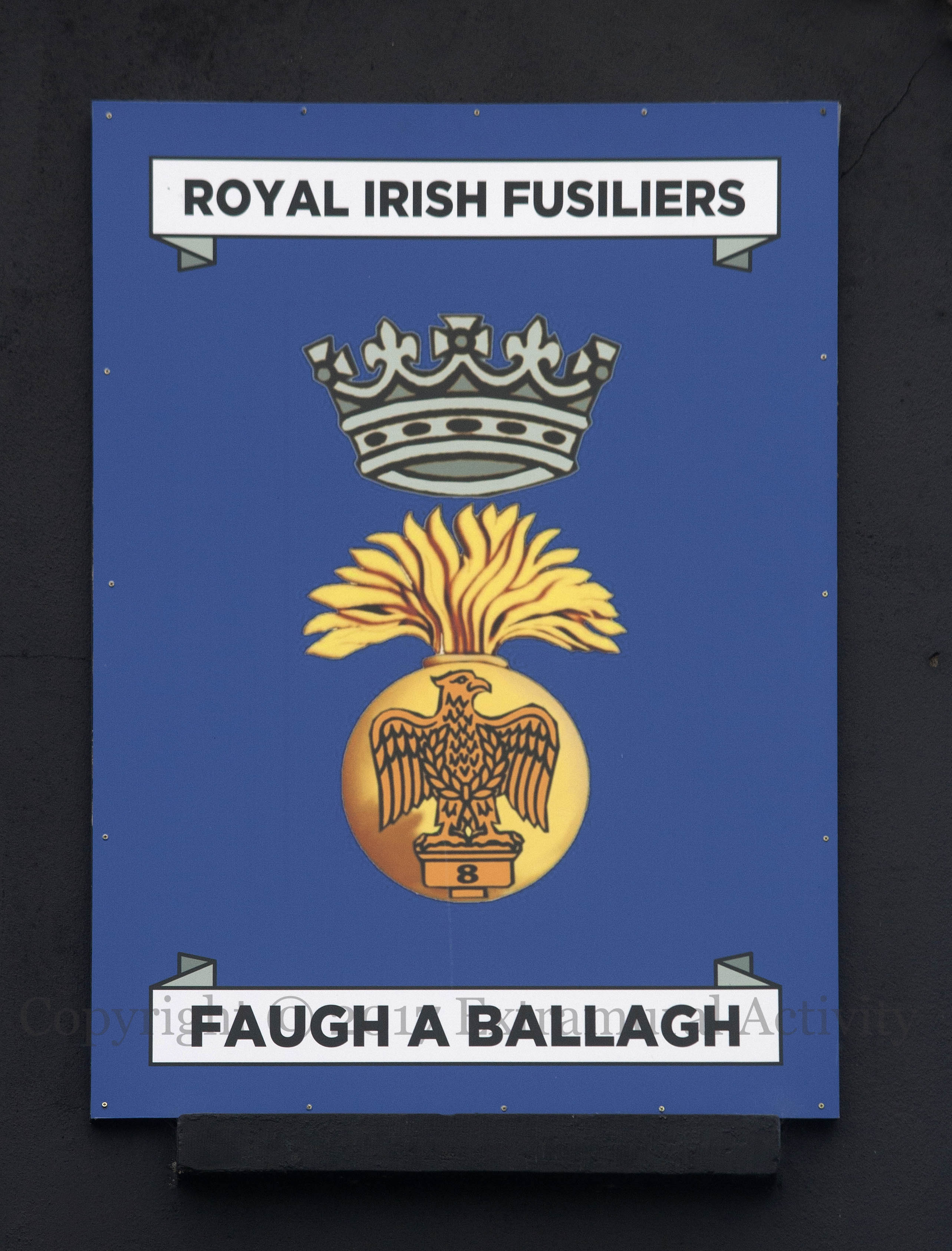
“Faugh a ballagh” (Clear the way) was the motto of the Royal Irish Fusiliers (and then of the Royal Irish Rangers and currently of the Royal Irish Regiment). The Fusiliers served on the western front during WWI – the first and ninth battalions serving in the 36th (Ulster) Division – and the 3rd battalion helped put down the Easter Rising in 1916. Its coat of arm are one of four panels along with the 36th, the Royal Irish Rifles, and the Royal Inniskilling Fusiliers.
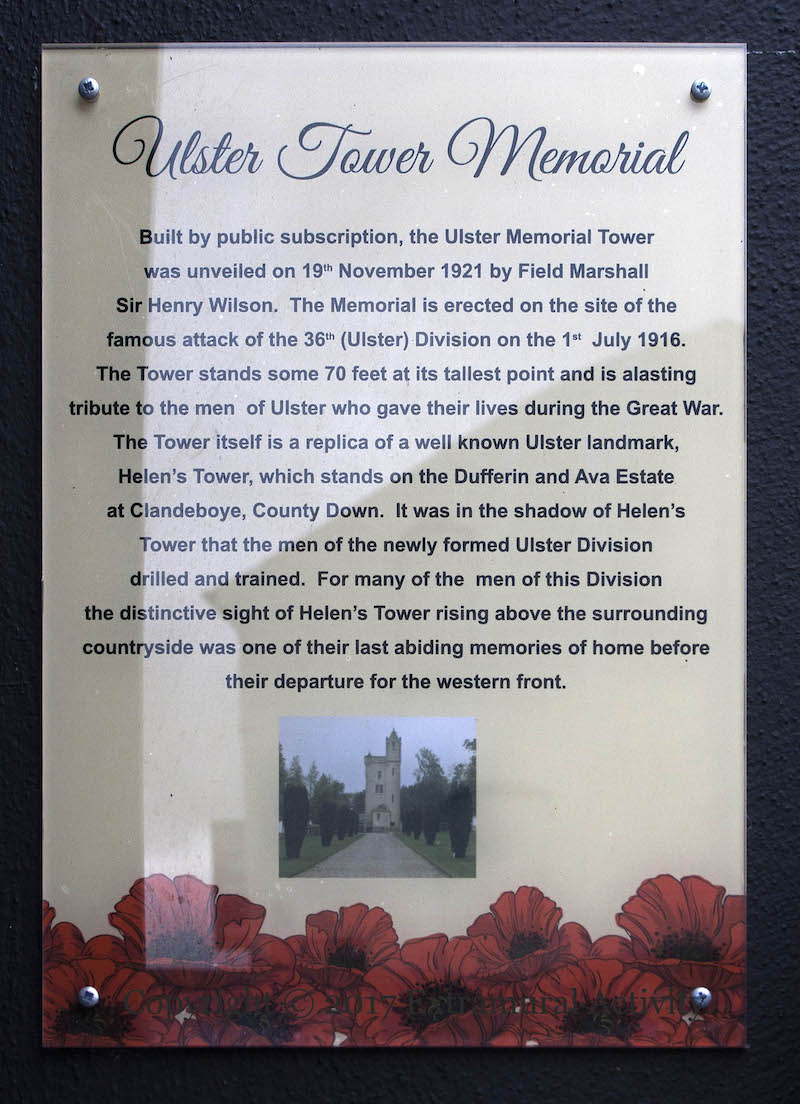
The Thiepval Memorial, the Cross of Sacrifice, and the Ulster Tower are pictured in the bottom left.
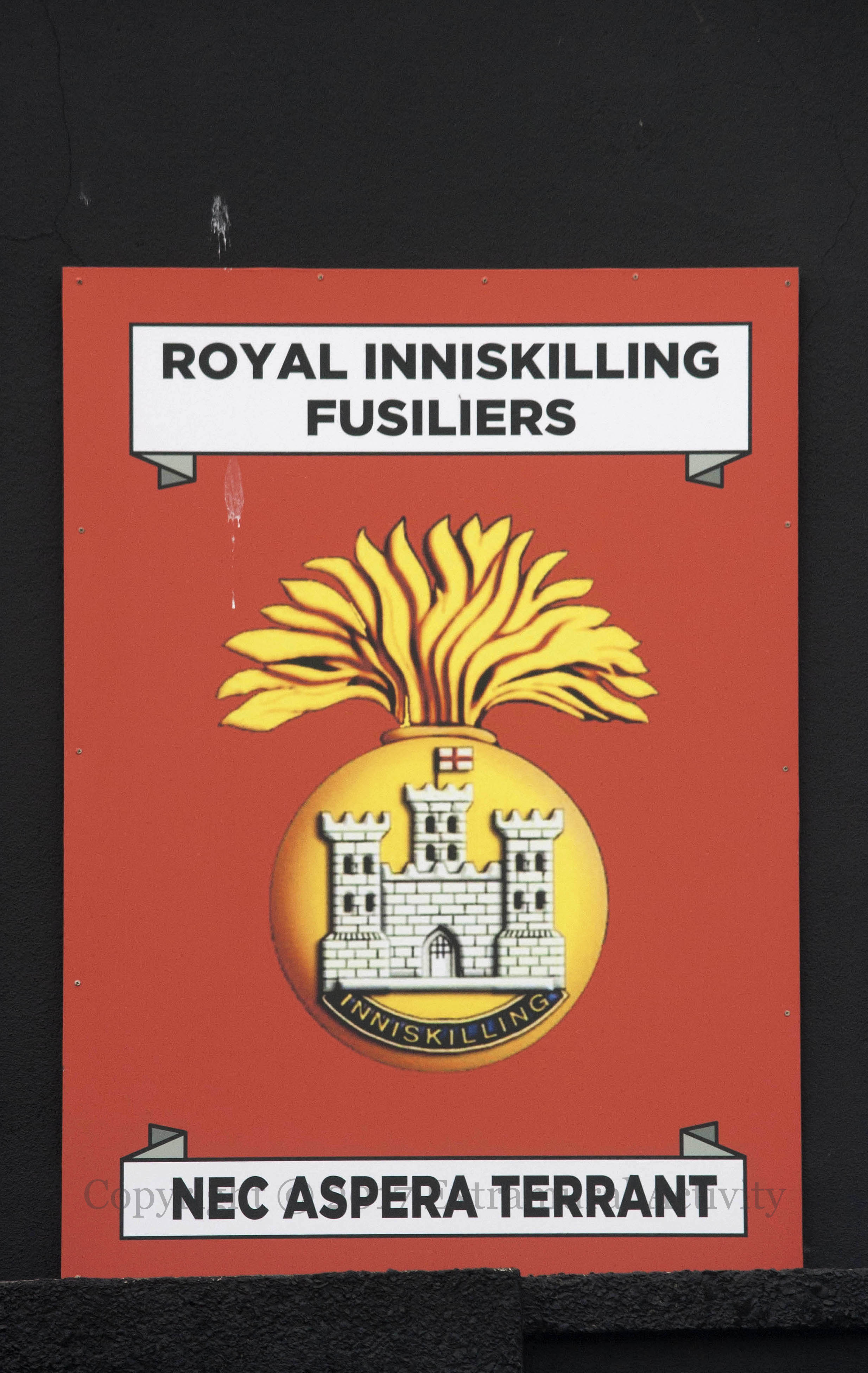
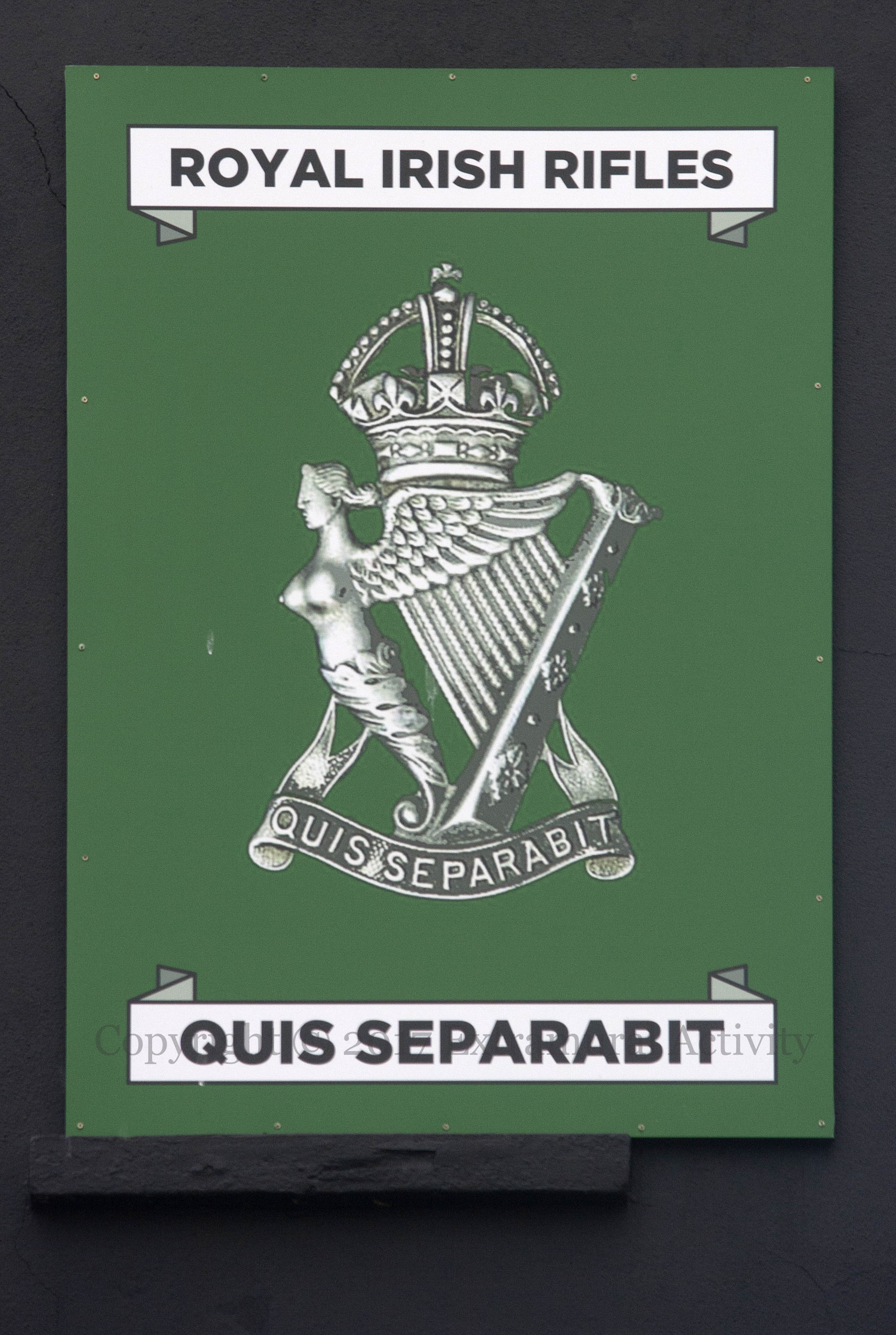
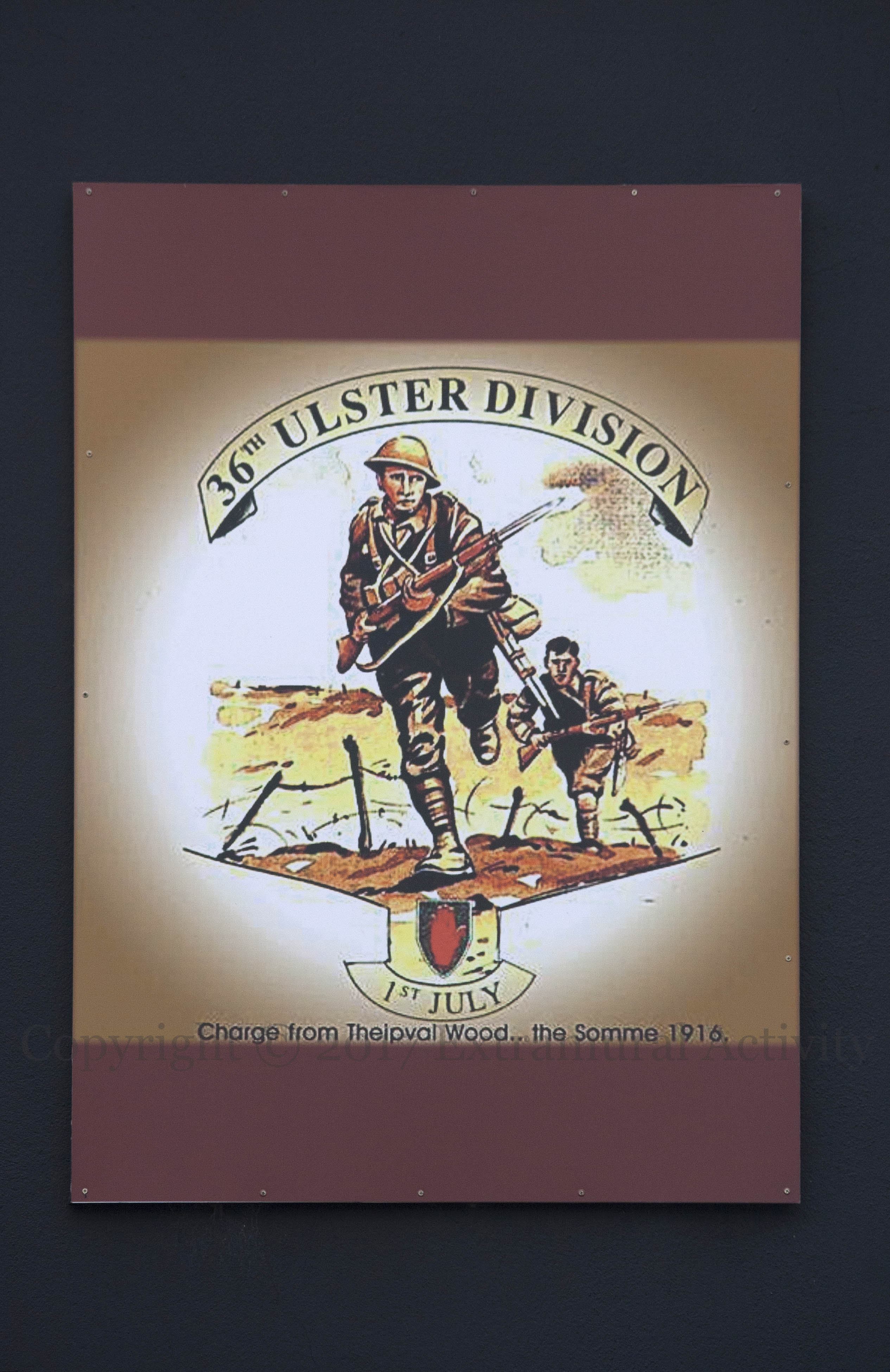
Close-ups of the four regimental insignia are included below. “Nec Aspera Terrant [sic, for “terrent”]”, meaning “frightened by no difficulties”, was the motto of the Inniskilling Fusiliers, who fought in both Boer Wars and both World Wars – its battalions saw action at Gallipoli and on the Western front – before being amalgamated in the Royal Irish Rangers in 1968, along with the Royal Ulster Rifles and the troop featured in the third image, the Royal Irish Fusiliers. Their arms are shown along with those of the Royal Irish Rifles and a board commemorating the charge from Thiepval Wood during the Somme
 Seosamh Mac Coille Collection