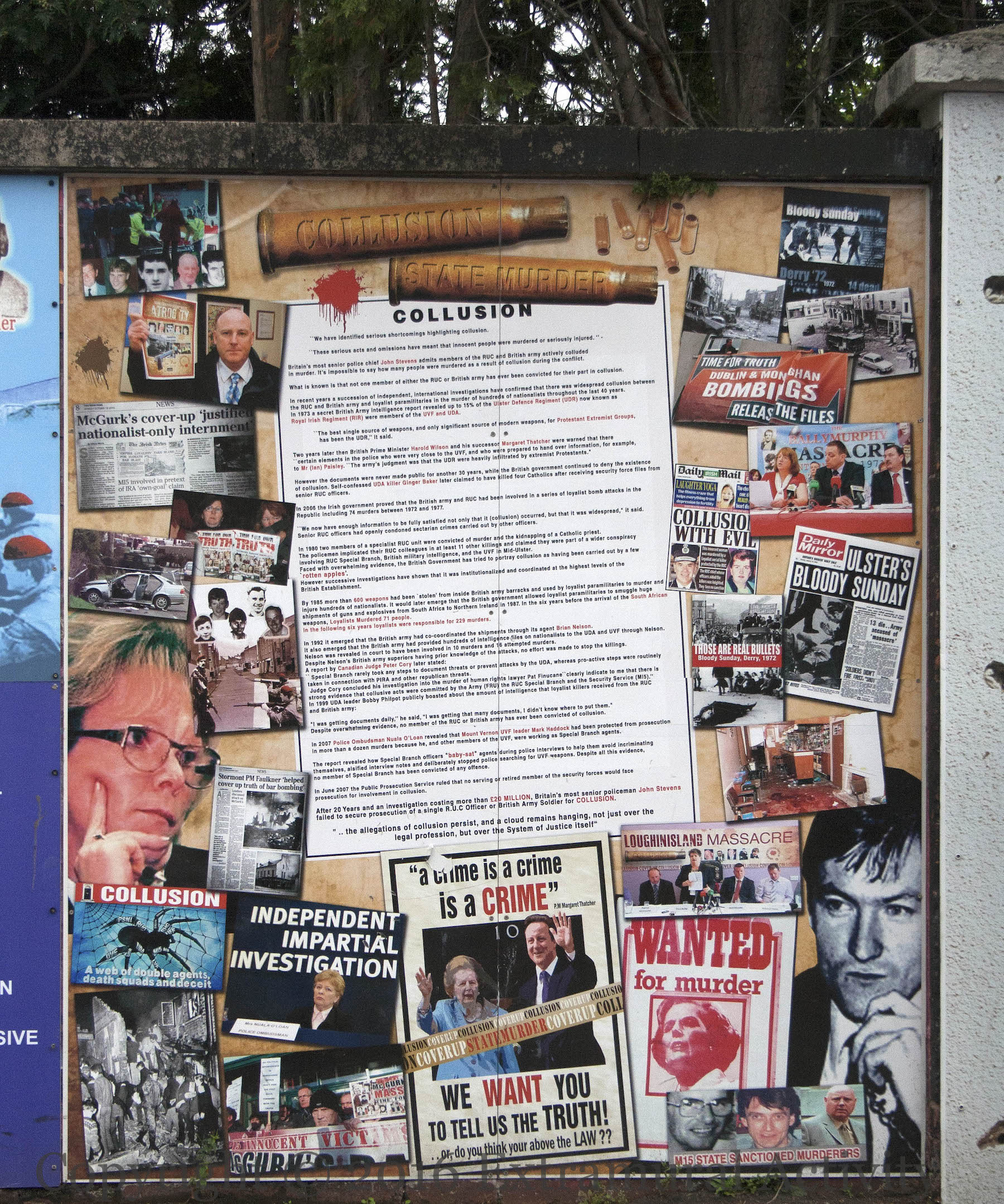
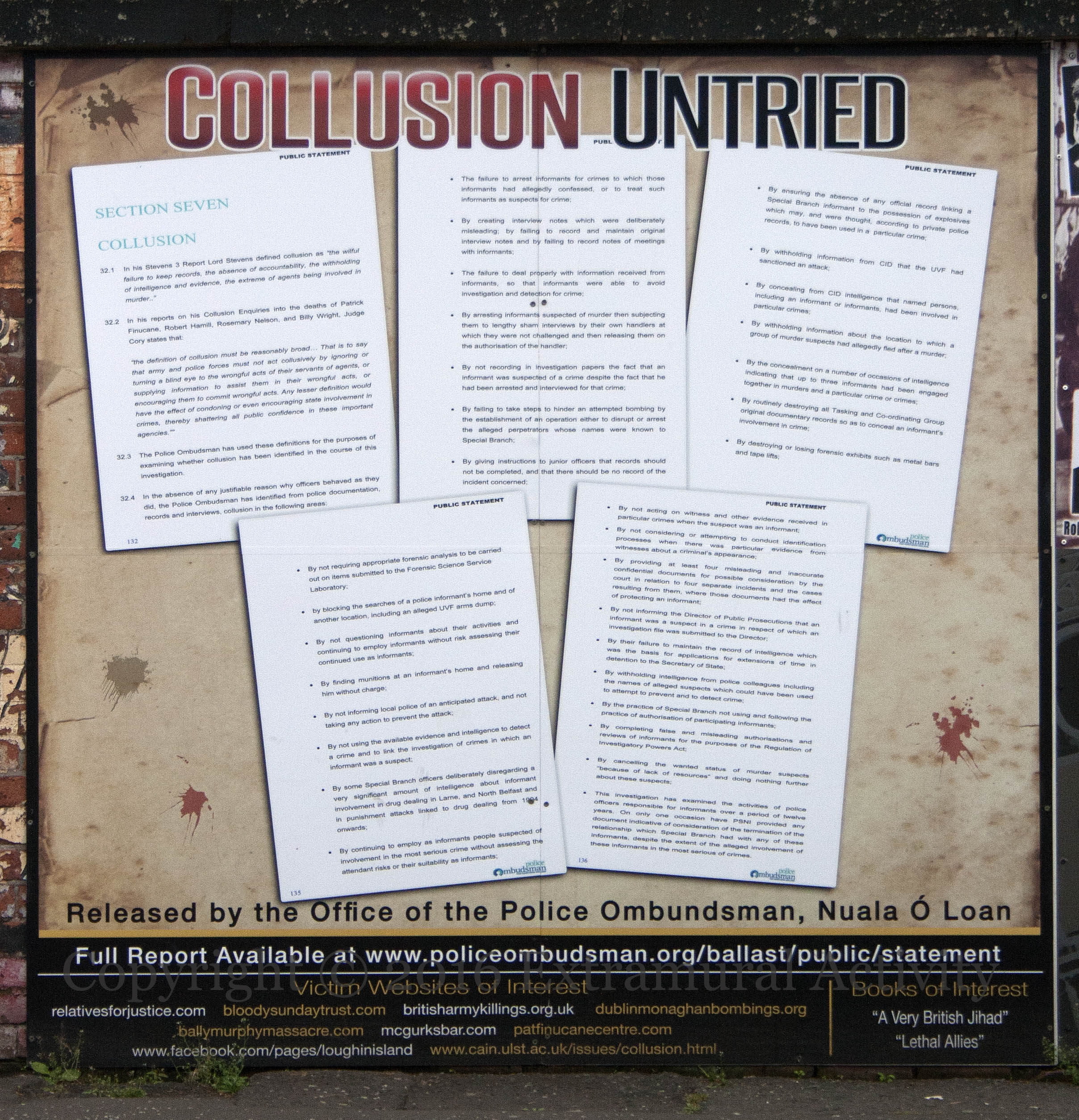
Two boards about collusion in Beechmount Avenue. The first chronicles (both in words and images) alleged instances of collusion between the RUC and loyalist paramilitaries, citing John Stevens, Peter Cory, and Nuala O’Loan – pages from the 2007 O’Loan report are shown in the second, below.
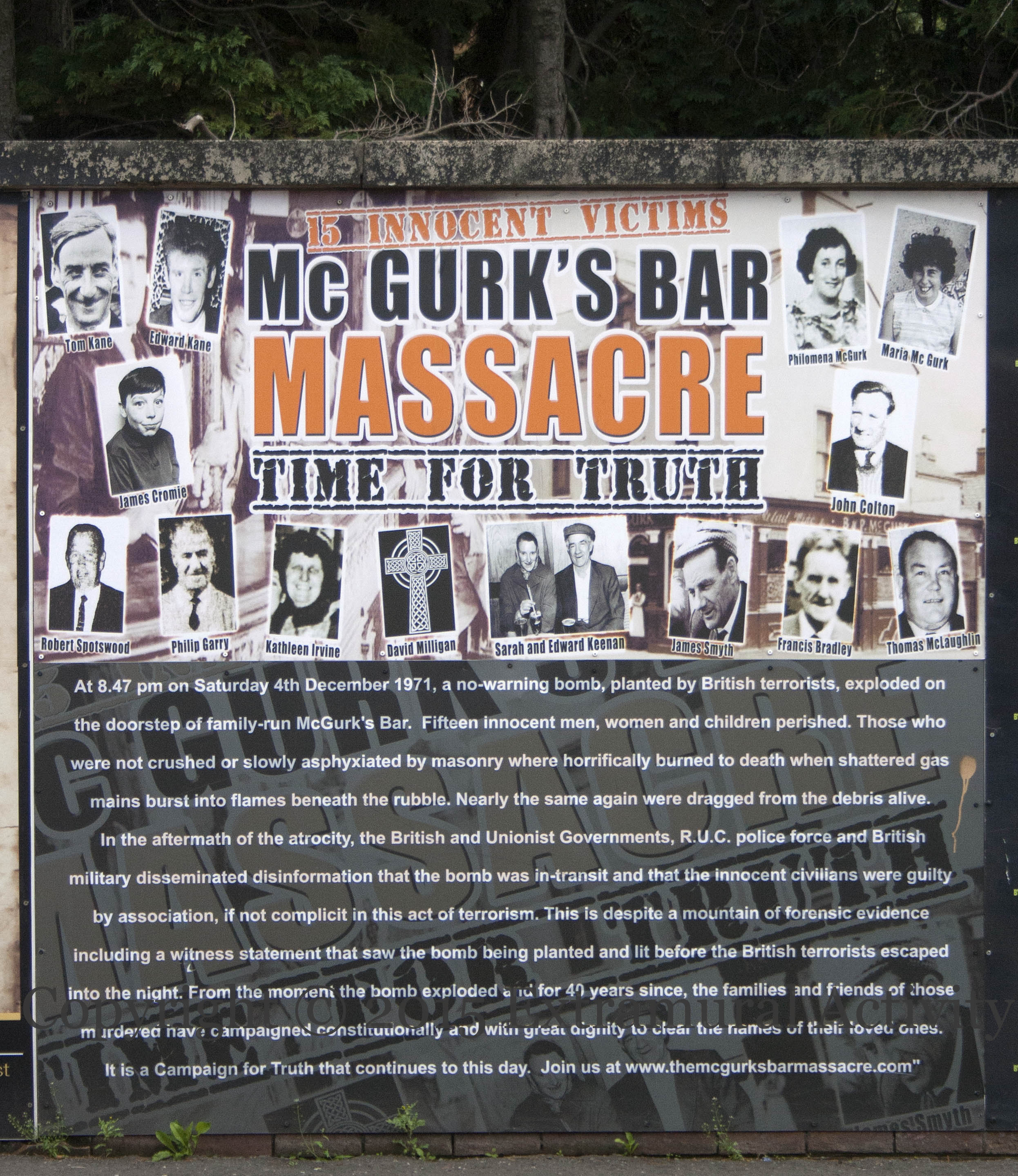
The McGurk’s Bar bombing of December, 1971 killed fifteen people – the most in a single incident during the troubles – capping what had already been a bloody year, including the “Ballymurphy Massacre” of July, in which 11 died, and starting another round of killings that would spread into the new year. Campaigners for an inquiry were busy this week in both Dublin and Belfast (Irish News).
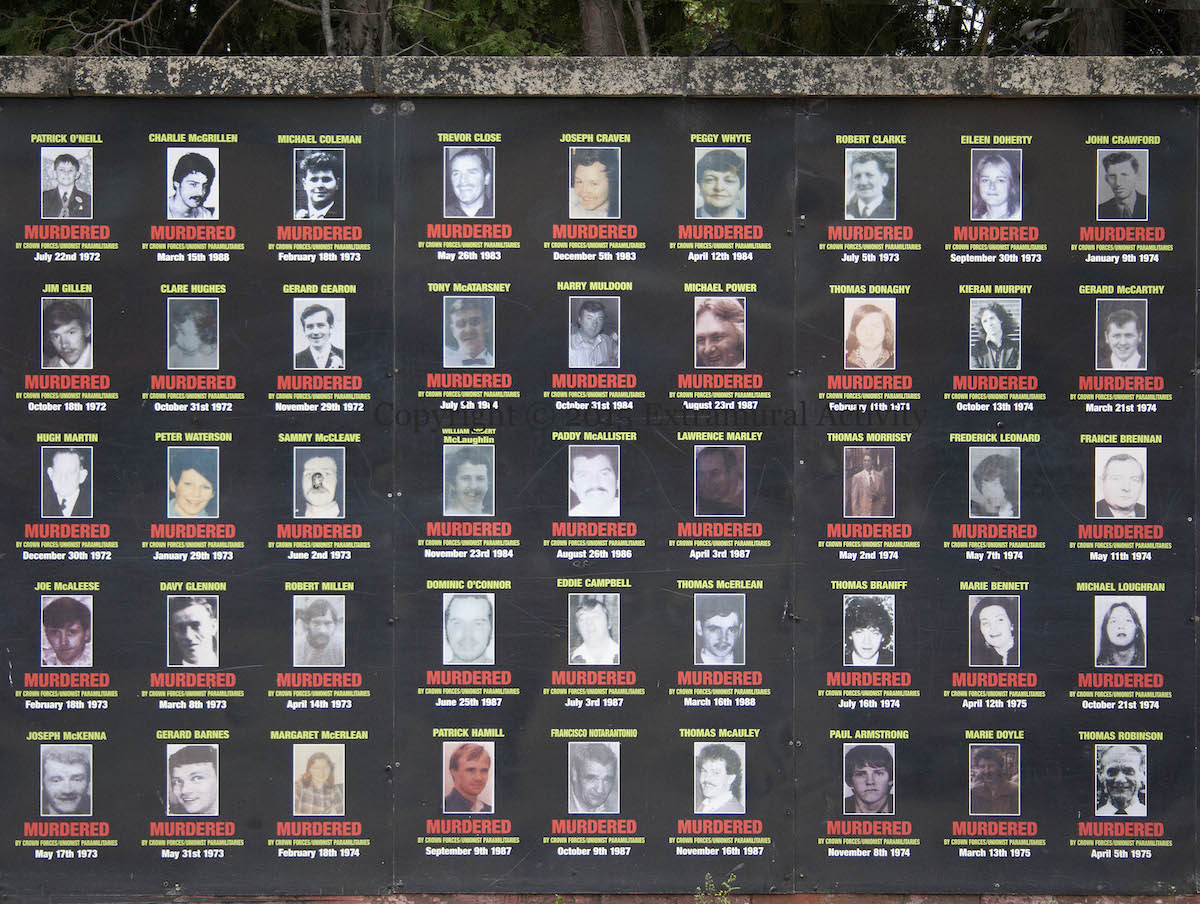
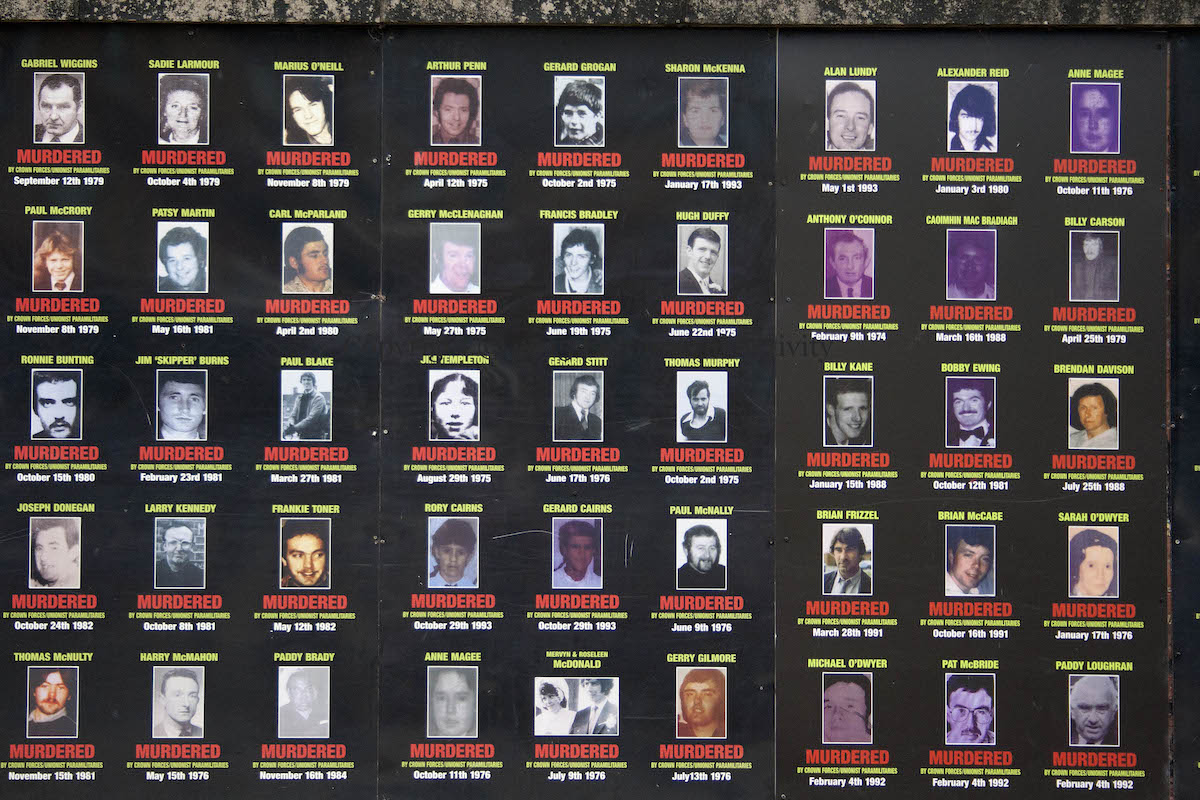
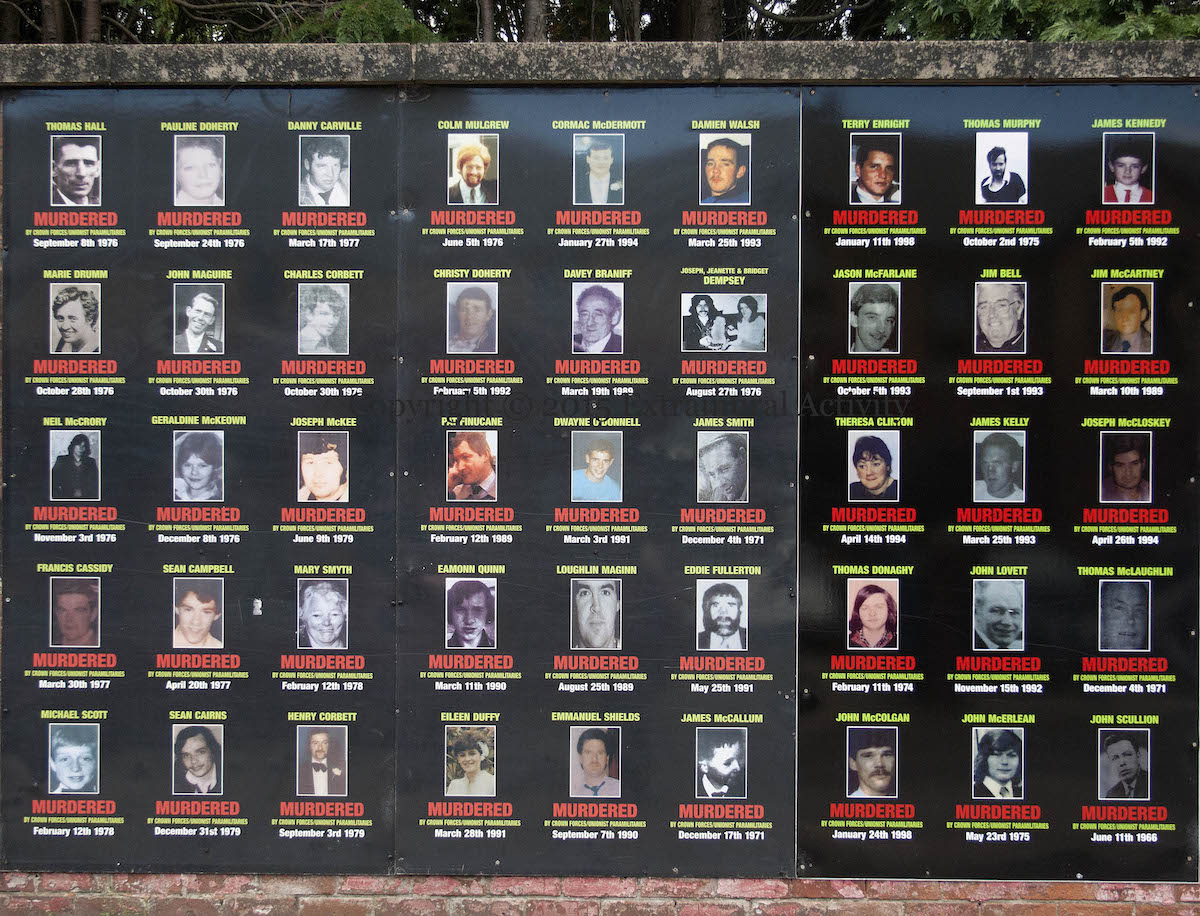
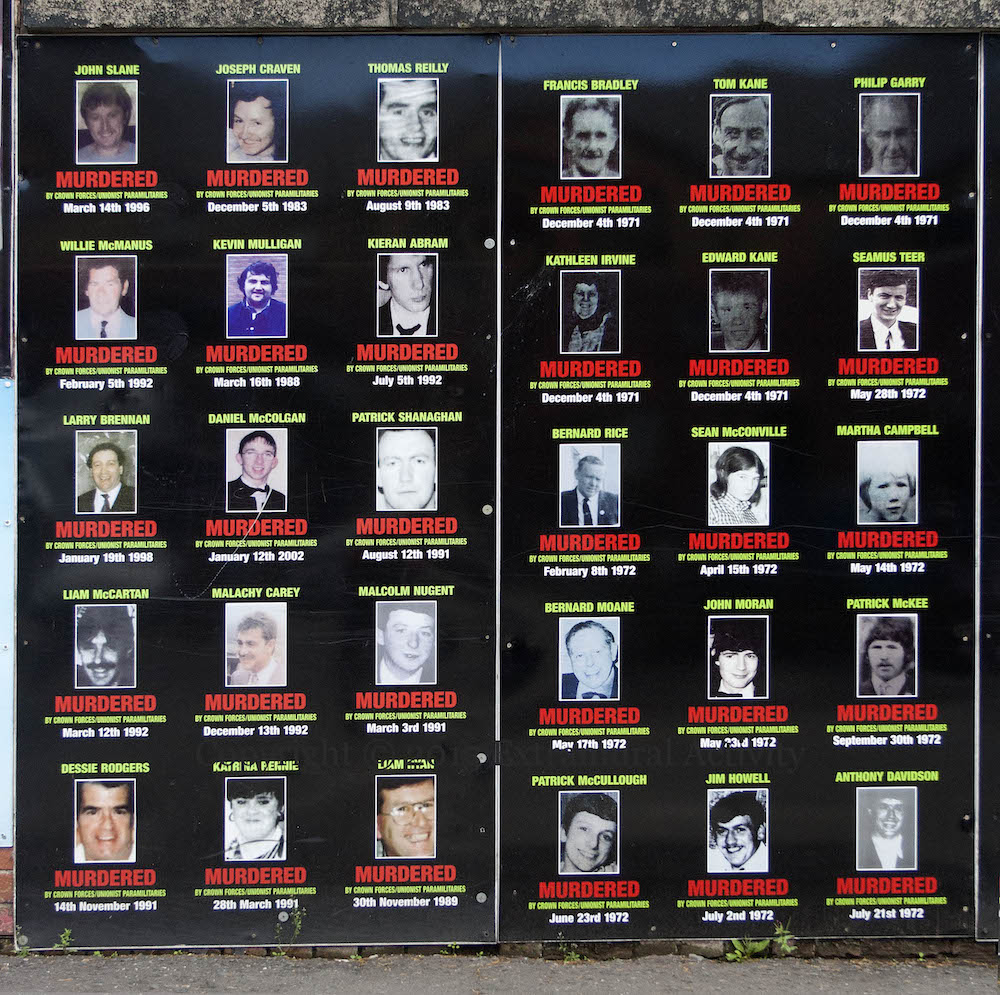
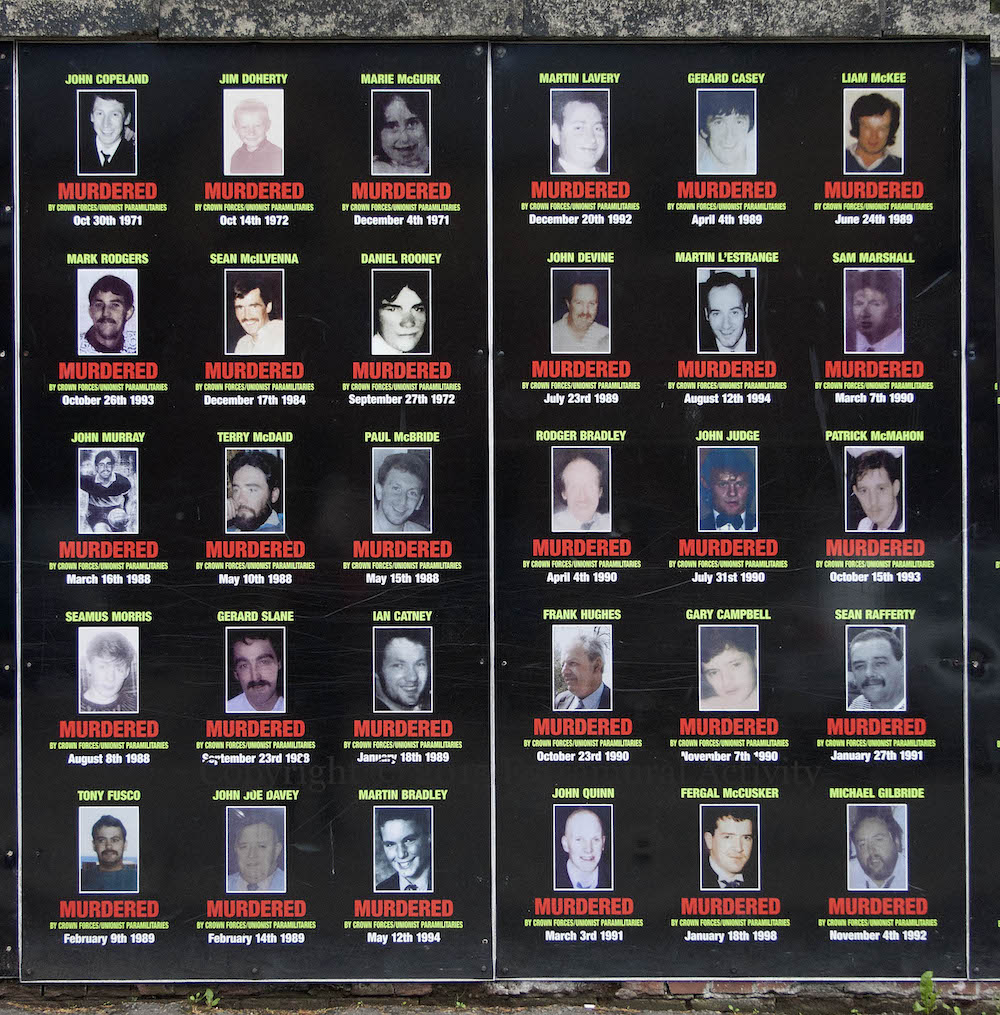
The first nine panels of the ‘murdered’ follow to the right of the McGurk’s Bar board, presented here three-at-a-time. Note that the ninth panel (with Terry Enright in the top left) was previously the 11th panel; it is not clear why it has been moved left.
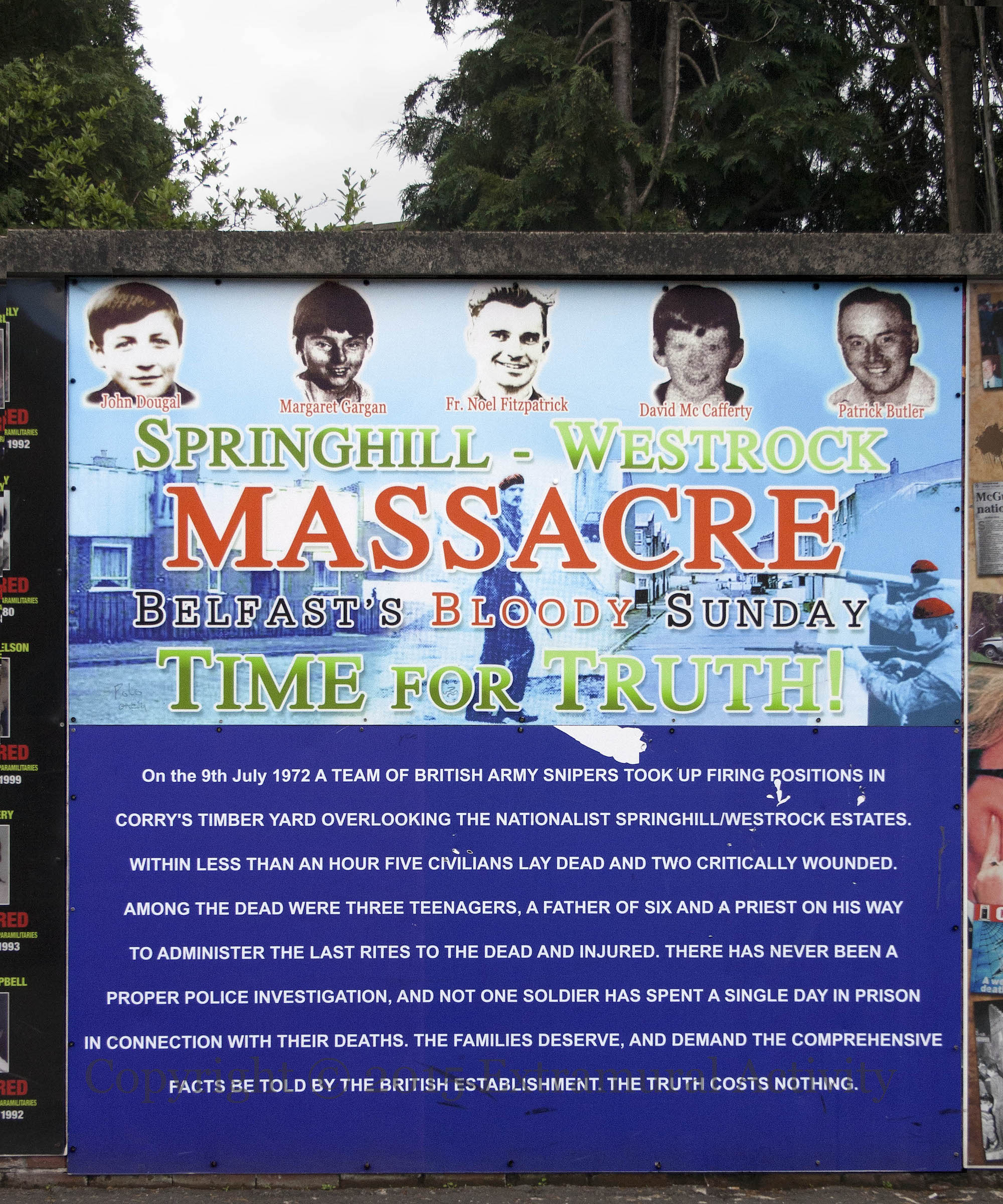
The British soldiers on the right of the board above are given red berets to indicate the Paratroop Regiment, which was the regiment involved in Derry’s Bloody Sunday.
“Springhill–Westrock massacre. Belfast’s Bloody Sunday. Time for truth! On the 9th July 1972 a team of British Army snipers took up firing positions in Corry’s timber yard overlooking the nationalist Springhill/Westrock estates. Within less than an hour five civilians lay dead and two critically wounded. Among the dead were three teenagers, a father of six and a priest on his way to administer the last rites to the dead and injured. There has never been a proper police investigation, and not one solider has spent a single day in prison in connection with their deaths. The families deserve, and demand the comprehensive facts be told by the British establishment. The truth costs nothing.”
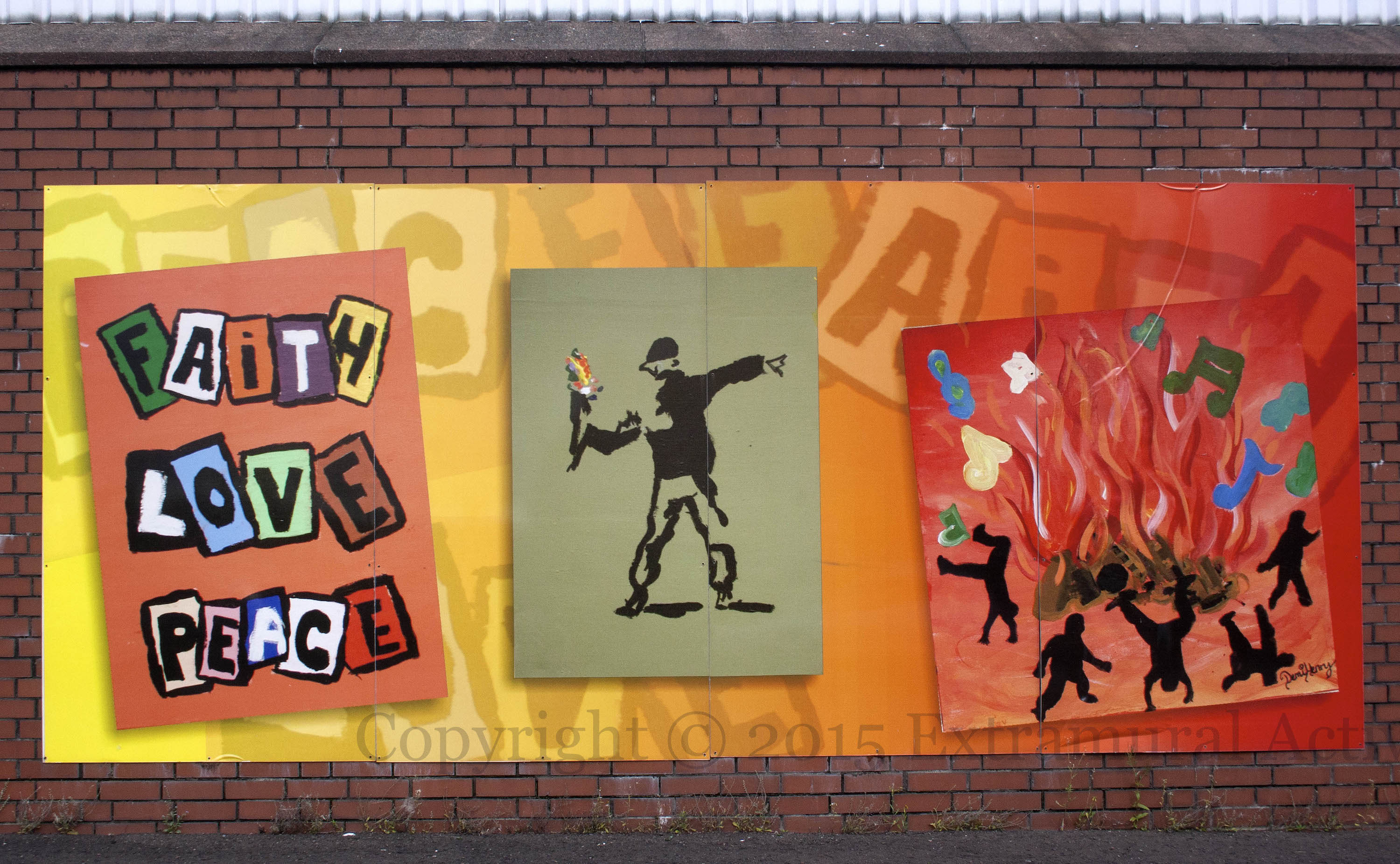
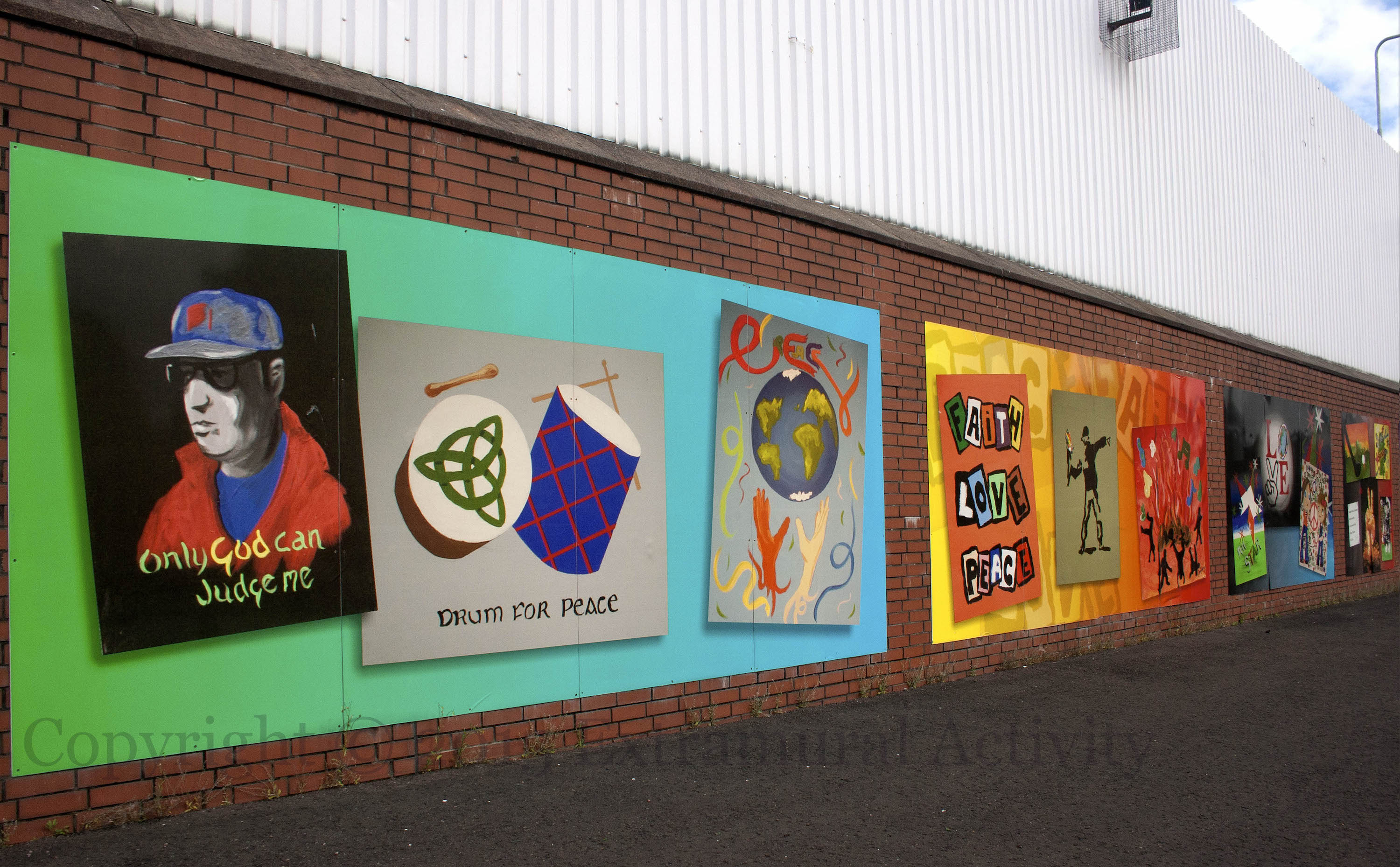
Bonfire break-dancers and bouquet-throwing rioters outside the Woodbourne PSNI station, as well as a lambeg drum side-by-side with a bodhrán and “Only God can judge me”, here used (probably) as an anti-suicide message rather than as an excuse to take the law into one’s own hands.
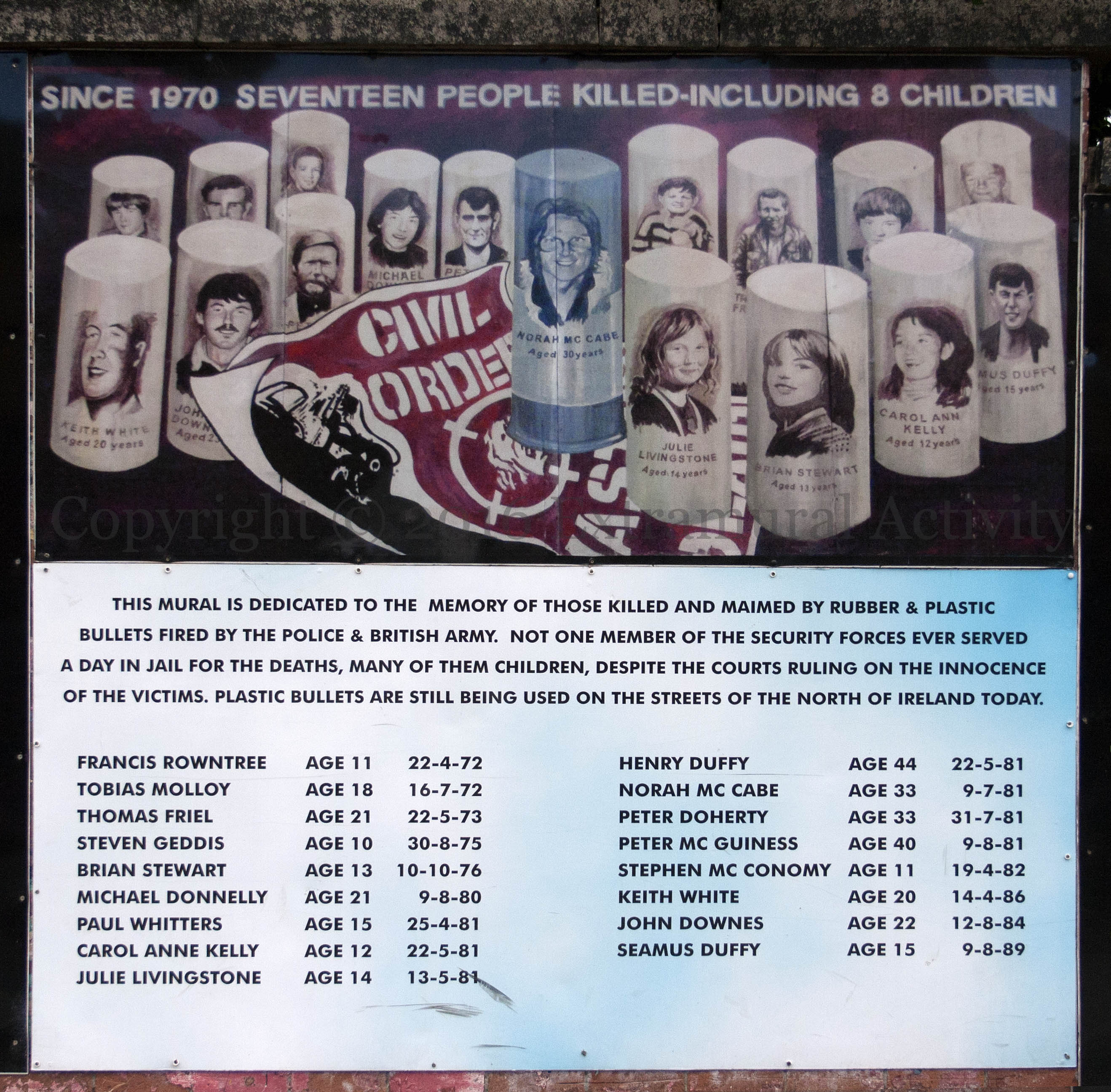
“Since 1970 seventeen people killed – including eight children”. A vintage poster against plastic bullets (see also Plastic Death in the Peter Moloney Collection for a mural) is part of this Beechmount Avenue mural showing a candle for each of the victims. The first listed (Rowntree, Molloy, Friel) were killed by rubber bullets, the rest by plastic; plastic bullets took over from rubber bullets in 1975 (WP).
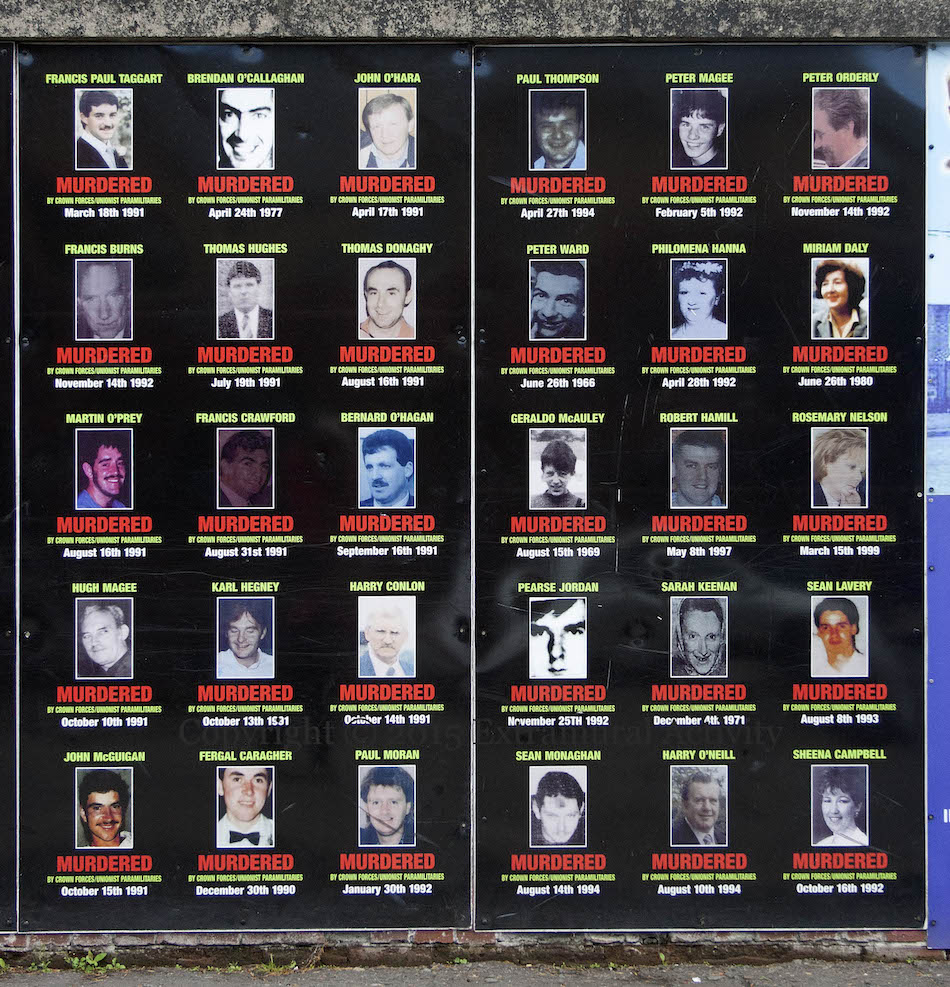
Panels 10-15 of the ‘murdered’ follow to the right of the Plastic Bullets board, here presented two-at-a-time. The 11th panel (the second one shown here, with Francis Bradley in top left) was previously the ninth panel; it is not clear why its position was swapped.
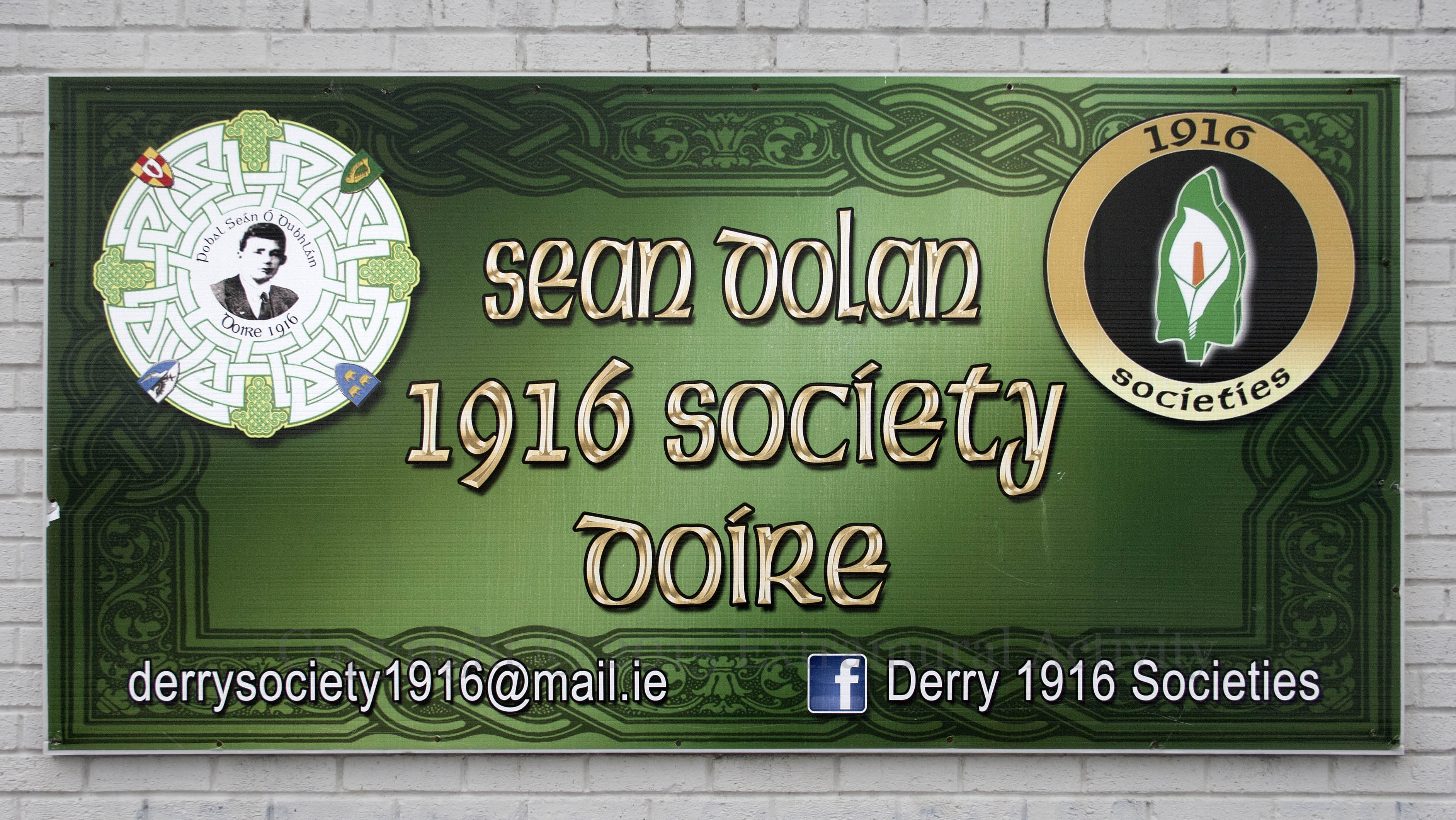
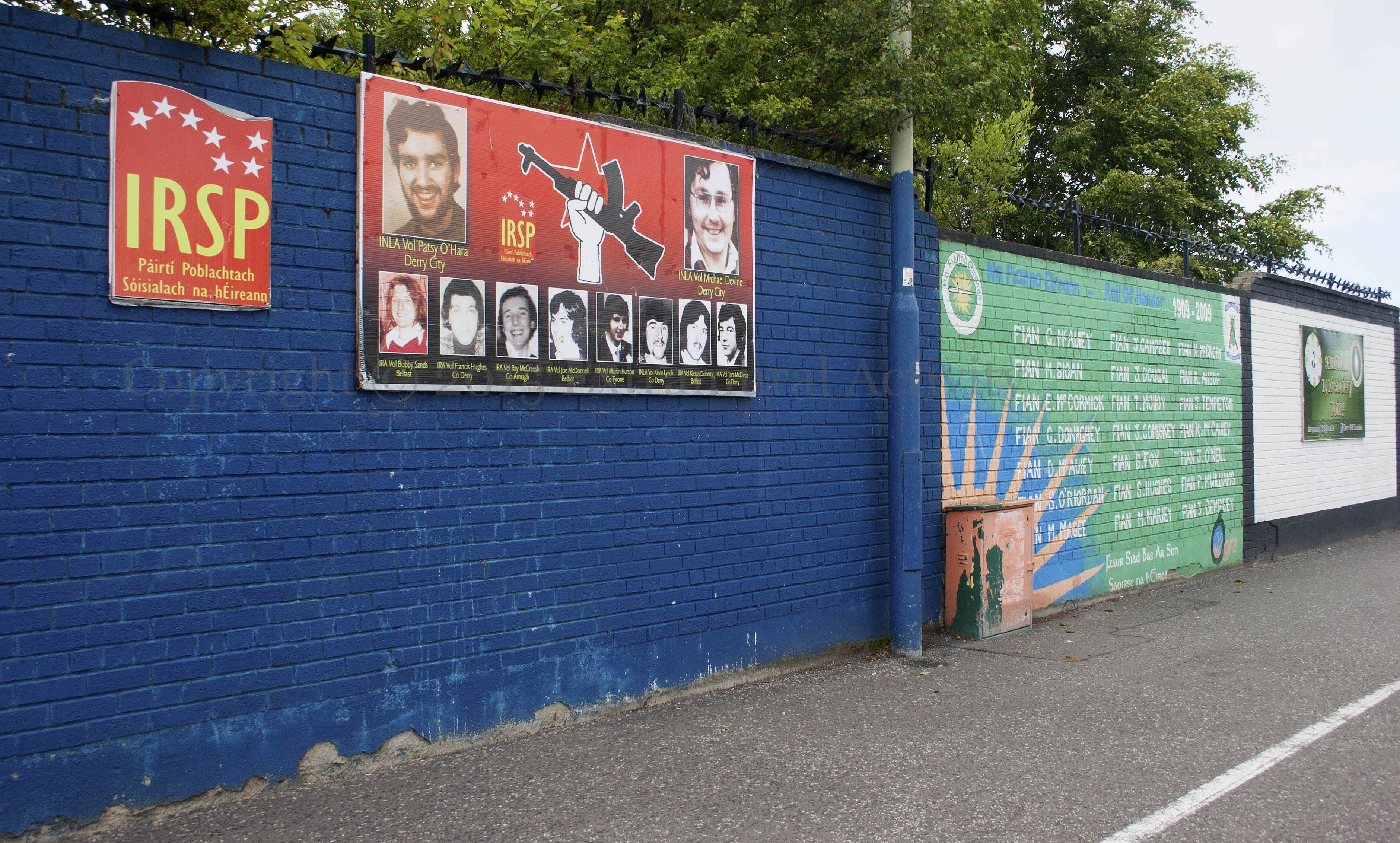
The Derry branch of the 1916 Societies (Fb) is named after Sean Dolan, an IRA volunteer interned at the outbreak of WWII on the prison ship Al Rawdah (WP | saoırse32) before being moved to Crumlin Road gaol. He was released on grounds of ill health shortly before dying in 1941 at age 28 in Derry. The title of this entry comes from Dolan’s gravestone, which is in Ardmore (findagrave).
It was the 1916 Societies that hoisted an Irish tricolour from the roof of Stormont in June 2015 (BBC).
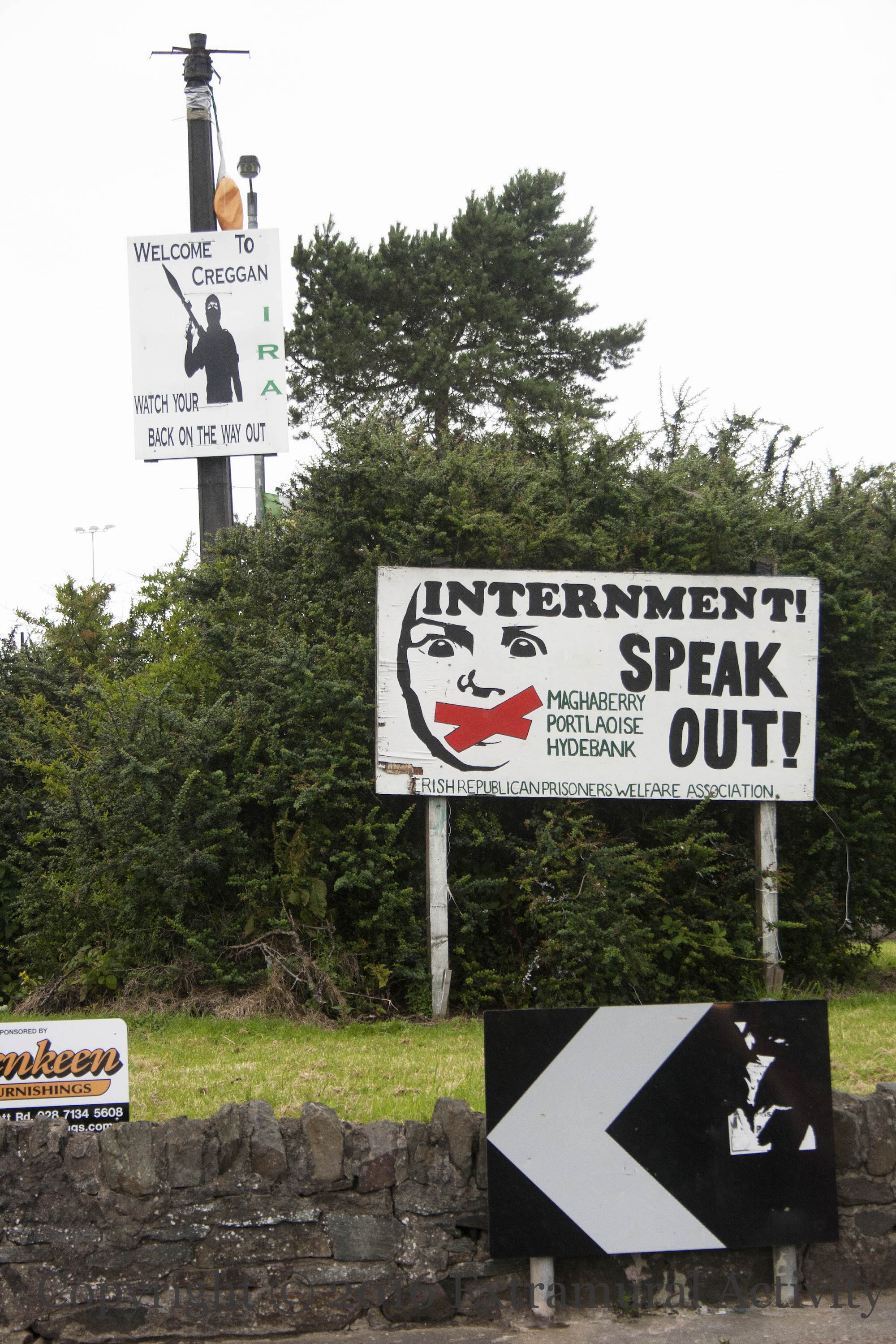
Two republican boards at the Eastway roundabout on the eastern side of Creggan estate. The upper board shows an IRA volunteer with RPG-luancher – “Welcome to Creggan. Watch your back on the way out.” – the other is an IRPWA board urging people to speak out against internment of republicans in Maghaberry, Portlaoise, and Hydebank.
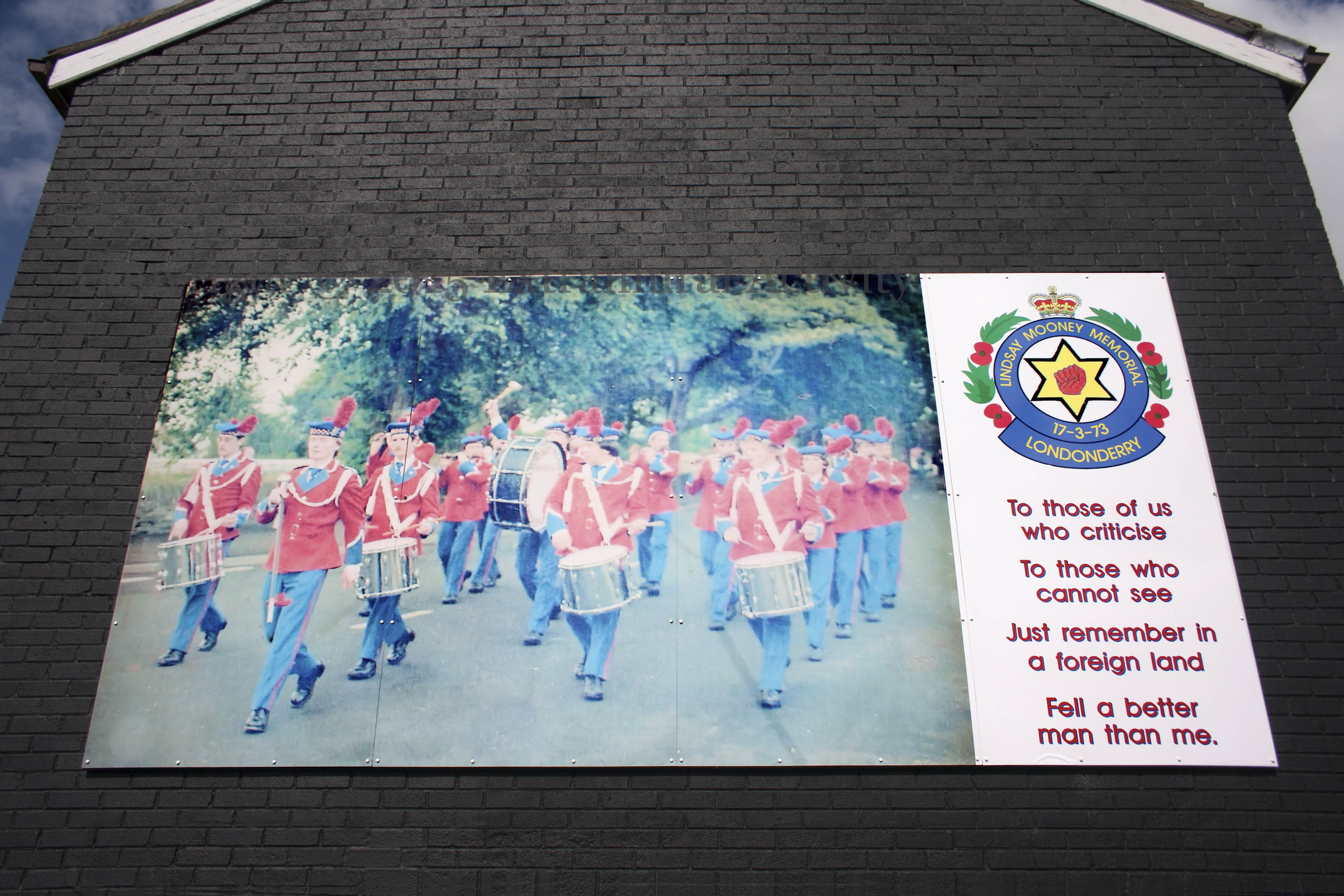
The [Sergeant] Lindsay Mooney Memorial Flute Band was formed in 1973 after the St. Patrick’s day death of Lindsay Mooney, a UDA member killed by the premature explosion of a bomb near Lifford, County Donegal (Sutton). The band dissolved in 1993 but commemorative nights are still held (NI World).
The board above is in the Lincoln Court area of Londonderry, from where Mooney and the band both hailed. “To those of us who criticise, to those who cannot see, just remember in a foreign land fell a better man than me.”
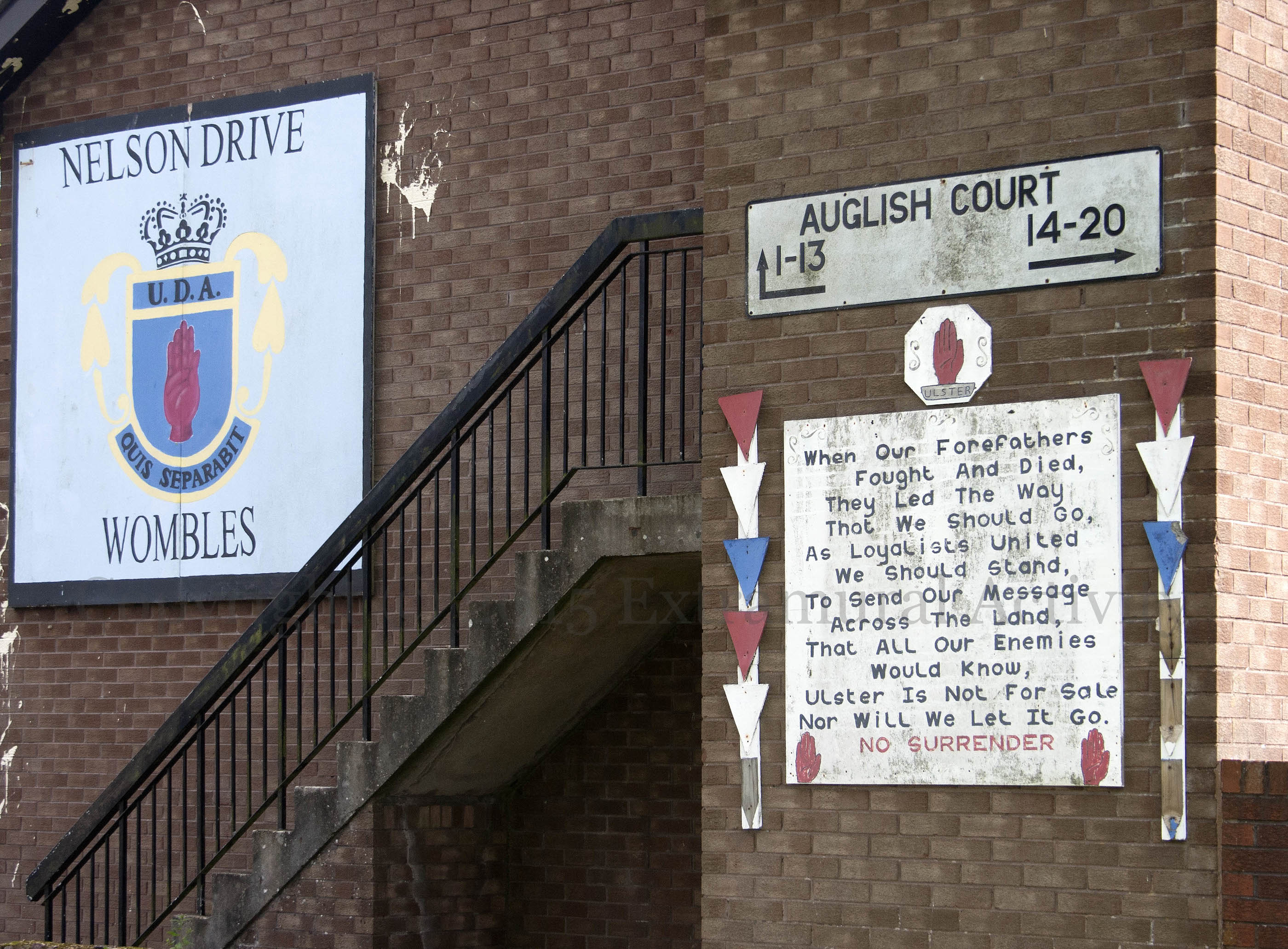
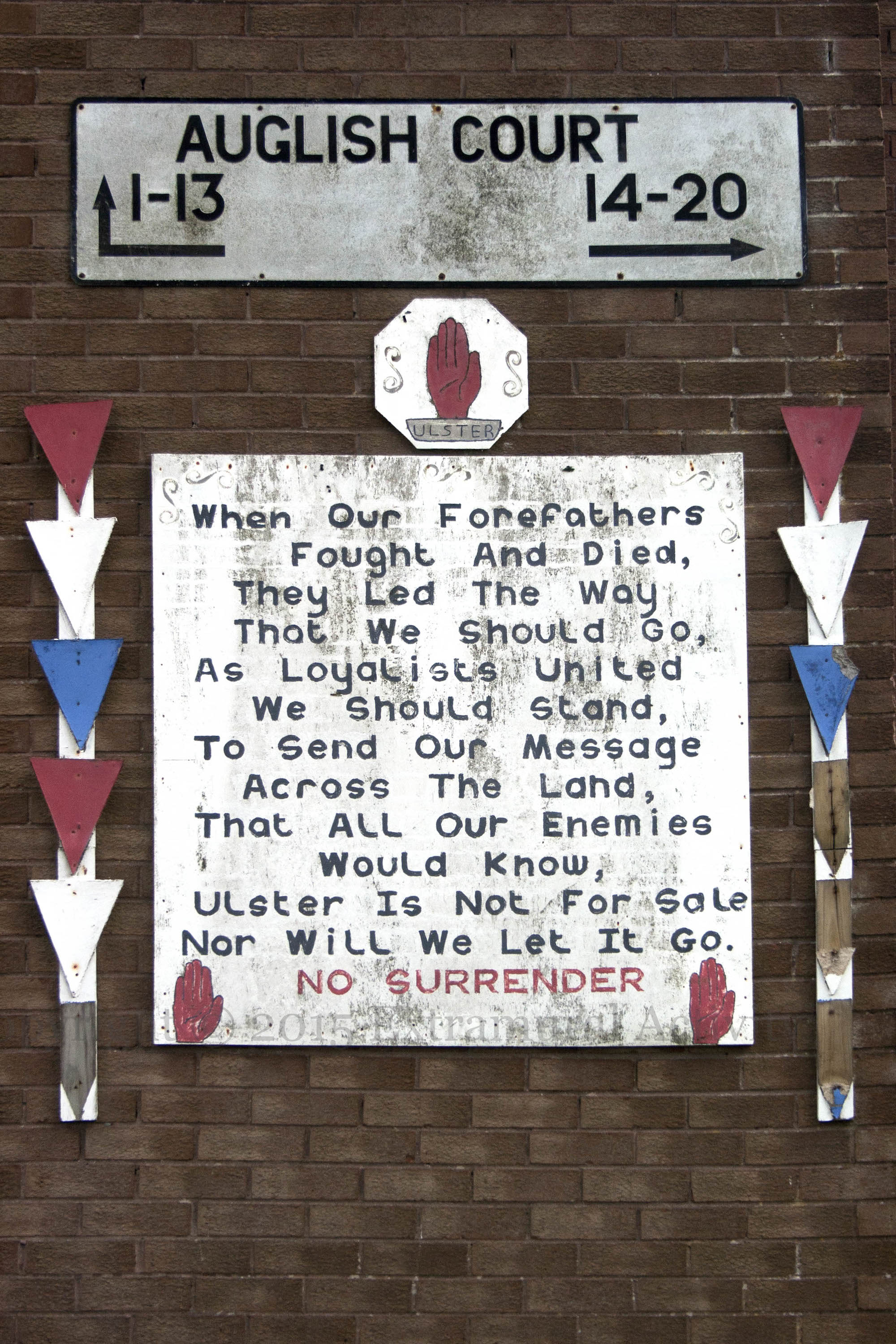
Quiz: The UDA are called “Wombles” because they resemble the stop-motion characters of the BBC children’s show in (a) their fur-lined parkas, (b) their parading, or (c) their ability to acquire anything? You can find all three explanations on-line. Originally the name seems to have been a derogatory one, used by their UVF rivals, but it was adopted by the group itself. A close-up of the text on the right is below.