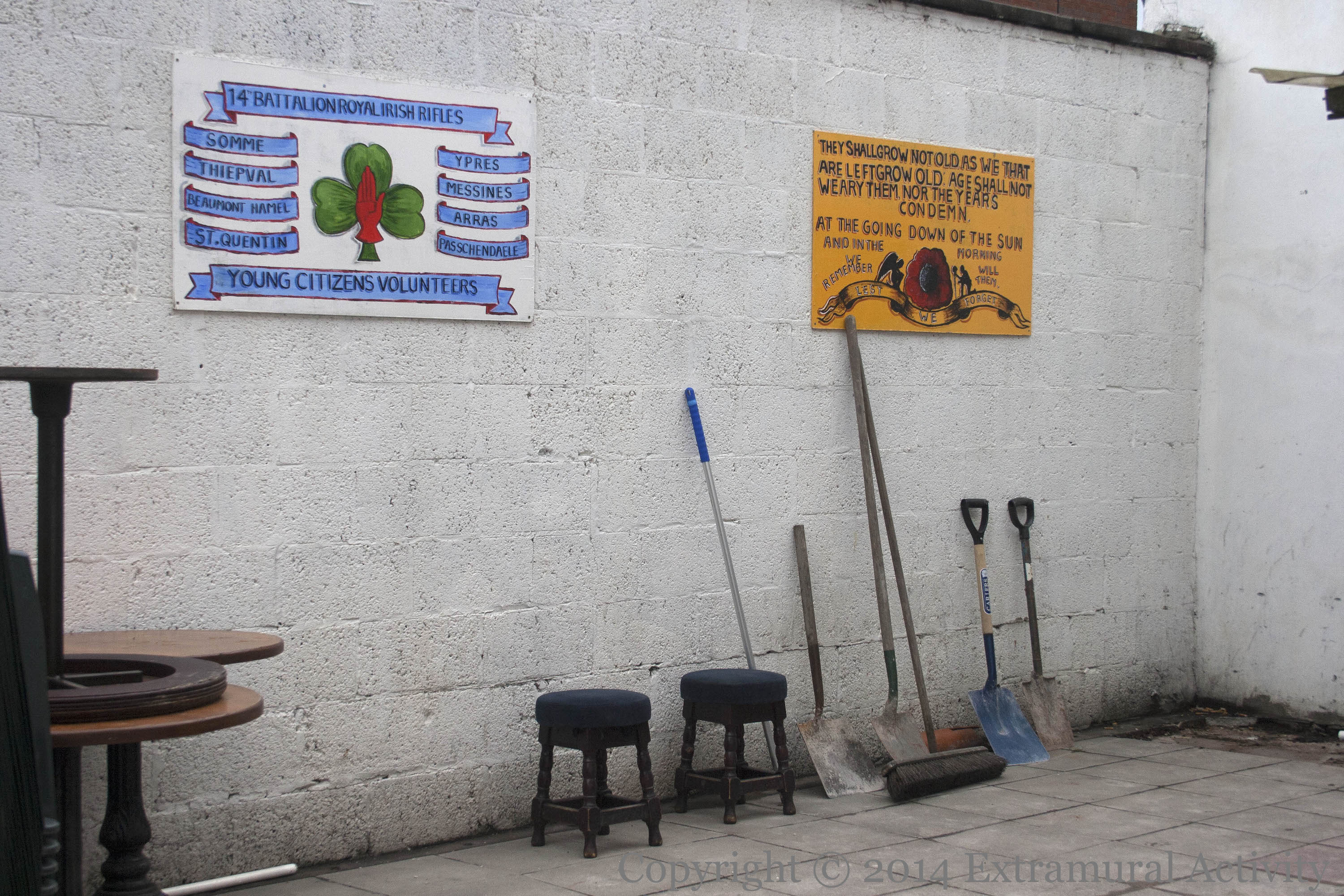
A selection of shovels and brooms stand to attention in the courtyard of The Hideout bar, in Donegall Pass, beneath boards to the 14th battalion of the Royal Irish Rifles and soldiers in WWI.
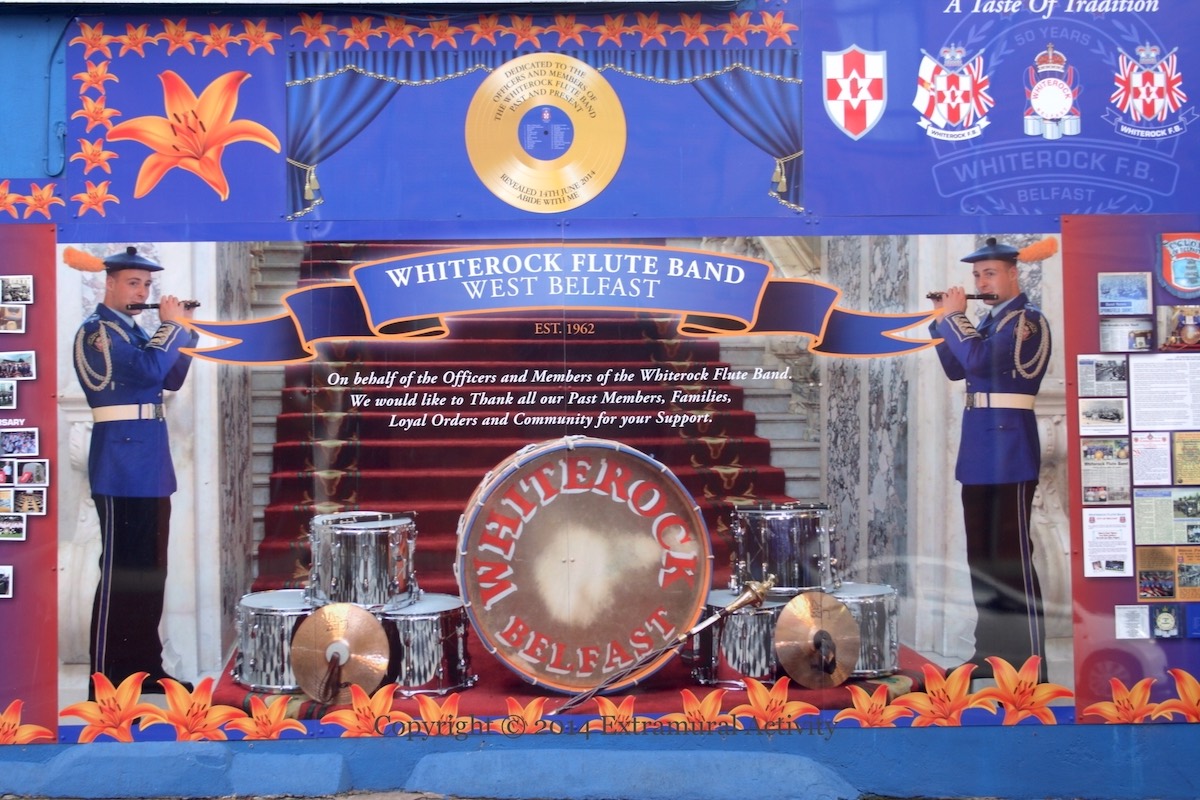
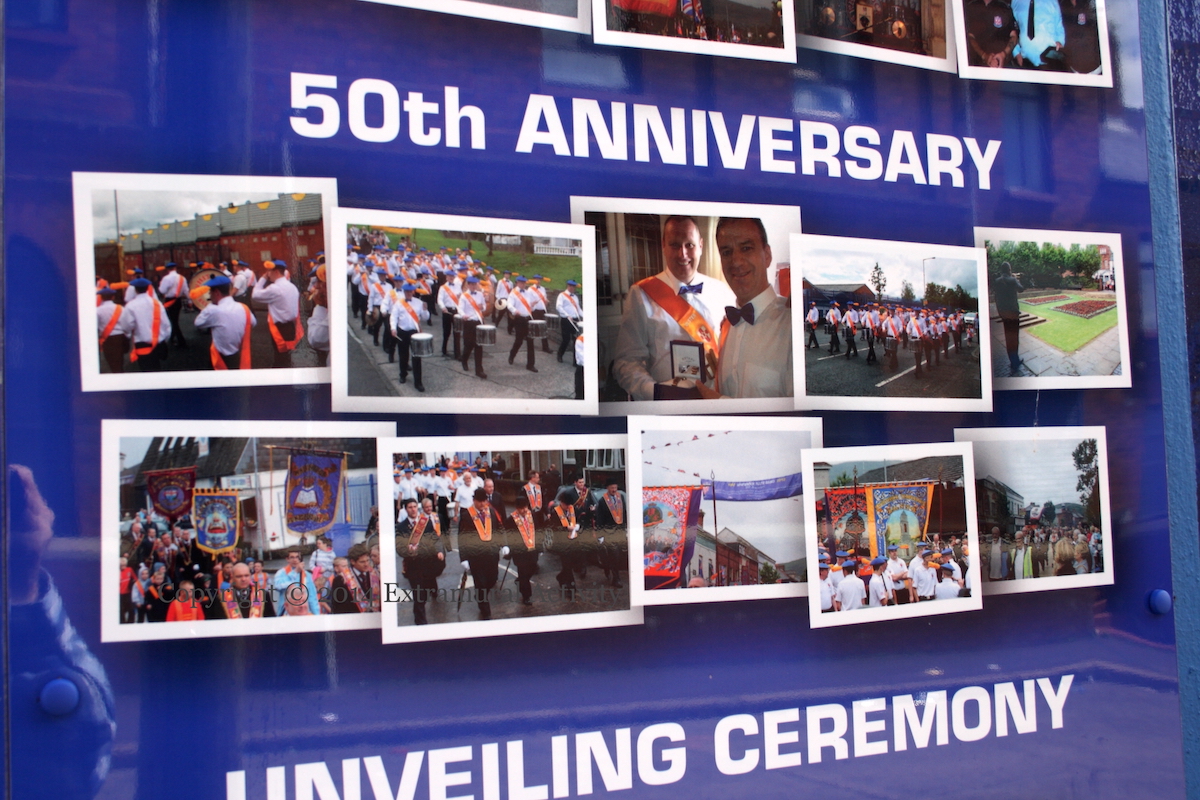
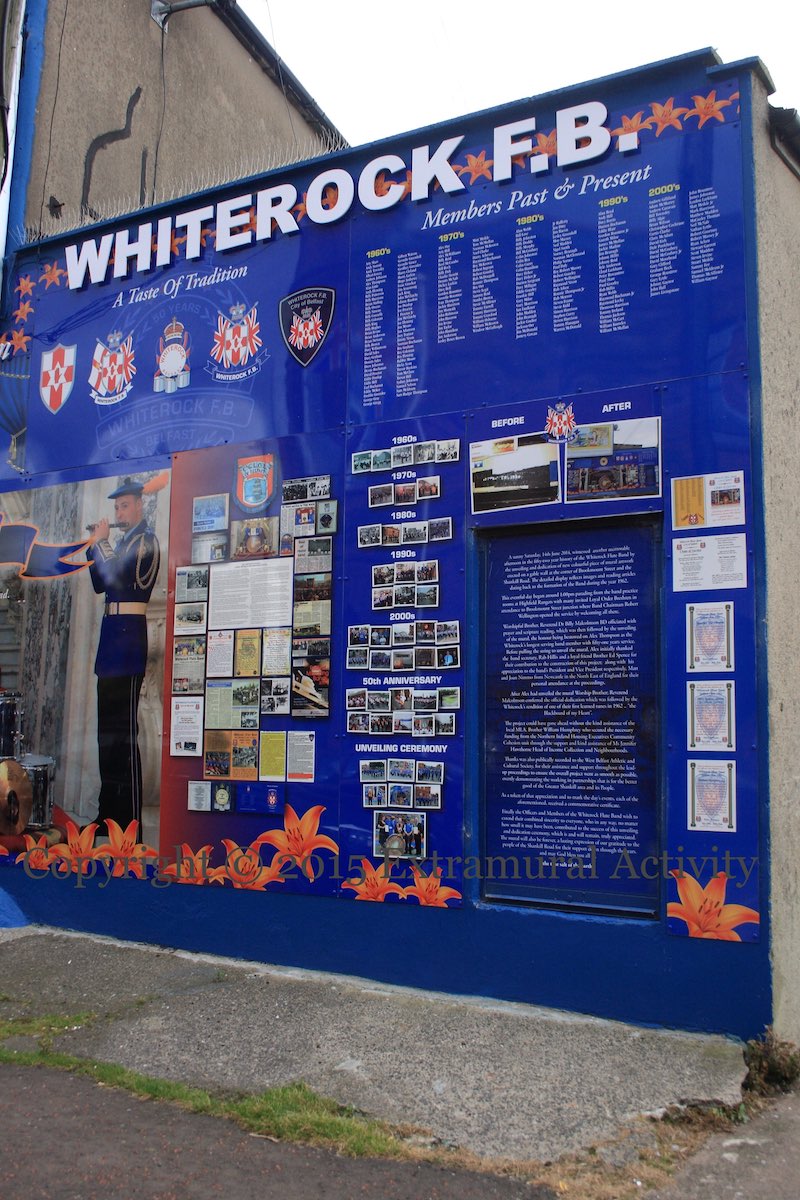
A pre-launch version (from May) of the Whiterock Flute Band mural in Brookmount Street can be seen in the Peter Moloney collection; this includes the main panel and the ‘brief history’ on the left. Since then a golden disc has been mounted above the main panel, and to the right have been added another panel of photographs, a list of members past and present, and an updated history panel. [The final image, from 2015, shows the addition of “Whiterock F.B.” in bold, white, lettering along the top right
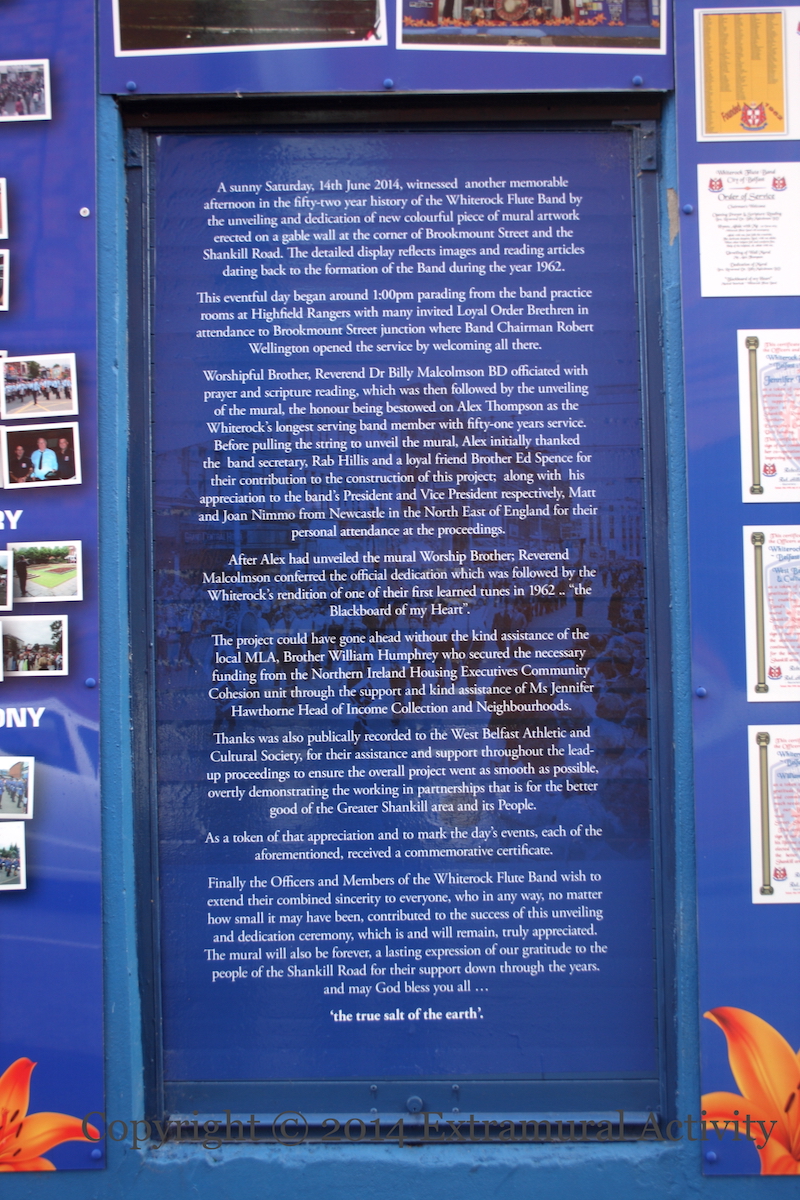
“A sunny Saturday, 14th June 2014, witnessed another memorable afternoon in the fifty-two year history of the Whiterock flute band by the unveiling and dedication of new colourful piece of mural artwork erected on the gable wall at the corner of Brookmount Street and the Shankill Road. The detailed display reflects images and reading articles dating back to the foundation of the band during the year 1962.
This eventful day began around 1:00 pm parading from the and practice rooms at Highfield Rangers with many invited Loyal Order Brethren in attendance to Brookmount Street junction where Band Chairman Robert Wellington opened the service by welcoming all there.
Worshipful Brother, Reverend Dr Billy Malcolmson BD officiated with prayer and scripture reading, which was then followed by the unveiling of the mural, the honour being bestowed on Alex Thompson as the Whiterock’s longest serving band member with fifty-one years of service. Before pulling the string to unveil the mural, Alex initially thanks the band secretary, Rab Hillis and a loyal friend Brother Ed Spence for their contribution to the construction of this project; along with his appreciation to the band’s President and Vice President respectively, Matt and Joan Nimmo from Newcastle in the North East of England for their personal attendance at the proceedings.
After Alex had unveiled the mural Worship Brother; Reverend Malcolmson conferred the official dedication which was followed by the Whiterock’s rendition of one of their first learned tunes in 1962 .. “the Blackboard of my Heart”.
The project could have gone ahead without the kind assistance of the local MLA, Btother William Humphrey who secured the necessary funding from the Northern Ireland Housing Executive’s Community Cohesion unit through the support and kind assistance of Ms Jennifer Hawthorne head of Income Collection and Neighbourhoods.
Thanks was also publically recorded to the West Belfast Athletic and Cultural Society, for their assistance and support throughout the lead-up proceedings to ensure the overall project went as smooth as possible, overtly demonstrating the working in partnership that is for the better good of the Greater Shankill area and its people.
As a token of that appreciation and to mark the day’s events, each of the aforementioned, received a commemorative certificate.
Finally the officers and members of the Whiterock flute band wish to extend their combined sincerity to everyone, who in any way, no matter how small it may have been, contributed to the success of this unveiling and dedication ceremony, which is and will remain, truly appreciated. The mural will also be forever, a lasting expression of our gratitude to the people of the Shankill Road for their support down through the years, and may God bless you all … ‘the true salt of the earth’.”
Update: further additions were made to the display in 2021.
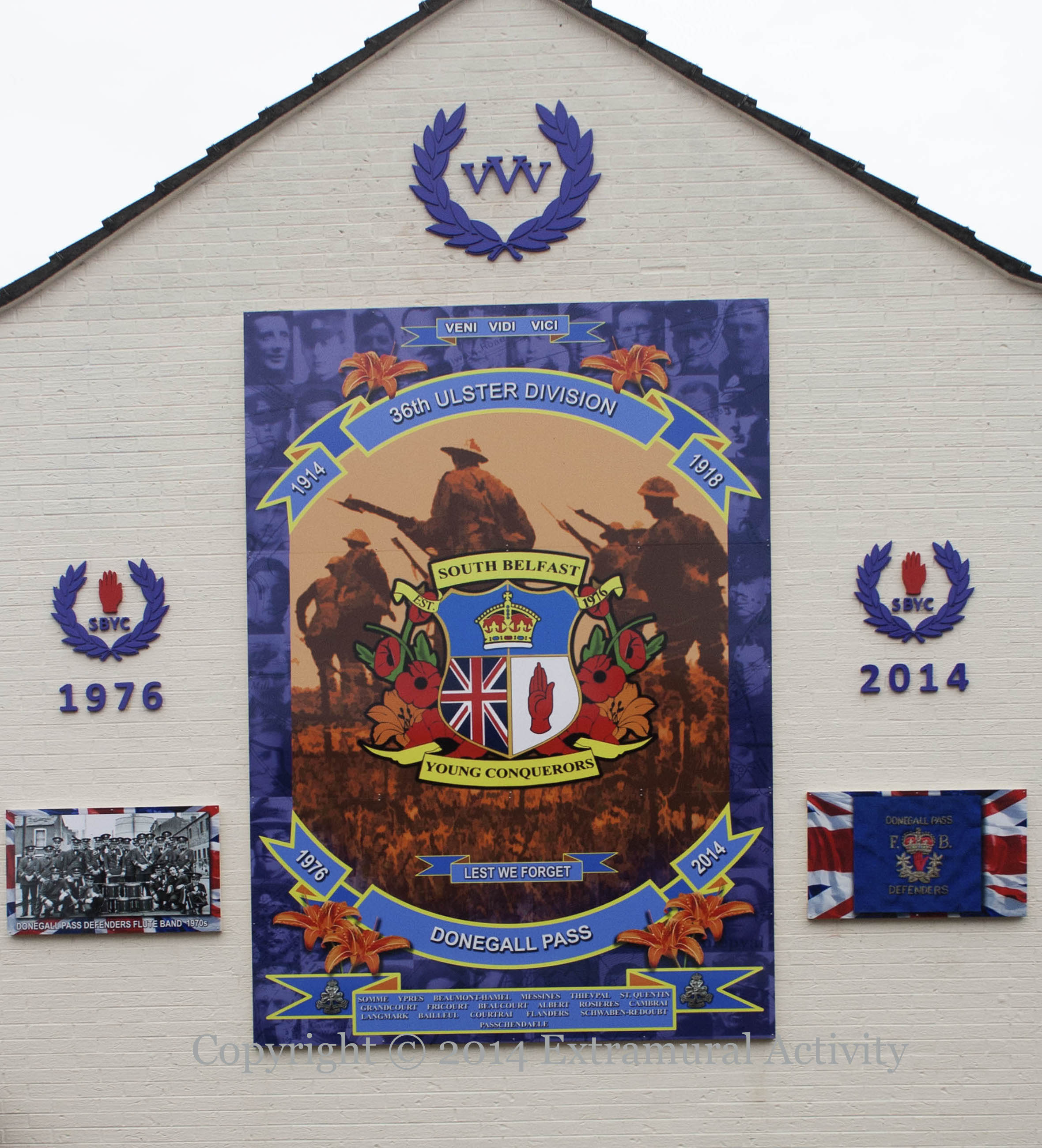
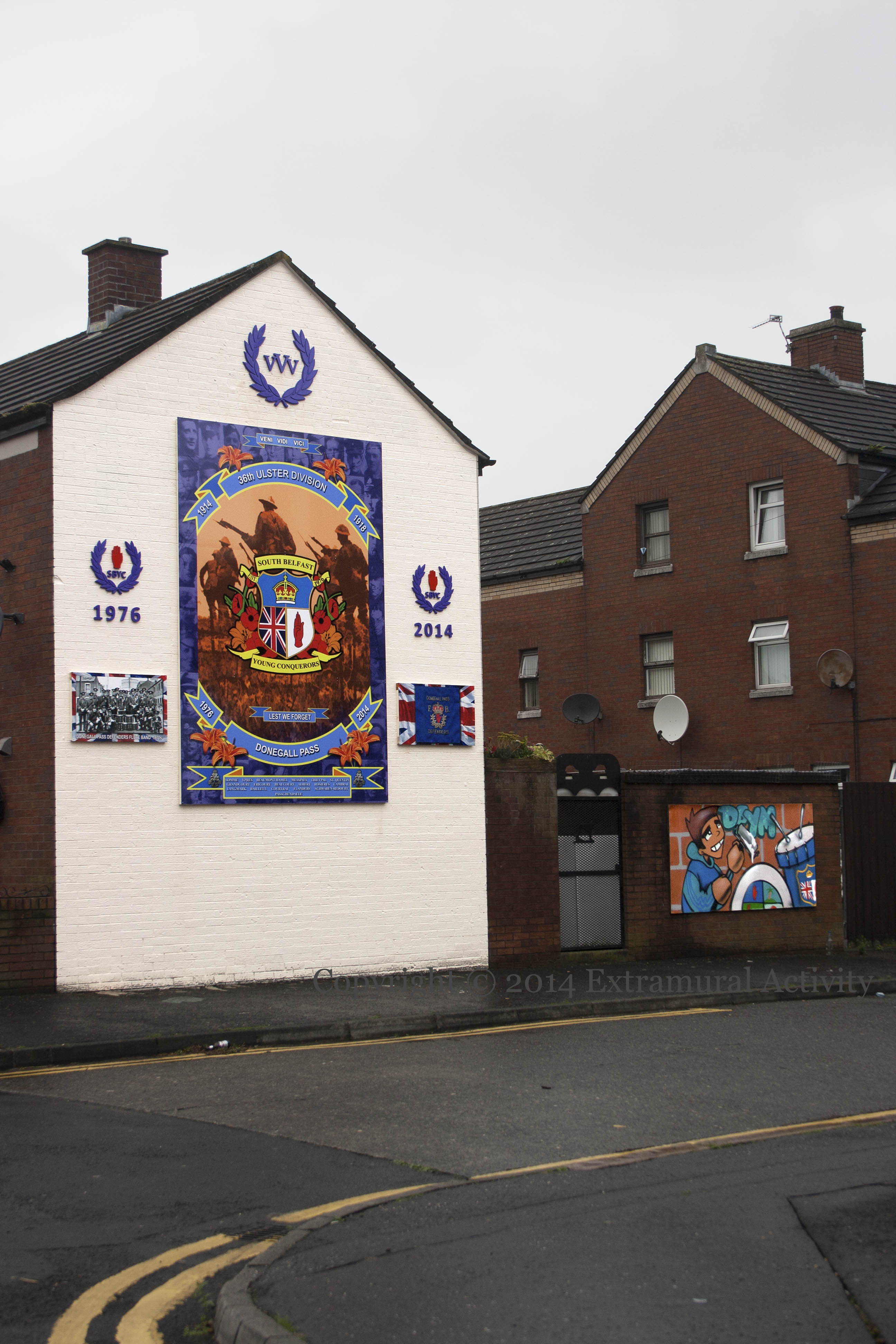
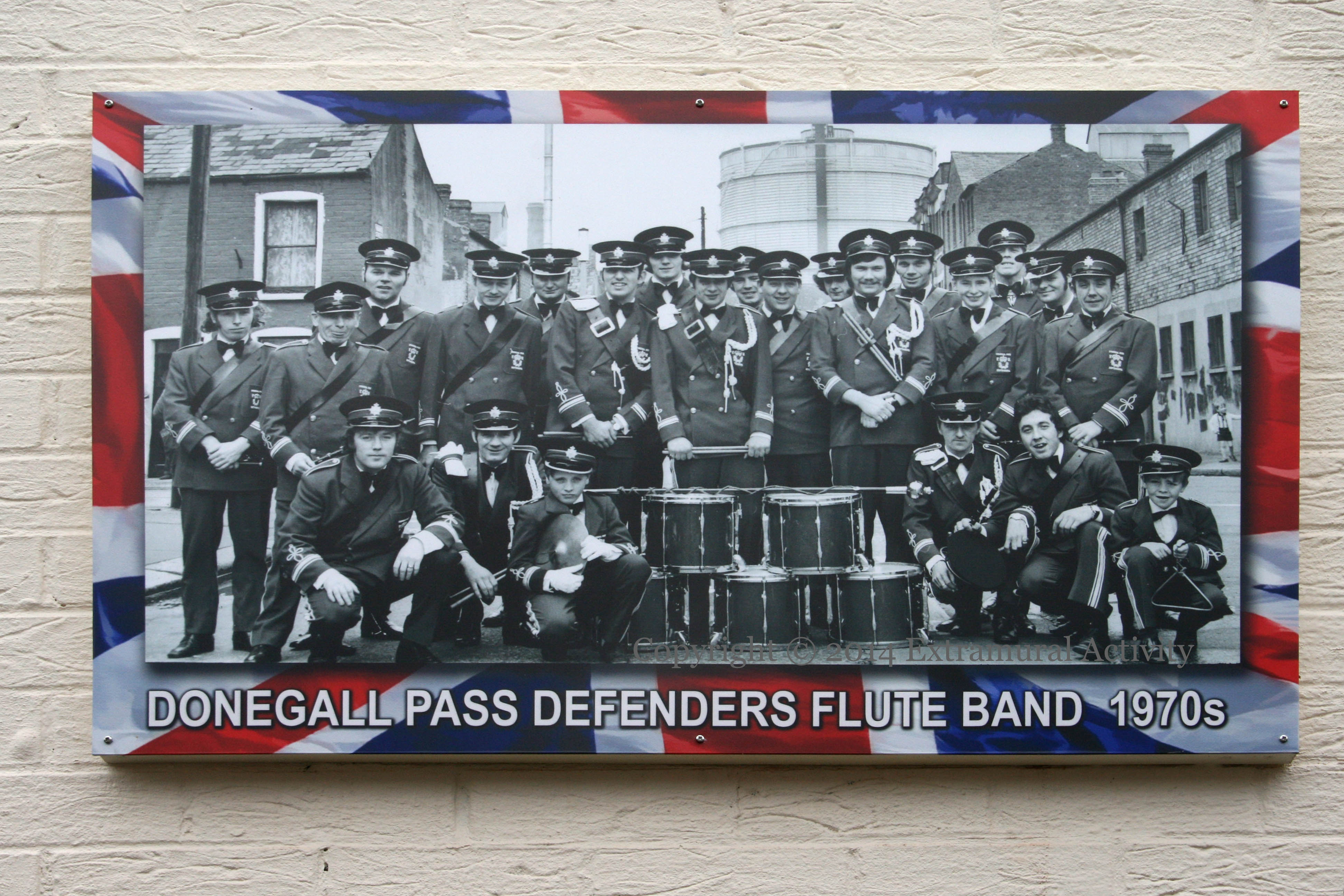
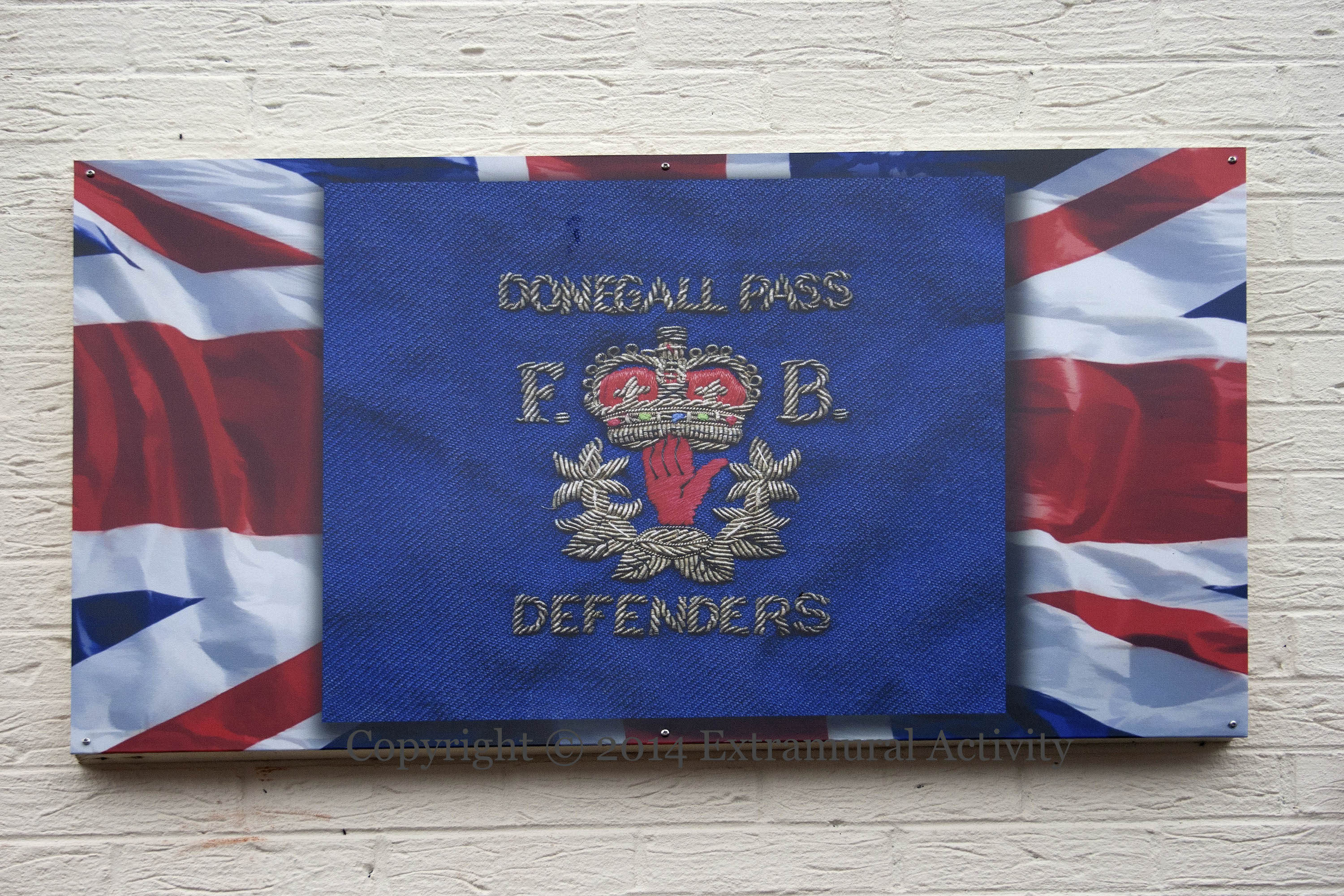
Here are close-ups of the two boards to either side of the new Young Conquerors piece (featured recently in Veni, Vidi, Vici). The first shows a photograph of the original Donegall Pass Defenders Flute Band, which lasted a short time in the 1970s before the formation of the Conquerors in 1977 (Fb). The second shows the patch of the band.
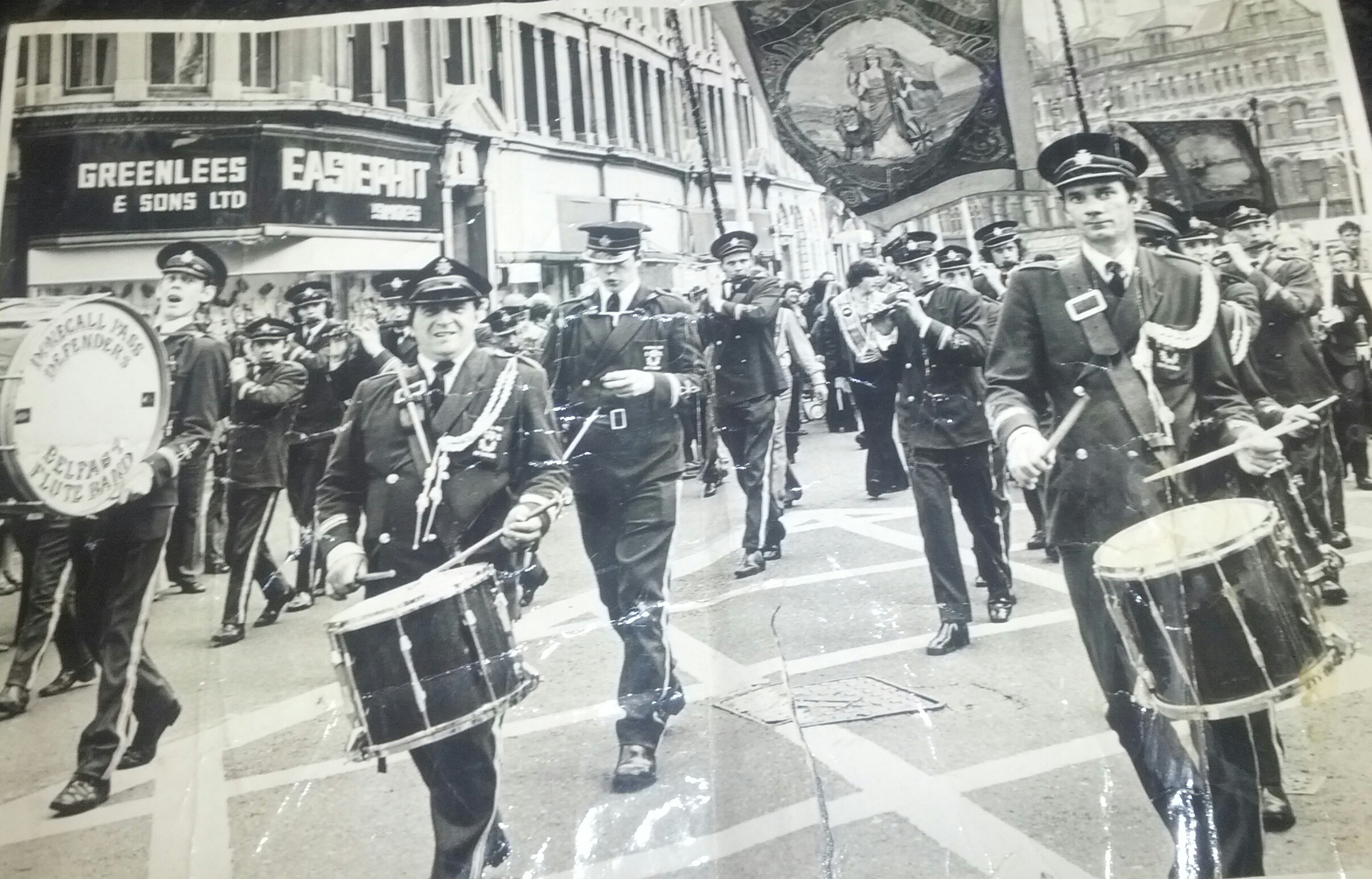
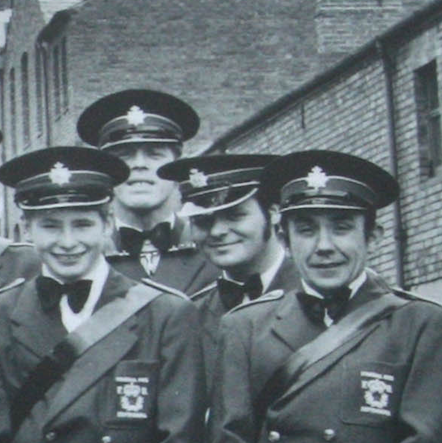
Update (2015-01): Nikki has kindly sent us an image of the band parading, taken sometime in the 1970s. Her grandfather, Thomas Lorimer, recently passed away and she found the picture in his roof space. He was a member of the Defenders and is at the far left of the picture, on the bass drum. She was also able to identify him in the posed picture from the board – shown in detail below; he is the tall gent in the back.
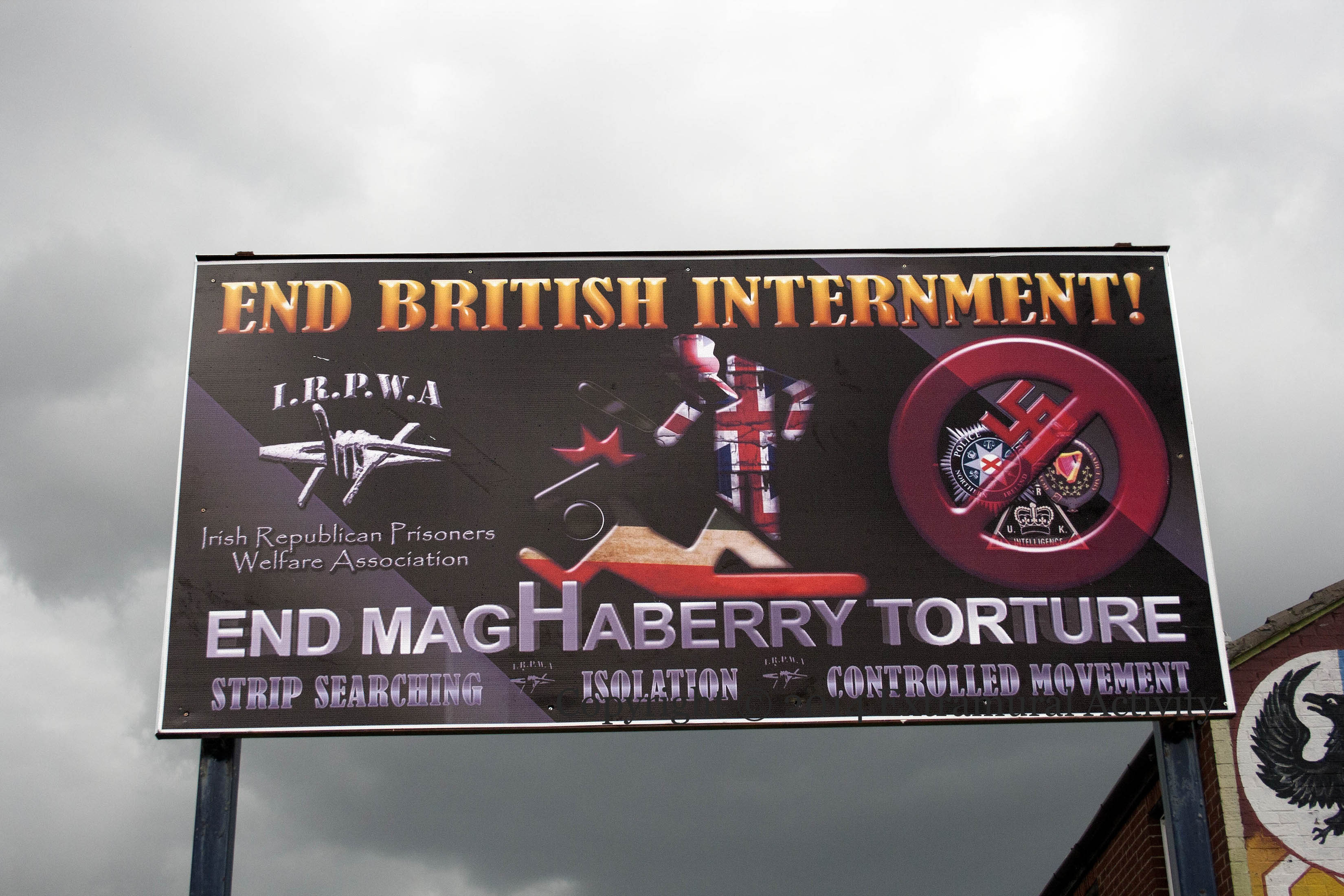
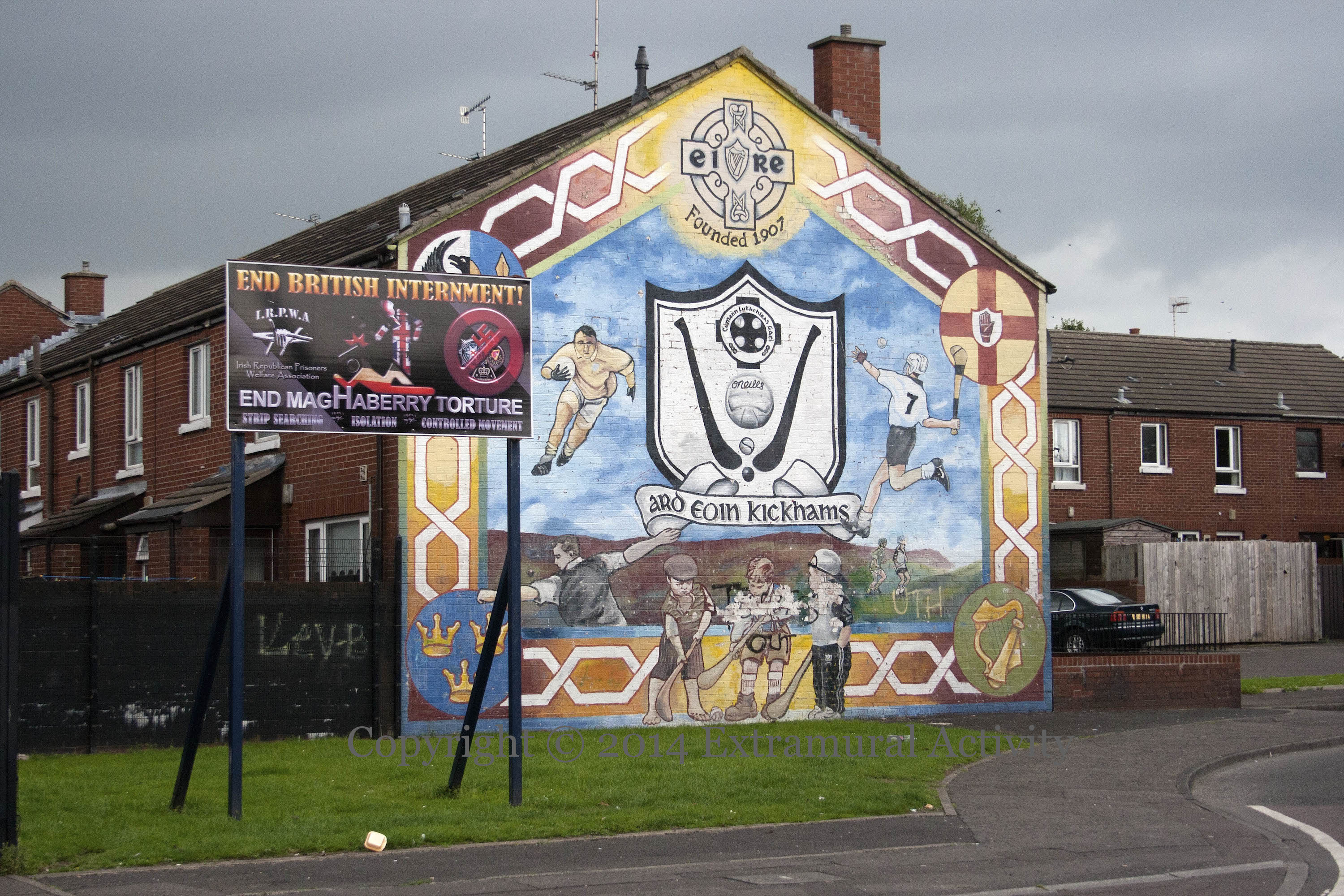
“End British Internment – End Maghaberry Torture – Strip searches, isolation, controlled movement”. The board above at the top of Havana Street, Ardoyne, shows a a prison guard in Union colours beating a prisoner in the Tricolour’s green, white, and orange. On the left is the barbed wire symbol of the Irish Republican Prisoners Welfare Association (IRPWA) and on the right the emblems of the PSNI, the RUC, and MI5 are crossed out under a swastika. A wide shot, showing the CLG/GAA mural in the background, is below.
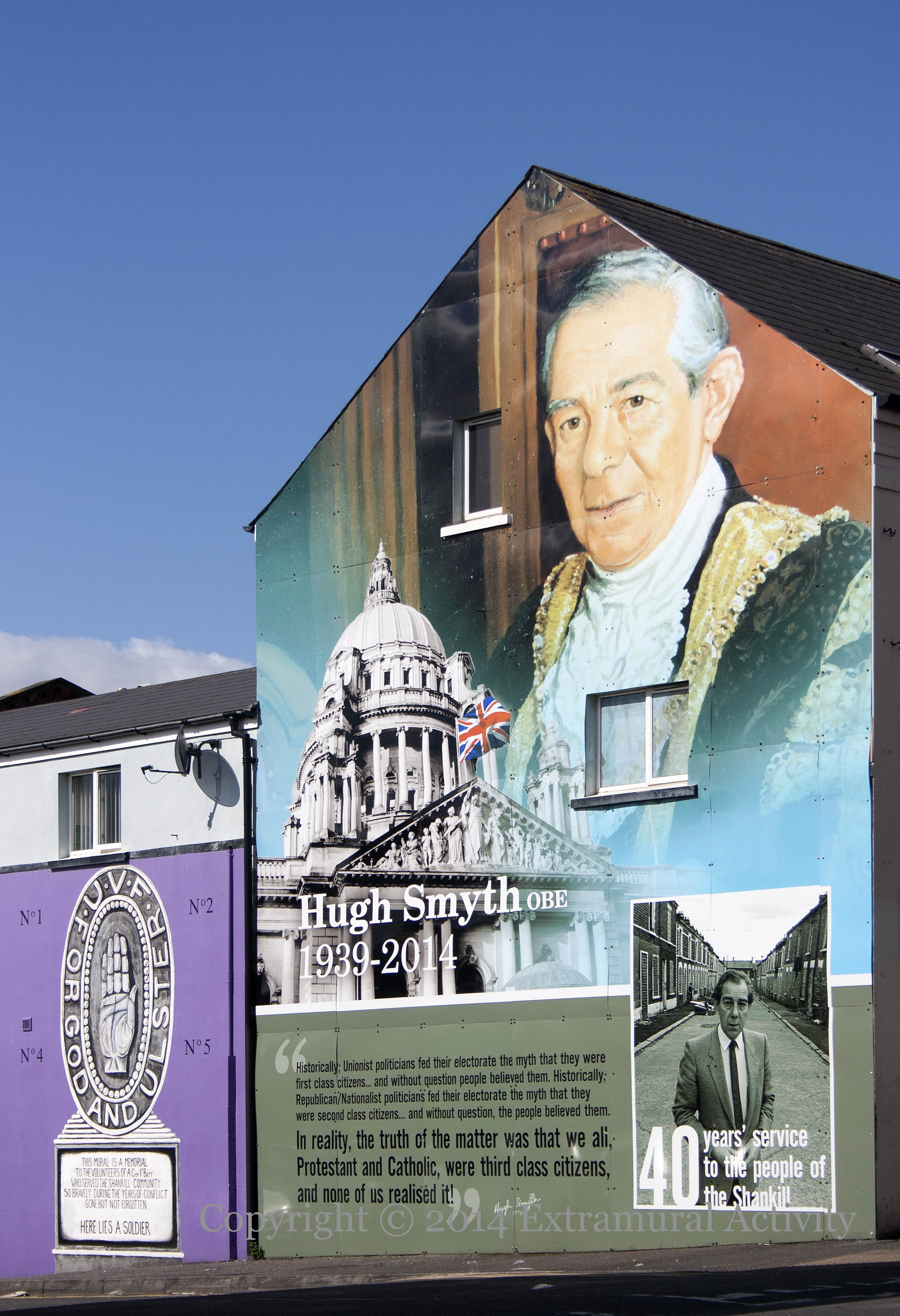
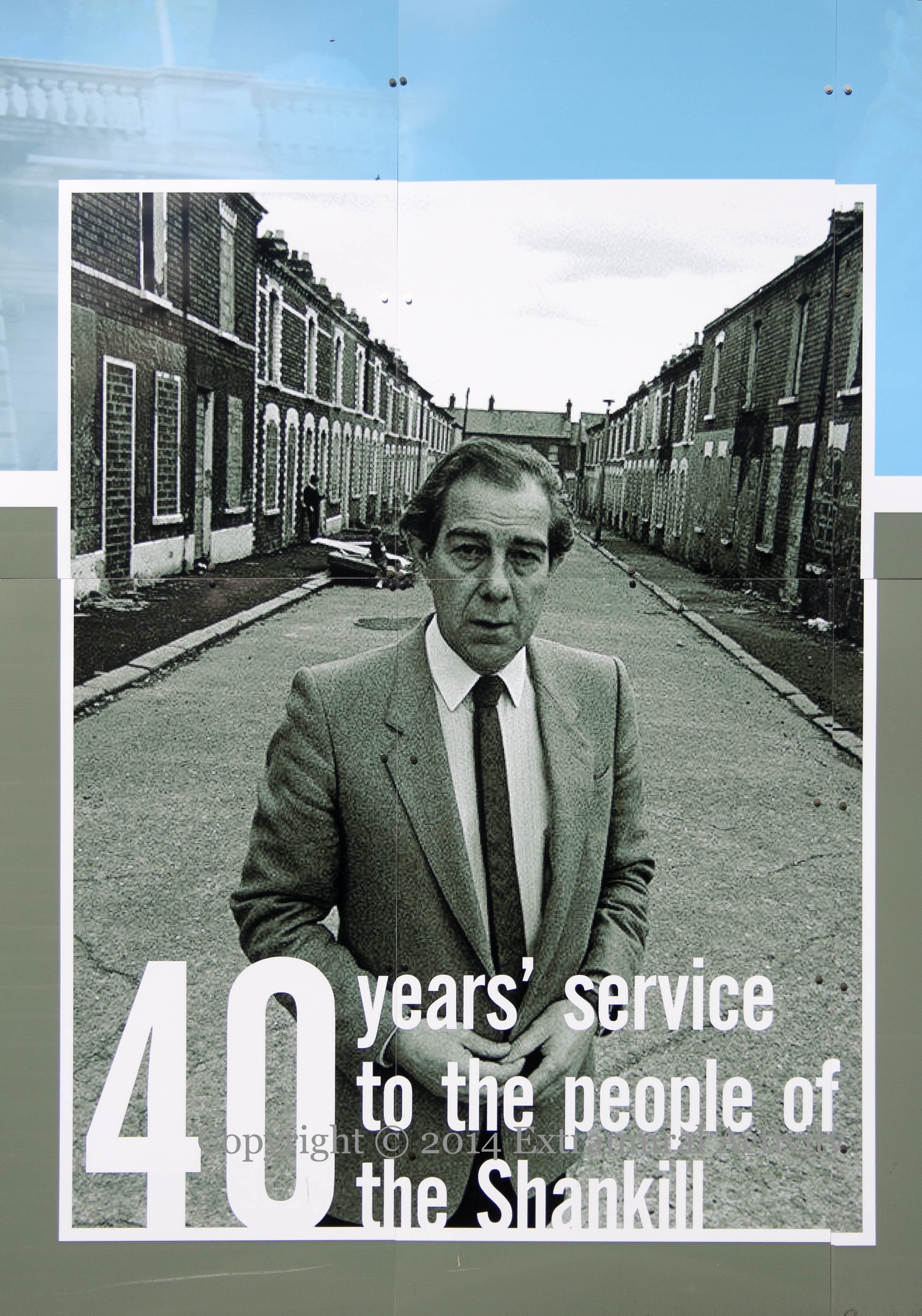
Hugh Smyth OBE was born in the Woodvale area and represented the upper Shankill as an Independent Unionist and then a Progressive Unionist in Belfast City Council for forty-one years, until the year before his death in May 2014, including a term as Lord mayor in 1994-1995 – he is pictured in the main image (above) in his mayoral robes.
The portrait on the right (shown solo below) was taken by Bobbie Hanvey and is kept in a Boston College archive; more from the archive of 50,000 images can be seen at BC.edu and on Flickr.
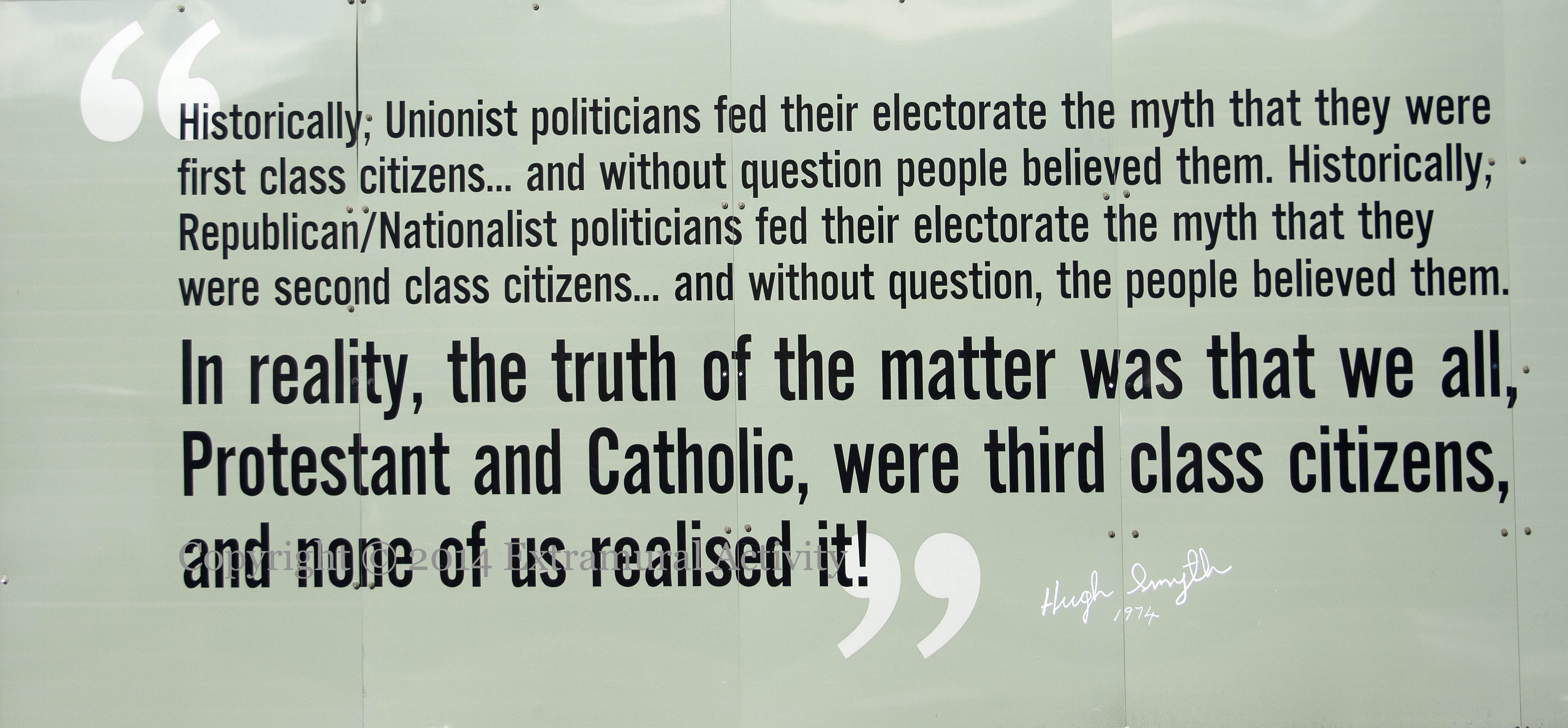
As the quote (shown in the final image below) indicates, his politics were oriented towards the working class: “Historically, Unionist politicians fed their electorate the myth that they were first class citizens… and without question people believed them. Historically, Republican/Nationalist politicians fed their electorate the myth that they were second class citizens… and without question the people believed them. In reality, the truth of the matter was that we all, Protestant and Catholic, were third class citizen, and none of us realised it!” The board was officially launched on June 19th.
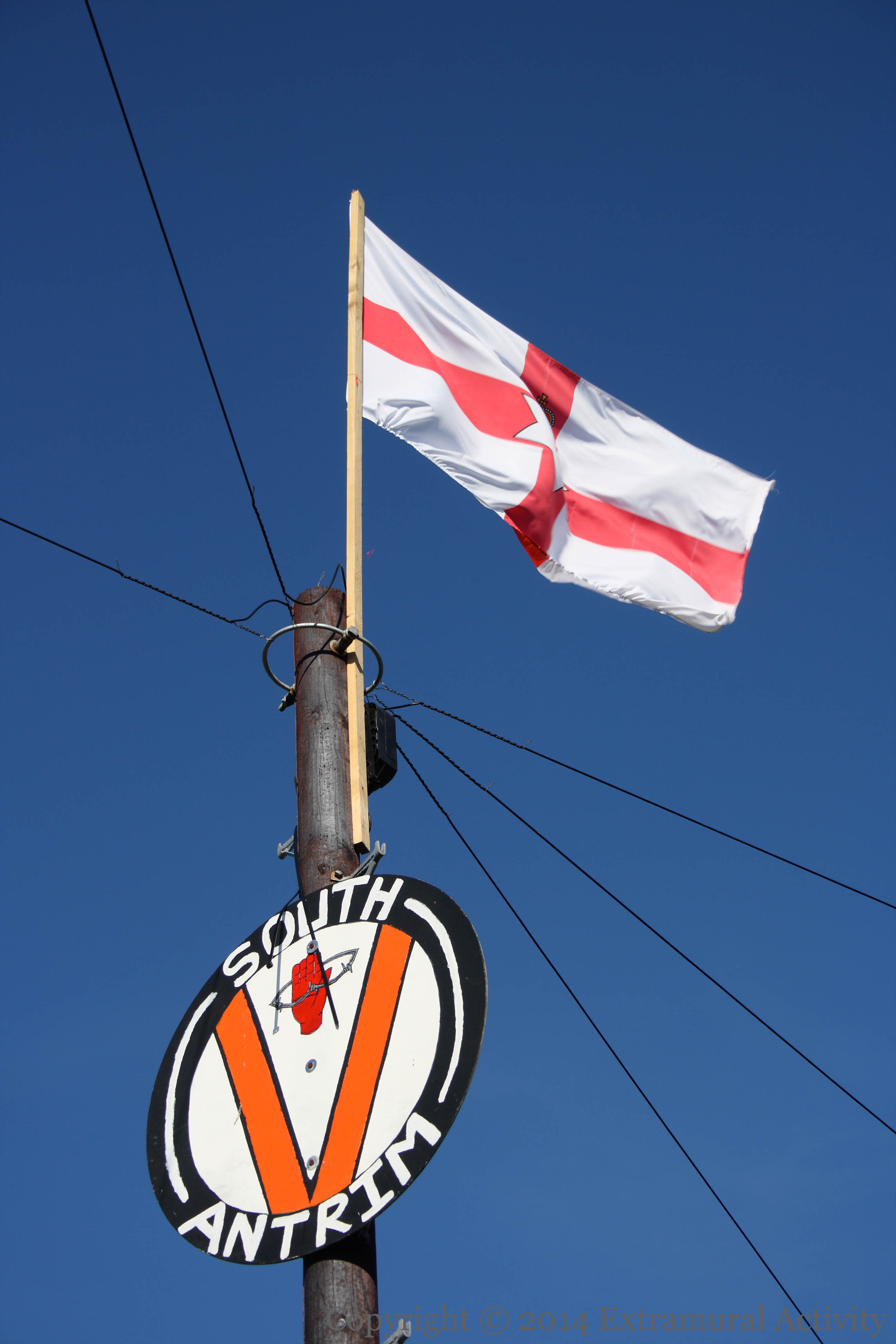
An Ulster Banner tops an electrical pole in Stoneyford sporting a picture of an Orange Order collarette and the red hand in barbed wire of the Loyalist Prisoners Association.
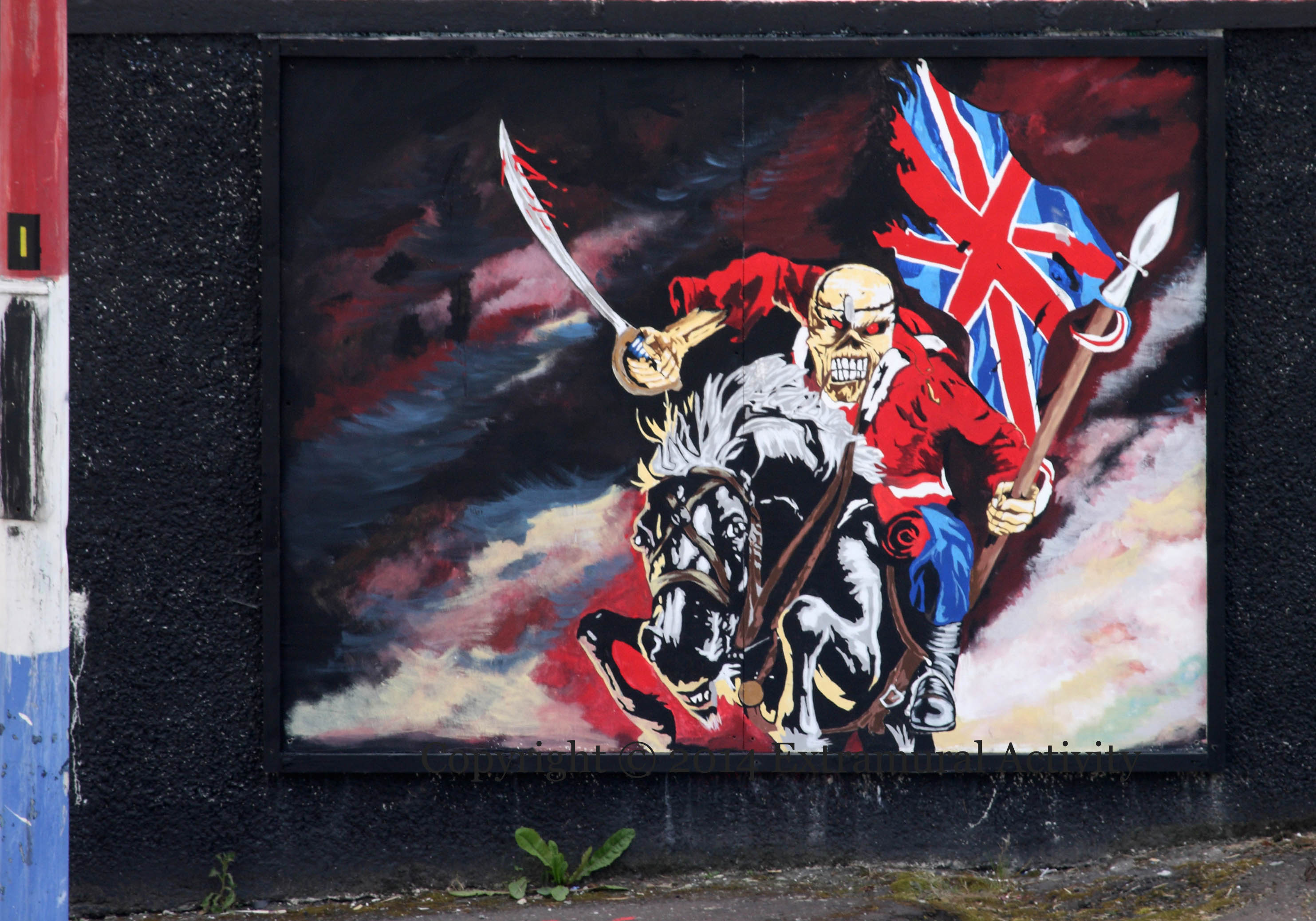
The famous “Eddie the Trooper” figure, previously seen marching over a field strewn with bodies in green and gold, is now on horseback in the Fountain area of Londonderry. For background, including the connection to Iron Maiden, see The Trooper and the Visual History page on Eddie.
 Seosamh Mac Coille Collection