Twelve Brave Young Men From Gertrude Street

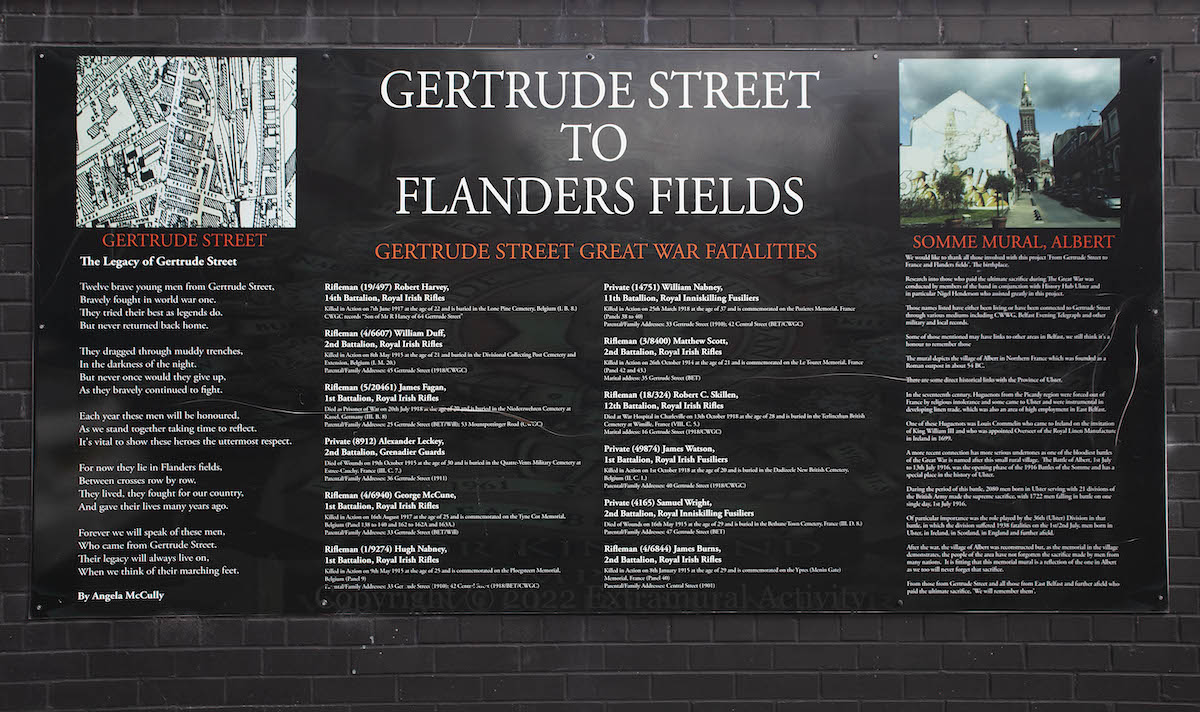
The twelve “Gertrude Street Great War Fatalities” are: Robert Harvey; William Duff; James Fagan; Alexander Leckey; George McCune; Hugh Nabney; William Nabney; Matthew Scott; Robert C. Skillen; James Watson; Samuel Wright; James Burns.

This board was originally next to the To France And Flanders mural on the adjacent wall; the mural also named these twelve but which only lasted a year. That mural depicted the damaged basilica tower in the village of Albert and there is a similar mural in the village itself – a photograph of the mural and the rebuilt tower can be seen in the top right of the board; the mural can be seen in full here.

As the map in the top left shows, Gertrude Street was where Wolff Close now is, running north from the Newtownards Road; the original Gertrude Star mural (circa 1989) was on the first gable of what is now called “Freedom Corner” – see D00388.

The emblem of the Gertrude Star flute band serves as a background. The band’s 60th anniversary mural is across the street.

“‘The Legacy Of Gertrude Street. Twelve brave young men from Gertrude Street,/Bravely fought in world war one./They tried their best as legends do./But never returned back home.//They dragged through muddy trenches,/In the darkness of the night./But never once would they give up,/As they bravely continued to fight.//Each year these men will be honoured,/As we stand together taking time to reflect./It’s vital to show these heroes the uttermost respect.//For now they lie in Flanders fields,/Between crosses row by row./They lived, they fought for our country,/And gave their lives many years ago.//Forever we will speak of these men,/Who came from Gertrude Street./Their legacy will always live on,/When we think of their marching feet.’ By Angela McCully”

Click image to enlarge
Copyright © 2022 Seosamh Mac Coılle
X10734
While I Live I’ll Crow

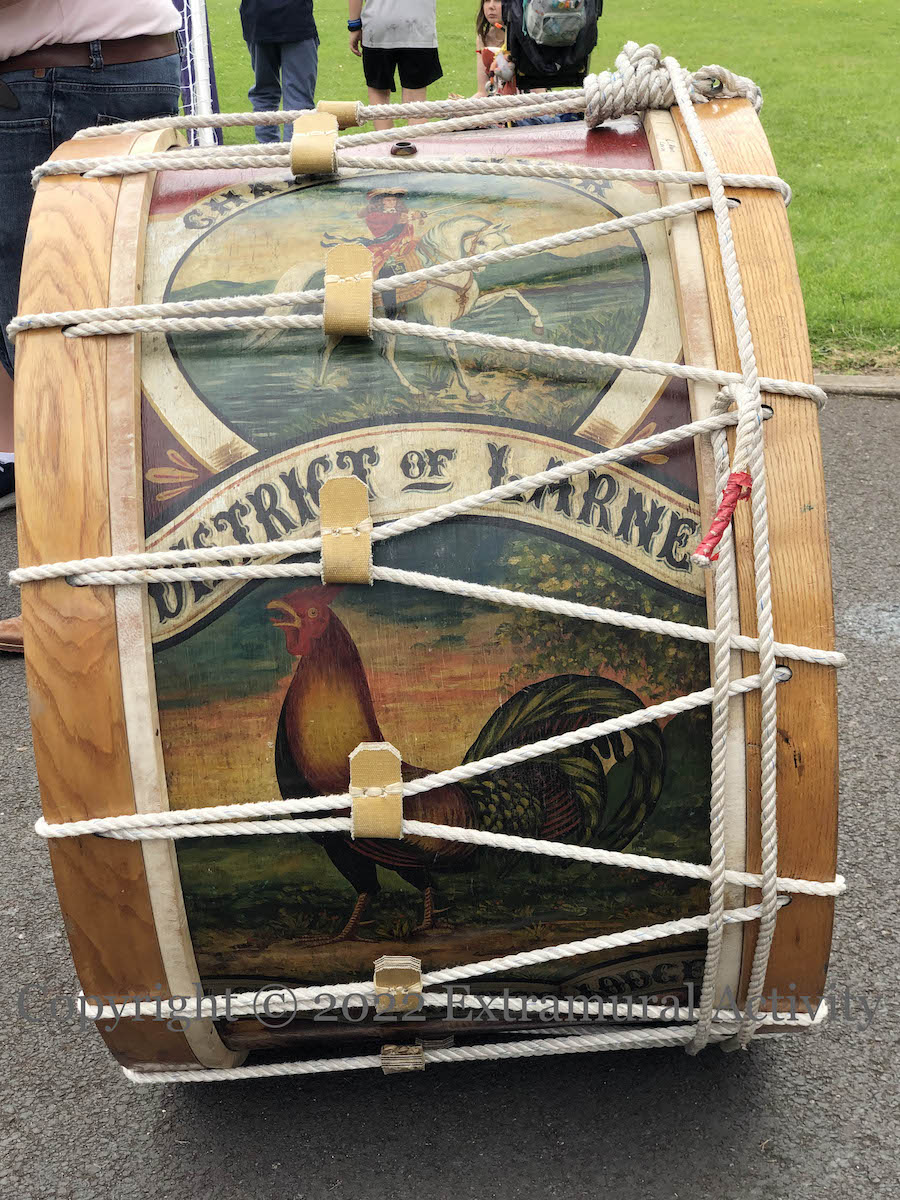
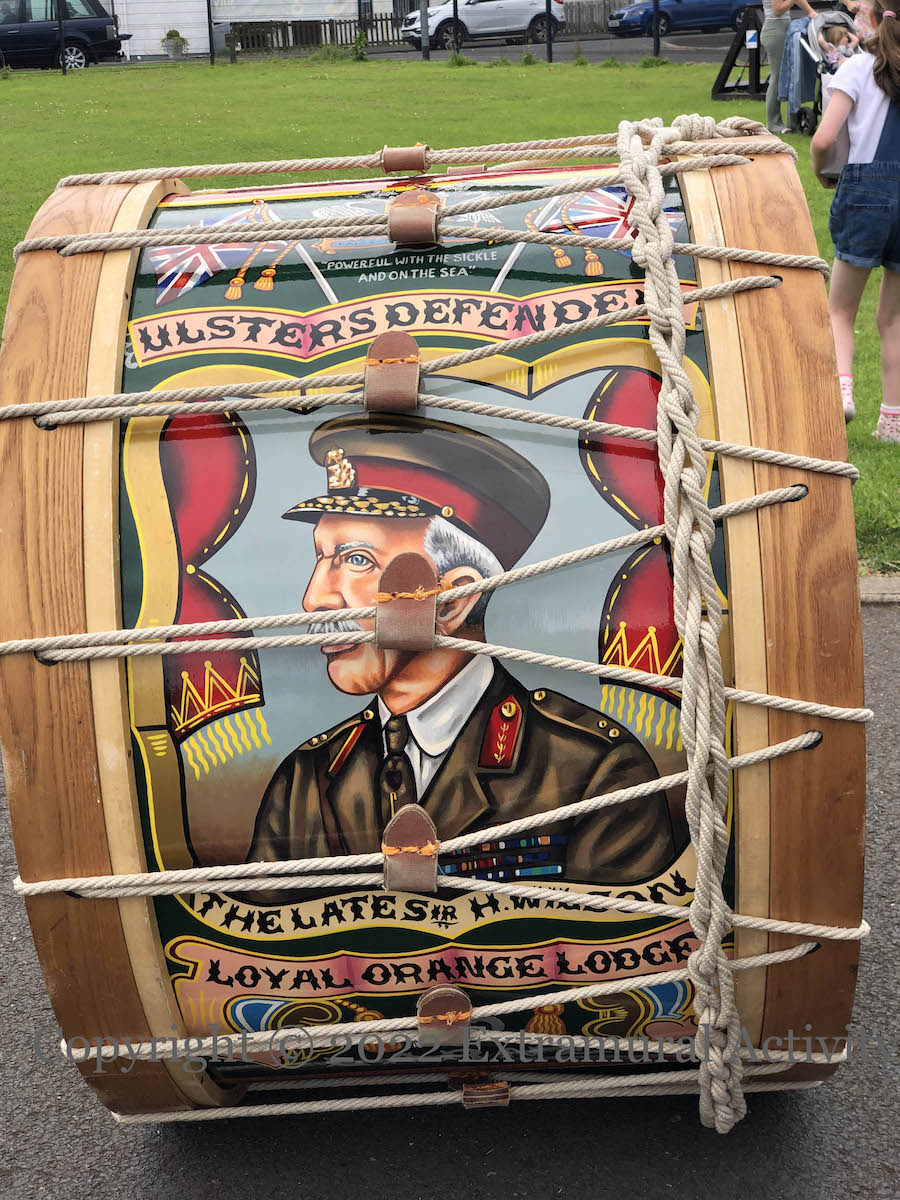
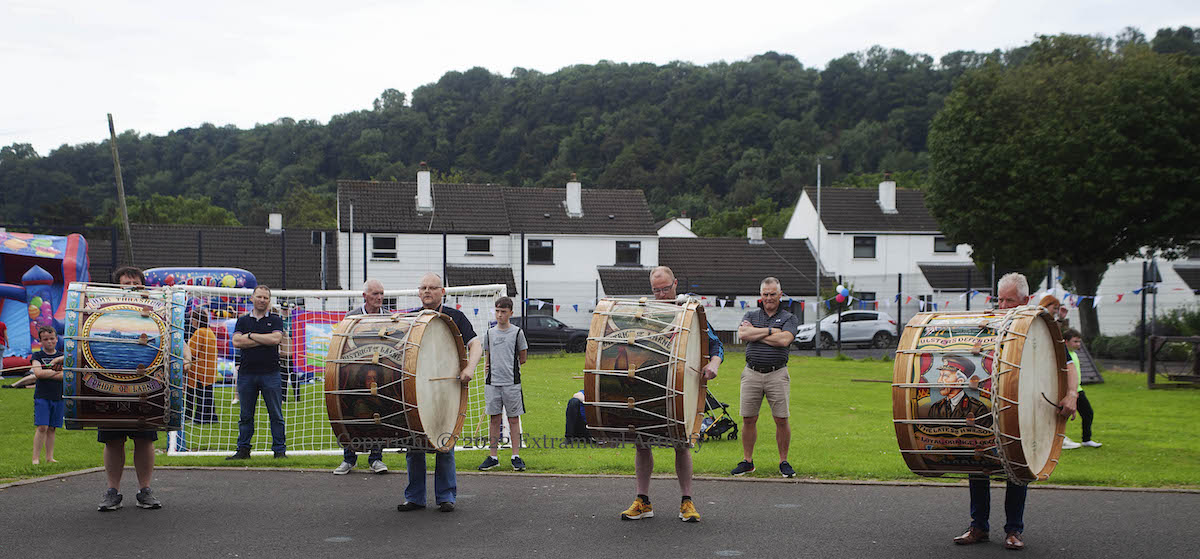
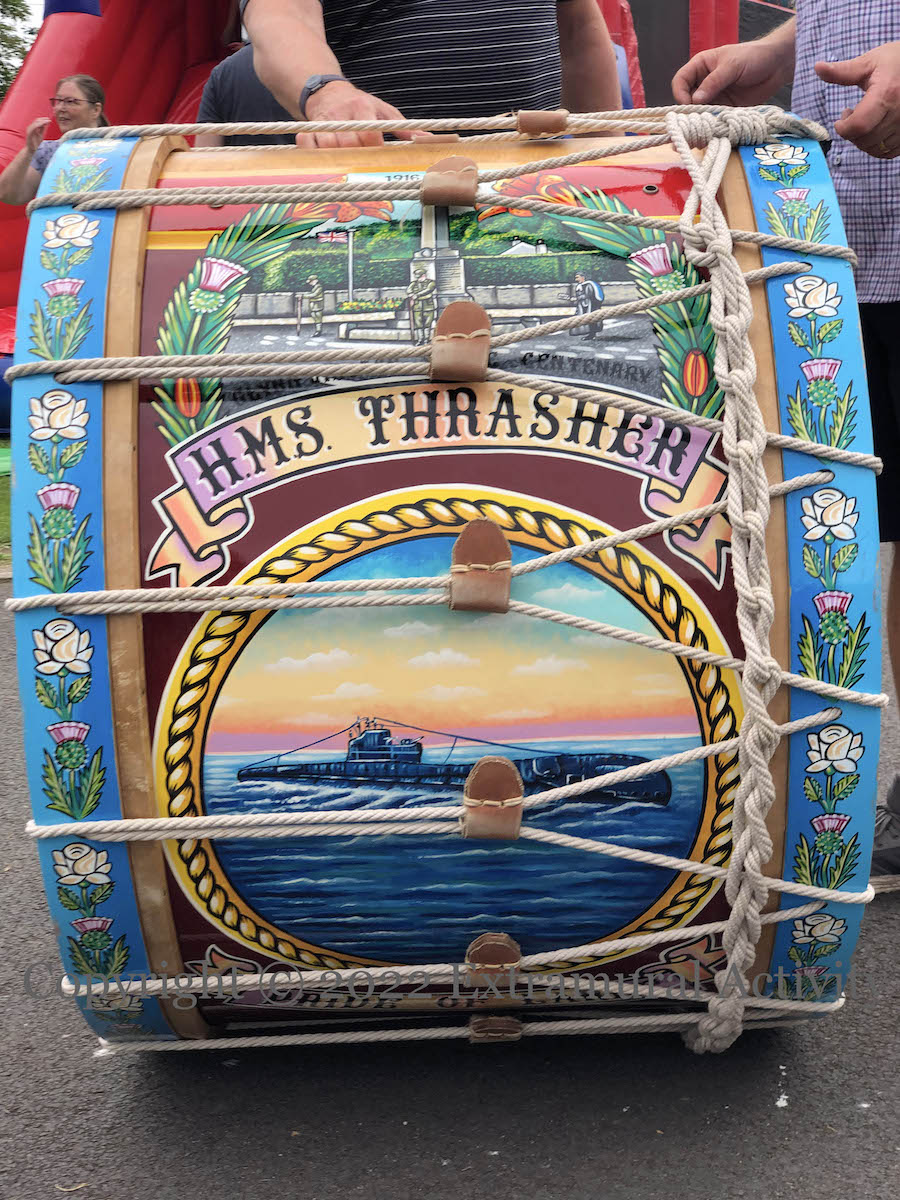
Lambeg drums can be as loud as 120 decibels – as loud as small aircraft. The skin is goat and the wood is typically oak, the middle part – or “shell” can be painted, with biblical, Orange, or loyal iconography: in the three close-ups presented here we see HMS Thrasher (which was docked for a time in Larne (Fb)), King Billy and the cock of the north, “the late Sir H[enry] Wilson” a high-ranking British Army soldier who was a supporter of the Ulster Volunteers and proponent of the Curragh “mutiny” (WP). The drums were played as part of the Eleventh celebrations in Glynn.

Here are 20 clips from the BBC programme Come Listen To Me Boys.

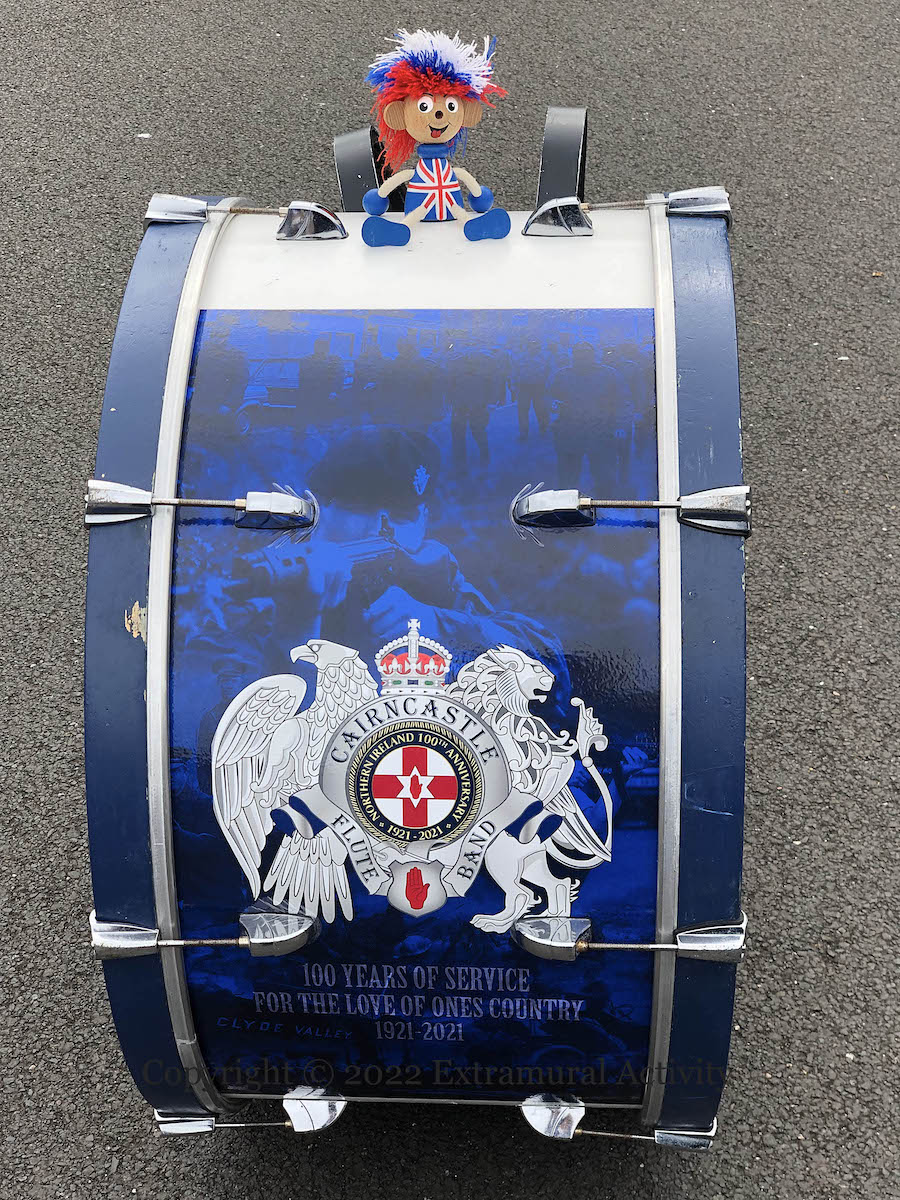
For another drum shell, see 100 Years Of Service.

Click image to enlarge
Copyright © 2022 Seosamh Mac Coılle
X10616 X10618 X10617 X10614
100 Years Of Service

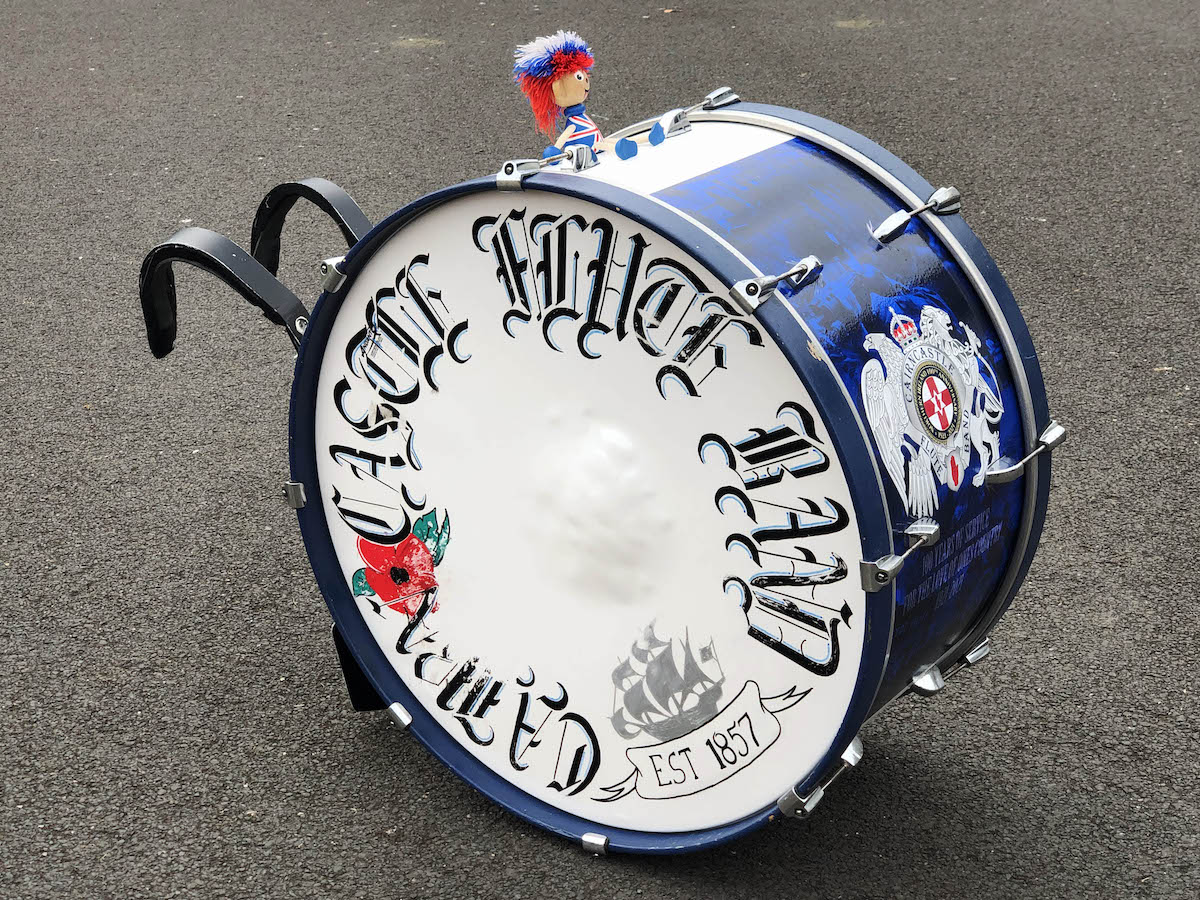
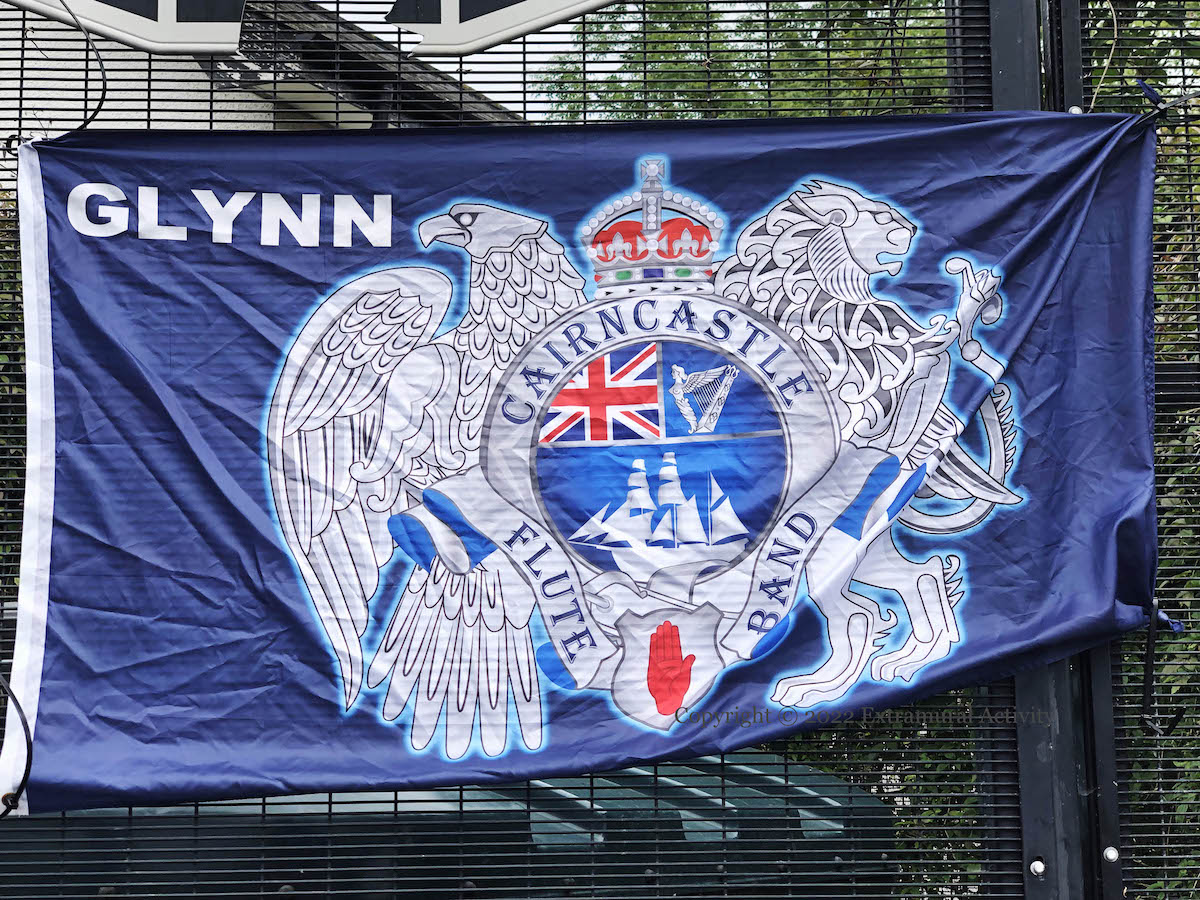
“100 years of service for the love of one’s country – 1921-2021.” Cairncastle flute band (Fb) marks the centenary of Northern Ireland and local military force with a special shell on one of their drums. The Special Constabulary was founded in 1920, in advance of partition and the creation of Northern Ireland (The Irish Story) and survived until 1970 when the UDR was established; this in turn became part of the RIR in 1992 and the RIR exists to this day.

Click image to enlarge
Copyright © 2022 Seosamh Mac Coılle
X10612 X10613 X10611 X10619

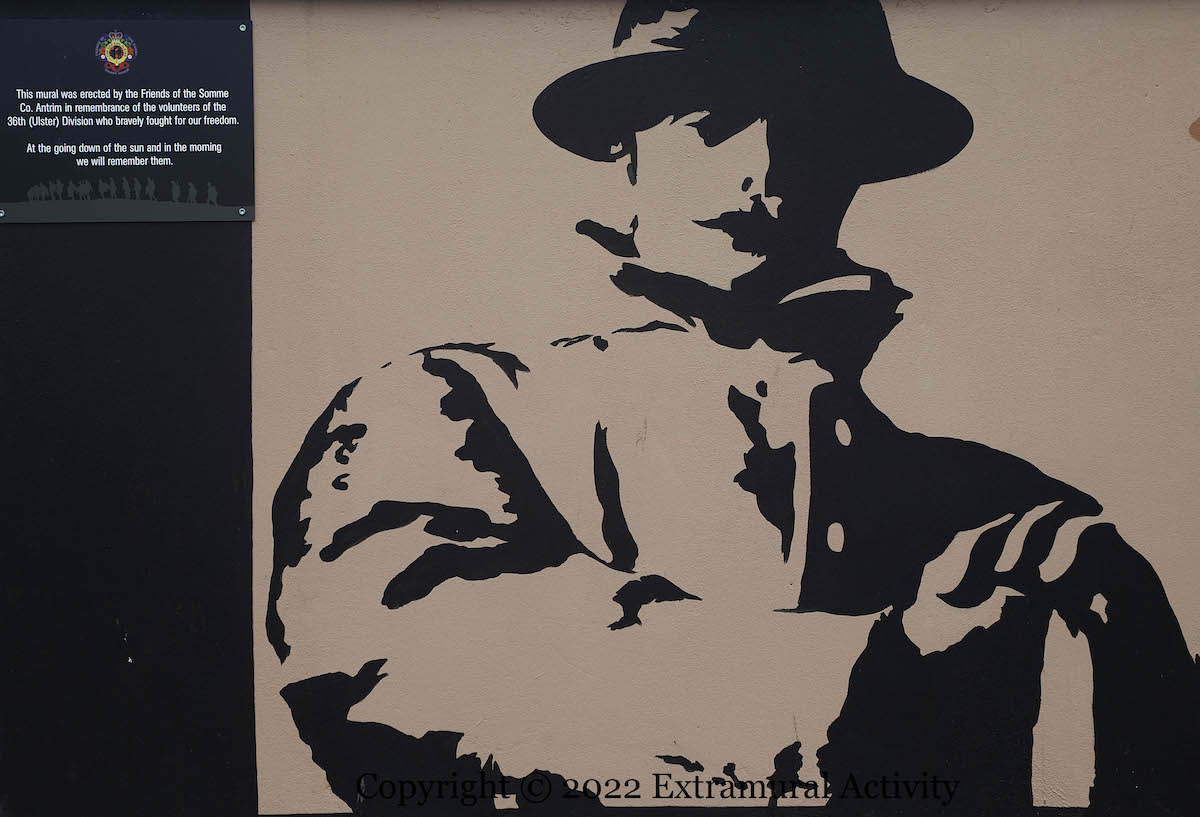
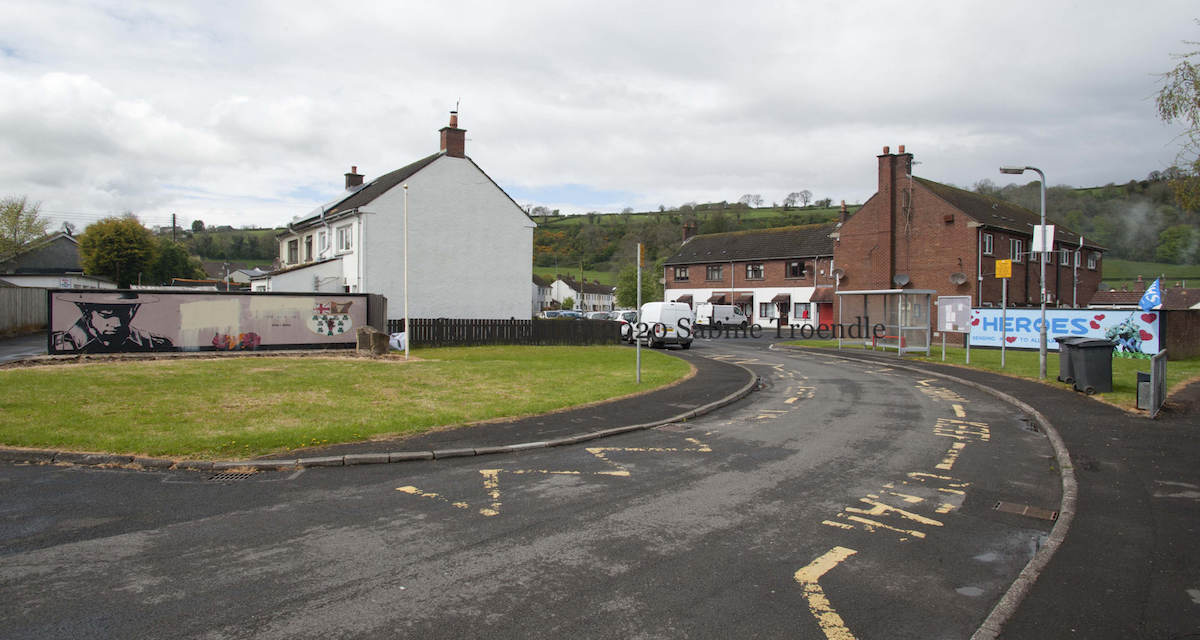
The Volunteers Who Bravely Fought For Our Freedom

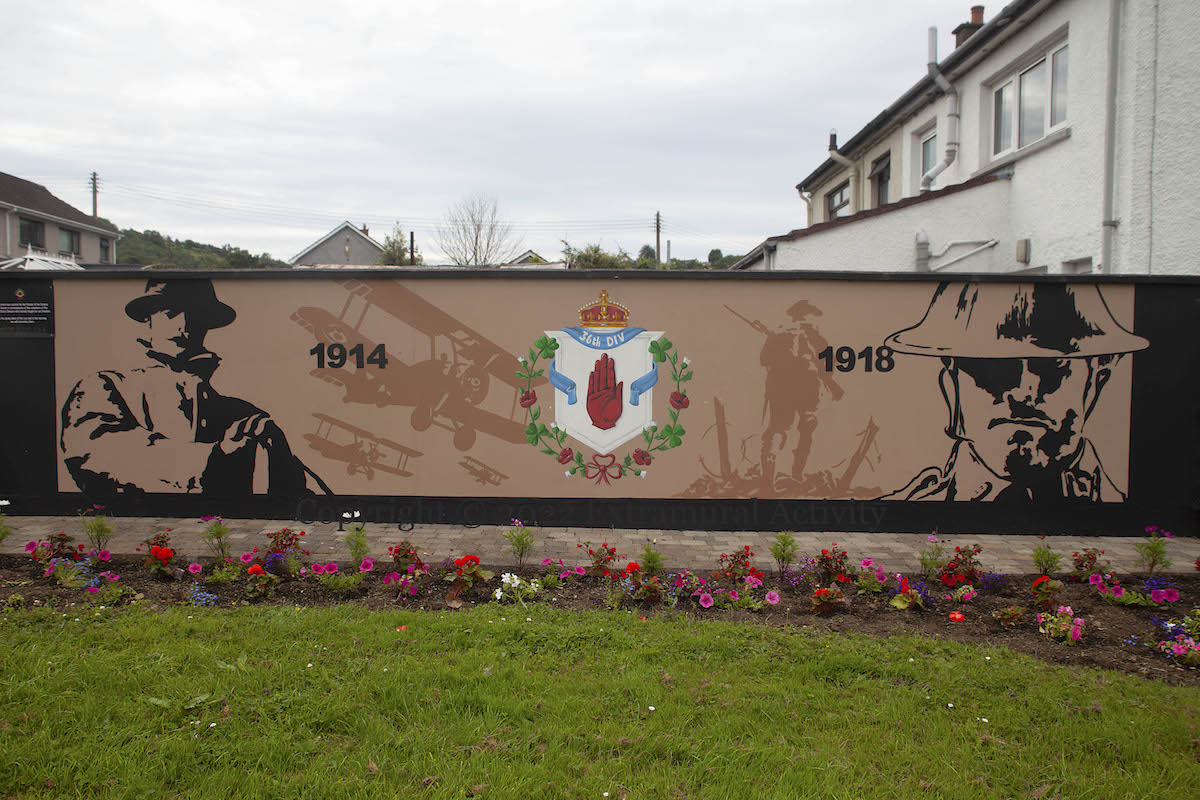
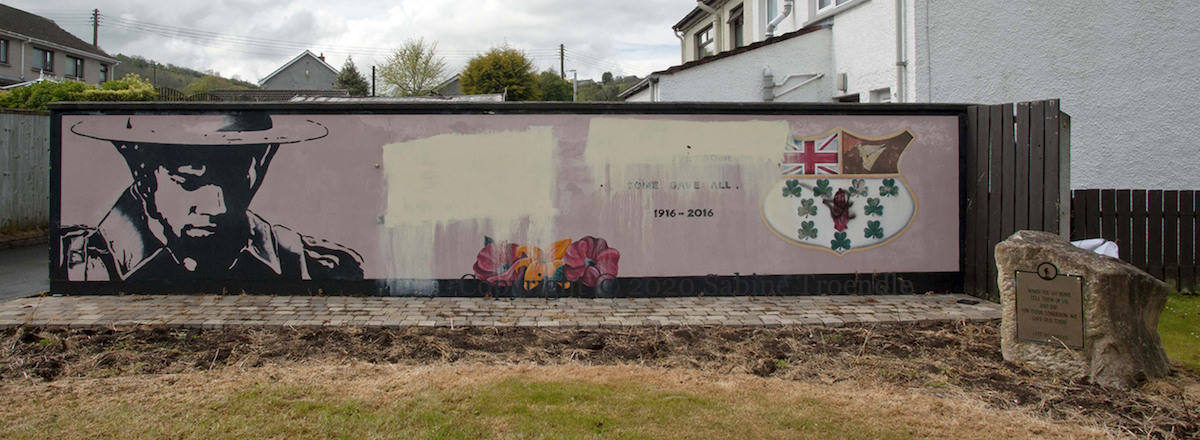
The emblem at the centre of this latest version of the 36th (Ulster) Division mural in Glynn seems to be a novel creation, putting together a crown sitting on a blue ribbon draped over a shield showing a (right-handed) red hand, with a garland of shamrock, thistle, and rose.

This is the fifth mural (at least) on this wall since 2008. The only images we have of the previous one shows it in a vandalised state (see the images from 2020 below); for earlier, see 2015, 2011 (Street View), and 2008.

The plaque on the stone to the right reads, “When you go home, tell them of us and say for their tomorrow we gave our today”

The new mural has the following to its left: “This mural was erected by the Friends of the Somme Co. Antrim in remembrance of the volunteers of the 36th (Ulster) Division who bravely fought for our freedom. ‘At the going down of the sun and in the morning we will remember them.”

Click image to enlarge
Copyright © 2022 Seosamh Mac Coılle X10622 X10623 [X01624]
Copyright © 2022 Sabine Troendle (web | Fb) X07108 X07109 [X07110]

You’re In The Anderson’s Band

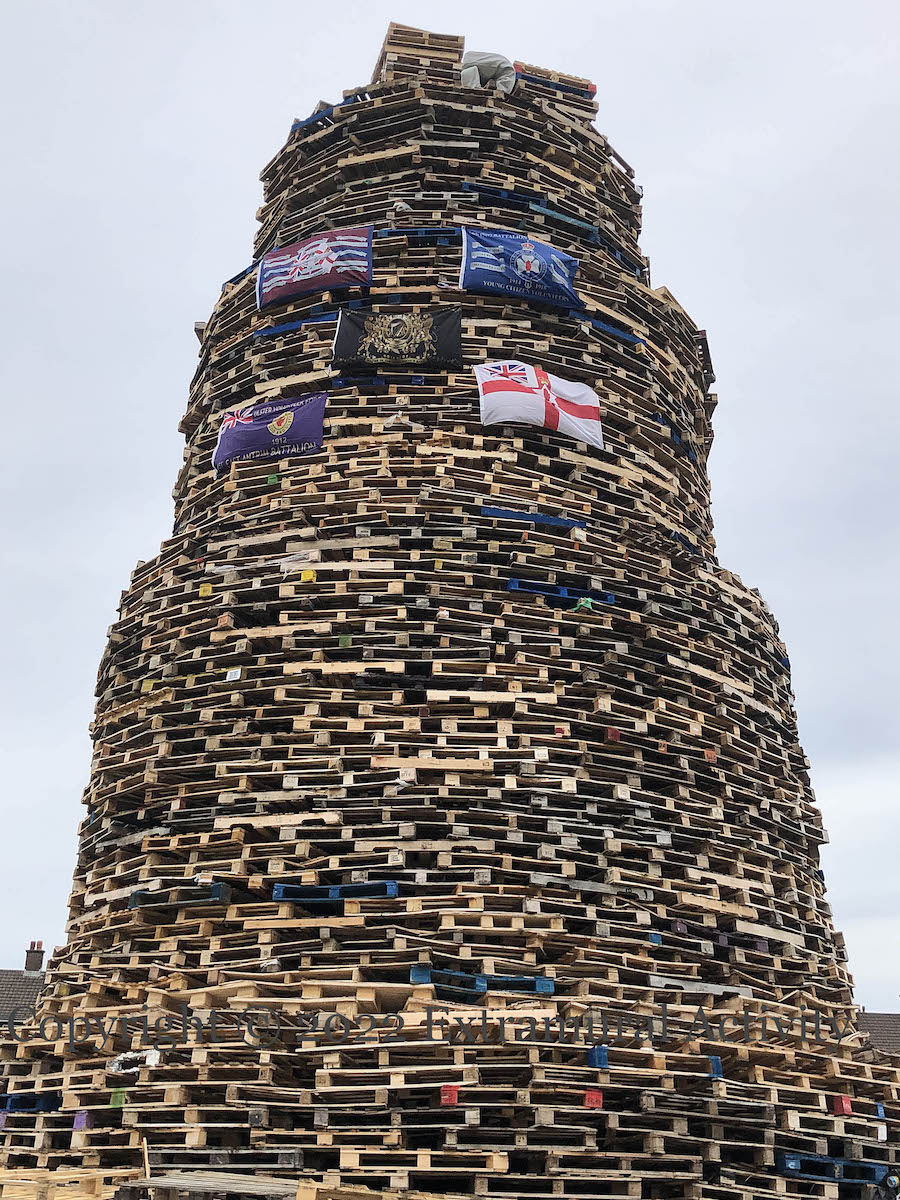
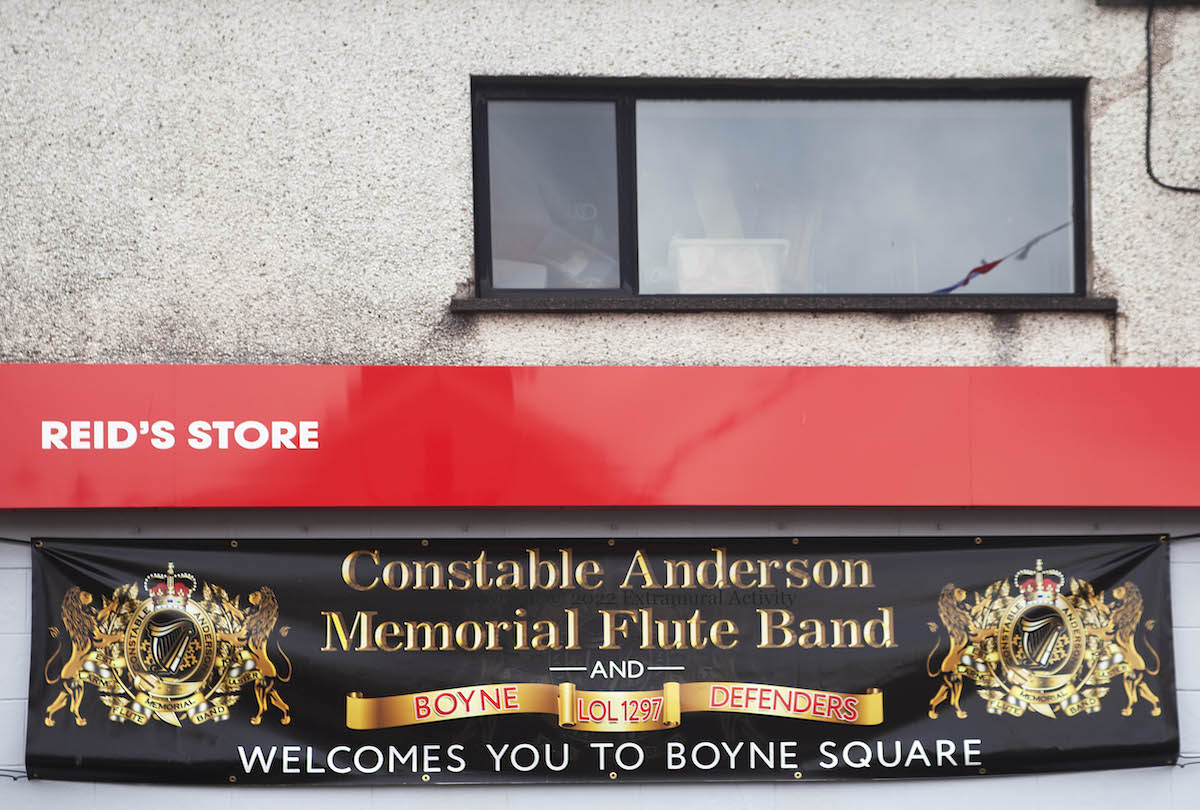
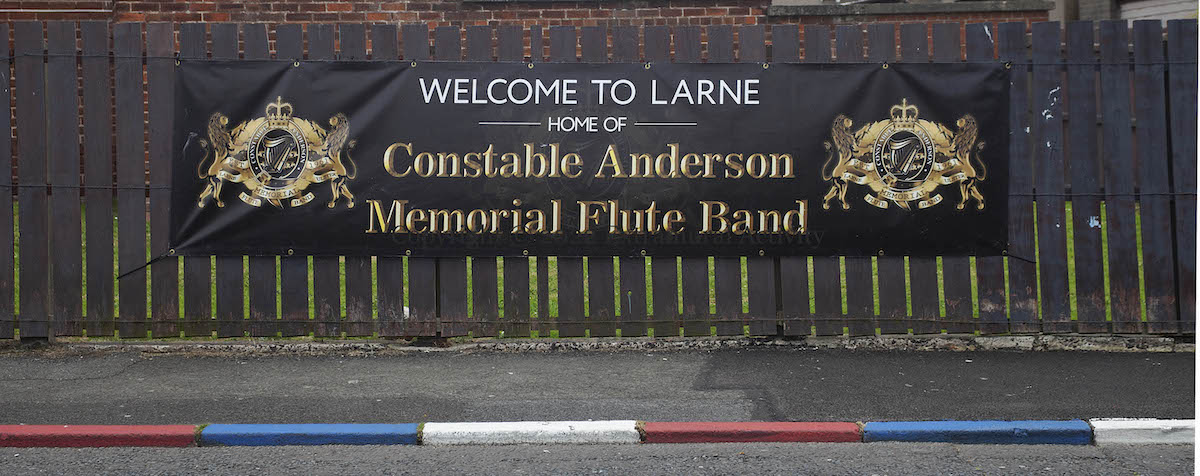
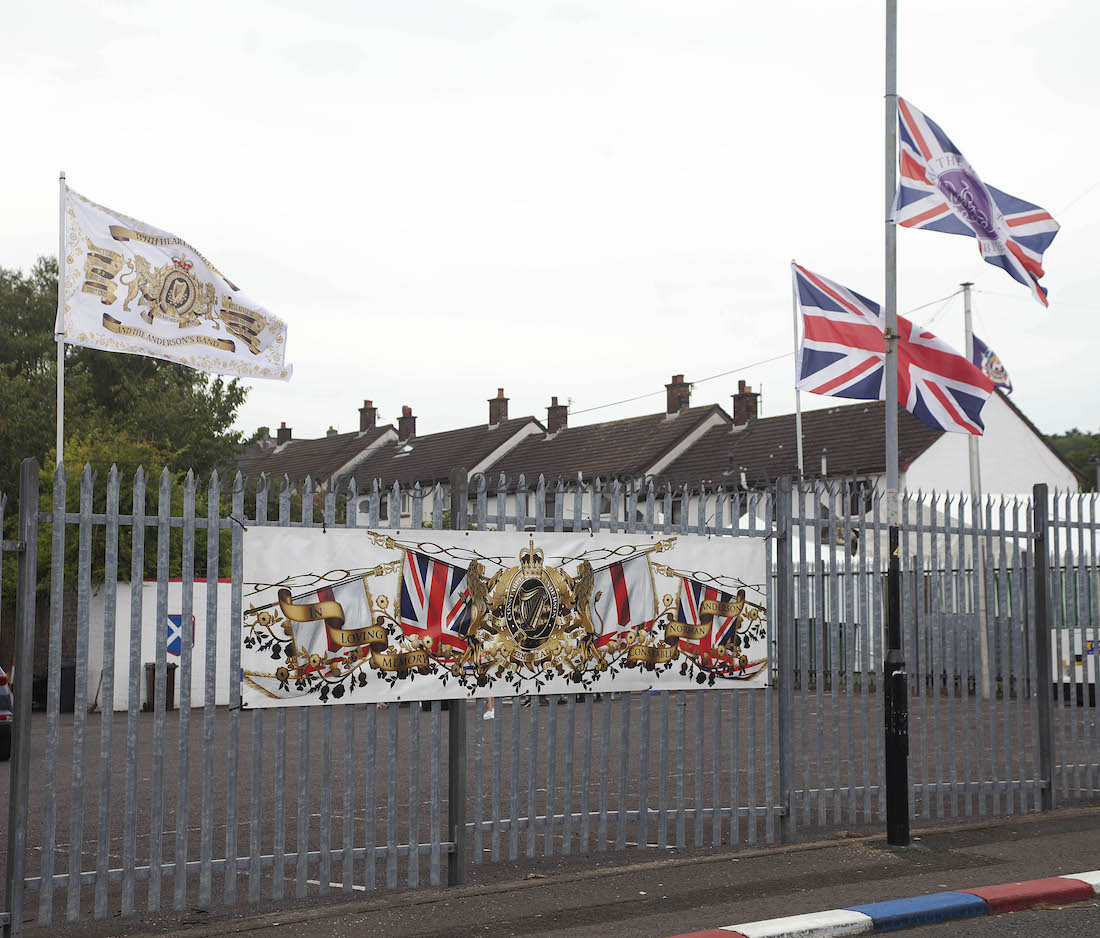
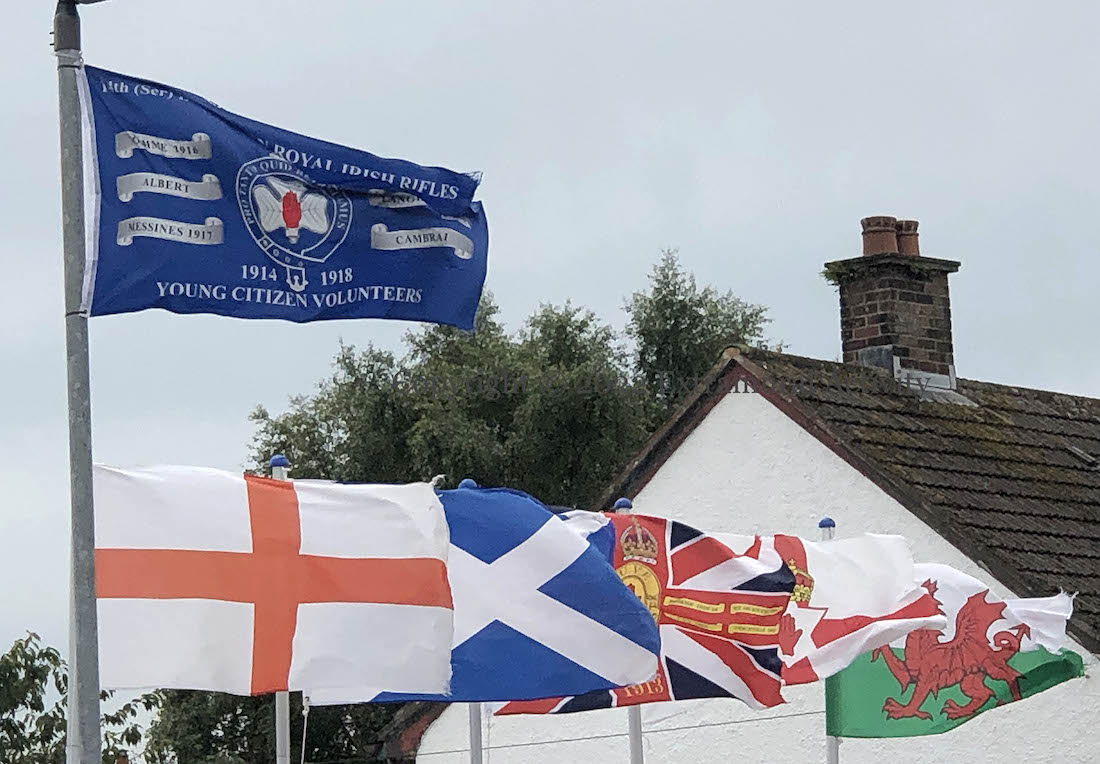
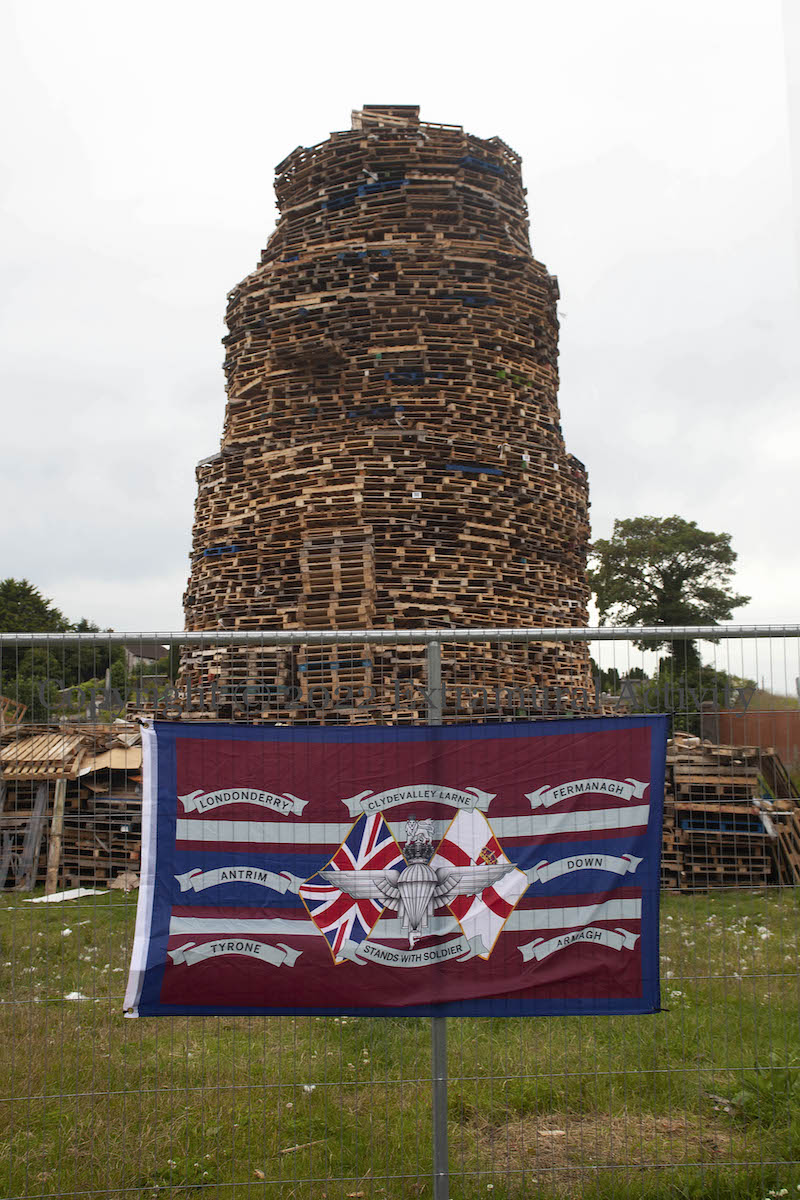
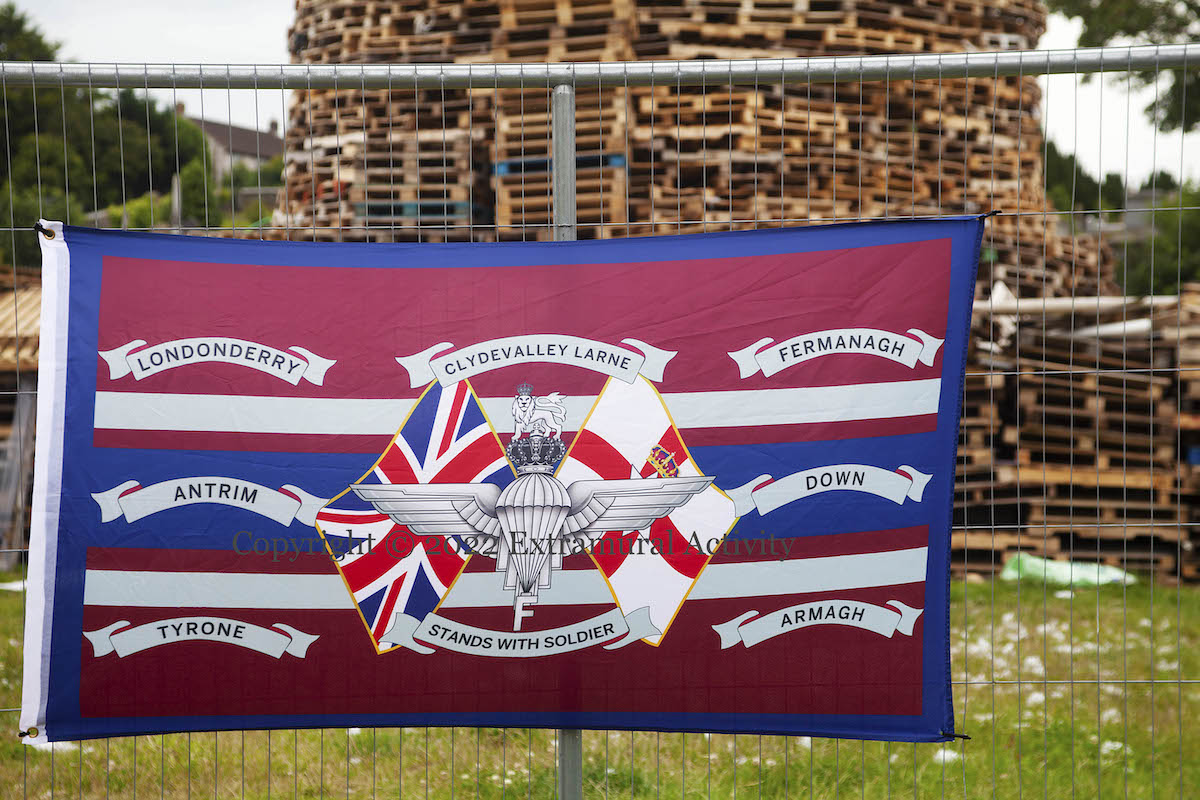
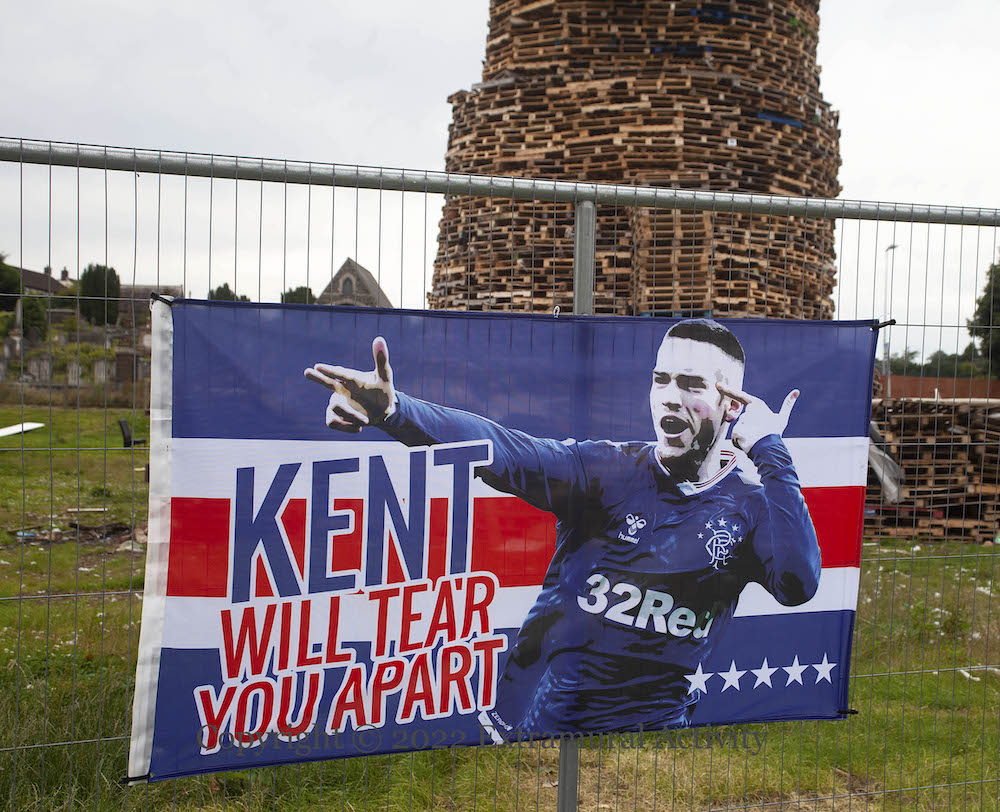
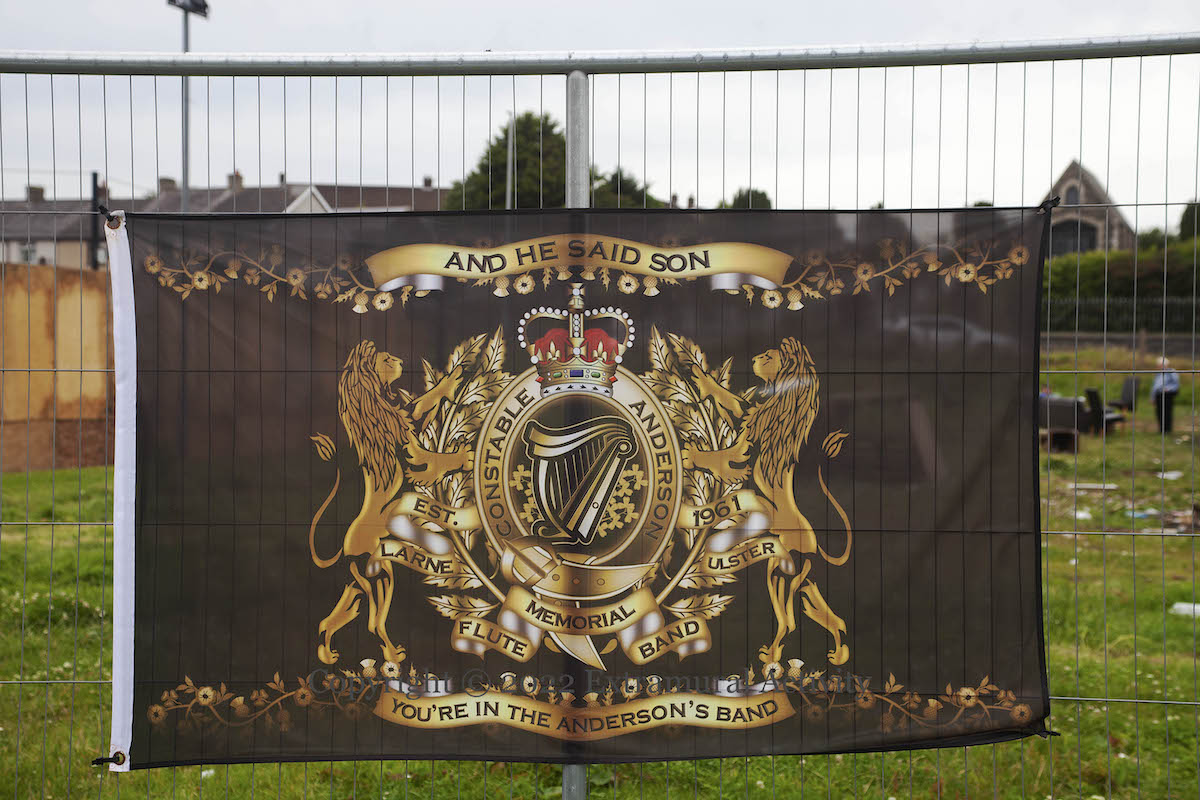
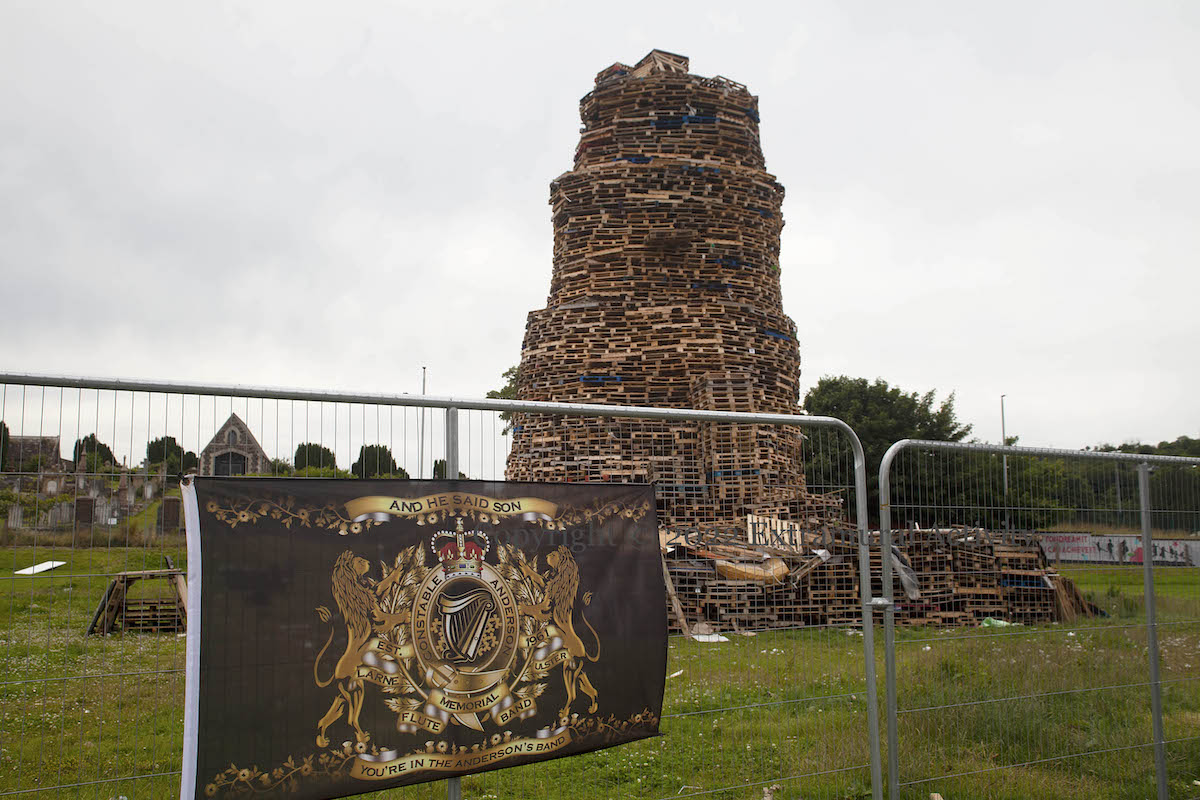
This is the scene around the Boyne Square (Larne) bonfire, hours before it was set alight on 11th night. There are multiple flags from Constable Anderson Memorial flute band (and LOL 1297 Boyne Defenders); Clydevalley flute band “stand with Soldier F”. On the bonfire itself there are only loyal flags – compare with the Tricolours and electoral posters on the Sunnylands bonfire in Carrickfergus.

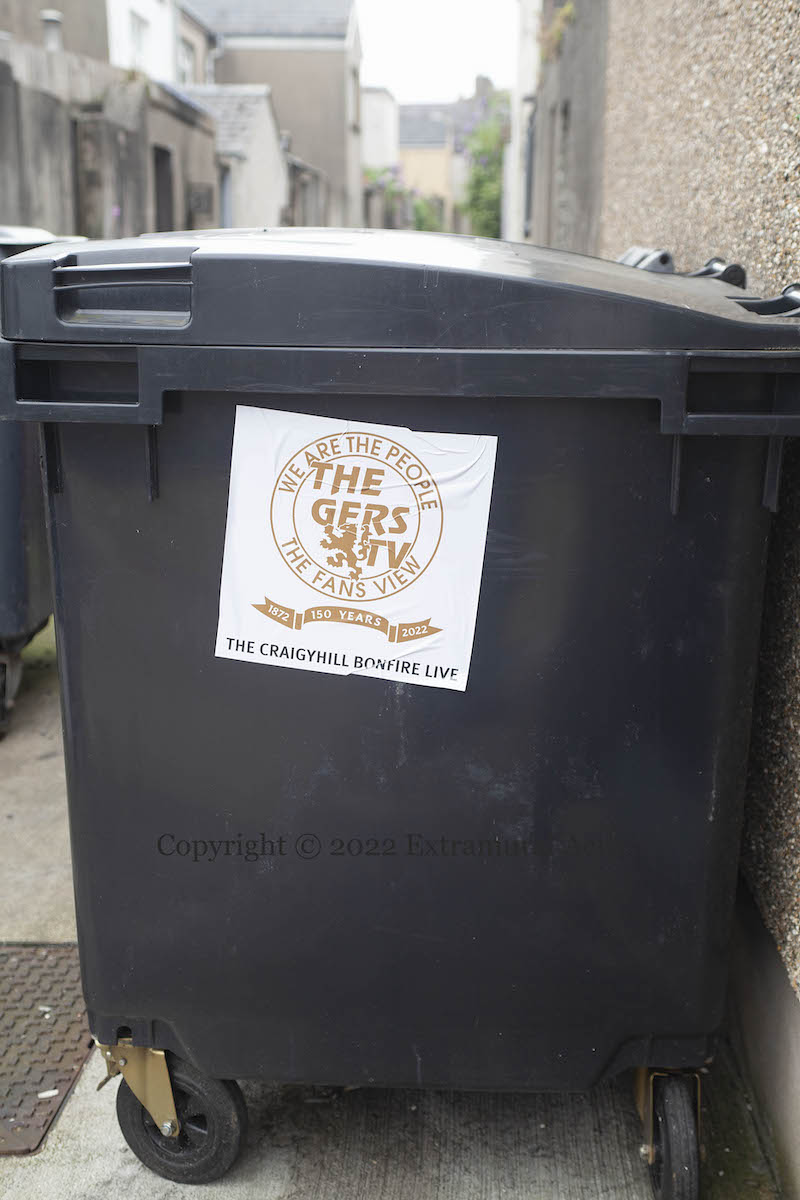
There’s also a sticker for live coverage of the Craigyhill bonfire on The ‘Gers TV.

Click image to enlarge
Copyright © 2022 Seosamh Mac Coılle
X10578 X10573 X10574 X10575 X10576 X10577 X10582 X10583 X10581 X10580 X10579

It’s A Long Way To Tullygarley

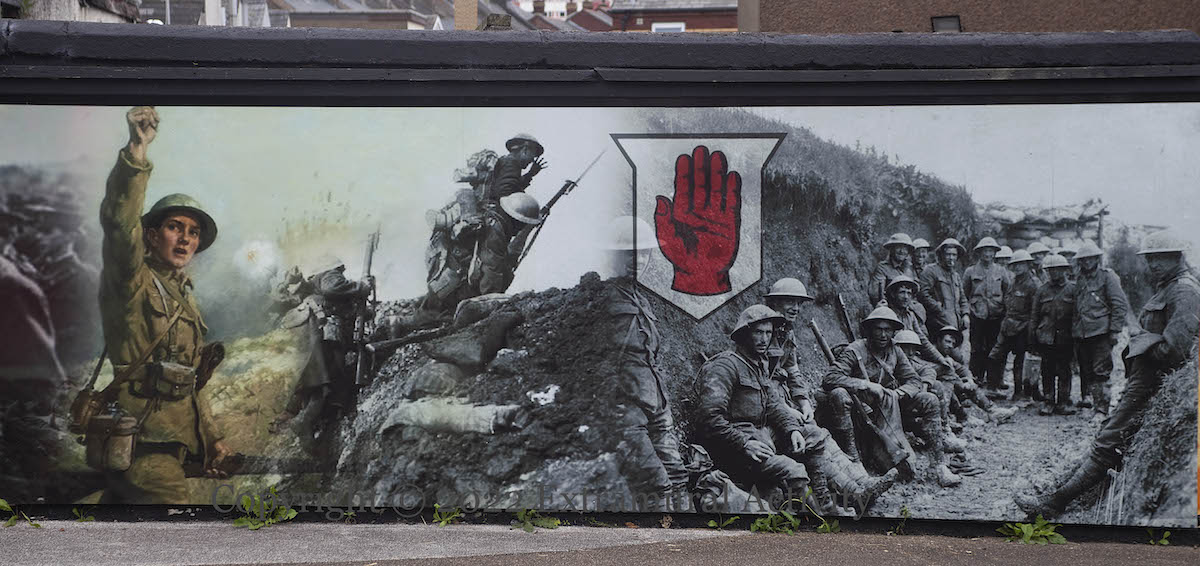
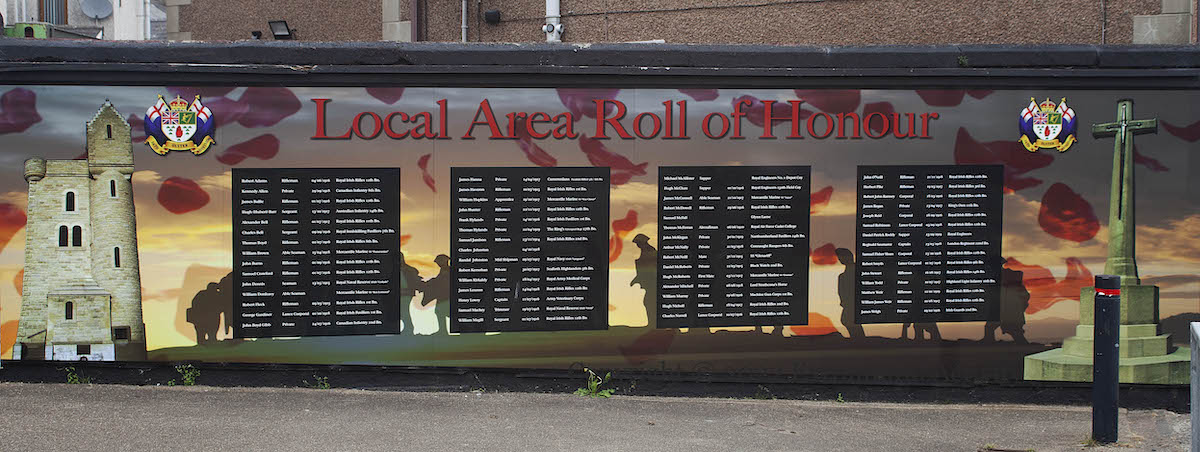
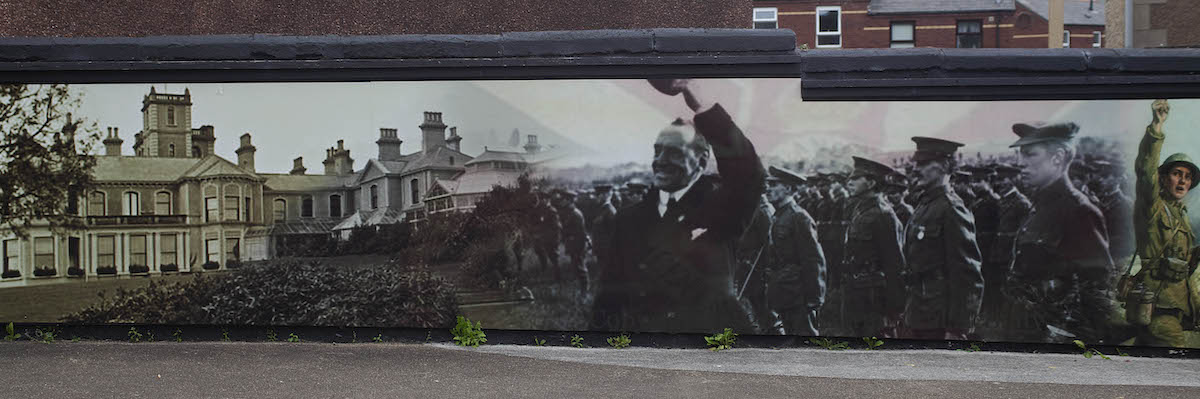
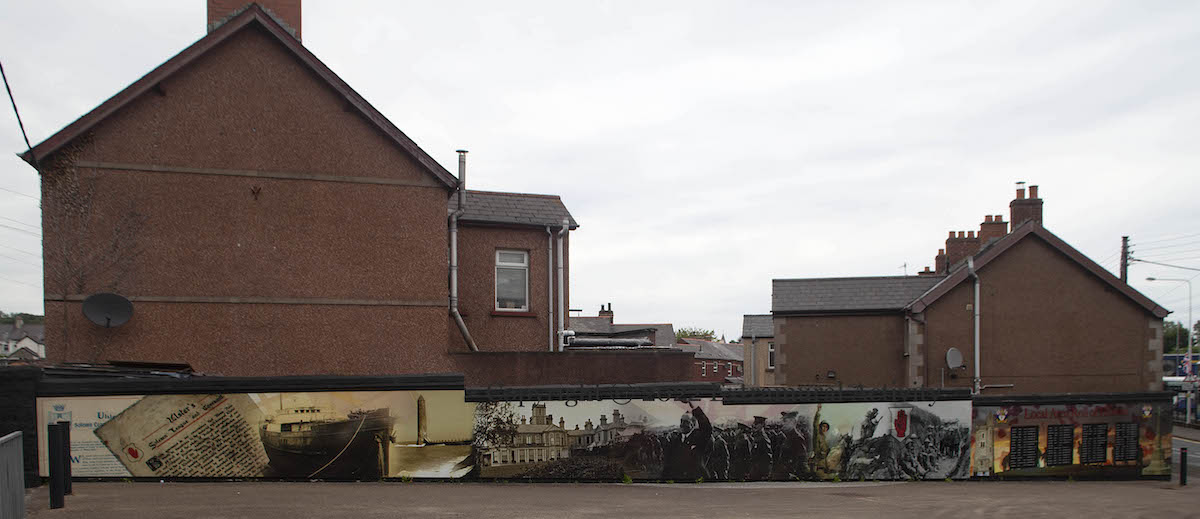
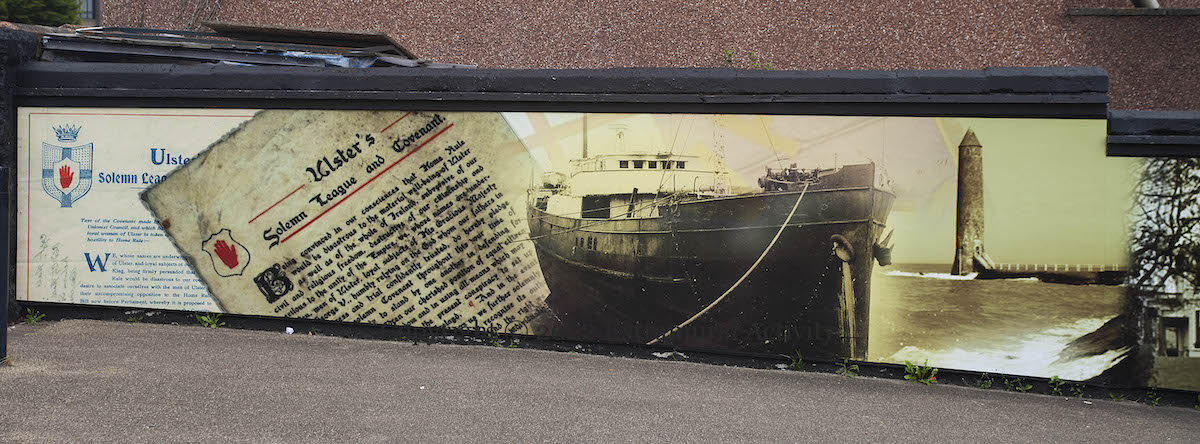
The previous Tullygarley mural on this wall included images of the local area in addition to the emblem of the 36th Division and the Clyde Valley but the new one is devoted solely to the years 1912-1918. On the left is the Ulster Covenant and the Clyde Valley, then an image of Drumalis House, Larne, which was a training ground for the Ulster Volunteers (see silent film from 1914 at BFI and photo of Carson presenting colours at Drumalis) and the base from which the gunrunning was staged, along with Carson acknowledging the troops at Glencairn (in Belfast). In the third image, the 36th (Ulster) Division goes over the top and sits in trenches. Finally, there is a ‘Local Area Roll of Honour’ listing 60 locals who died in WWI.

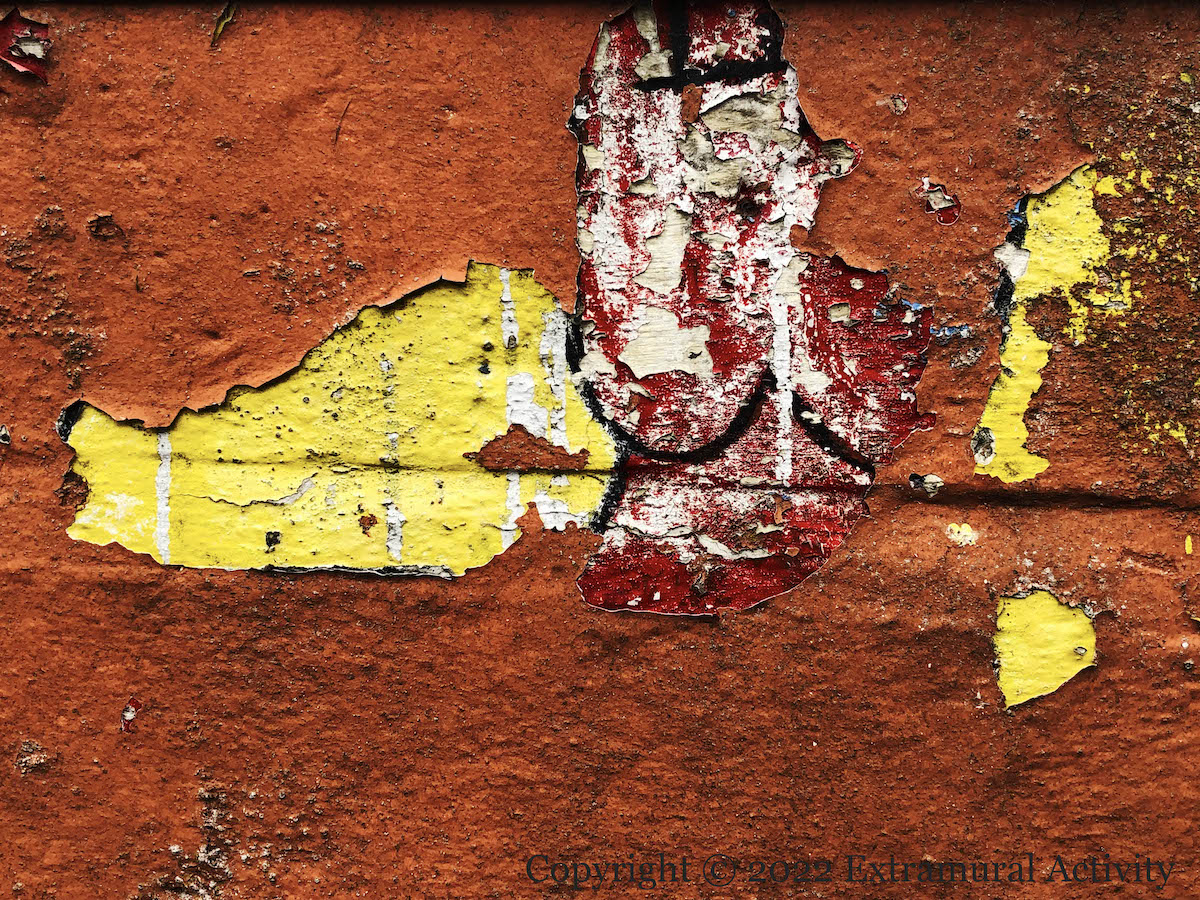
The odd-man-out image – of paint peeling to reveal a red hand – shows the re-emergence of a mural from 1999 on the side wall.

Click image to enlarge
Copyright © 2022 Seosamh Mac Coılle
X10602 [X10603] X10604 X10601 X10605 X10598 [X10599] X10600 Glynn Road Larne

Commonwealth Handling Equipment

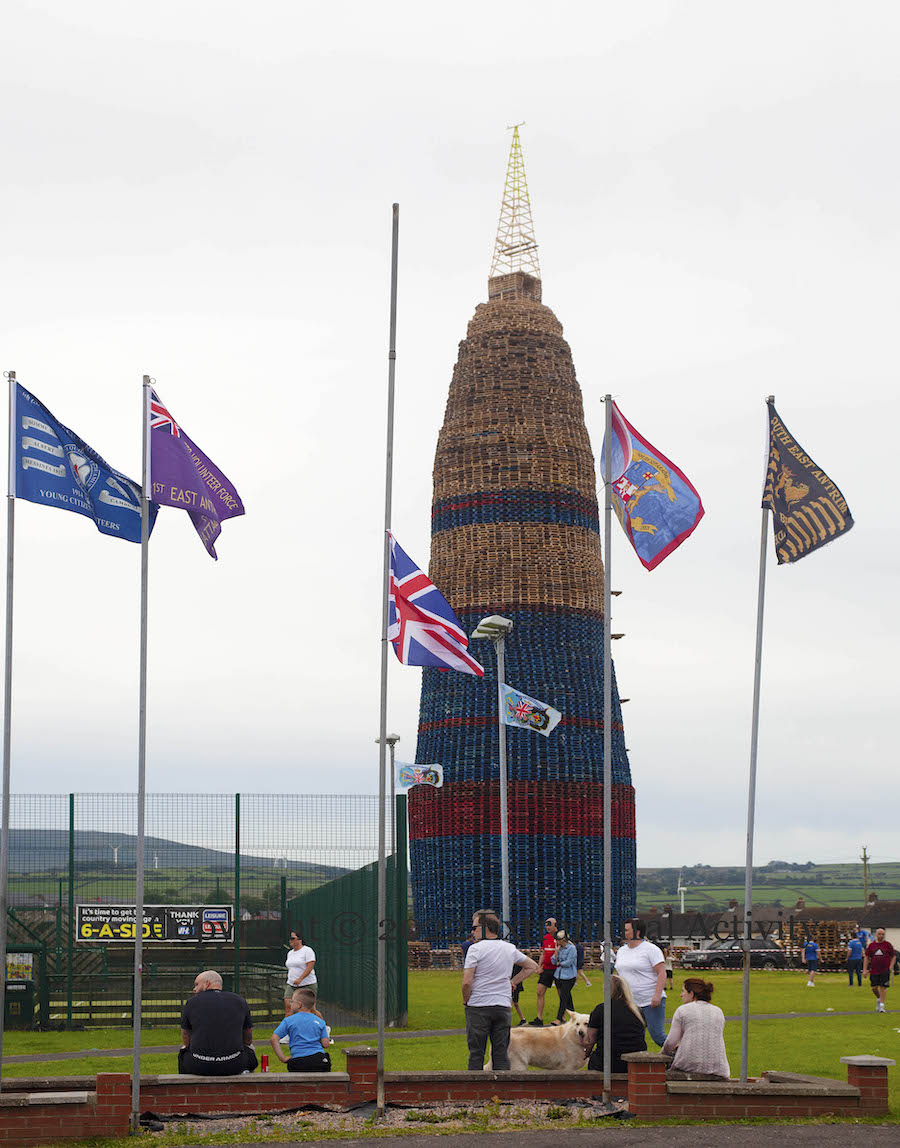
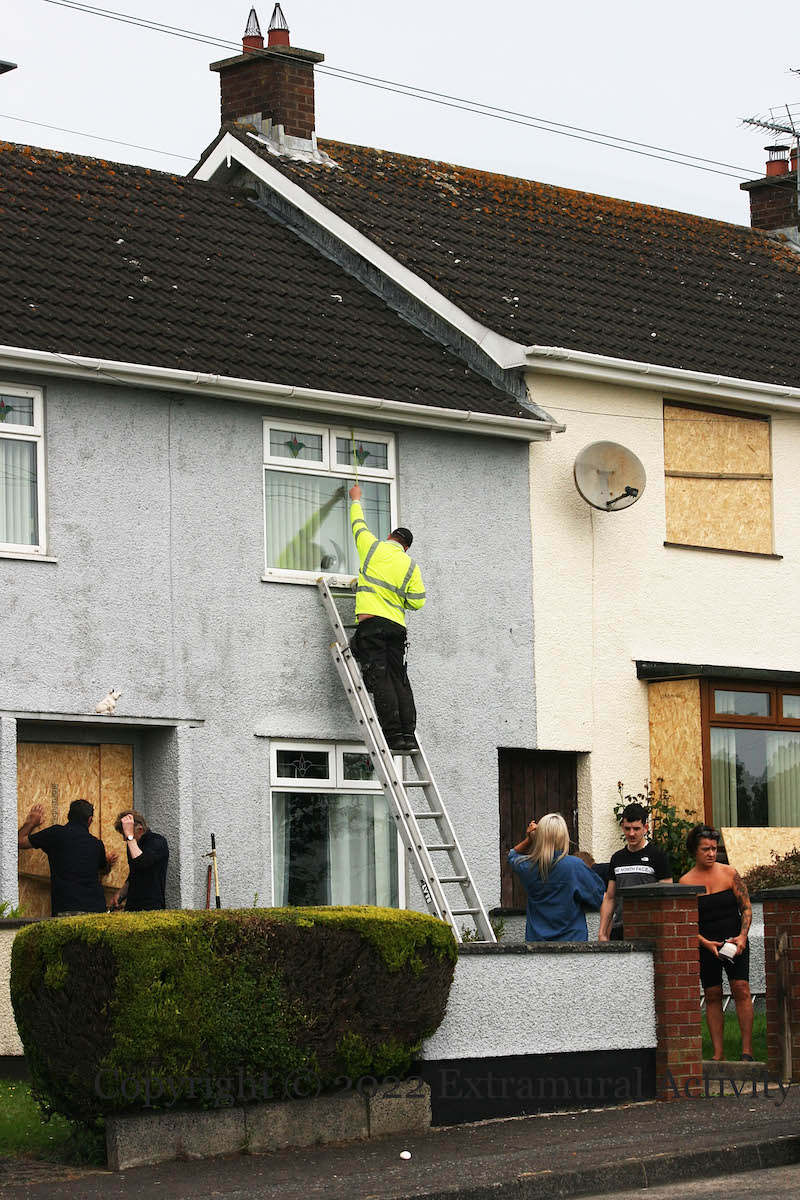
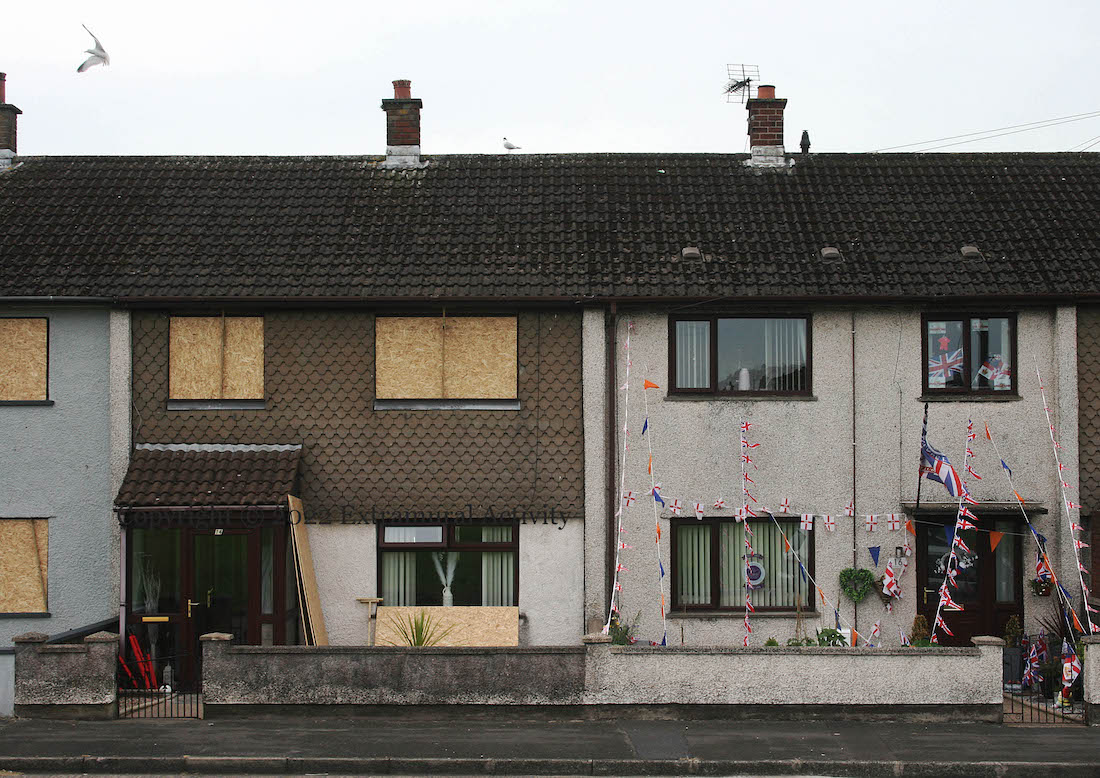
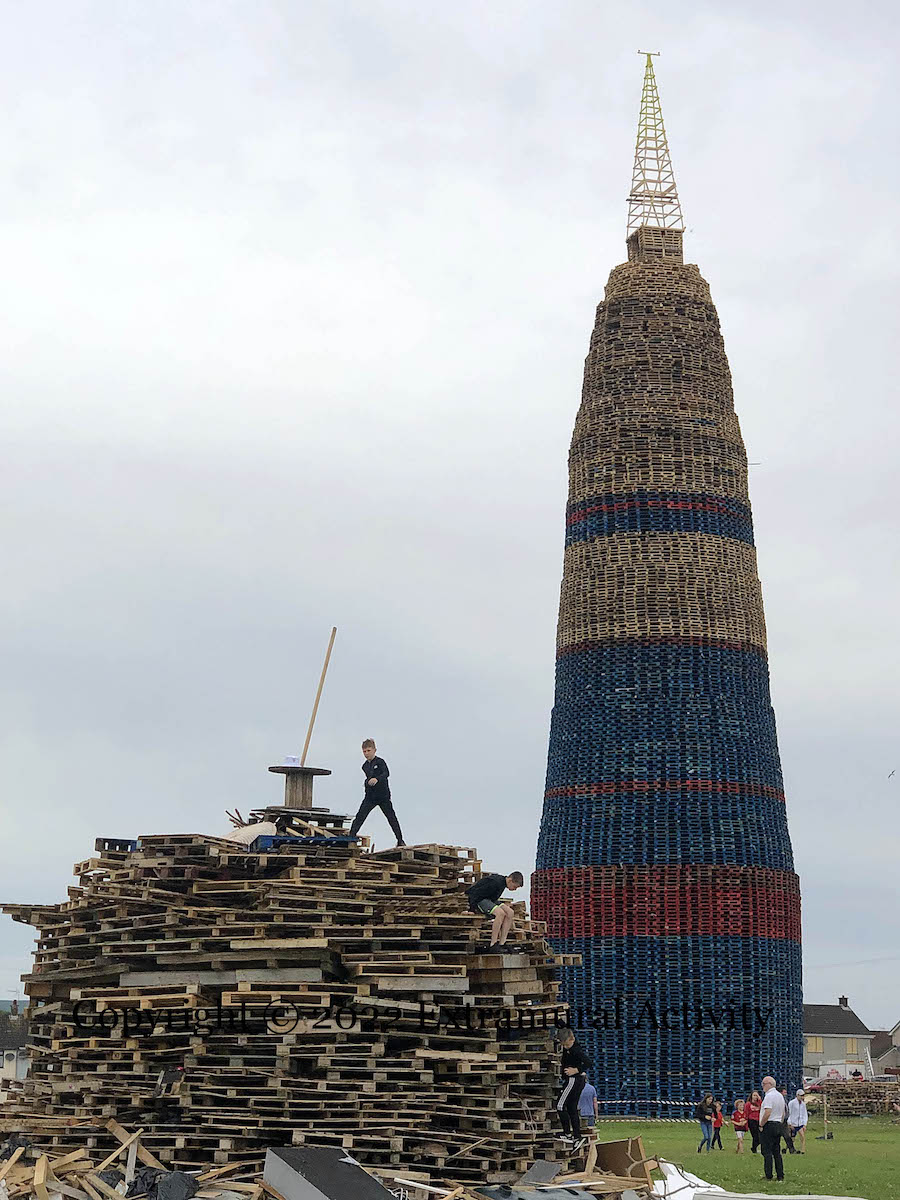
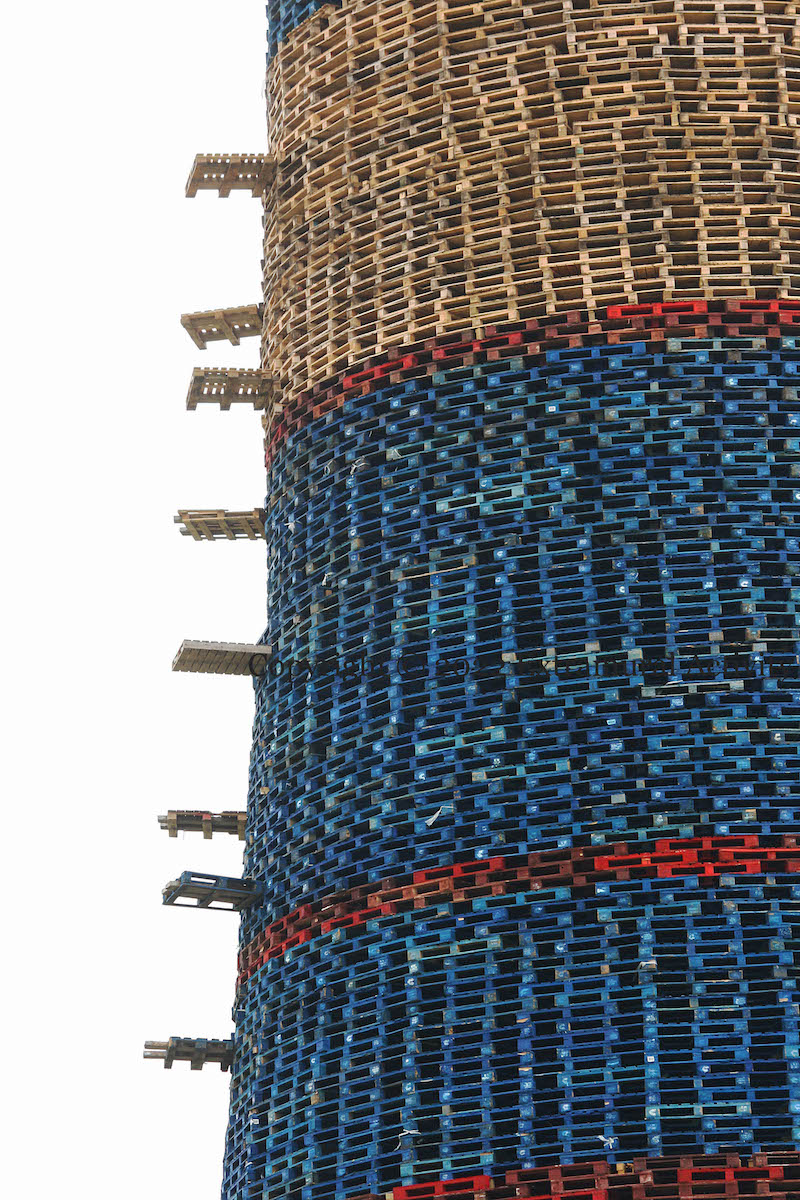
The Craigyhill (Larne) bonfire was officially measured at 202.3 feet in height, exceeding the existing Guinness World Record for tallest bonfire, a 199-ft pyre in Austria in 2019. More than 40,000 pounds was raised for the effort (Belfast Live). In preparation for lighting, houses around the green were boarded up with sheets of plywood (see below).

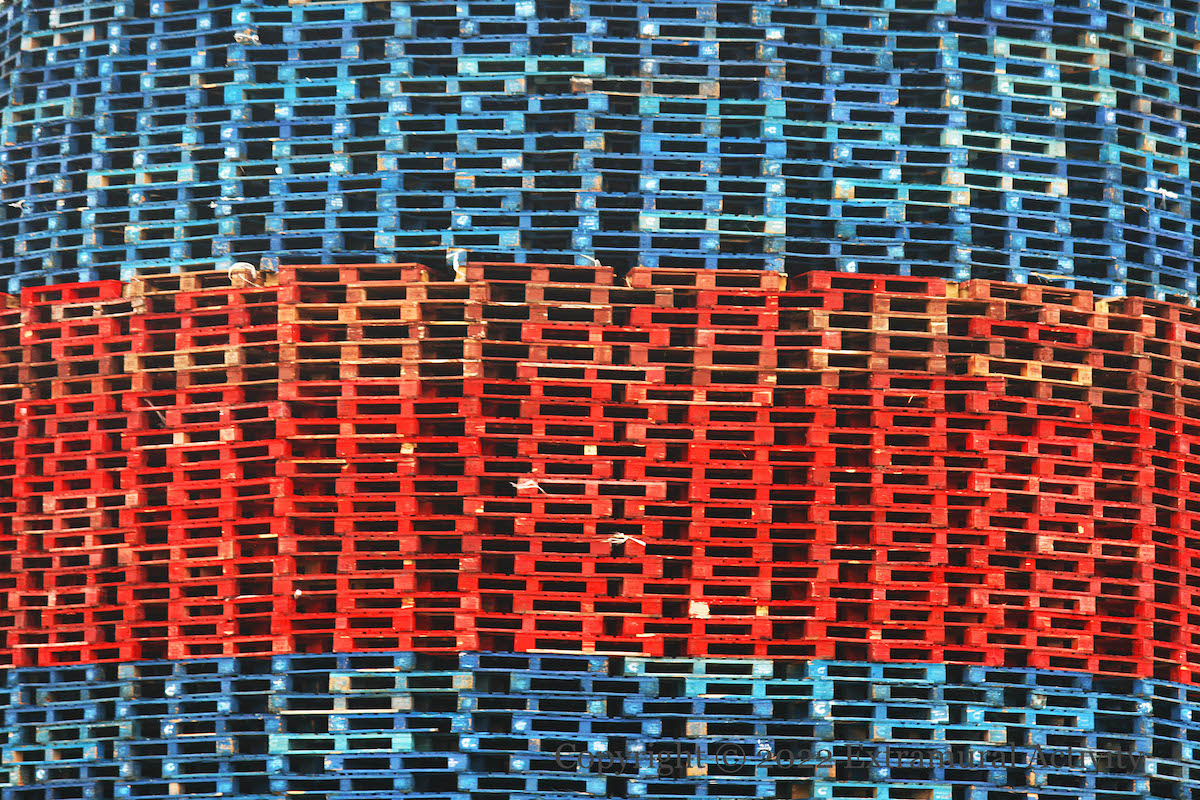
The red and blue pallets mostly go at the bottom because they are sturdier pallets; they are also longer lasting and more expensive to produce. The red pallets come from La Palette Rouge while the blue come from CHEP (Commonwealth Handling Equipment Pool) (Belfast Media). They can be legally bought or sold only by their respective companies.

In nearby Antiville, a bonfire builder fell to his death. See With Heart And Hand.

Click image to enlarge
Copyright © 2022 Seosamh Mac Coılle
X10538 X10535 X10542 X10543 X10540 [X10537] [X10541] X10536

Stop Sign

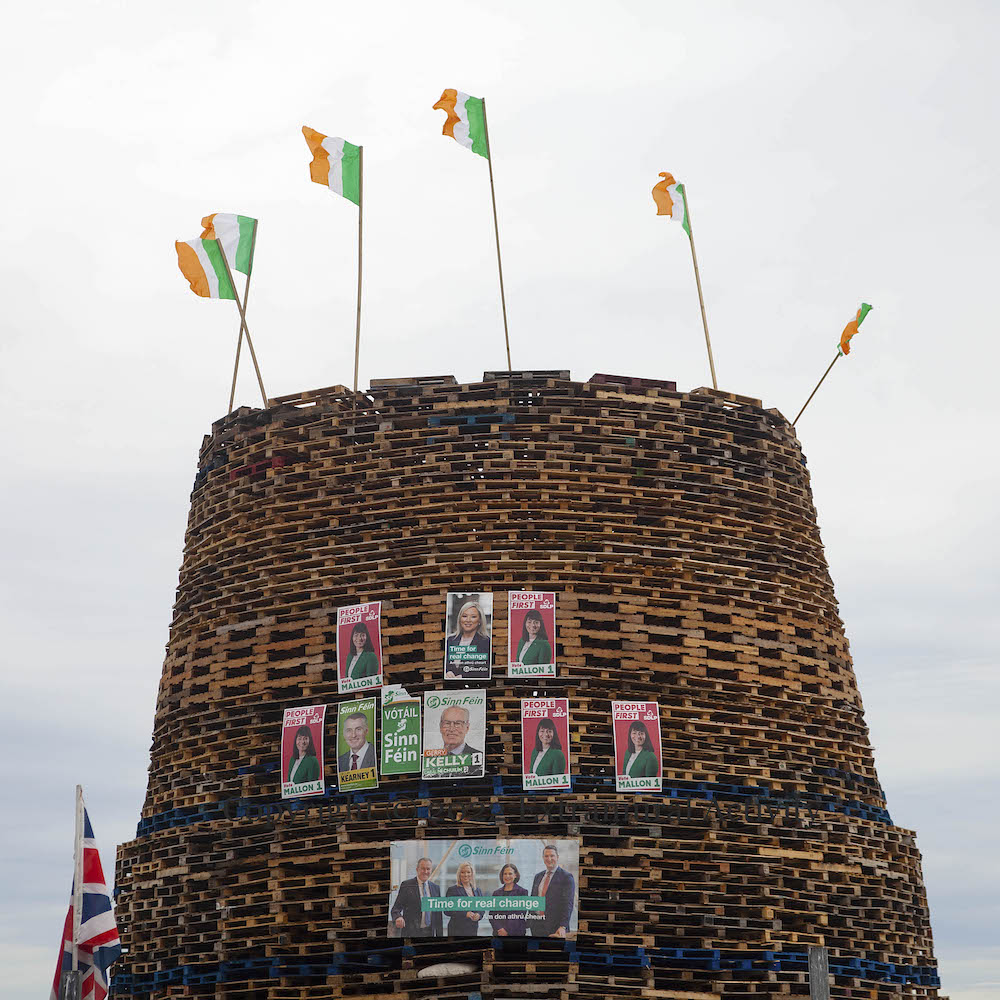
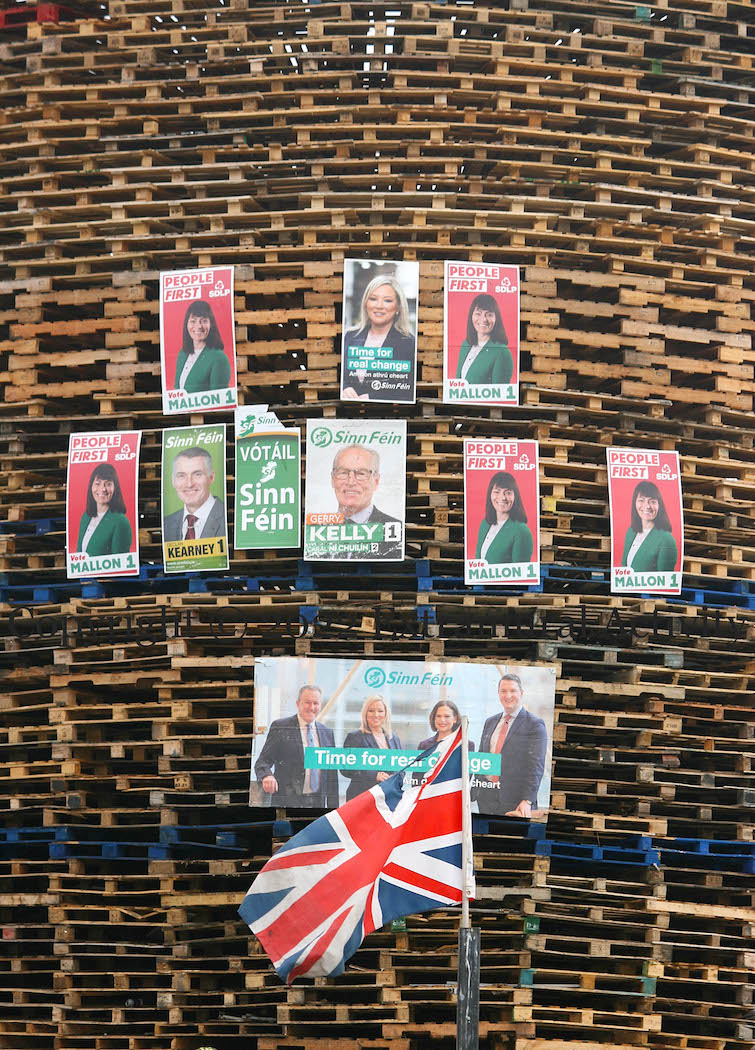
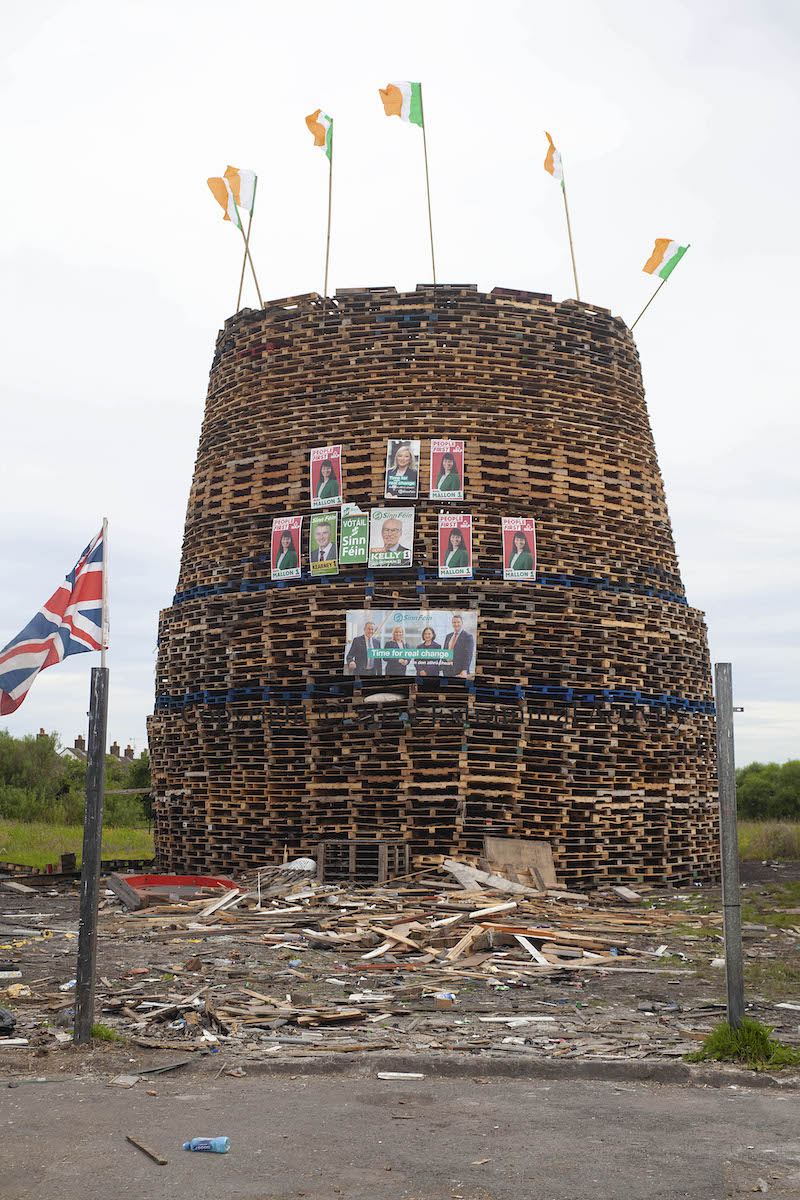
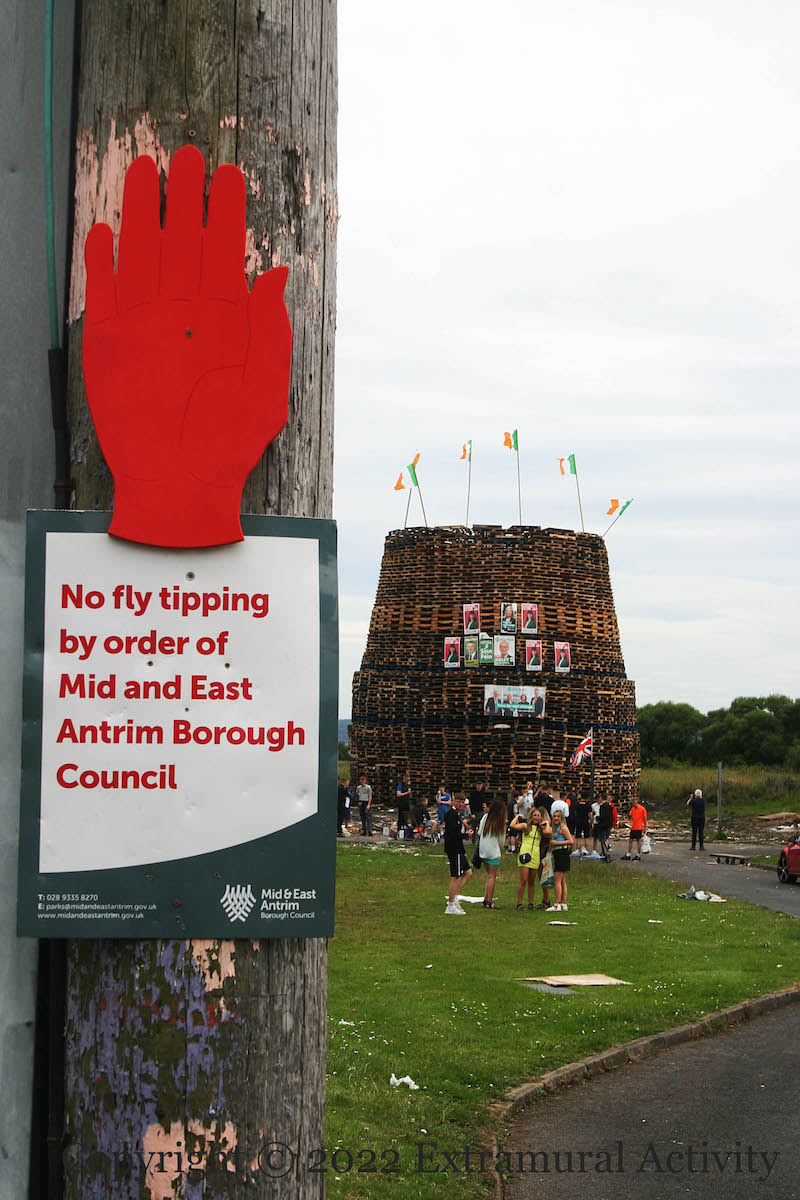
The fourth condition (‘Good Relations’) for funding for bonfires under Mid and East Antrim council’s ‘Cultural Celebrations’ grant scheme asks organisers to discourage “the flying of flags or emblems or the burning of election posters at [the] bonfire site” (MidAndEastAntrim.gov.uk). The Sunylands/Woodburn (Carrickfergus) bonfire shown in this entry – the images are from July 11th – lacked either funding or sufficient discouragement, as there are six Tricolours flying and ten Sinn Féin and SDLP election placards. The Council notice on the lamp-post, below the red hand – see the final image – is more direct, simply stating “No fly tipping, by order”.

Click image to enlarge
Copyright © 2022 Seosamh Mac Coılle
X10653 X10654 [X10651] X10652 X10650

Killarney’s World War II Hero

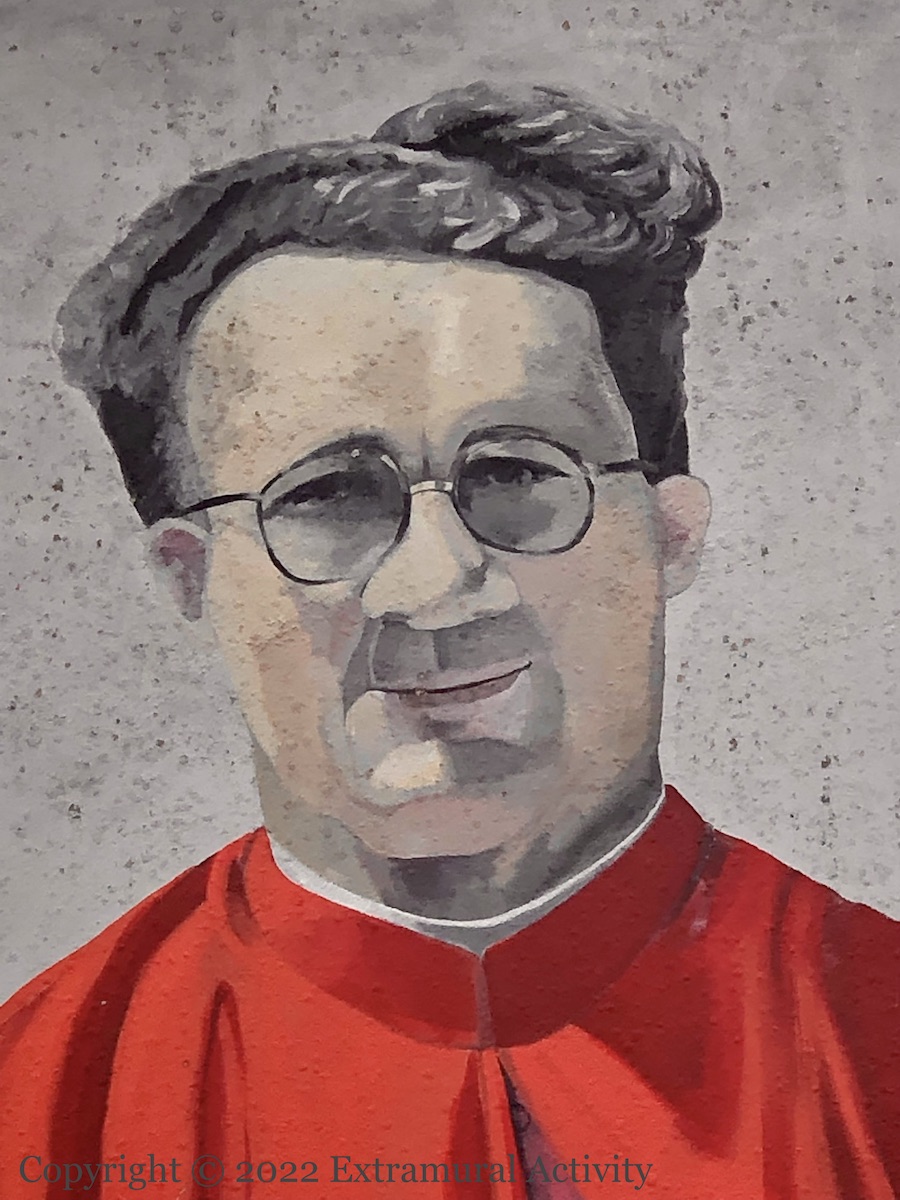
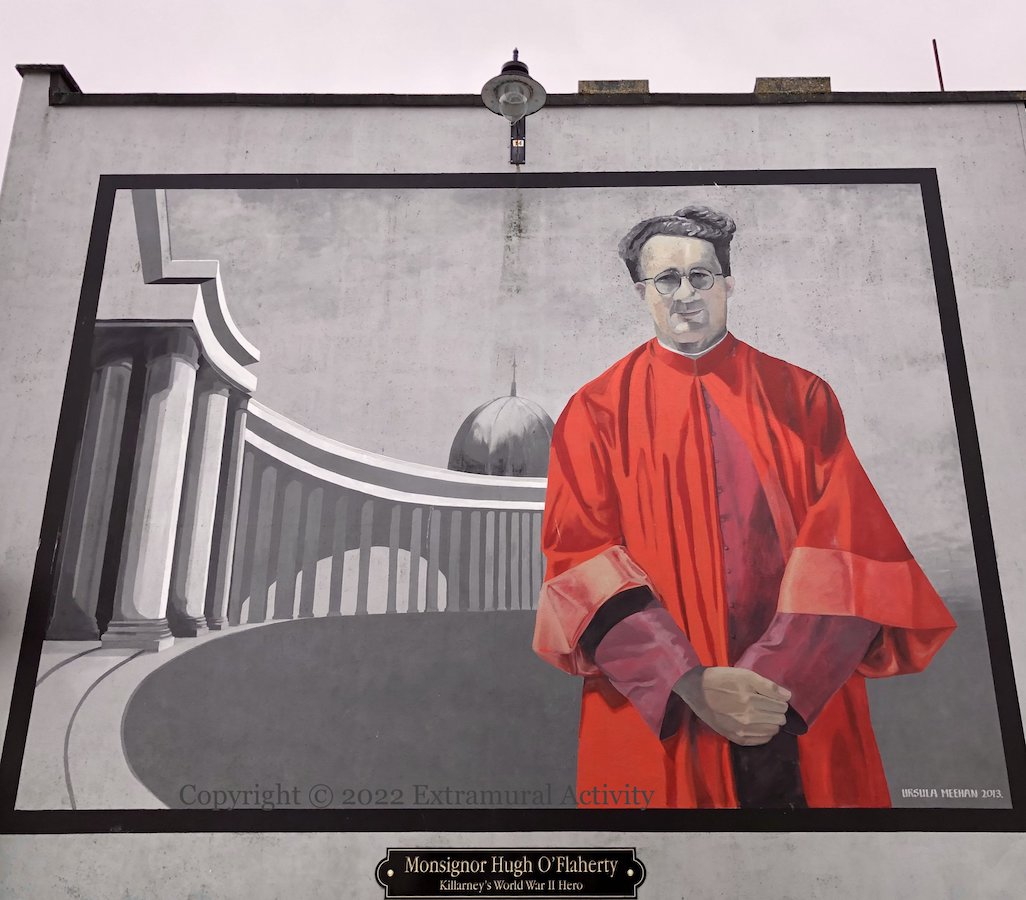
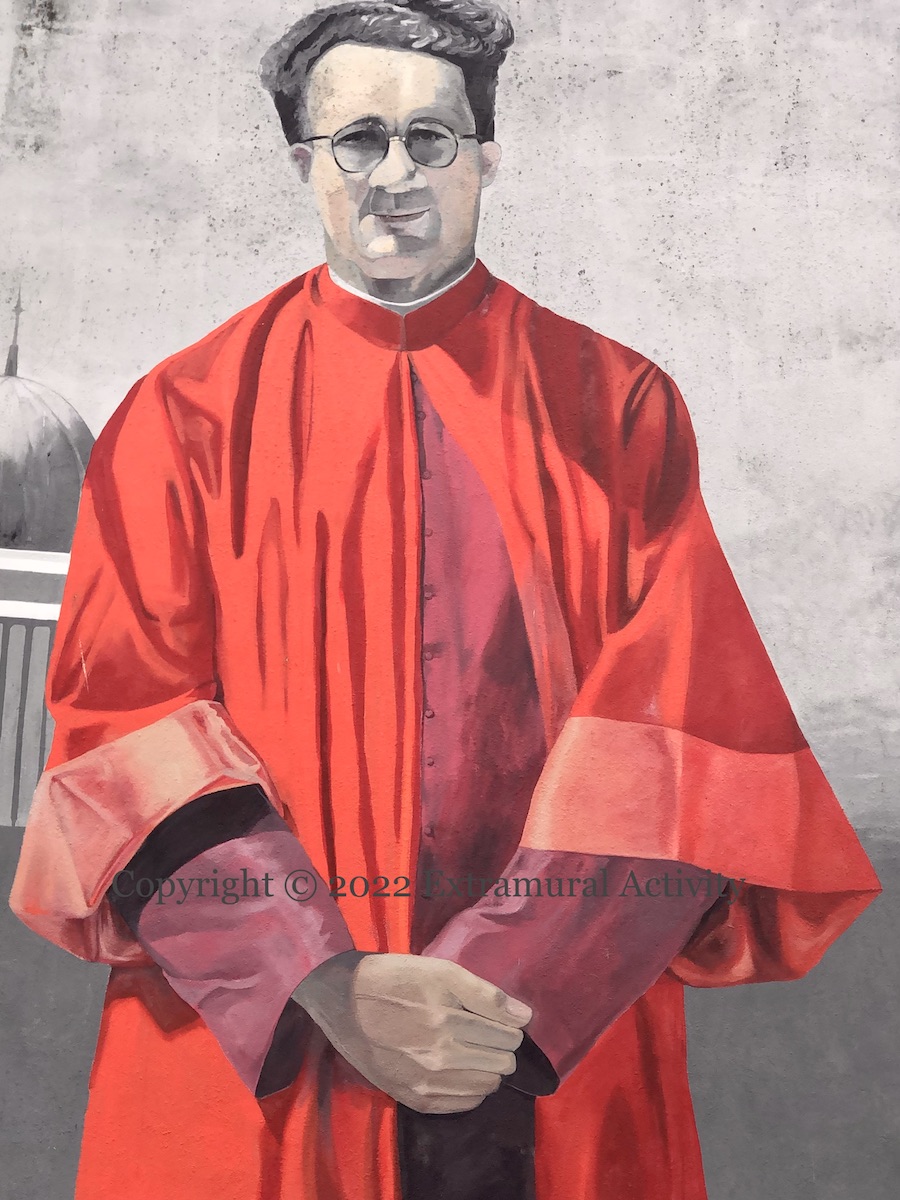
Hugh O’Flaherty – the Scarlet Pimpernel Of The Vatican – is thought to have helped save 6,425 soldiers and Jews who were at large after the fall of Mussolini but prior to the German occupation of Italy and who made it to Rome to see O’Flaherty or the still-functioning Irish embassy at the Holy See. O”Flaherty was raised in Killarney and died in Cahersiveen; he is remembered in Killarney by this mural – painted by Ursula Meehan (ig) in High Street with support from Killarney Art Gallery (web) – and a statue by Alan Ryan Hall (killarney.ie) in Mission Road.

(HughOFlaherty.com | WP | Irish Central)

Click image to enlarge
Copyright © 2022 Seosamh Mac Coılle
X10485 X10483 X10484

Cearta Teanga

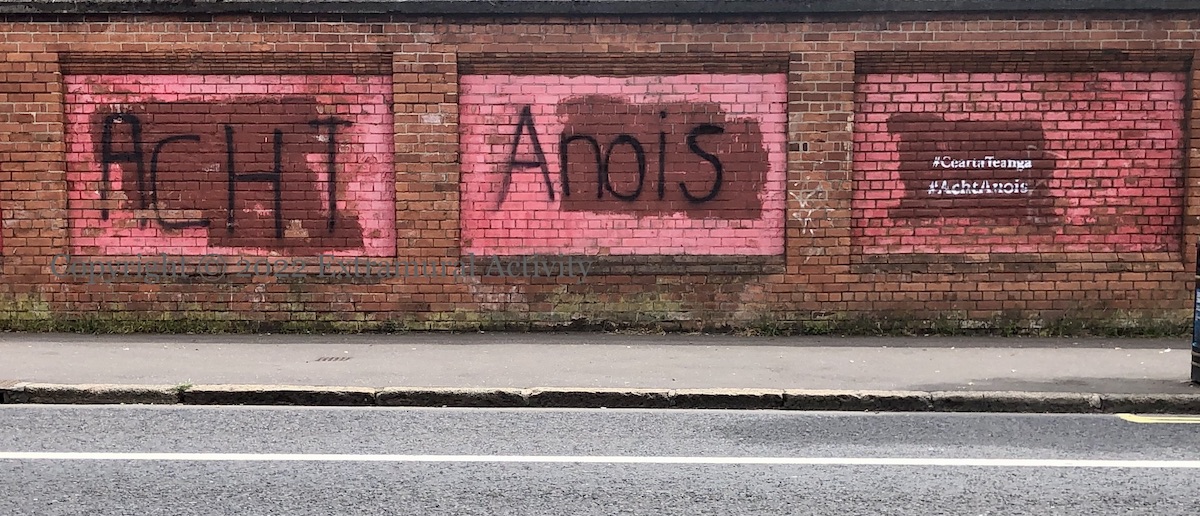
The Identity And Language bill is making its way through the House Of Lords. Here is the web page for the stages of the processes. The “report” stage – when it is open to the whole body for amendment – begins on July 6th; the bill drew criticism from DUP peers during the second reading (BelTel). The graffiti and stencil shown above in support of an Act is on the Falls Road.

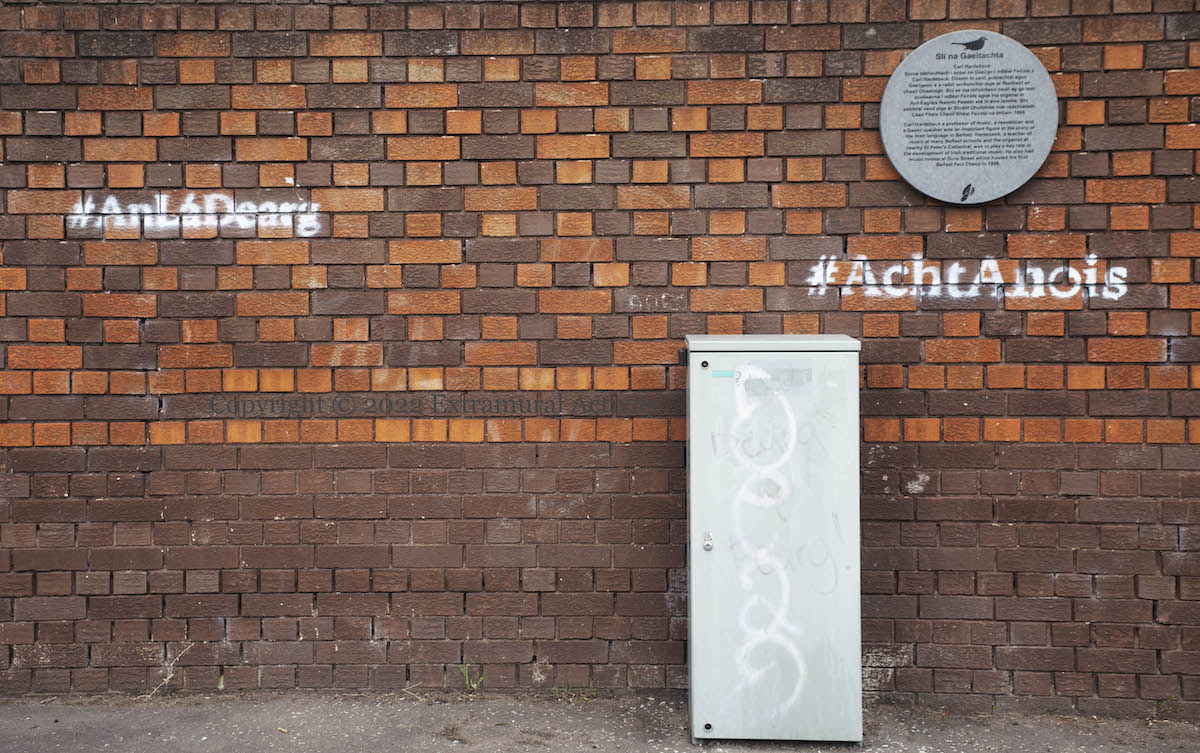
The second image is from Divis Street. For Carl Hardebeck, see Music – Light In Darkness.

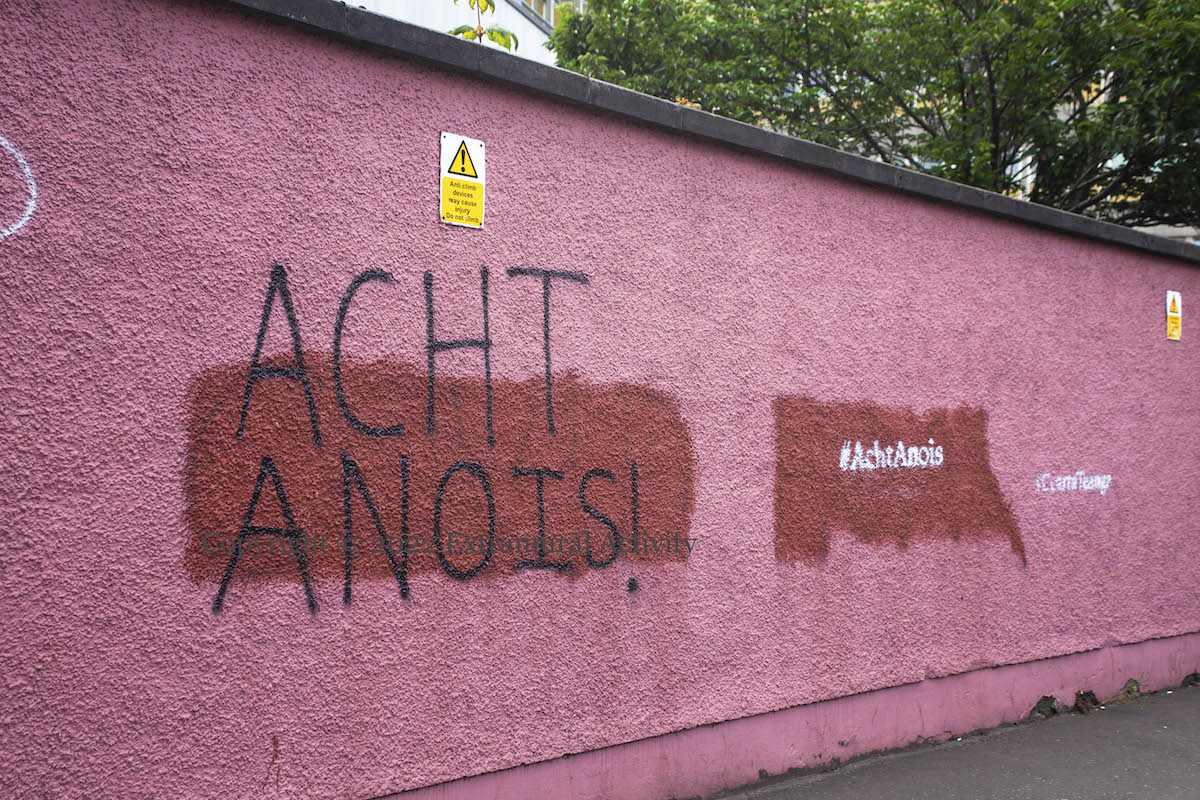
The third image is from the RVH wall, next to Victory To The Workers.

Previously from this year: A Tale Of Two Protests | Multicultural East Belfast; from earlier: Acht Anoıs | #AchtAnoıs.

Click image to enlarge
Copyright © 2022 Seosamh Mac Coılle
X10399 [X10400] X10702 X10495 [X10494] [X10496] Act now Cearta Teanga slí na gaeltachta belfast feıs cheoıl in 1898