Something In The Air

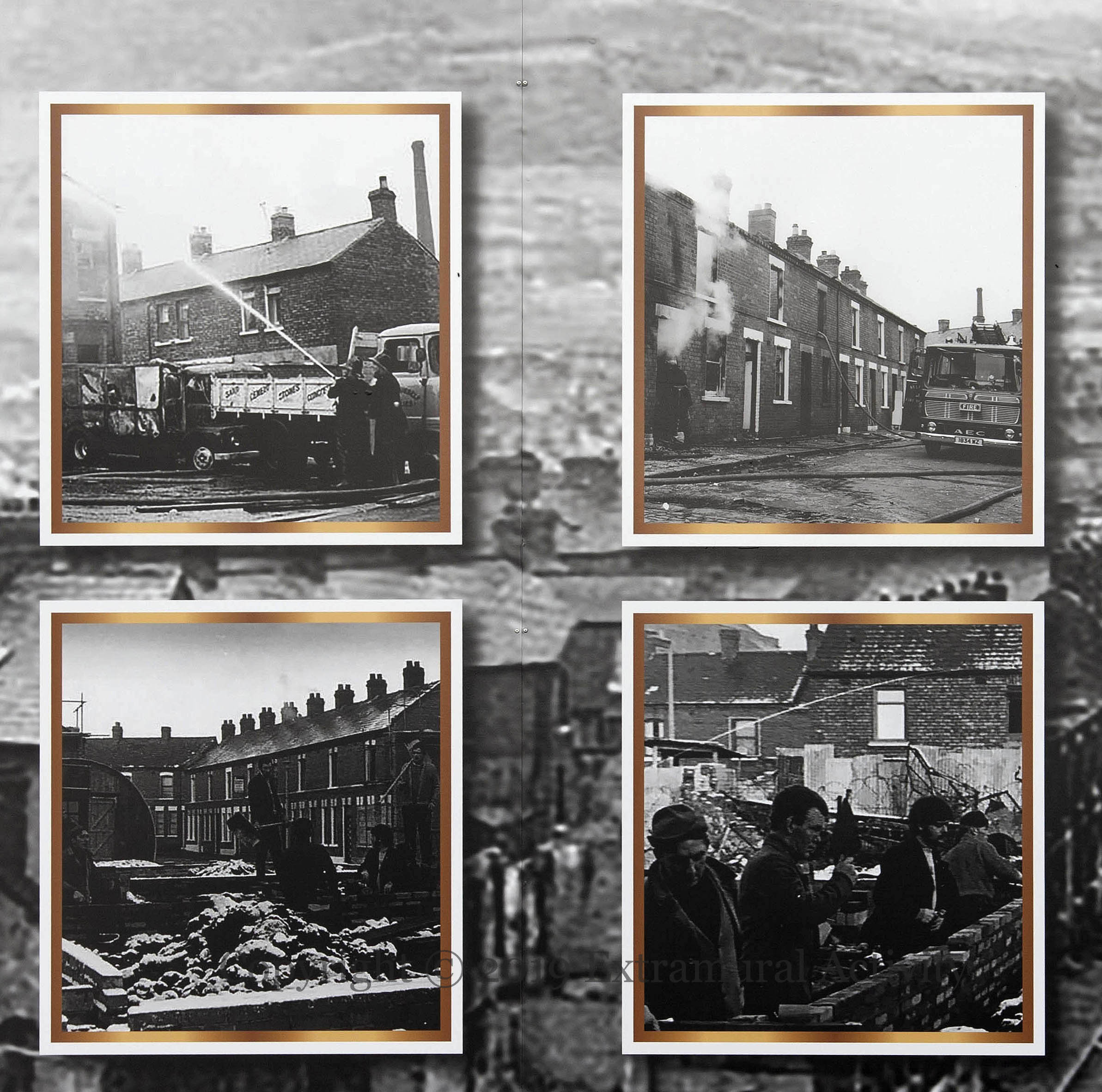
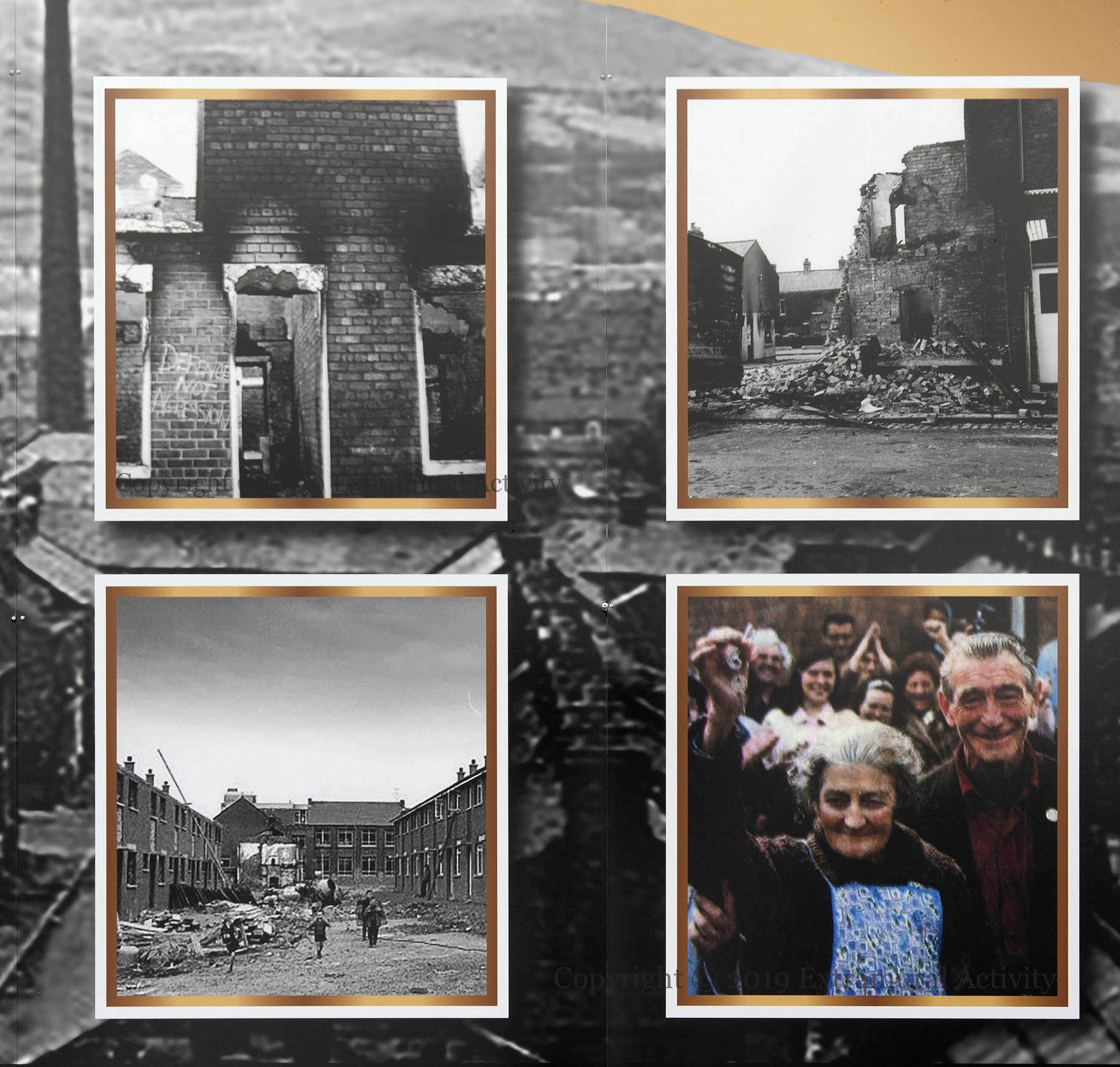
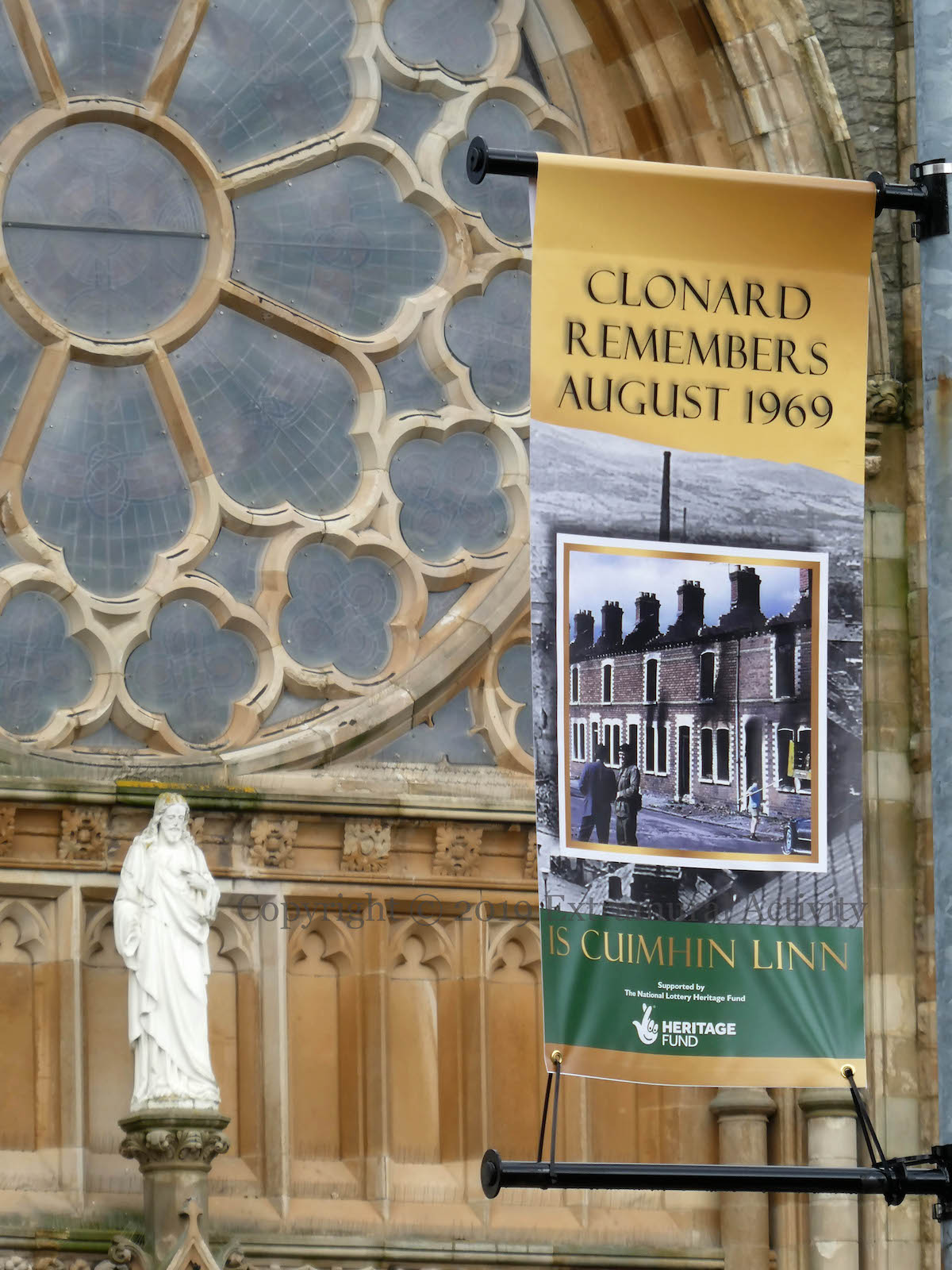
Clonard monastery (and church of the Holy Redeemer) date back to 1897, built on the grounds of Clonard House (1843) and including 3.5 acres to provide spiritual services to the burgeoning Catholic population of west Belfast, about 30,000 in number (Ita | Rafferty). On the night of August 15th, 1969, the complex came perilously close to destruction, like the houses in the streets around it, but became of focal point of locals’ attempts to defend the area (Murray).

For other posts about the 50th anniversary of the August riots, see The Pogrom Of 1969 | Clonard Remembers | End Apartheid | Derry, Aughrim, Enniskillen And Ardoyne.
Click image to enlarge
Copyright © 2019 Seosamh Mac Coılle
X06761 [X06762] X06757 X06760
Active Service

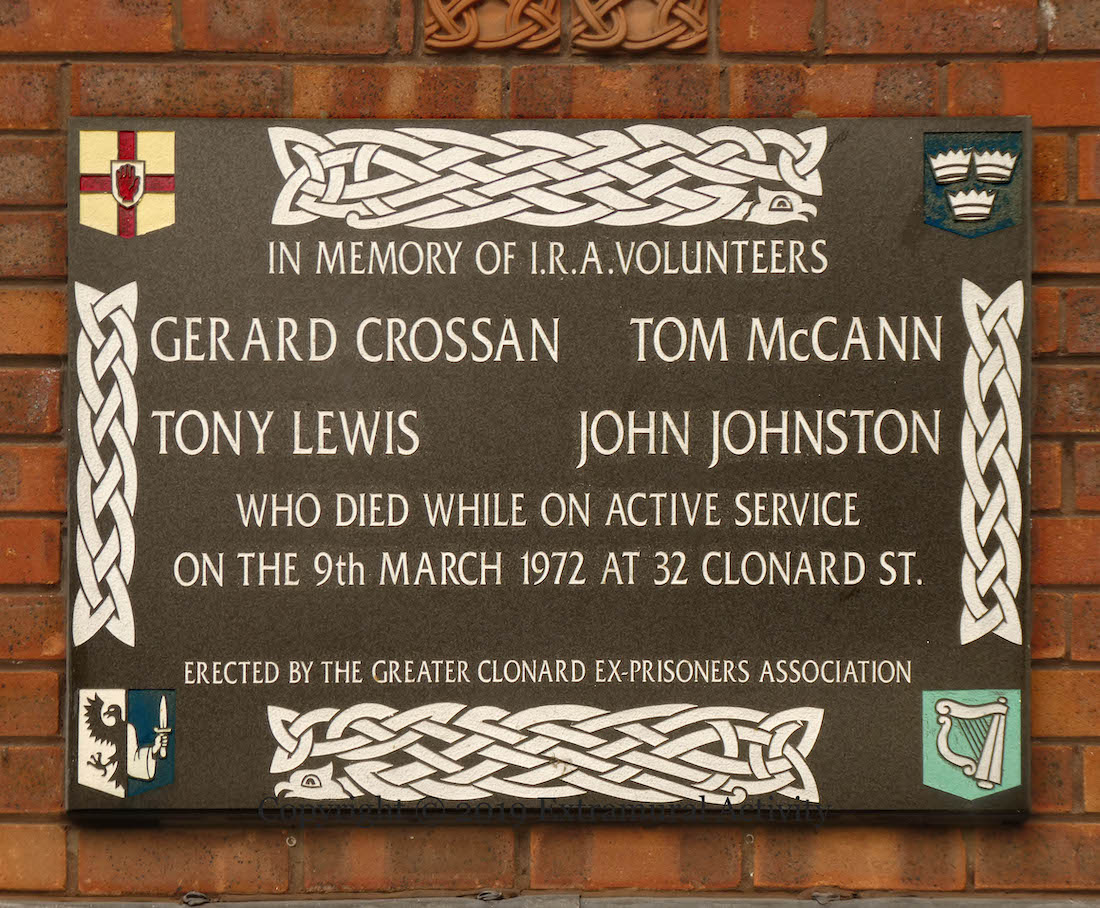
“In memory of IRA volunteers Gerard Crossan, Tom McCann, Tony Lewis, John [Sean] Johnston, who died while on active service on the 9th March 1972 at 32 Clonard St. Erected by the Greater Clonard Ex-Prisoners Association.” The four died in a premature explosion (“active service”) presumably at the home of Lewis, who lived in Clonard Street. Crossan and Johnston were 19, McCann and Lewis were 20 (The Troubles 11).

Clonard Street, Belfast.

Click image to enlarge
Copyright © 2019 Seosamh Mac Coılle
X06765

The Chronicles Of A People

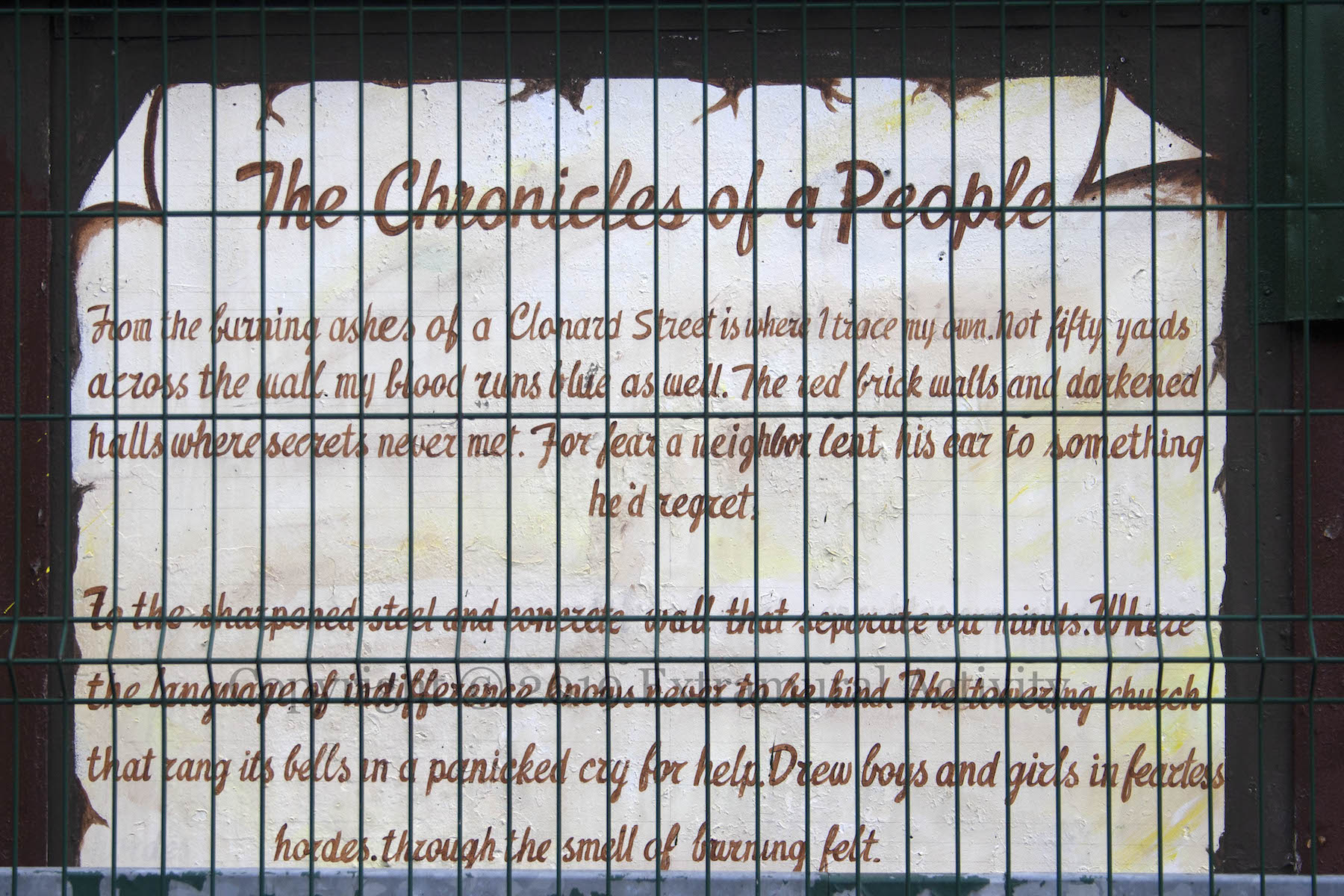
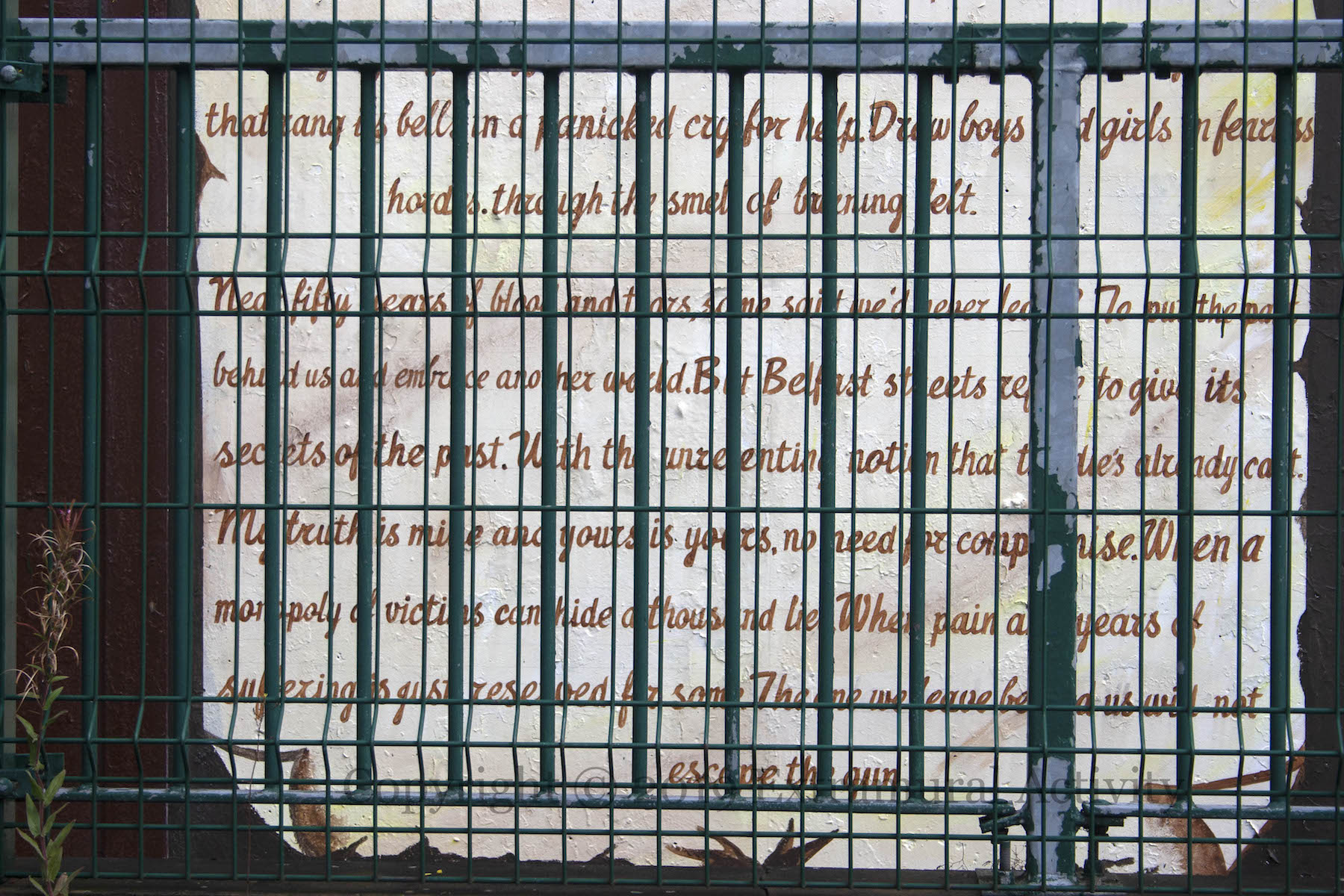
Republican Seán Murry’s great-grandfather was in the British Army and Orange Order and his family lived on the Shankill Road. One of his daughters married a Catholic and converted. The history of the family on both sides of the wall is also depicted Murray’s short video ‘The Wall‘. The poem is next to Clonard Remembers.

“From the burning ashes of a Clonard Street is where I trace my own. Not fifty yards across the wall, my blood runs blue as well. The red brick walls and darkened halls where secrets never met. For fear a neighbor lent his ear to something he’d regret.//

To the sharpened steel and concrete wall that separates our minds. Where the language of indifference knows never to be kind. The towering church that rang its bells in a panicked cry for help. Drew boys and girls in fearless hordes through the smell of burning felt.//

Near fifty years of blood and tears some said we’d never learn? To put the past behind us and embrace another world. But Belfast streets refuse to give its secrets of the past. With the unrelenting notion that the die’s already cast. //

My truth is mine and yours is yours, no need for compromise. When a monopoly of victims can hide a thousand and lies. When pain and years of suffering is just reserved for some. The one we leave behind us will not escape the gun.”

Click image to enlarge
Copyright © 2019 Seosamh Mac Coılle
[X06752] X06753 X06754 X06751

Clonard Remembers

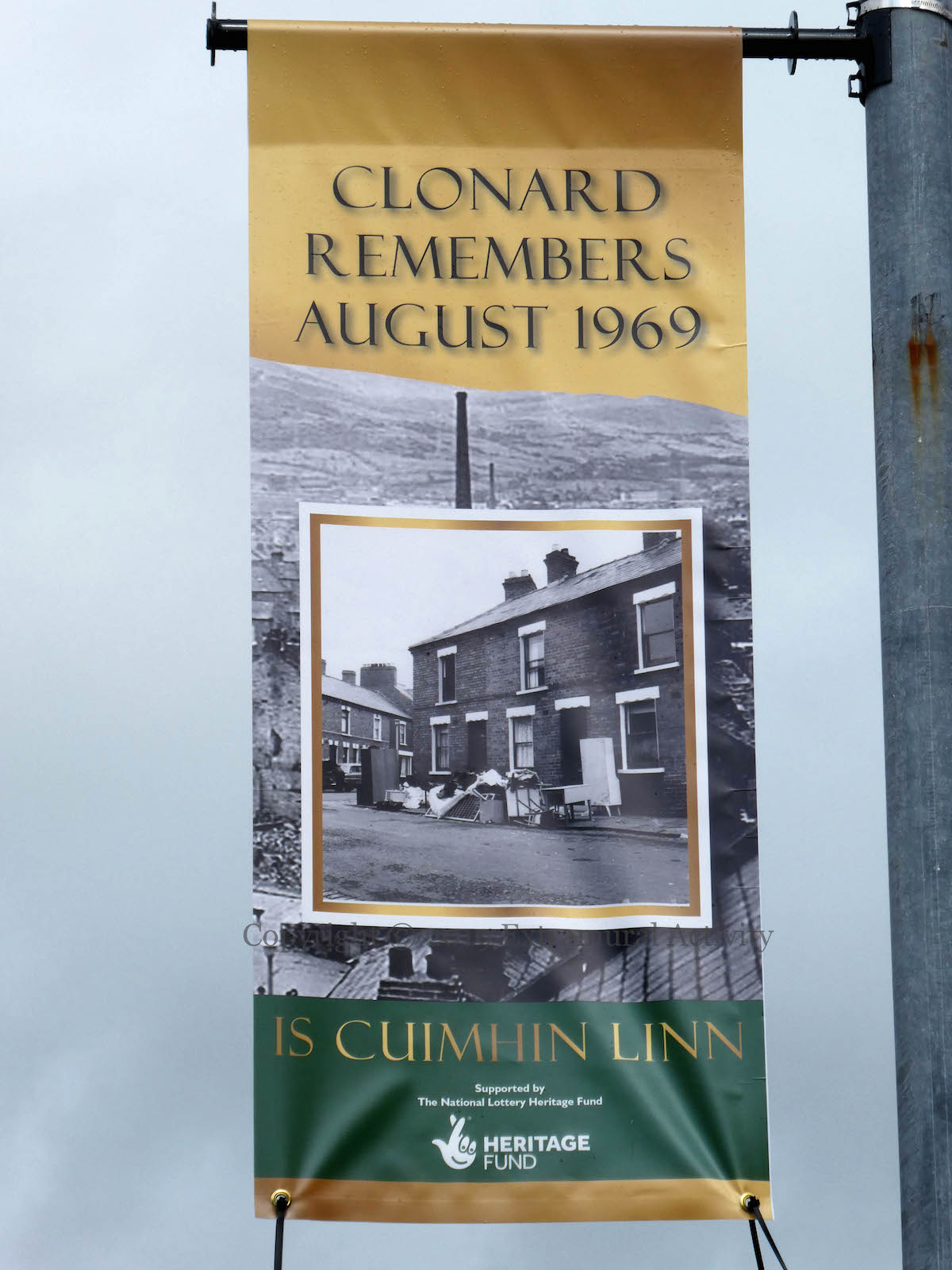
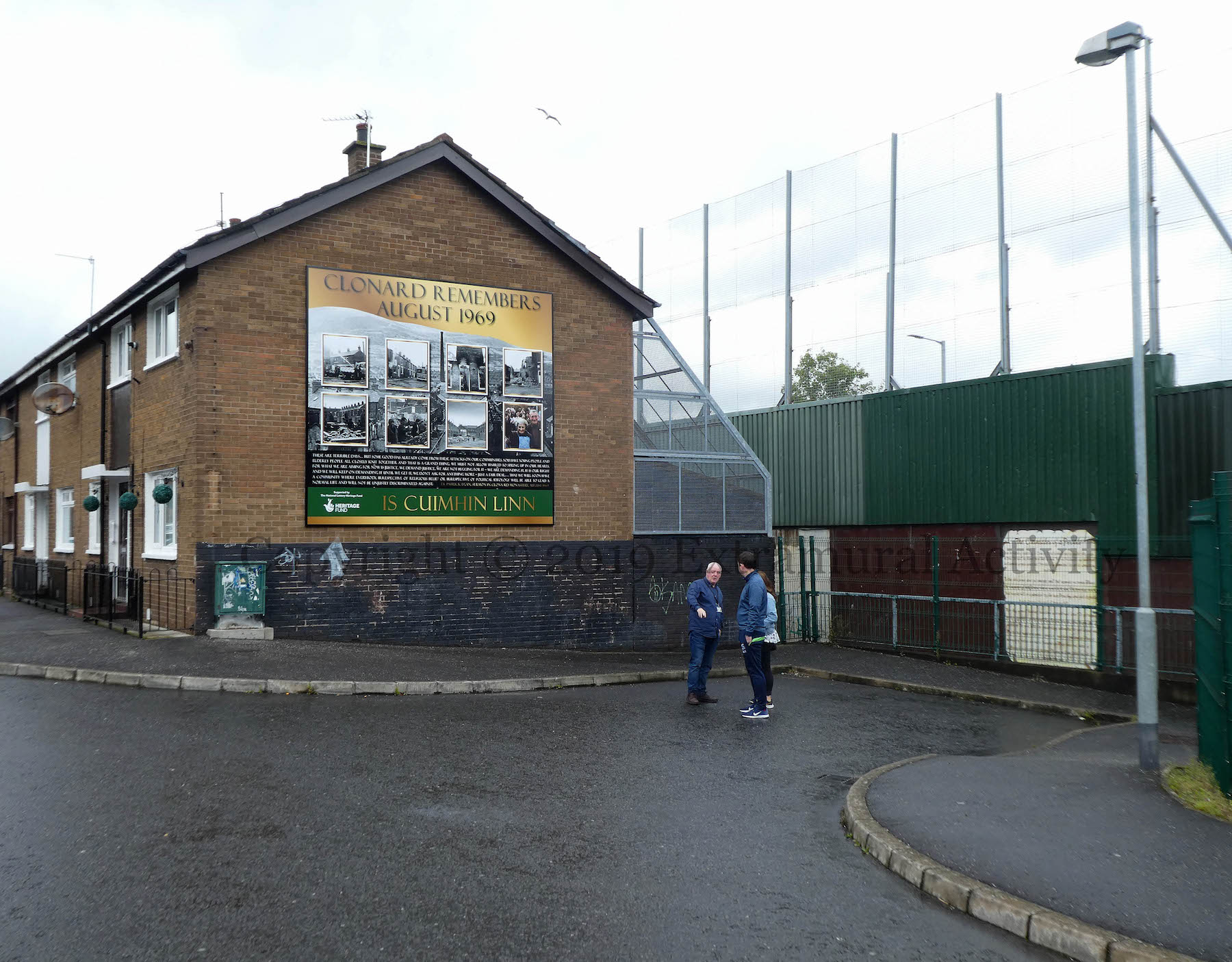
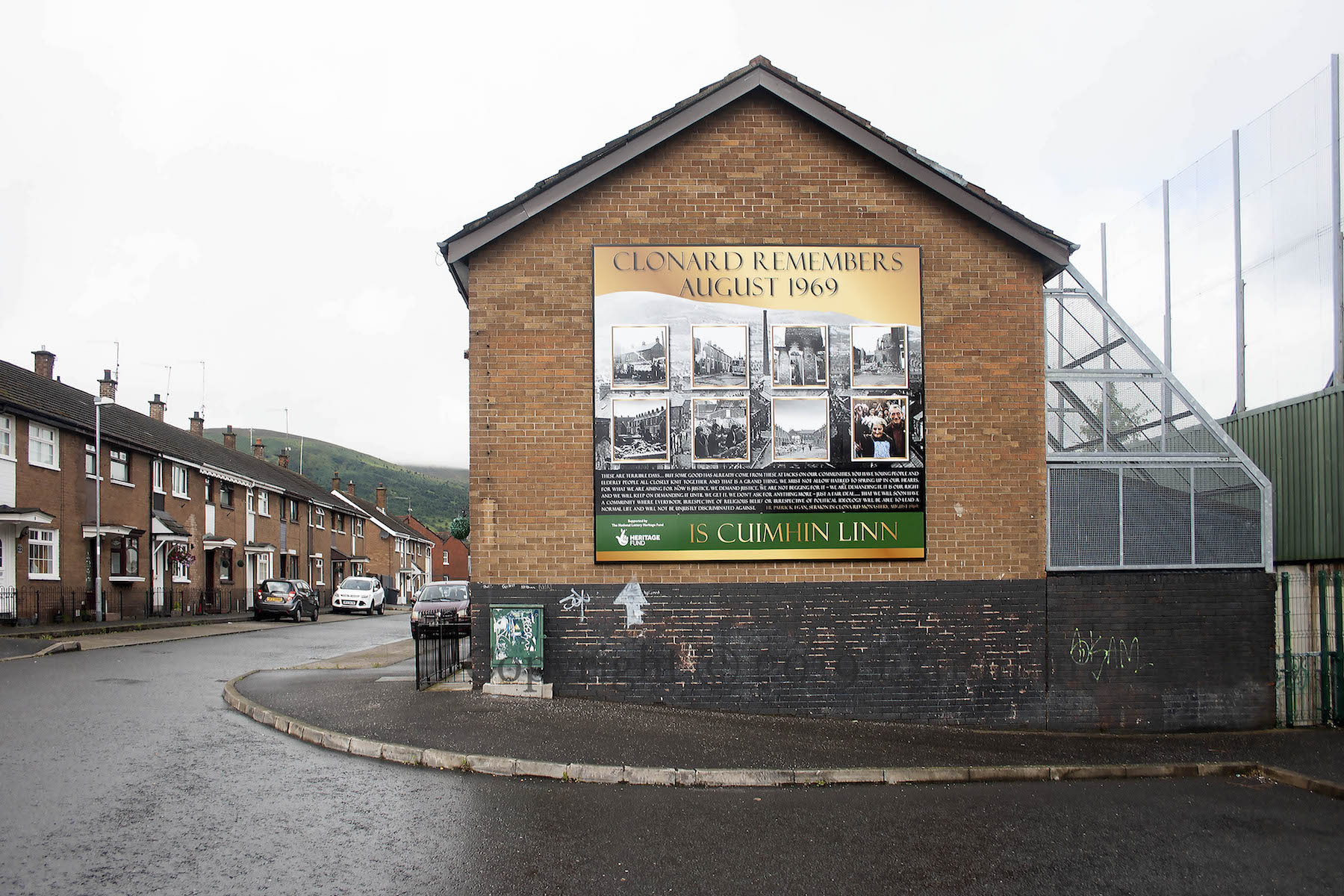
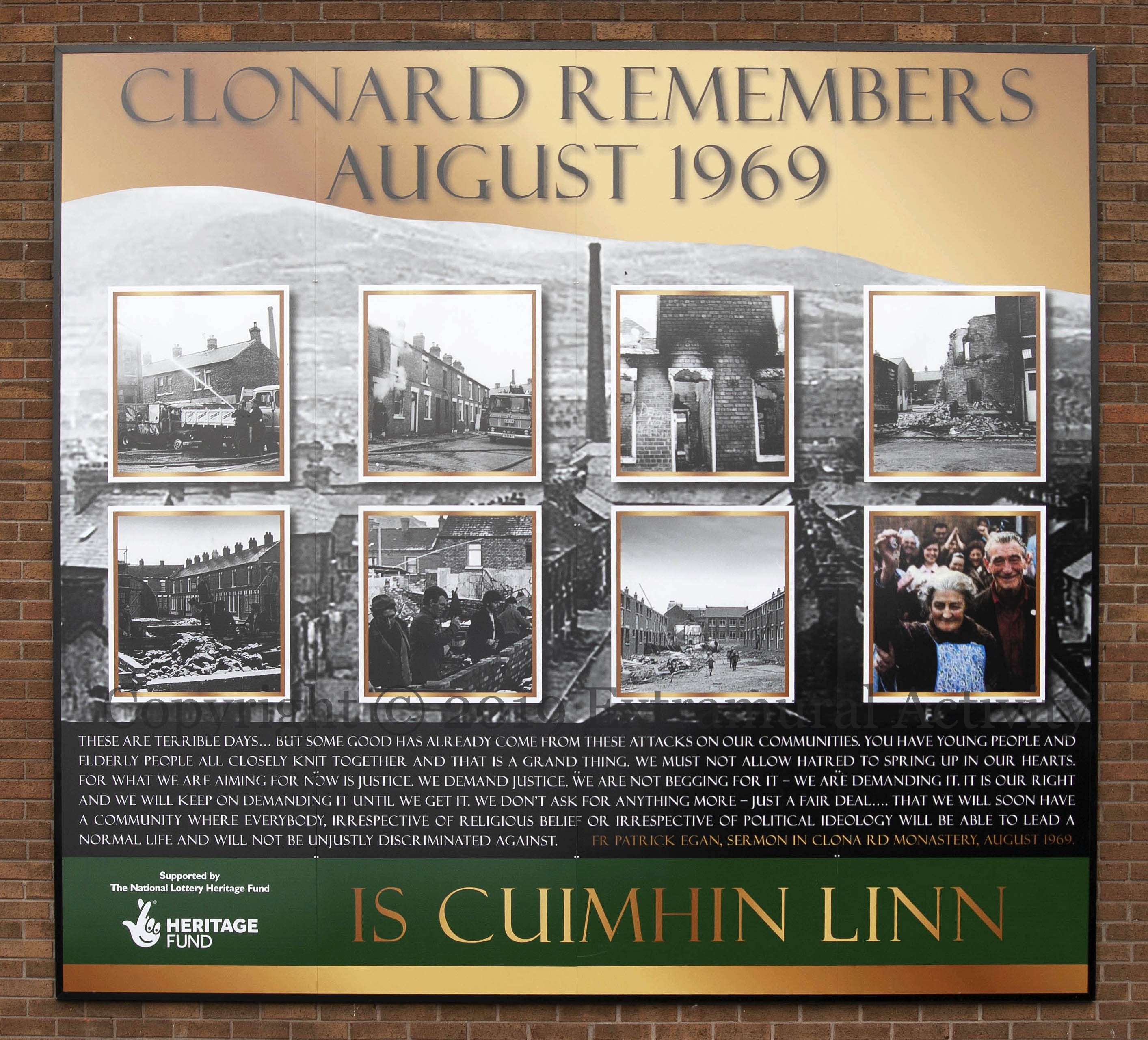
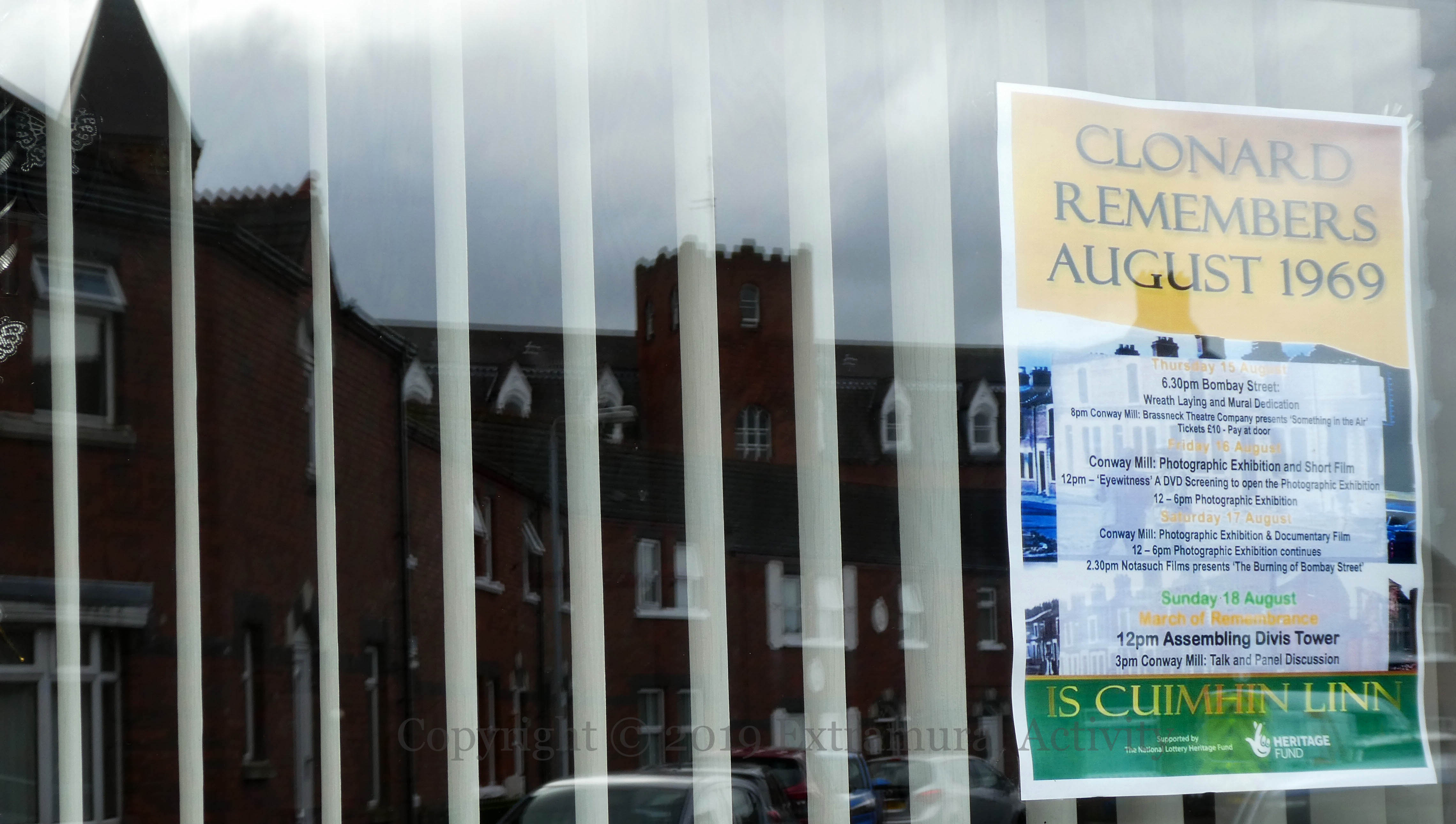
“Is cuimhin linn.” Last week saw a series of events, organised by the Belfast 1969 Pogroms Commemoration Committee, in Clonard, Falls, and Ardoyne, including a photographic exhibition, documentary screenings, panel discussions, a play, a mass, and murals (Irish News), including The Pogrom Of August 1969 and the one above, in Bombay Street, which used to run between the Shankill and Falls but after the riots and burnings of August 1969 was split in two by a so-called “peace” line (see the wide shot, below).

“These are terrible days … but some good has already come from these attacks on our communities. You have young people and elderly people all closely knit together and that is a grand thing. We must not allow hatred to spring up in our hearts. For what we are aiming for now is justice. We demand justice. We are not begging for it – we are demanding it. It is our right and we will keep on demanding it until we get it. We don’t ask for anything more – just a fair deal … that we will soon have a community where everybody, irrespective of religious belief or irrespective of political ideology will be able to lead a normal life and will not be unjustly discriminated against.” – Fr Patrick Egan, sermon in Clonard Monastery, August 1969 (youtube).

Click image to enlarge
Copyright © 2019 Seosamh Mac Coılle
X06748 Xo6749 X06750 X06746 [X06747] [X06751]

The Pogrom Of August 1969

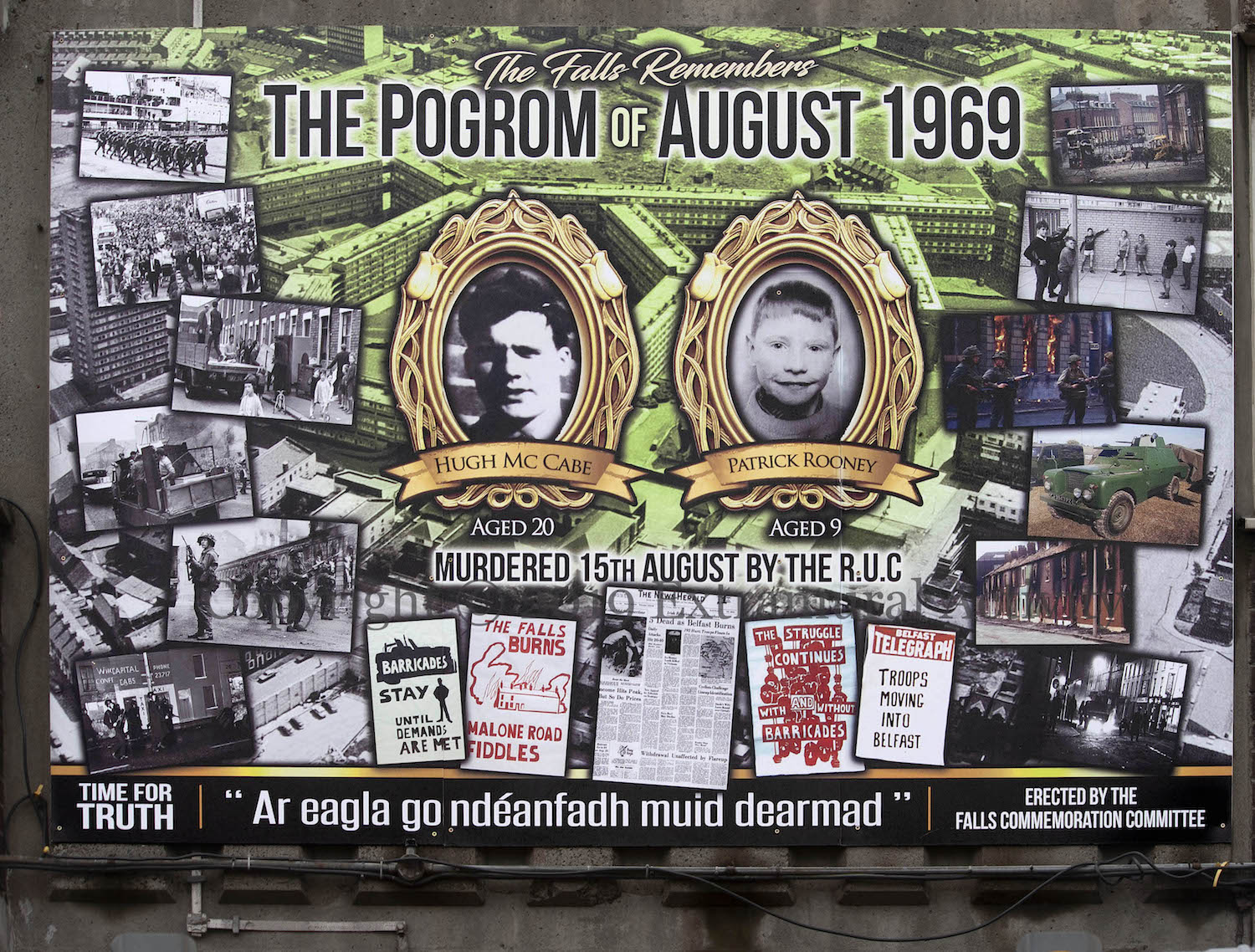
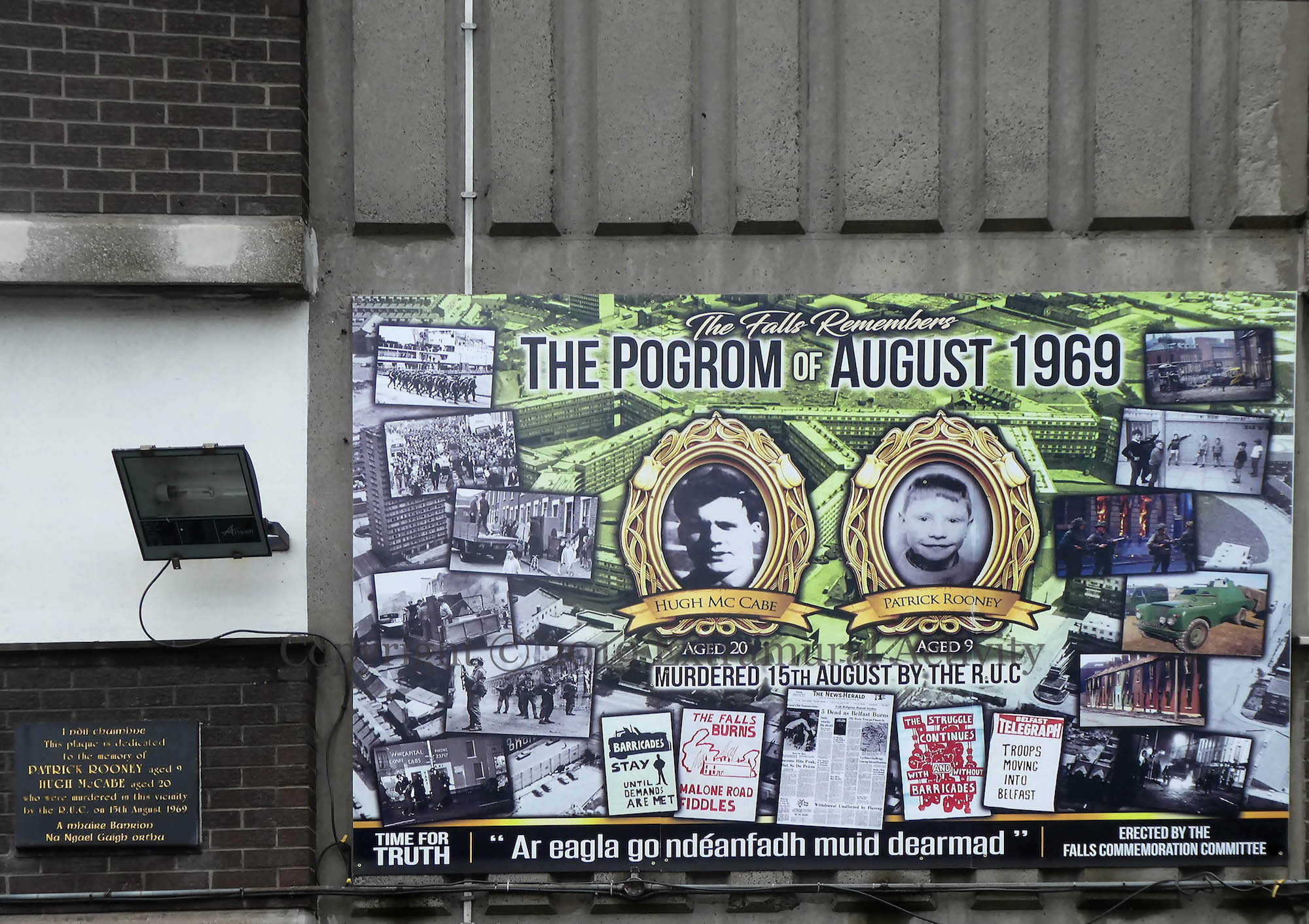
This August marks the 50th anniversary of what are euphemistically called “The Troubles”. The Battle Of The Bogside (Derry) began on August 12th; in Belfast, fighting began on the night of August 14th and before dawn three people in the Divis Street area were dead: Protestant Herbert Roy and Catholics Patrick Rooney and Hugh McCabe, both shot in the Divis flats complex by the RUC’s Shorland armoured cars. (Two other Catholics were killed in rioting in Ardoyne.) This new board is on Divis tower, next to the plaque commemorating Rooney and McCabe.

Click image to enlarge
Copyright © 2019 Seosamh Mac Coılle
X06744 X06745 “Ar eagla go ndéanfadh muıd dearmad” [for fear we would forget/lest we forget] “erected by the falls commemoration committee” ‘time for truth” “malone road fiddles”  “barricades stay until demands are met”

Parkside

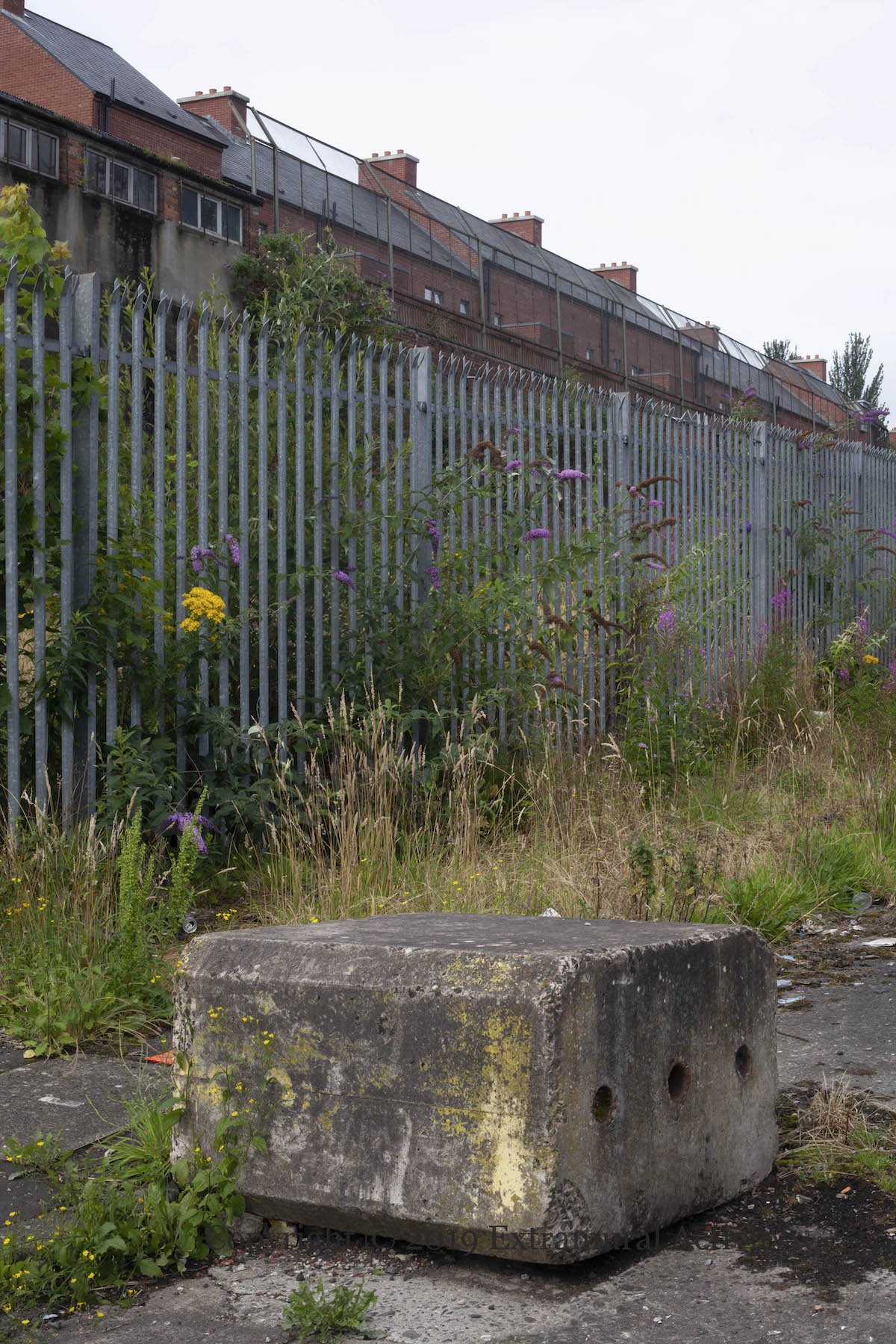
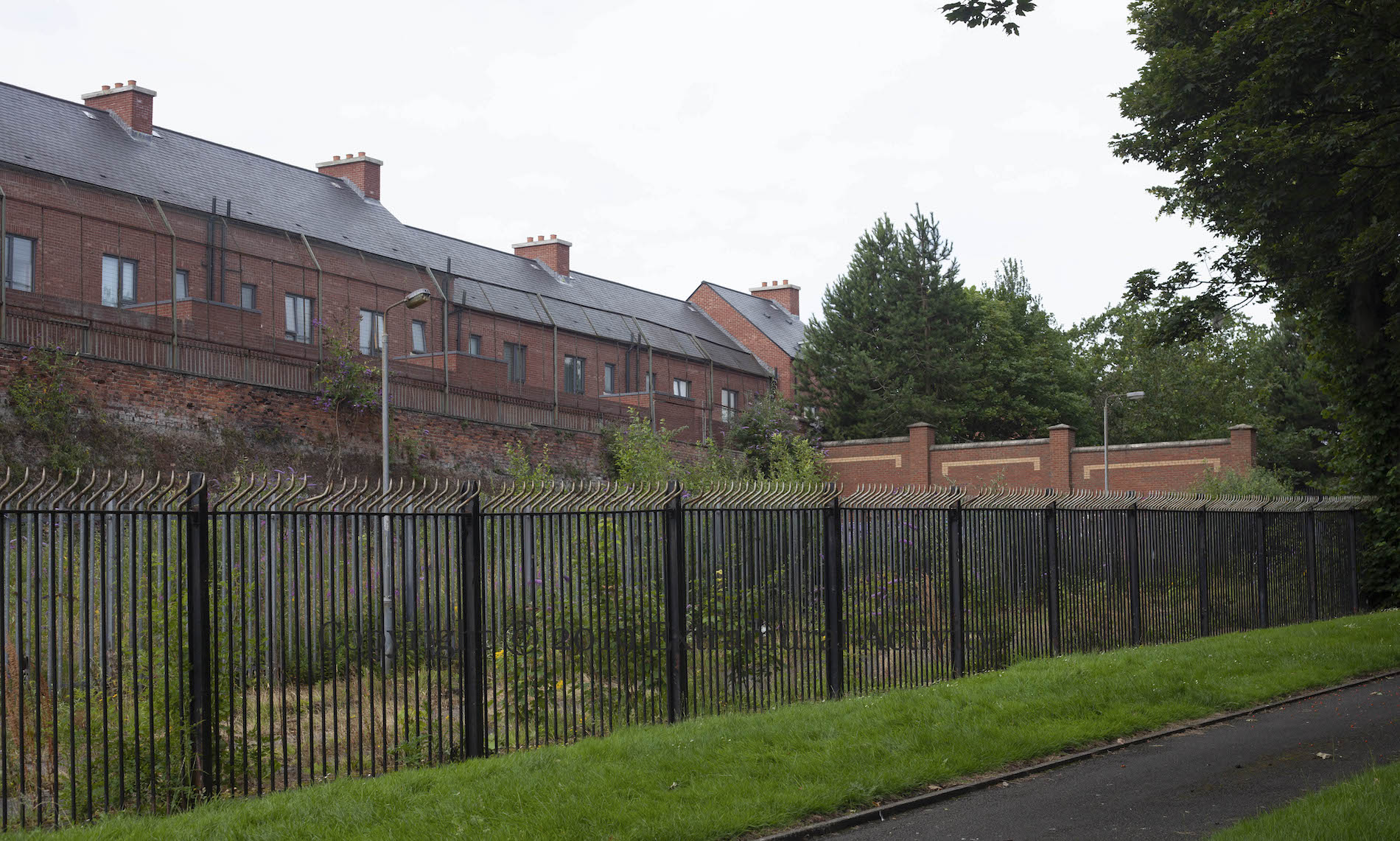
The new homes in Parkside Gardens were completed in March 2018 (in the same style as the award-winning houses in Parkend), but the security fencing separating Newington from Mountcollyer remain. The “park” in question is Alexandra Park, believed to be Europe’s only park with a “peace” line running through it (BBC) – see previous posts from 2011 and 2013.

Click image to enlarge
Copyright © 2019 Seosamh Mac Coılle
X06724 [X06725] X06722 [X06723]

Masked Republican Mercenaries

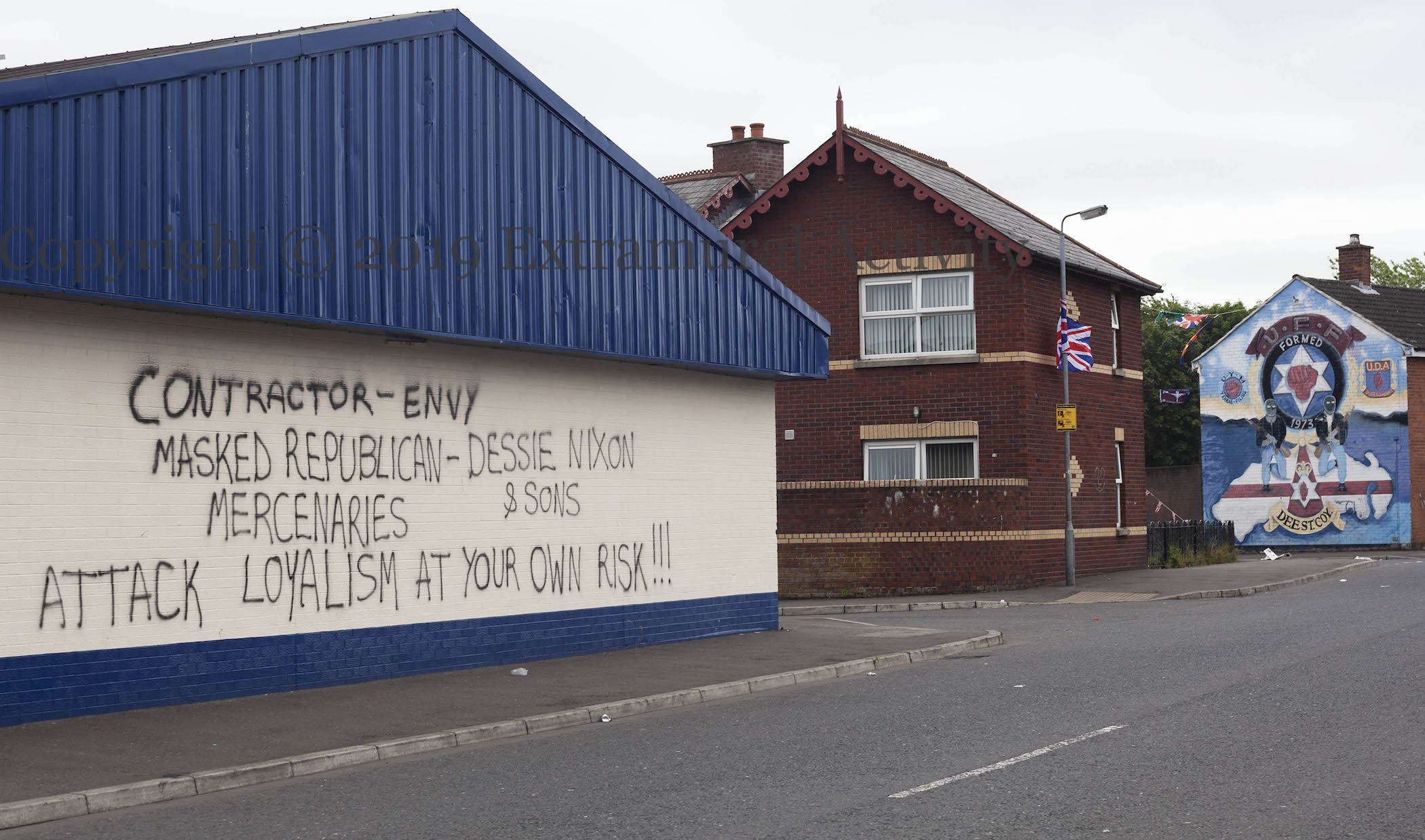
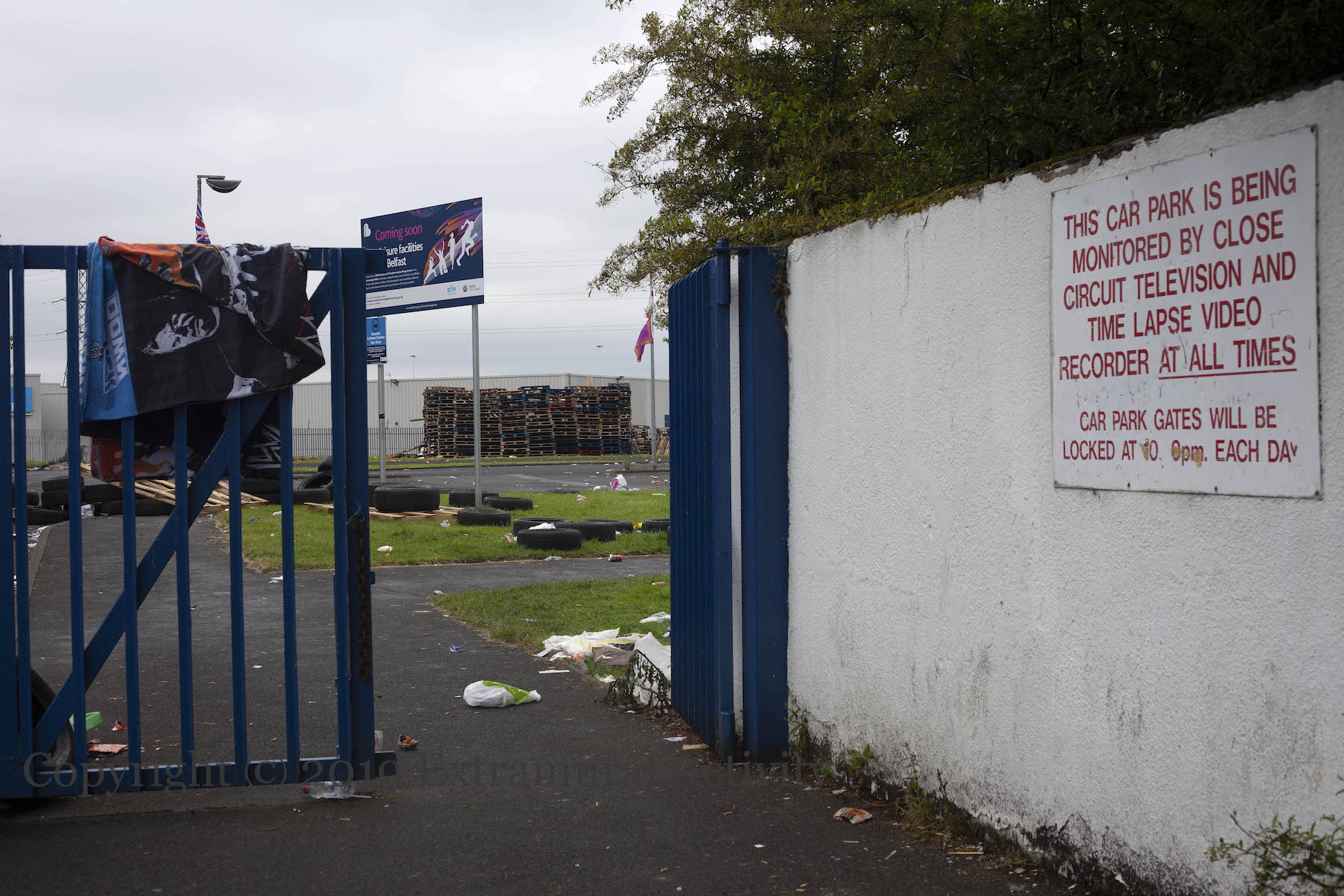
The Strategic Policy and Resources Committee of Belfast City Council decided on the 8th to remove two east Belfast bonfires built on council-owned land, carparks at the Avoniel leisure centre and in Ashdale Street, after staff arriving for work reported being threatened (BBC), perhaps by bonfire-builders reacting to the removal of tyres in Lismore Street (ITV) (see A Vote For The IRA). In response, builders of the Avoniel pyre removed its tyres, lowered its height, and moved it further away from buildings, but the Council affirmed its decision. A crowd of about 400 gathered to protect the site on Tuesday evening (BBC) and barricaded the site. The graffiti shown above appeared, calling contractors “masked republican mercenaries” and vowing that if they interfered they would “Attack loyalism at your own risk!!!” On Wednesday (1oth) the Council committee again affirmed its decision (Ailerain) but expressed concern over information of possible UVF involvement (Belfast Live) supplied in a letter from the PSNI (Mark Simpson).  (The mural is the background is a UDA one. See Northern Island.) The barricades were removed on Wednesday (as the image below shows). A contractor hired to remove the fire pulled out (BBC) on Wednesday evening. A “cultural celebration” was held throughout the night (BelTel).

The Ashdale Street fire was moved to a different location, near the Oval (BBC) and was set alight last night (BelTel).

Click image to enlarge
Copyright © 2019 Seosamh Mac Coılle
X06687 X06690

Herbie McCallum

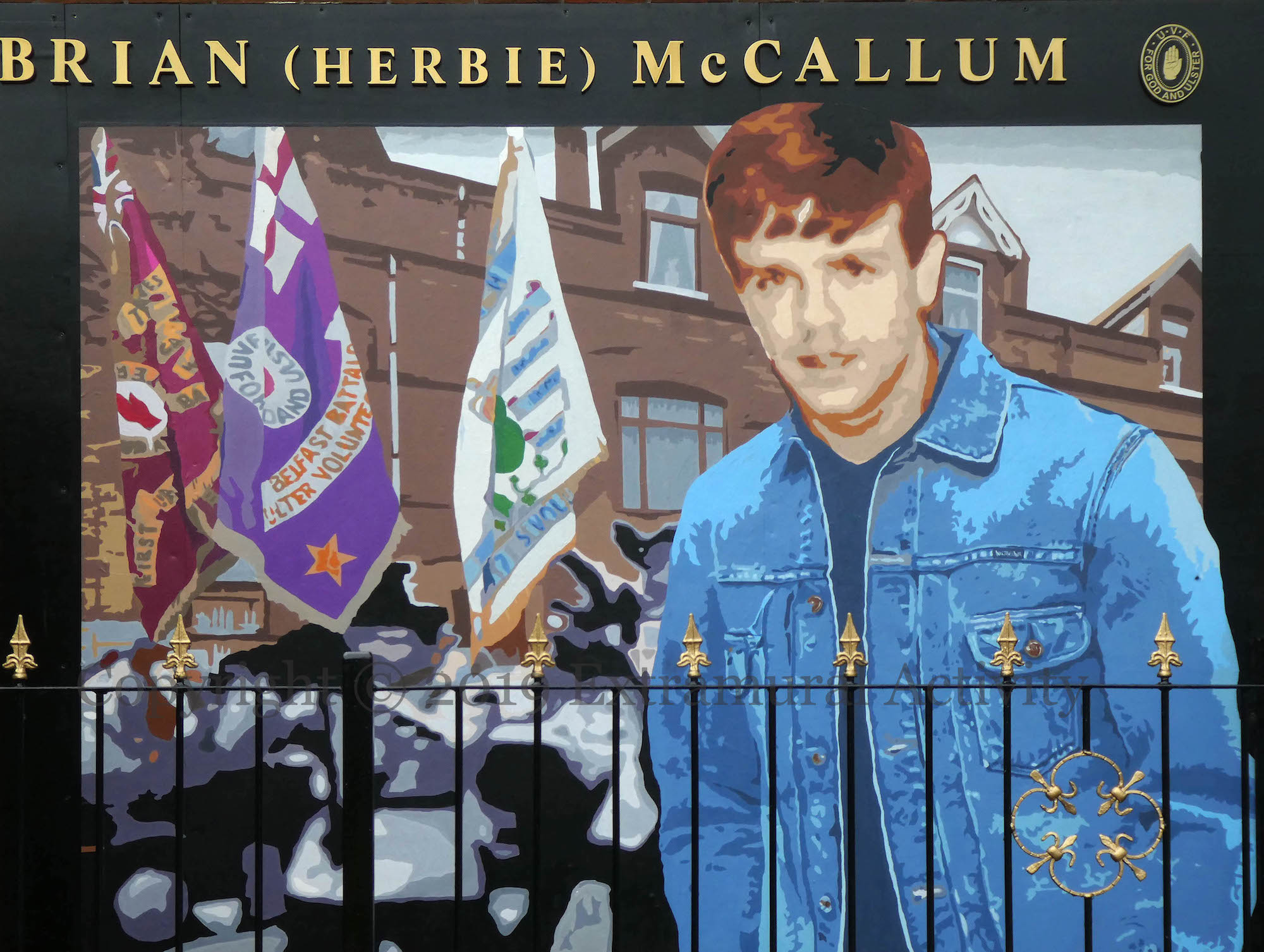
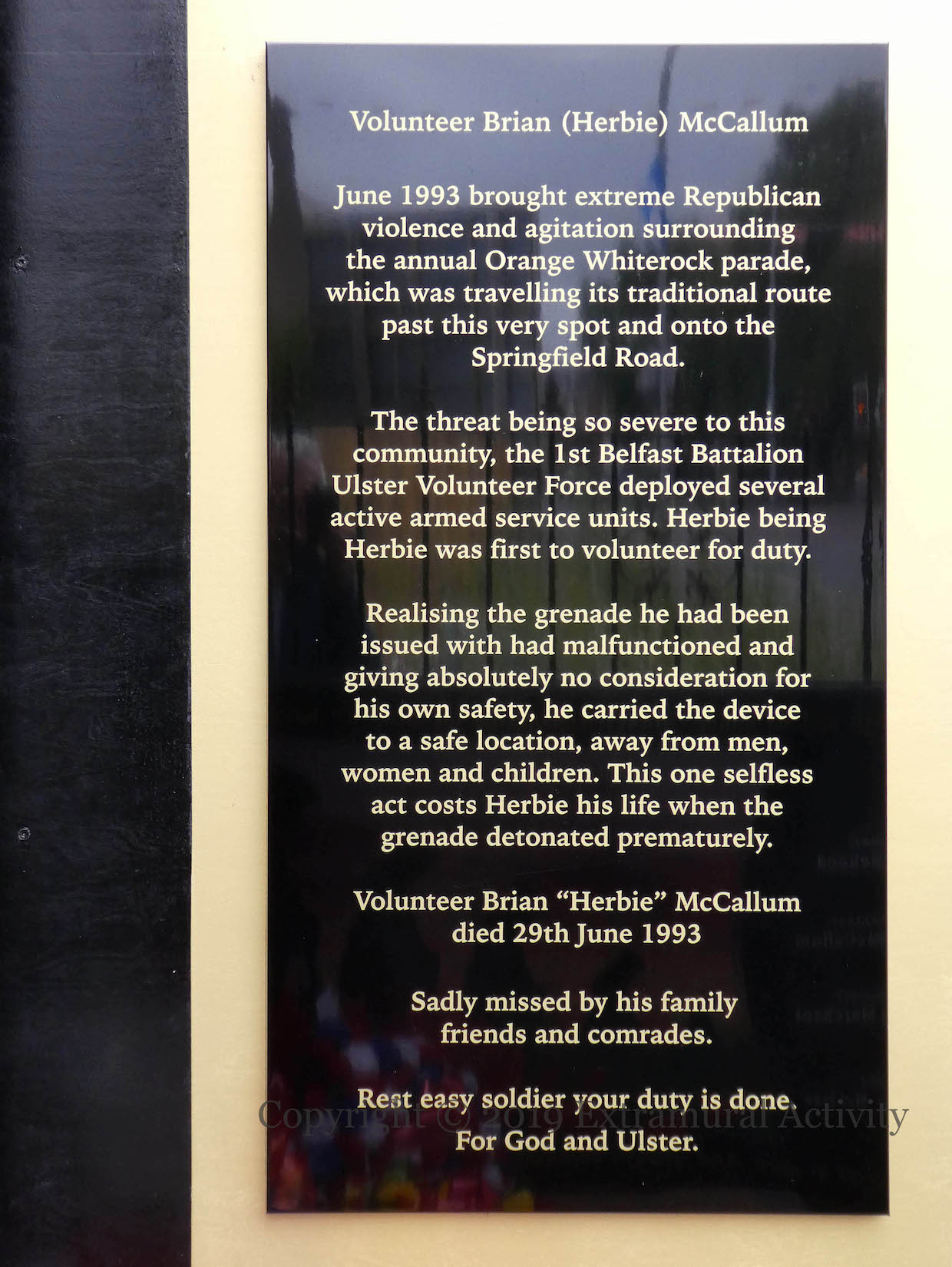
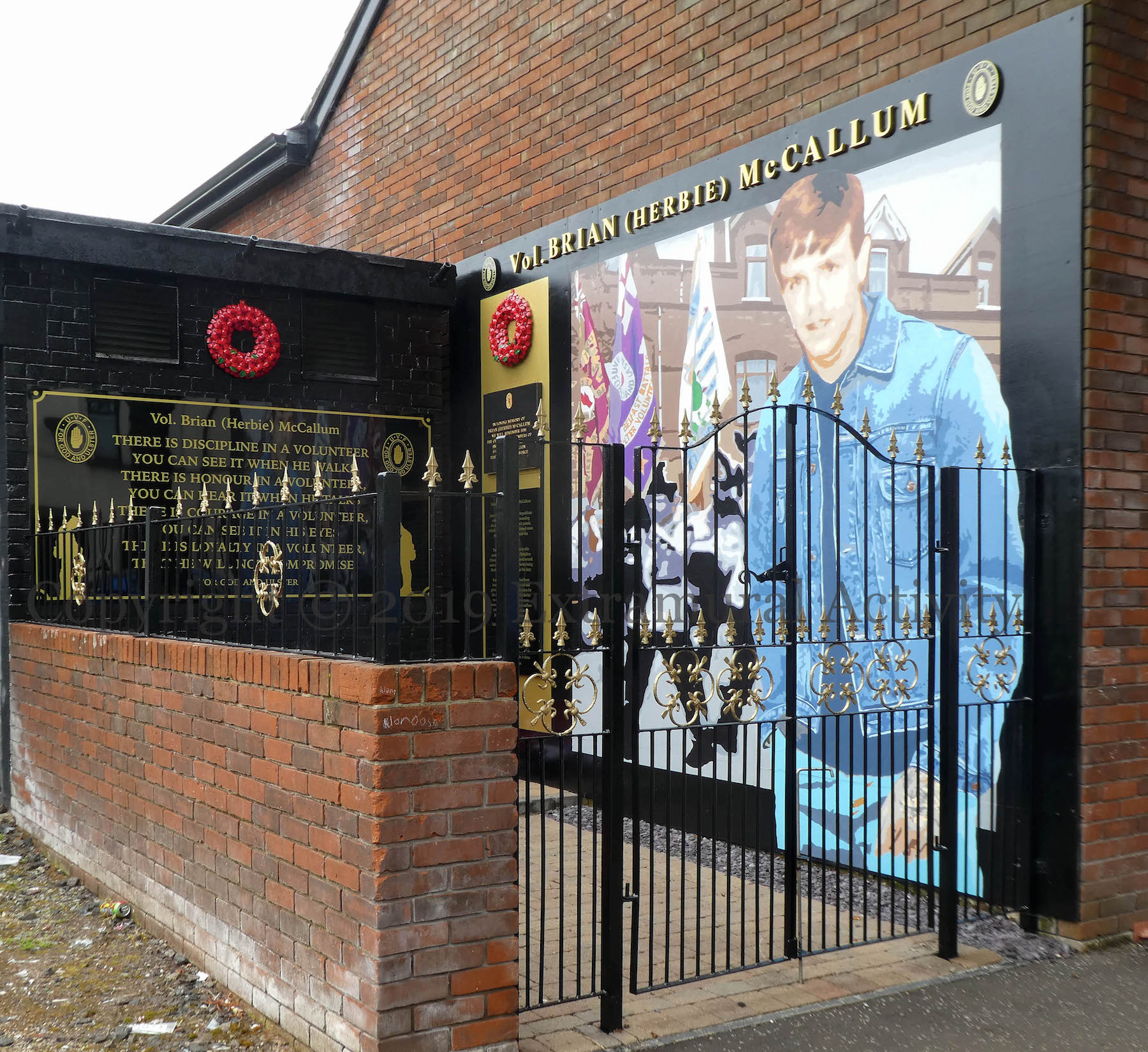
The memorial to Brian “Herbie” McCallum at the top of Ainsworth Avenue received a major upgrade late last year, with two new plaques and a mural (shown above) along with a side wall that is featured in a separate post: The Earth And Its Toiling.

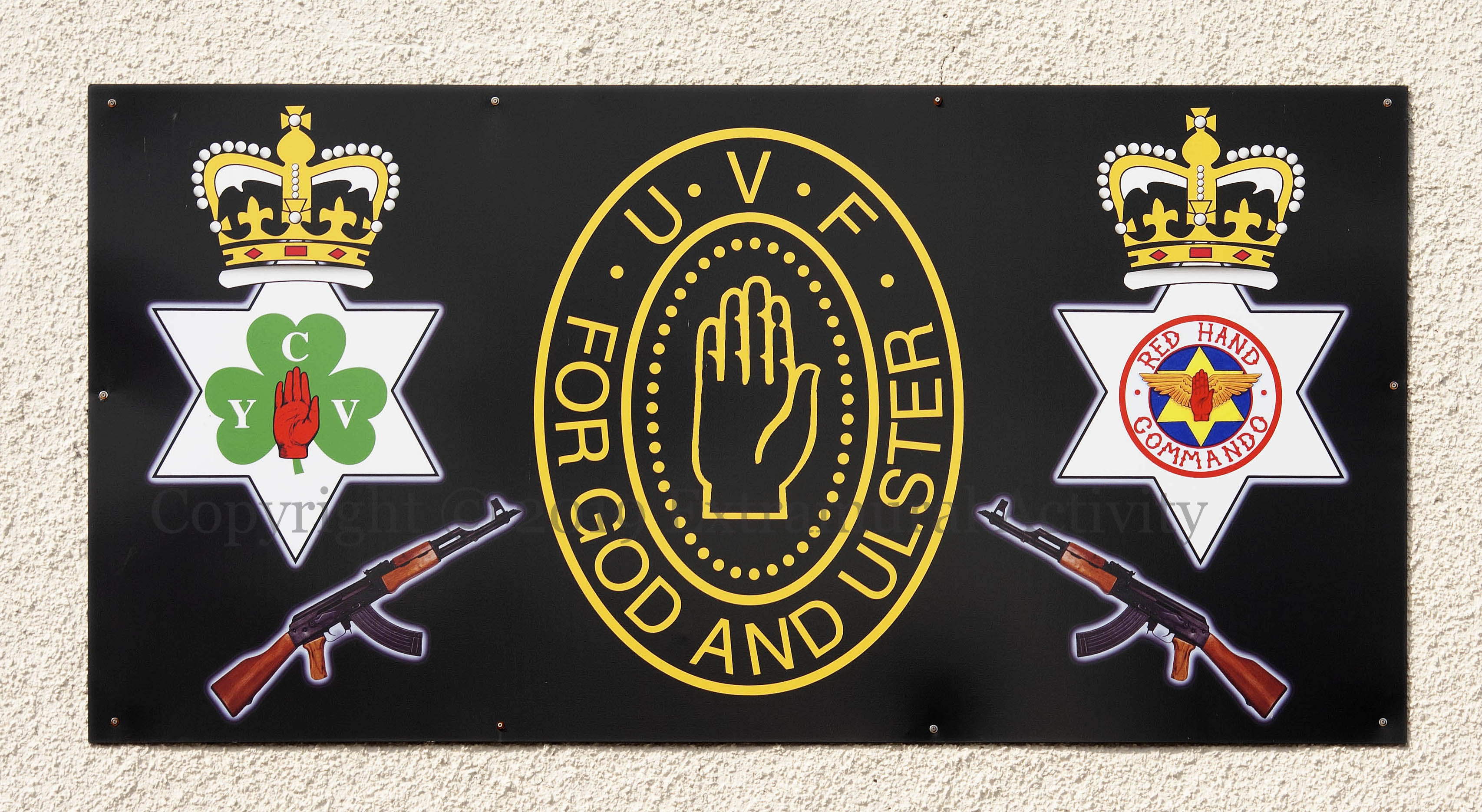
The long plaque reads: “June 1993 brought extreme Republican violence and agitation surrounding the annual Orange Whiterock parade, which was travelling its traditional route past this very spot and onto the Springfield Road. The threat being so severe to this community, the 1st Belfast Battalion Ulster Volunteer Force deployed several armed active service units. Herbie being Herbie was first to volunteer for duty. Realising the grenade he had been issued with had malfunctioned and giving absolutely no consideration for his own safety, he carried the device to a safe location, away from men, women and children. This one selfless act costs Herbie his life when the grenade detonated prematurely. Volunteer Brian “Herbie” McCallum died 29th June 1993. Sadly missed by his family friends and comrades. Rest easy soldier your duty is done. For God and Ulster.” McCallum died three days after the explosion.

The plaque from the original memorial (which dates back to 1994) has also been retained (above the one shown next, below): see Some Day Soon We’ll March Proudly On Parade.

Click image to enlarge
Copyright © 2019 Seosamh Mac Coılle
X06675 X06676 [X06677] [X06678] X06674 [X06680] “There is discipline in a volunteer/You can see it when he walks/There is honour in a volunteer,/You can hear it when he talks/There is courage in a volunteer,/You can see it in his eyes/There is loyalty in a volunteer/That he will not compromise.” “We will remember him. The officers and members of Sweeney’s ‘A’ Company 1st Belfast Battalion Ulster Volunteer Force.”

The Terror, Threats, And Dread

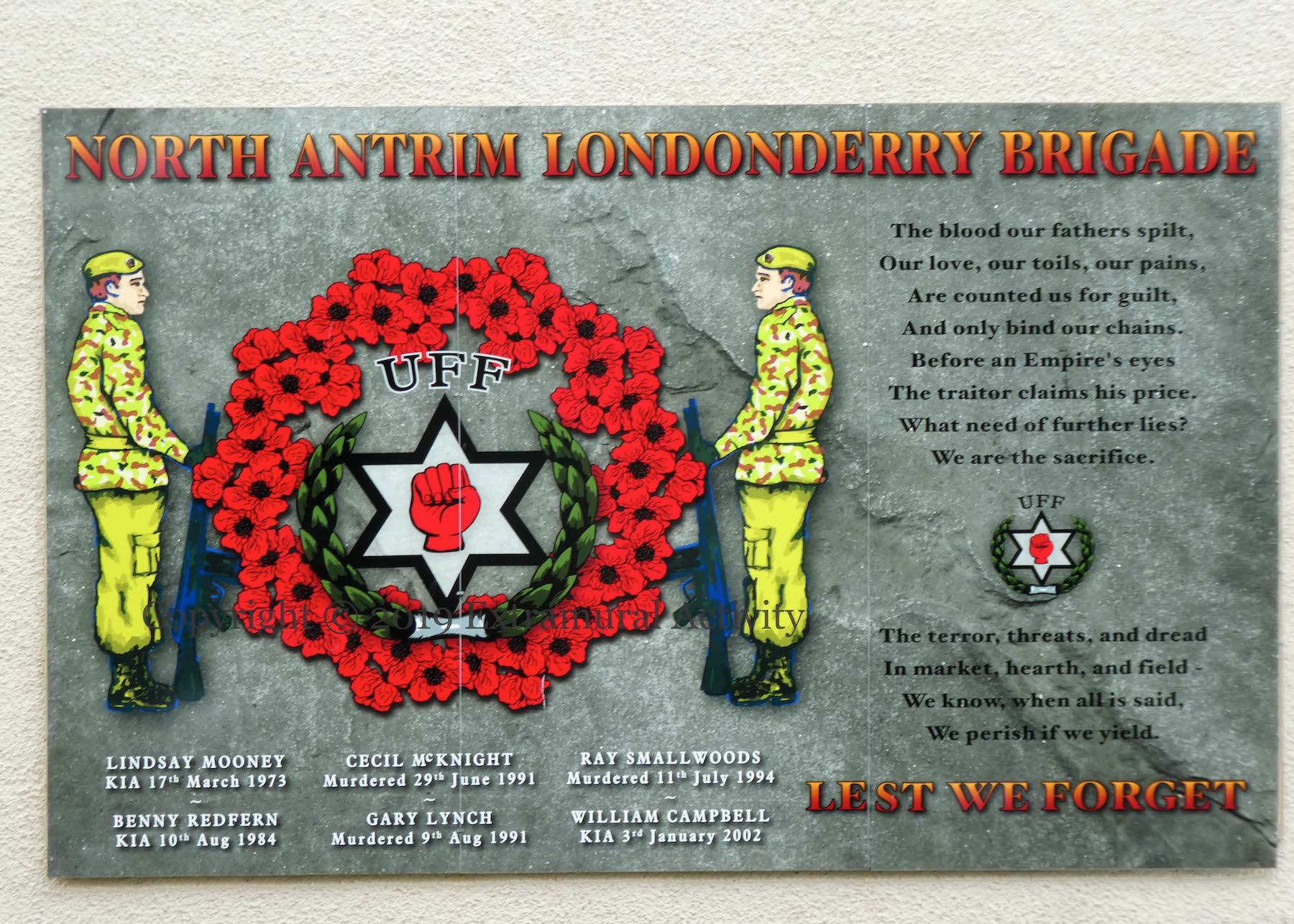
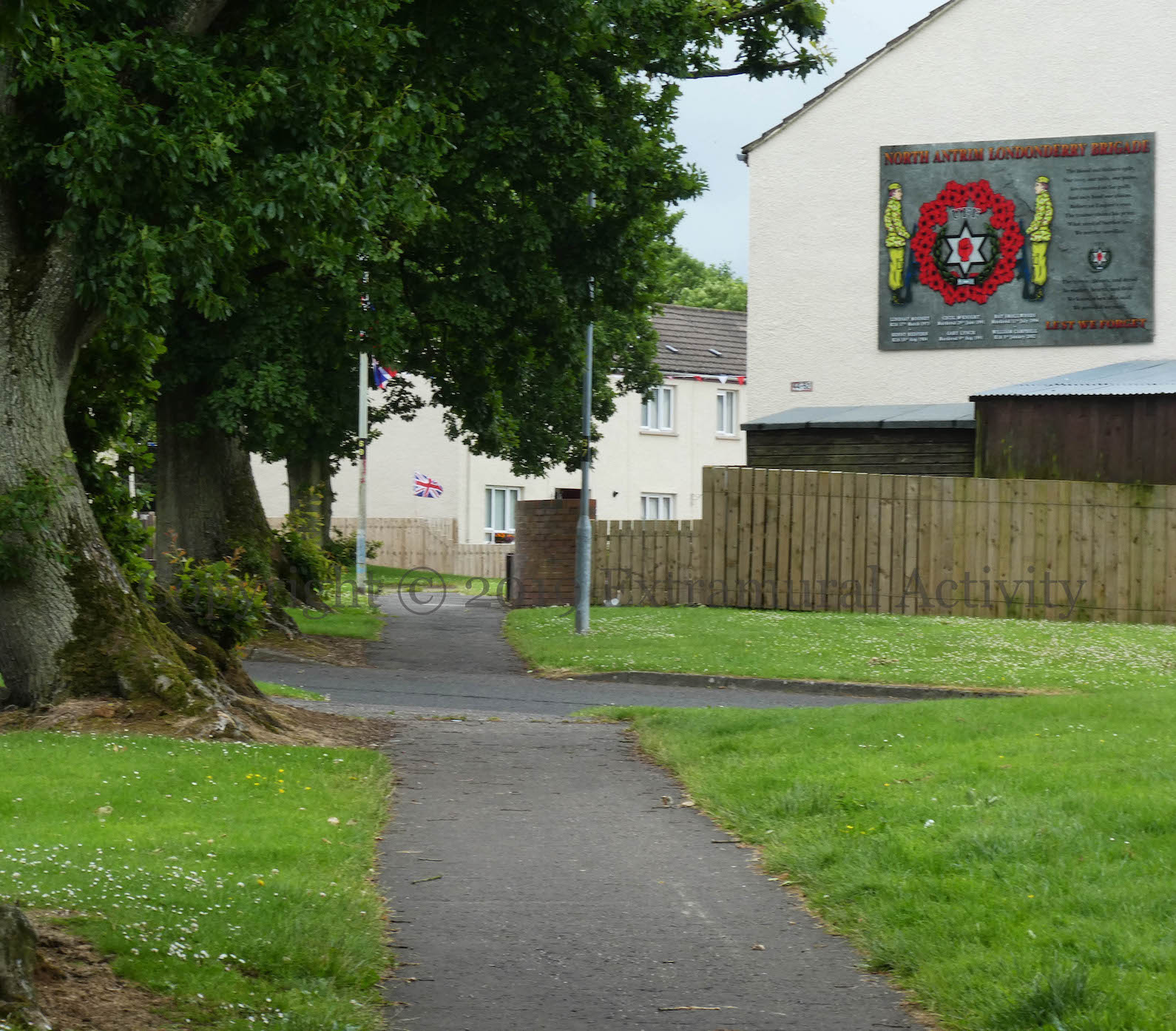
Kipling’s 1912 poem Ulster is not often quoted in loyalist muraling, despite it being an angry denunciation of Home Rule and the sacrifice of loyalists, as in the lines quote here: “The blood our fathers spilt/Our love, our toils, our pains/Are counted us for guilt/And only bind our chains./Before an Empire’s eyes/The traitor claims his price./What need of further lies?/We are the sacrifice. … The terror, threats, and dread/In market, hearth, and field/We know, when all is said./We perish if we yield.” Specifically, the sacrifice is six North Antrim/Londonderry UDA volunteers: Lindsay Mooney, Cecil McKnight, Ray Smallwoods, Benny Redfern, Gary Lynch, William Campbell. (See also: a RHC mural in the Shankill with a few lines from the poem.)

Click image to enlarge
Copyright © 2019 Seosamh Mac Coılle
X06660 X06659 Carnany estate, Ballymoney