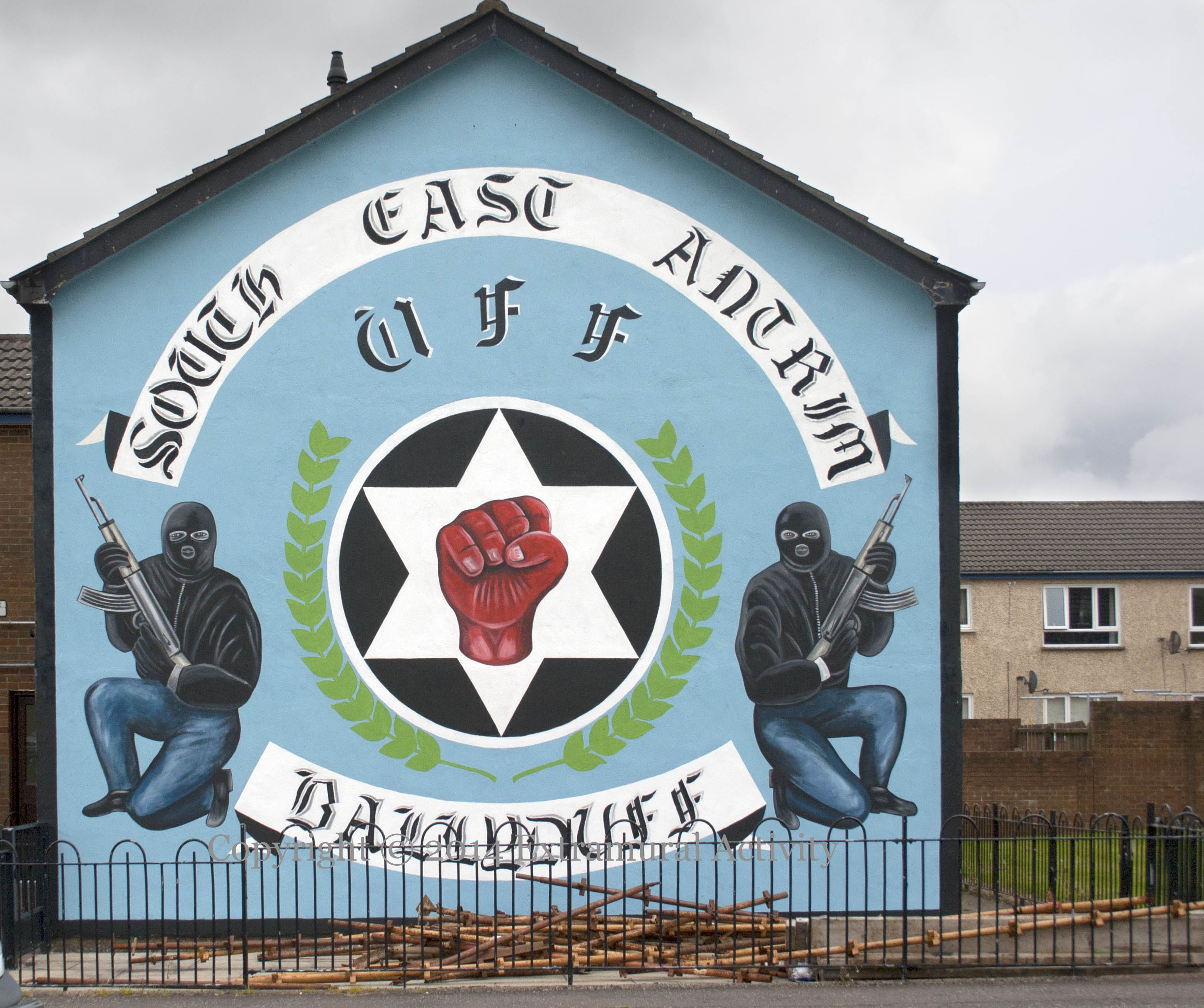
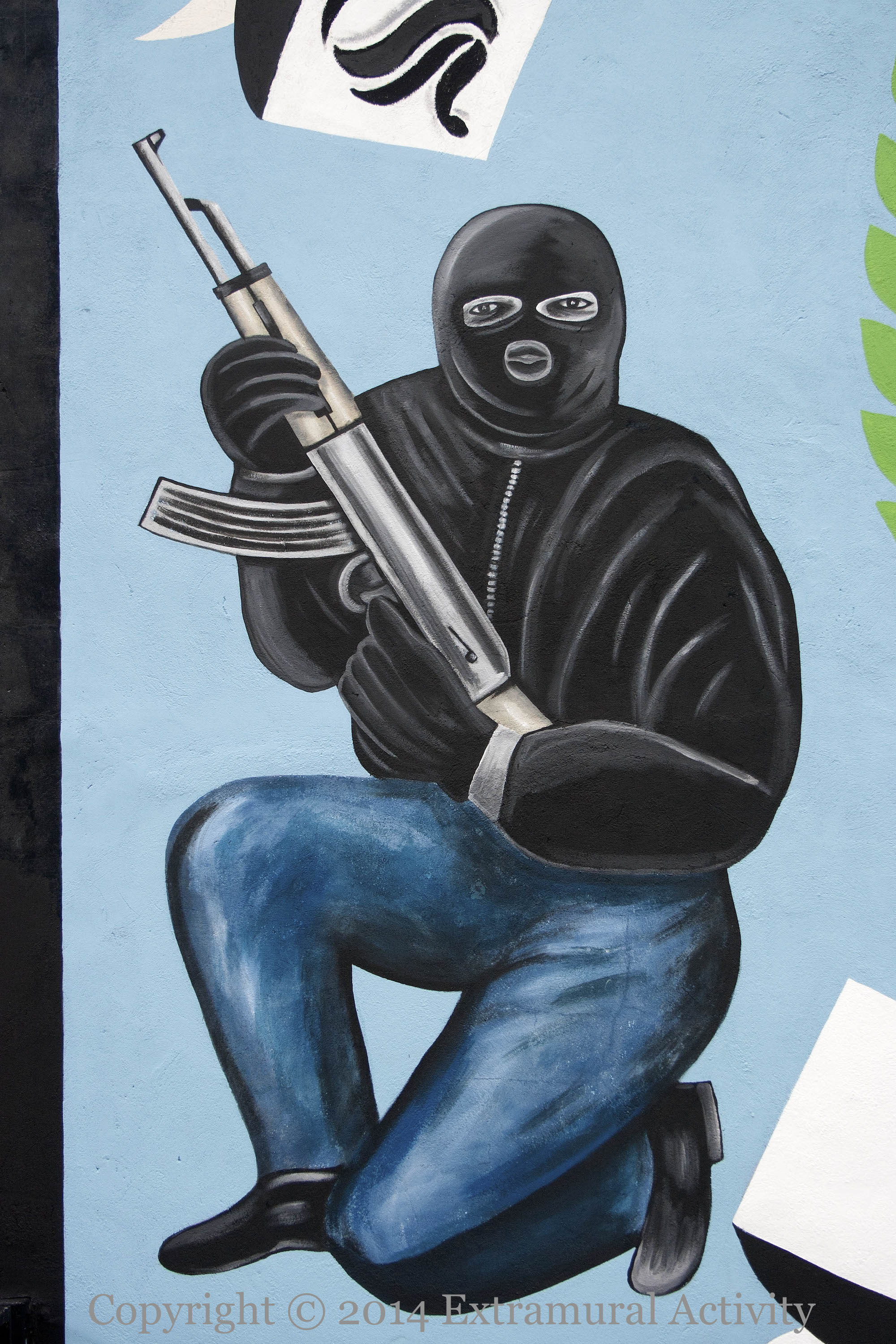
Two masked men with assault rifles flank the red fist and white star emblem of the Ulster Freedom Fighters. The figure on the left is shown in detail below. The South East Antrim UDA’s tumultuous history is substantial enough to warrant its own WP page.
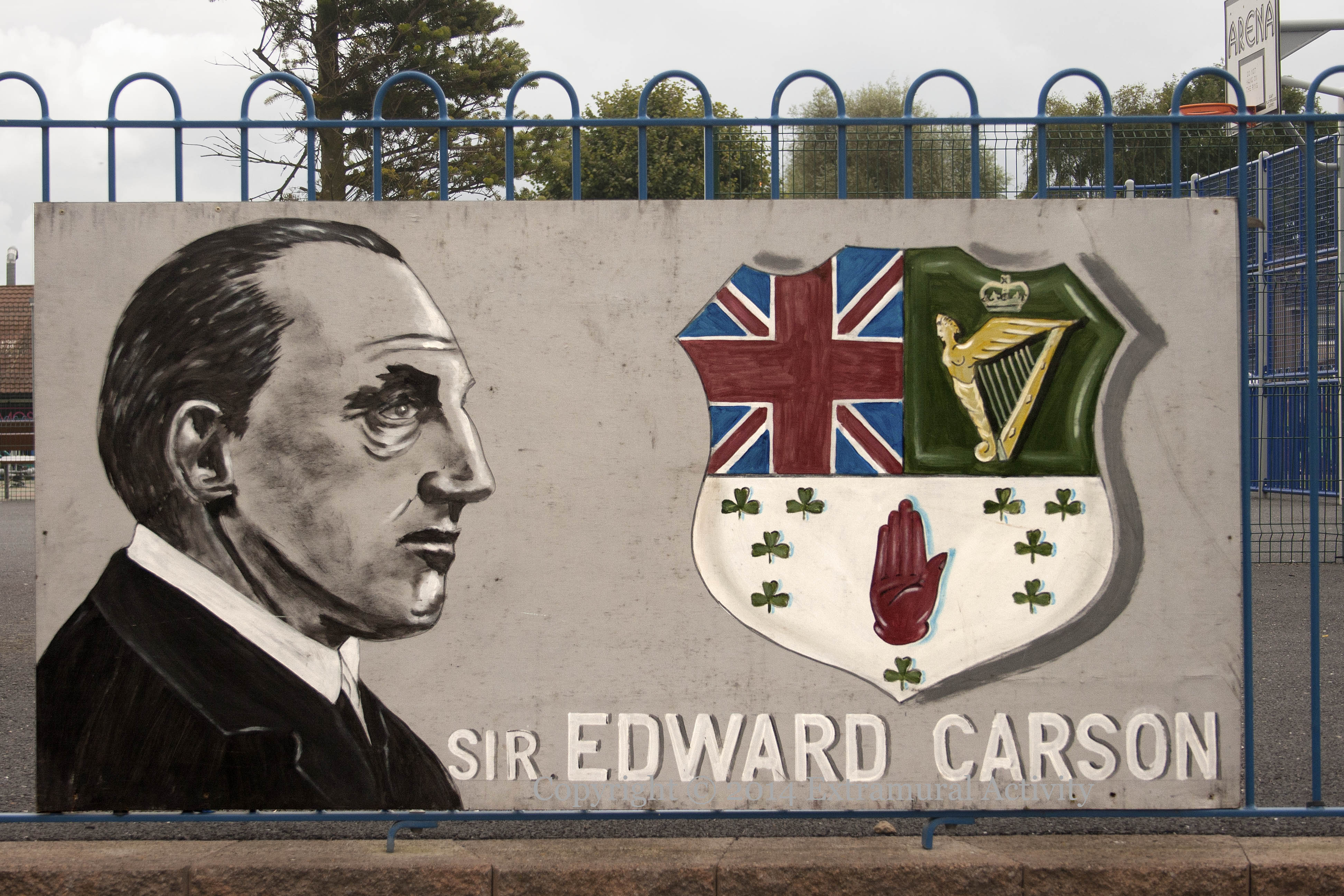
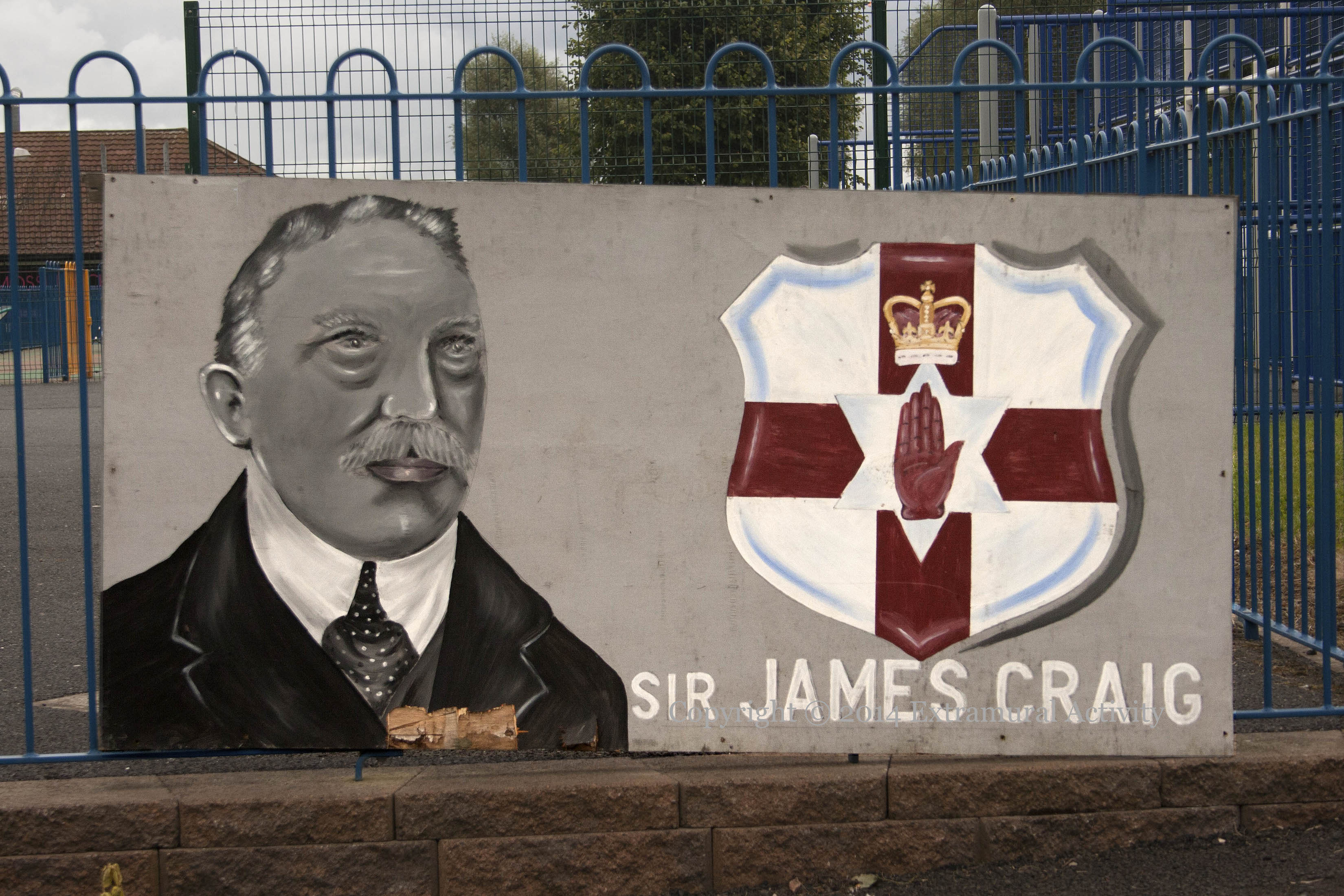
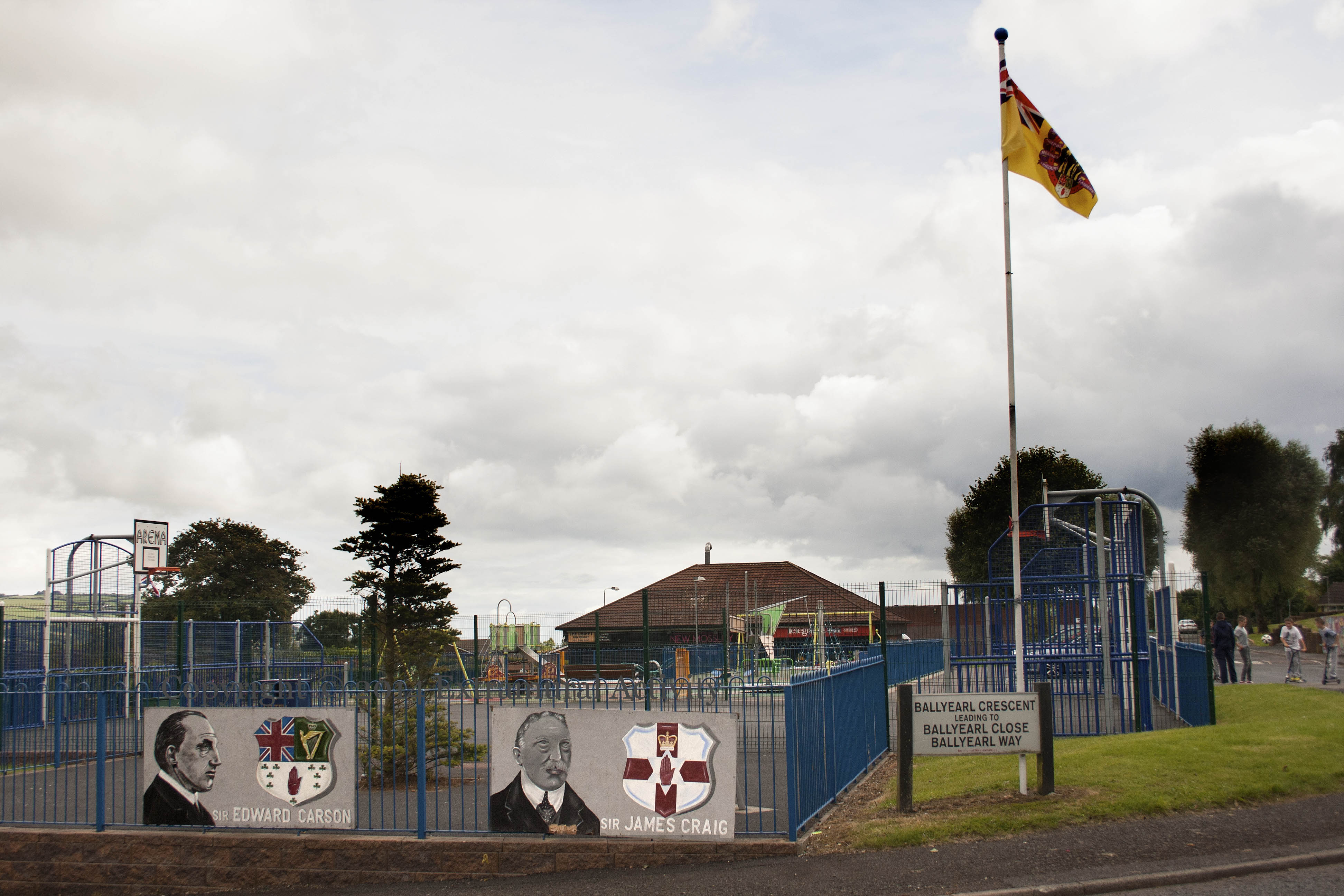
Carson (above) and Craig (below), founders of the Ulster Volunteers and the first two leaders of the Ulster Unionist Party, stand watch at the edge of an outdoor pitch and children’s playground in New Mossley, beneath a flag of the 36th (Ulster) division (see wide shot below). Carson’s profile is shown next to the emblem of the 36th division; Craig is shown next to the flag of Northern Ireland.
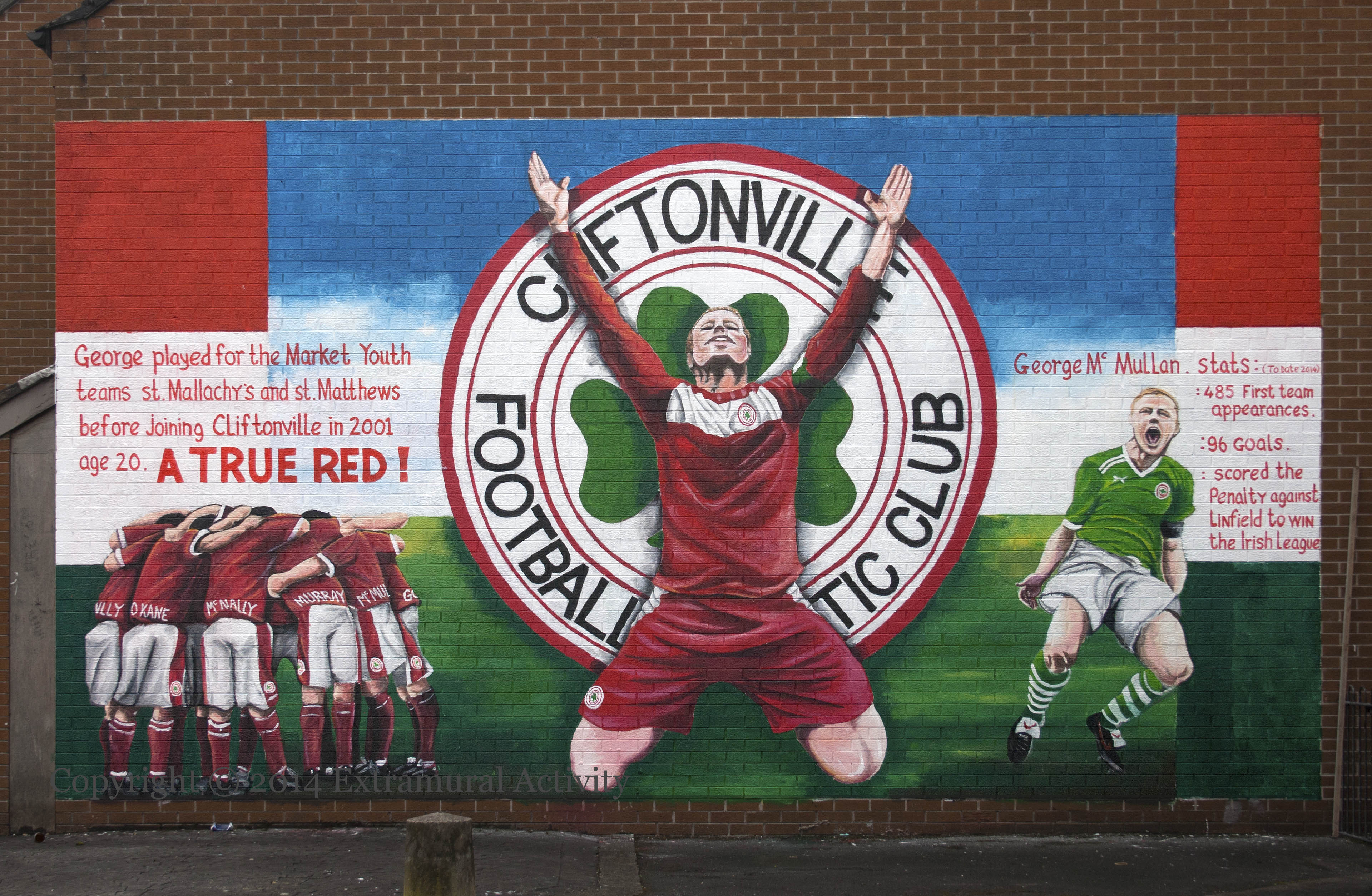
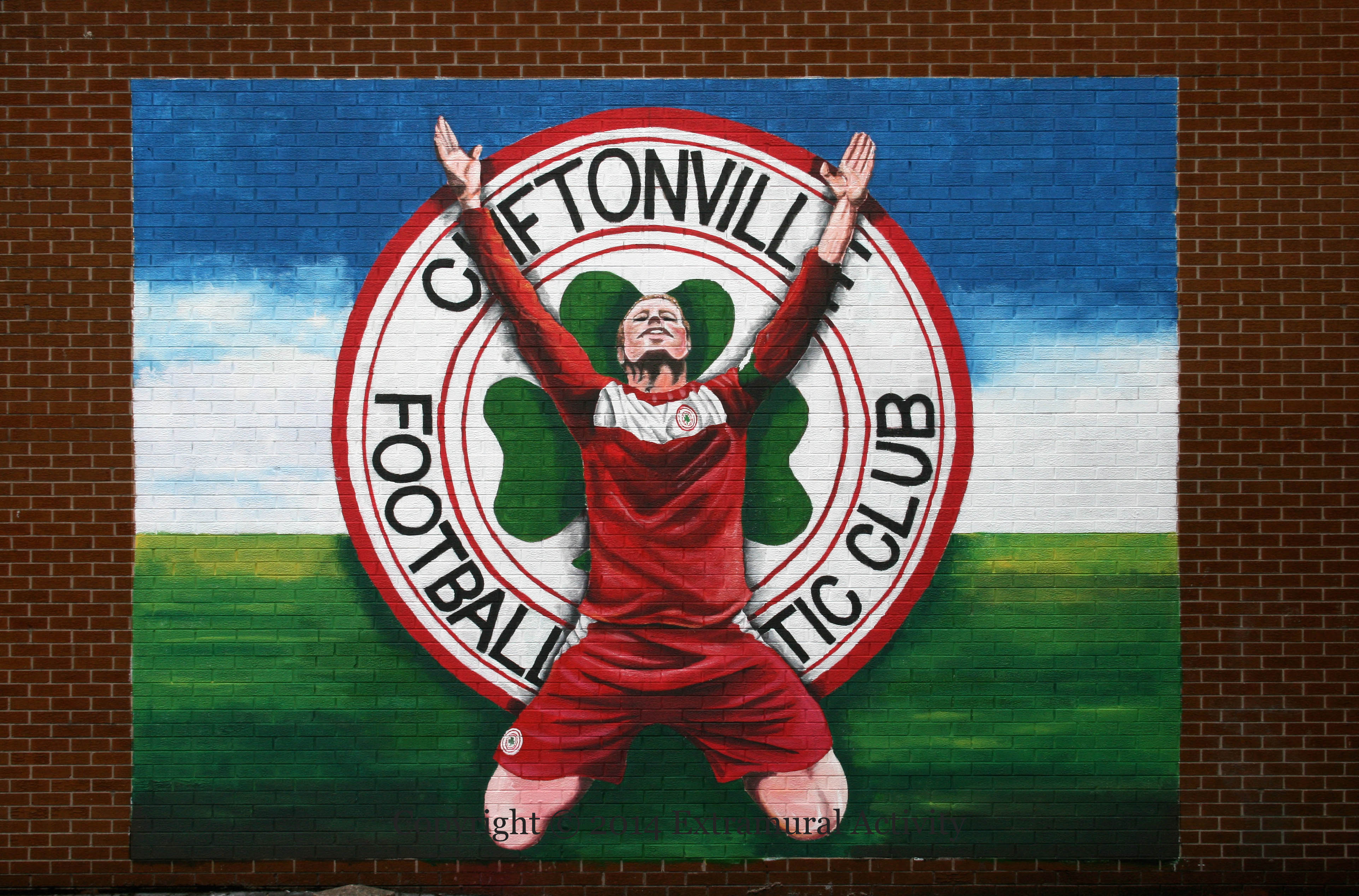
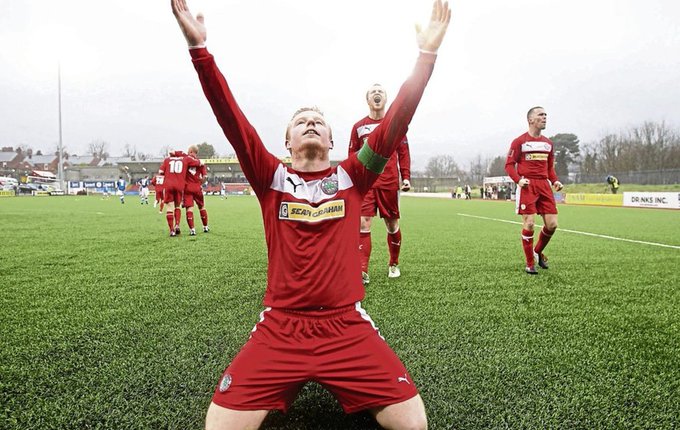
Here is a mural in the Markets area of south Belfast celebrating the achievements of local boy George McMullen, who played youth football for St. Malachy’s and St. Matthew’s before joining Cliftonville in 2011 age 20.
On the left is the familiar Cliftonville huddle (see previously: The Red Army). The two poses in the centre and on the left are reproductions of Belfast Telegraph images. The first is from Cliftonville’s 2013 Dankse Bank Irish League-clinching win over Linfield, which the Reds won with a McMullen penalty in the dying seconds; the second in from the same moment in the 2014 campaign: Chris Curran has just scored to put the Reds two-nil up in a game against Portadown that would win them the League for the second year in succession.
Other Cliftonville players have been featured in murals: Joe The Goal in Ardyone and Rory Donnelly in the Bone.
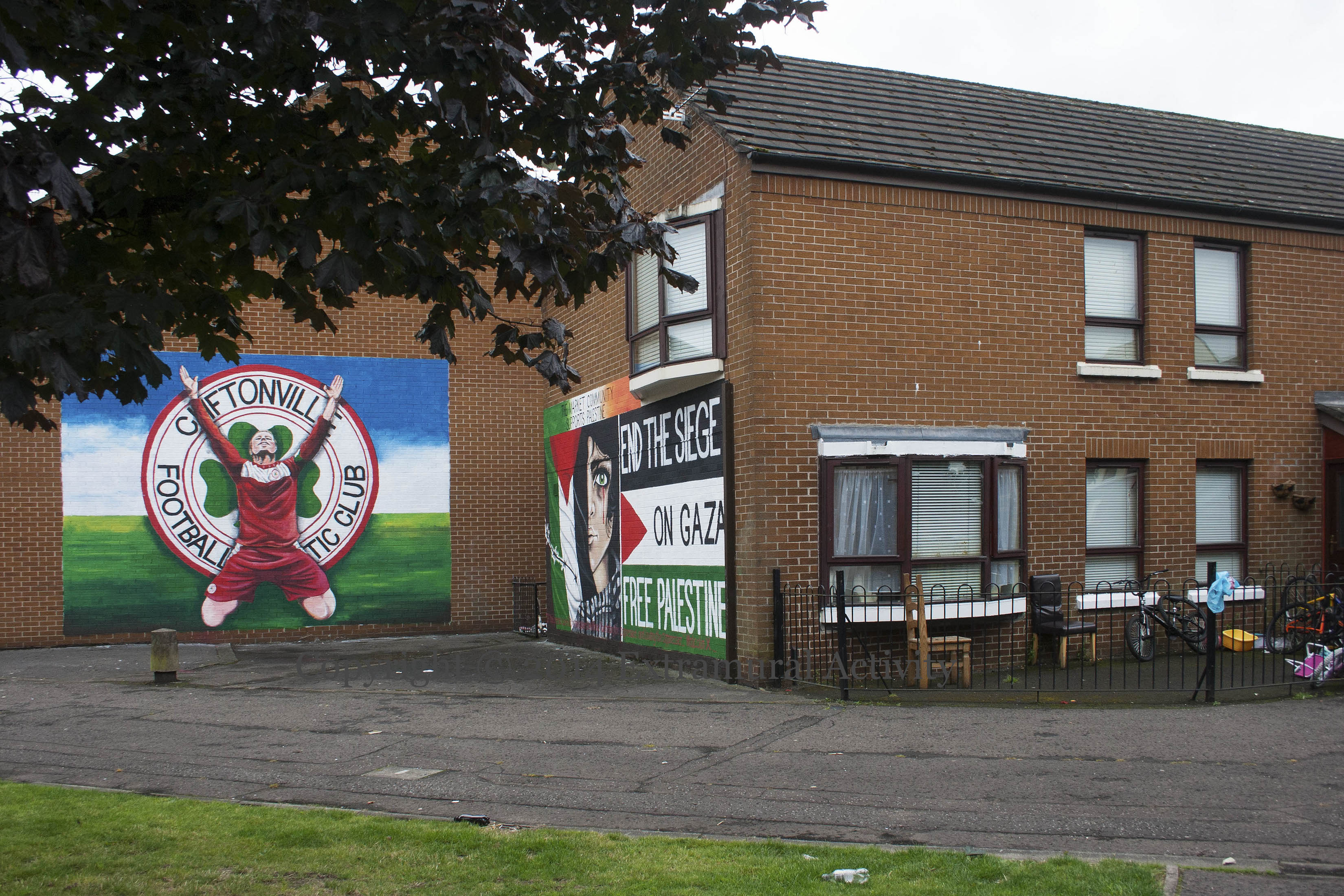
Below is a shot of the piece in development and below that is a wide shot showing the mural’s location adjacent to the End The Siege On Gaza mural.
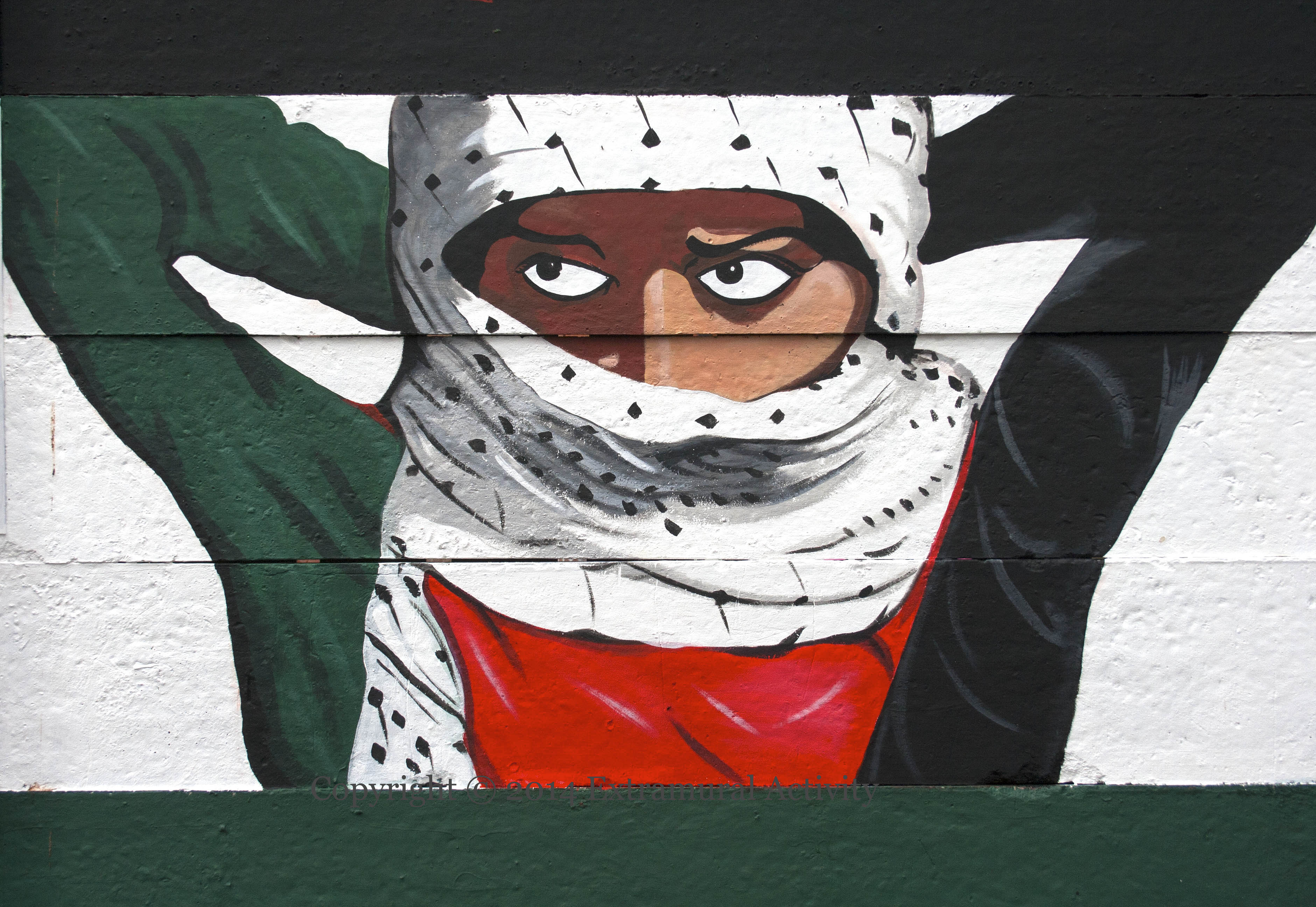
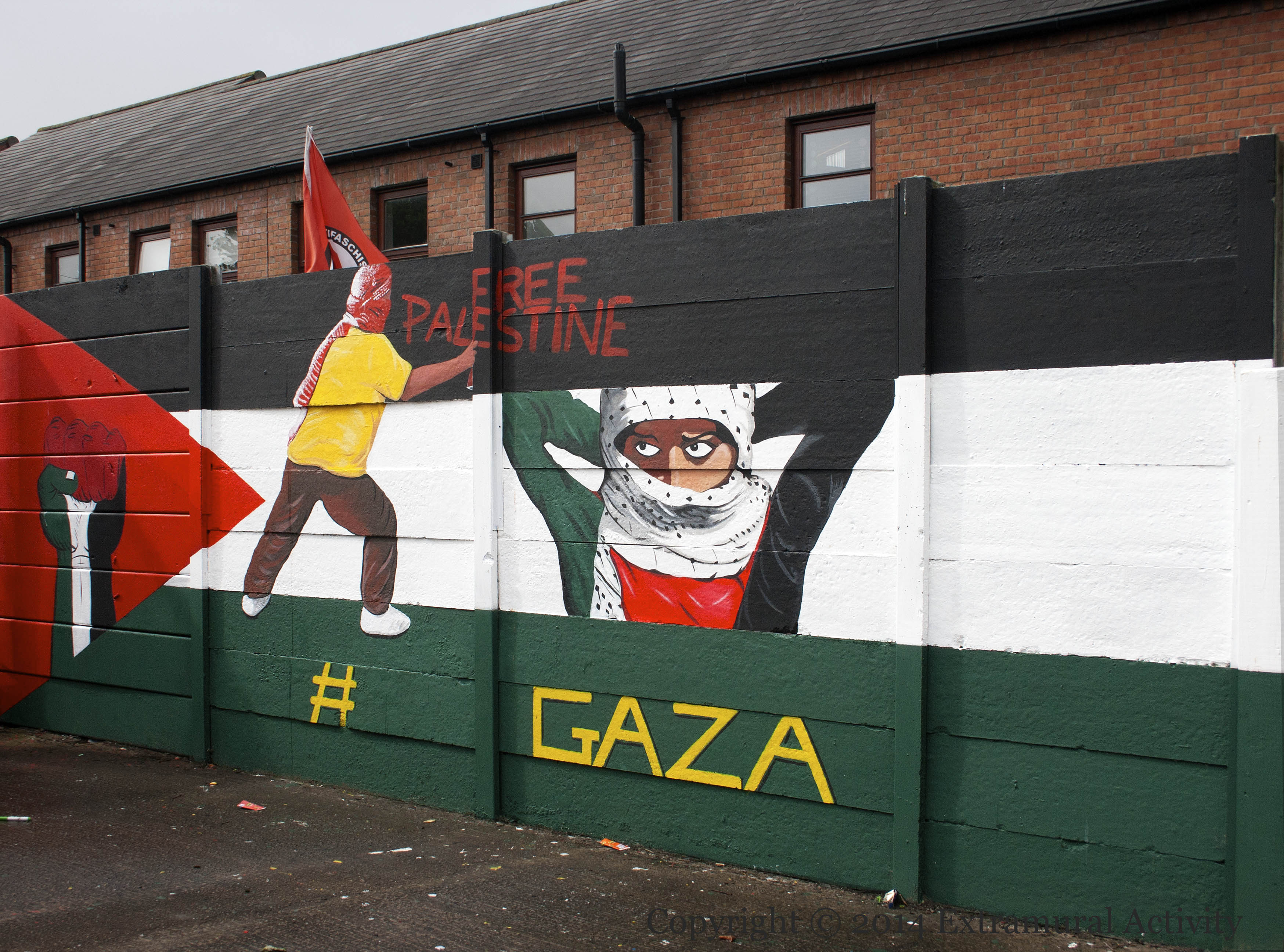
A young woman dressed in the red, black, and green of Palestine secures her keffiyeh, preparing for defiance rather than expressing her modesty – a detail from a new mural in Balfour Avenue (shown below) with a graffitist in a red-and-white keffiyeh (the colours of the PFLP – see previously: The Popular Front) writing “Free Palestine”. An ‘anti-fascist action’ flag flies in the background.
Previously: Leila Khaled wearing a keffiyeh – traditionally a male garment – in the style of a hijab – a woman’s garment (WP).
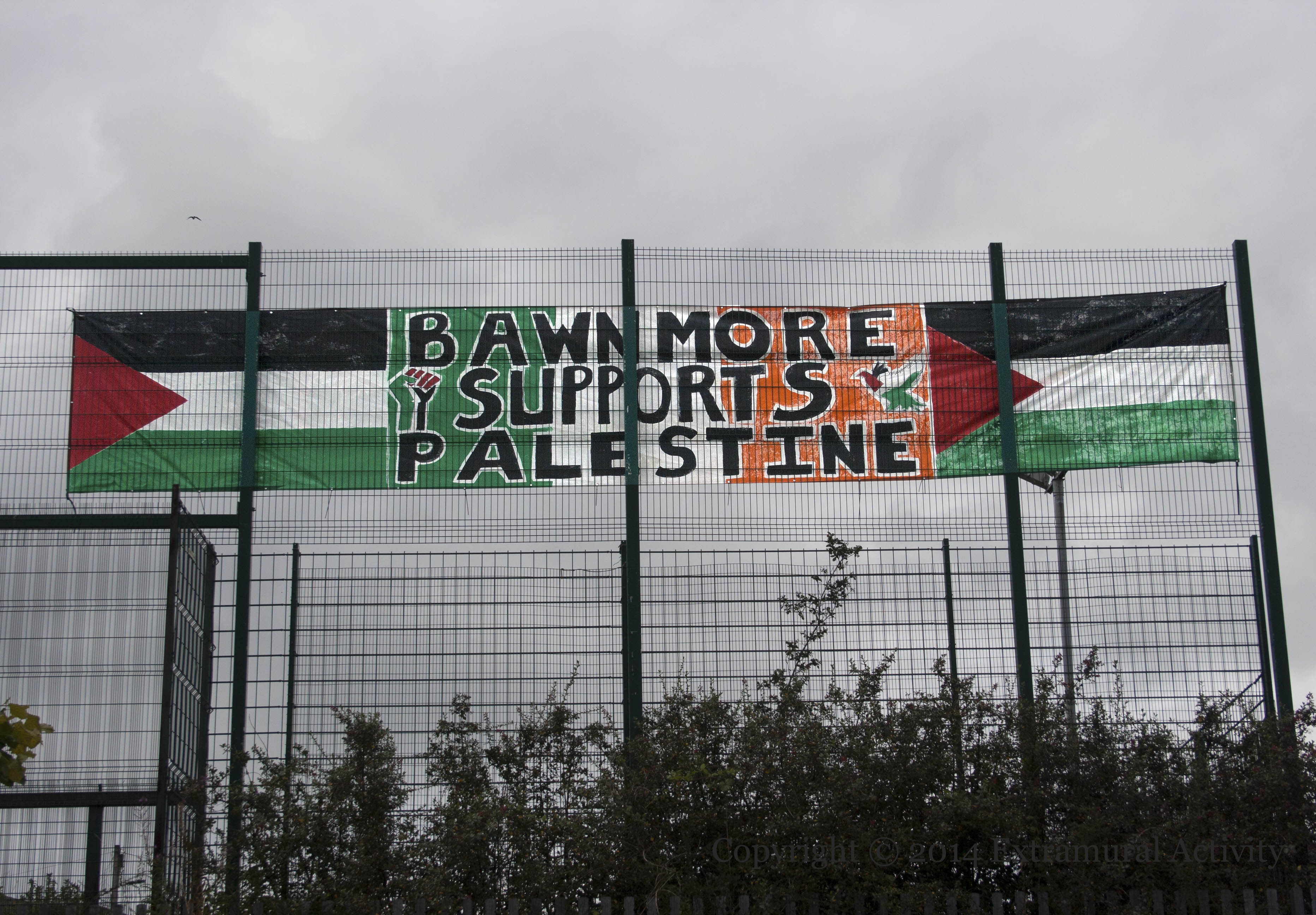
This banner just off the Shore Road includes two Palestinian flags and an Irish tricolour, along with a raised first and the lark of freedom, both in green, black, and red.
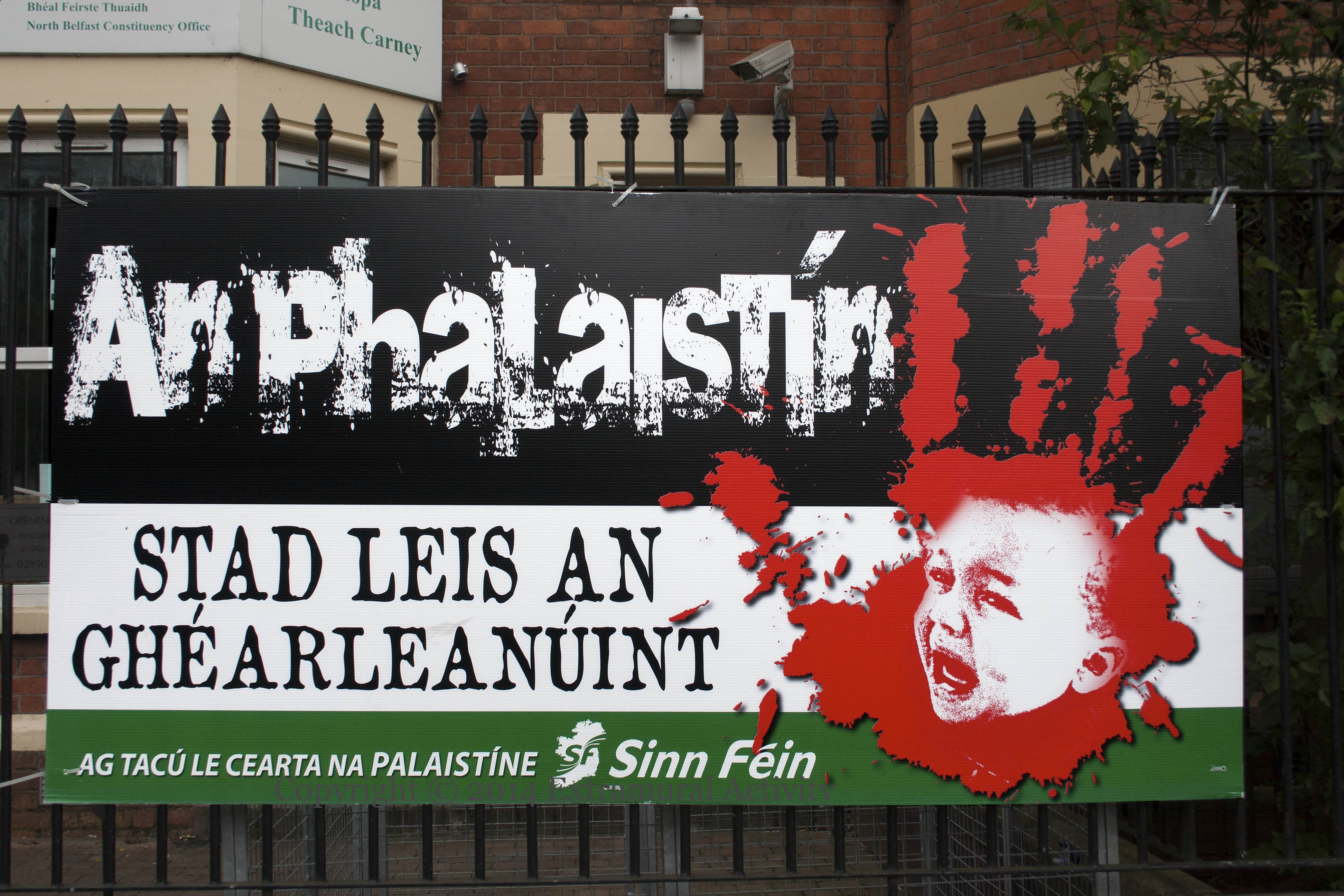
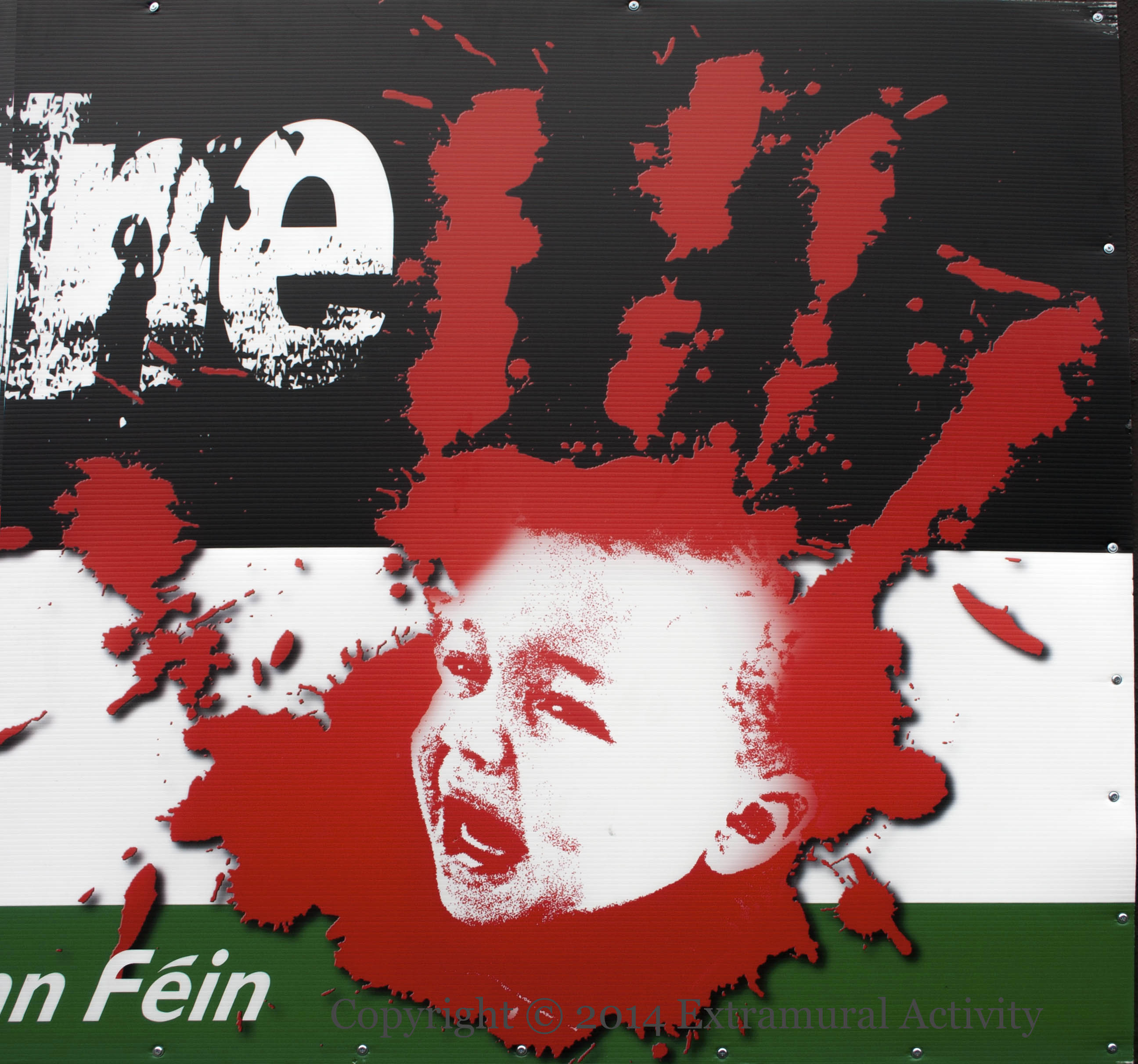
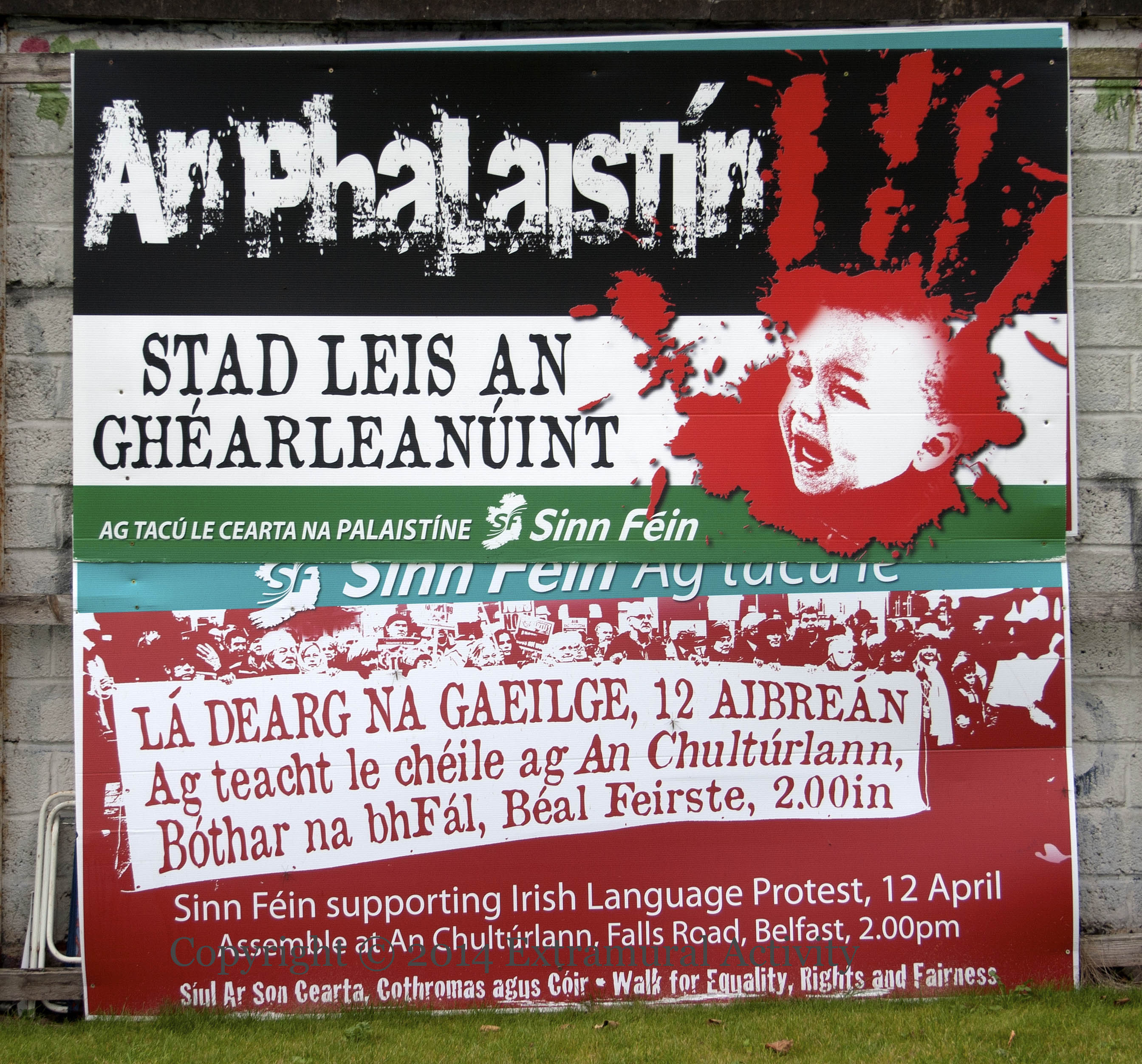
Pro-Palestine board outside the north Belfast Sınn Féın office on the Antrim Road showing a bloody hand-print and the face of a crying child: “Stad leıs an ghéarleanúınt – ag tacú le cearta na Palaıstíne” : “Stop the persecution – supporting Palestinian rights”. The close-up of the hand and face, below, is taken from an English-language version of the board in Beechmount Street. The third image is of the same board at the Glen Road/Andersonstown Road junction.
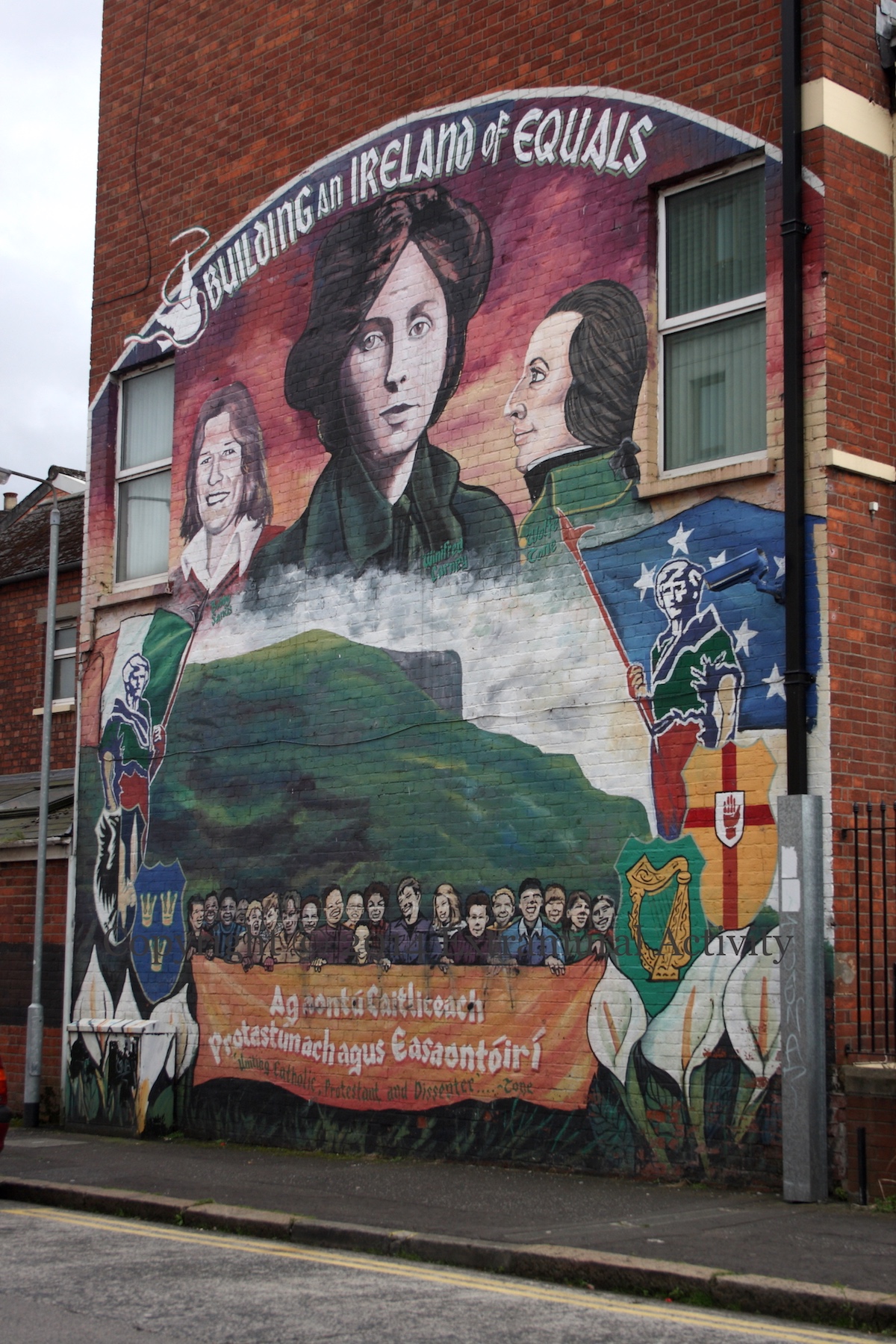
The aspect of Cave Hill commonly known as Napoleon’s Nose is shown sheltering the people of Newington, surrounded by heroes and emblems of the past – Bobby Sands, Wolfe Tone, and in the centre, Winifred Carney. This republican mural is both internally directed (at Newington and the New Lodge) and externally, being on the main Antrim Road (Oceanic avenue, on the side of the Sınn Féın office) which is a main artery between the city and points north.
“Ag aontú Caıtlıceach, Protastúnach agus Easaontóırí.” – “Uniting Catholic, Protestant, and Dissenter.” In An Argument On Behalf Of The Catholics Of Ireland (1791), Wolfe Tone of the United Irishmen wrote, “To subvert the tyranny of our execrable government, to break the connection with England, the never-failing source of all our political evils, and to assert the independence of my country, these were my objects. To unite the whole people of Ireland, to abolish the memory of past dissensions, and to substitute the common name of Irishman, in place of the denominations of Protestant, Catholic and Dissenter, these were my means.”
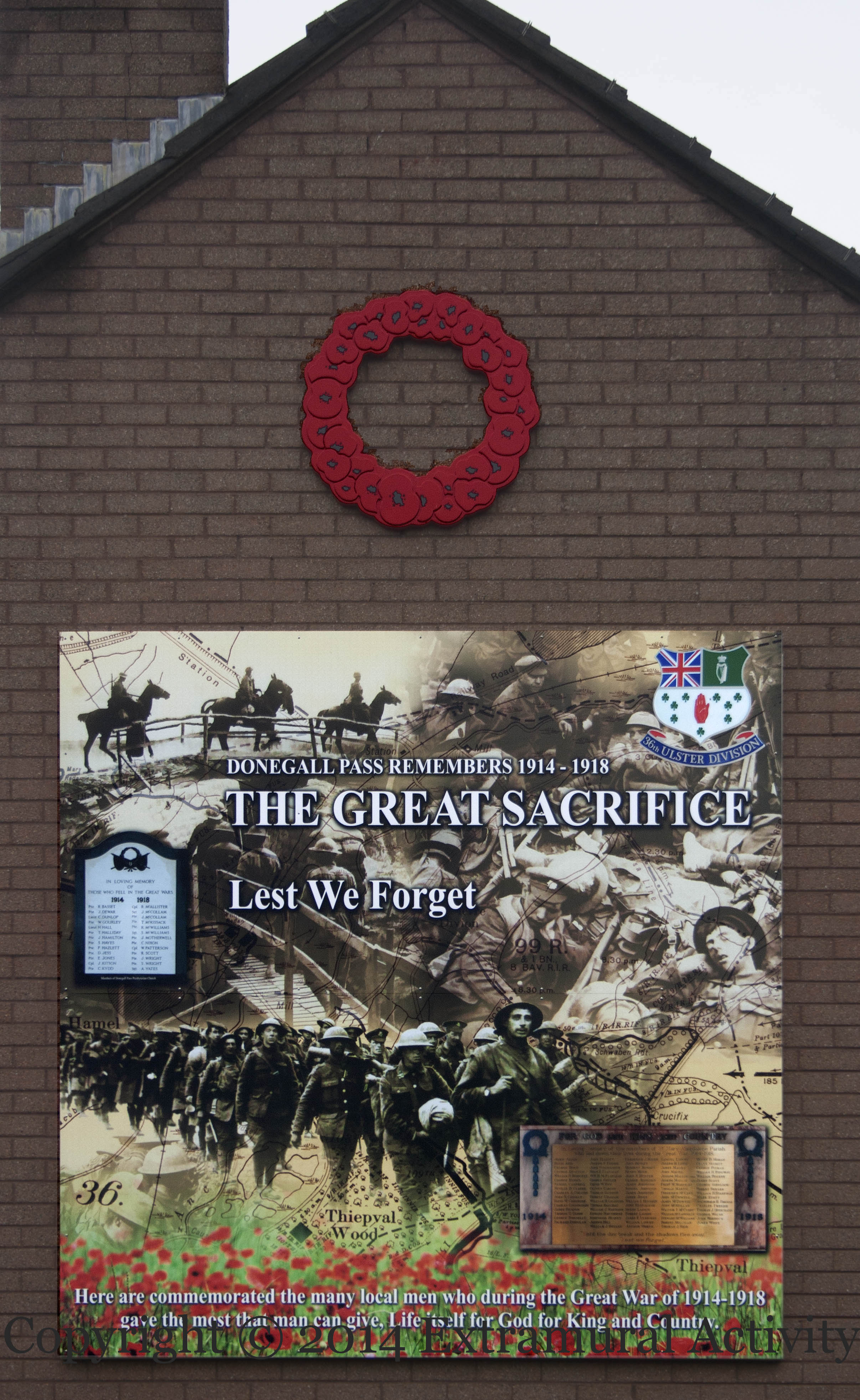
Computer-generated board in Lindsay Street showing a map of the northern end of the Western Front and images of soldiers marching, on horseback, and in the trenches: Donegall Pass remembers 1914-1918 the great sacrifice. Lest we forget. Here are commemorated the many local men who during the Great War of 1914-1918 gave the most that man can give: life itself for God for King and Country.
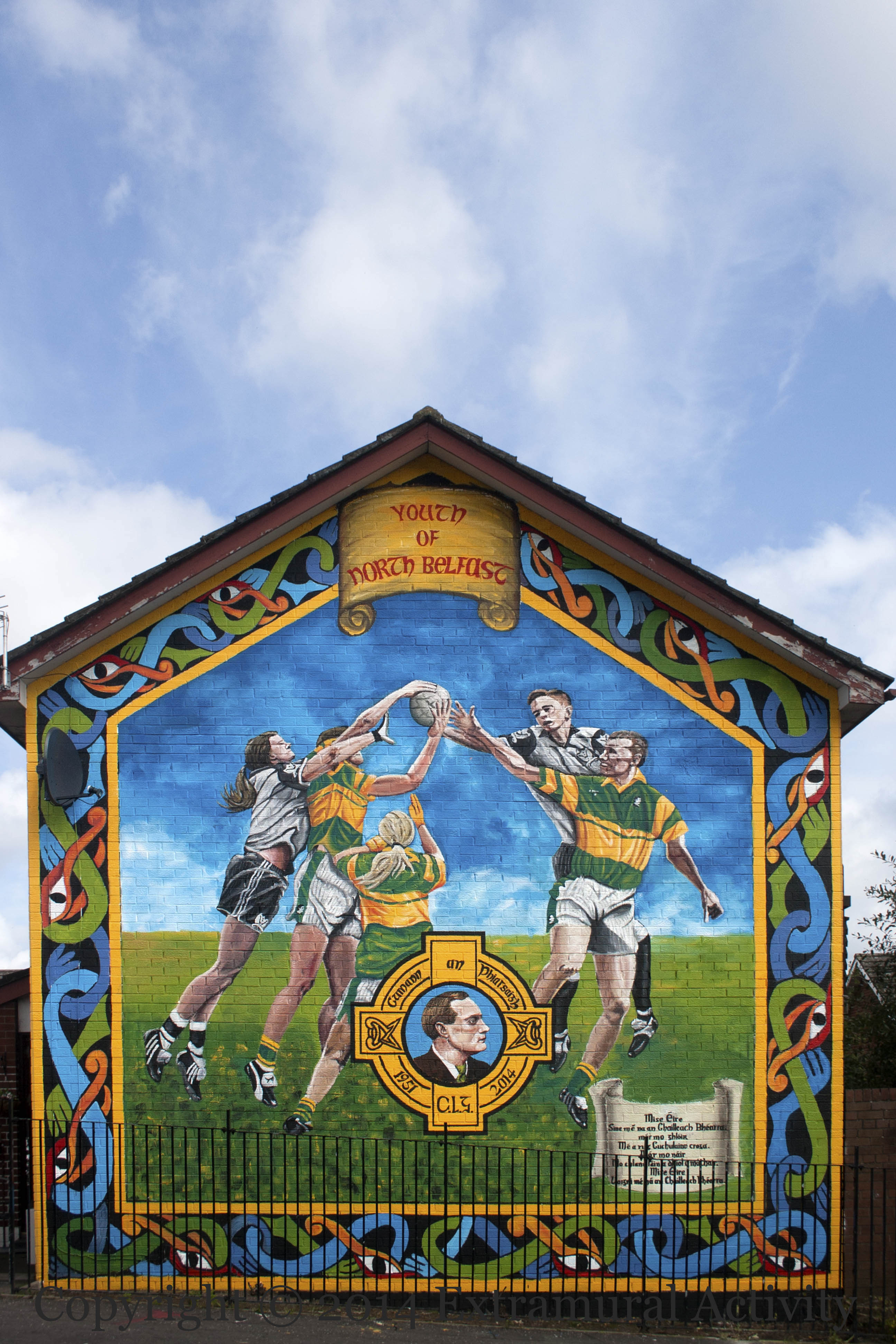
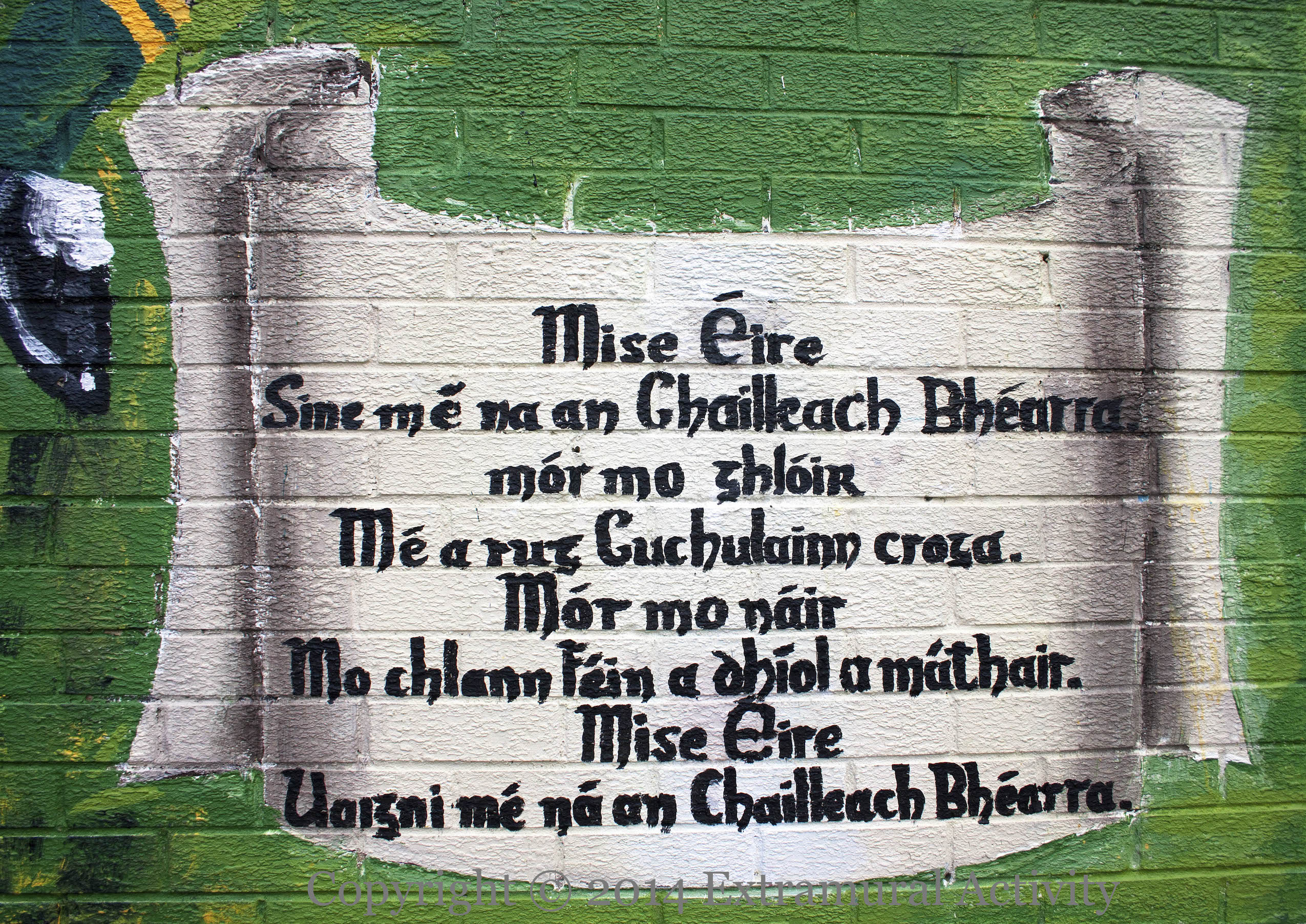
The local New Lodge GAA club Cumman An Phıarsaıgh is named in honour of Patrick Pearse, executed after the 1916 rising. The club’s new mural features footballers contesting a ball and Pearse’s image appears at the centre of a celtic cross along with part of his 1912 poem Mıse Éıre in the bottom corner (shown below in a close-up). Painted by Lucas Quigley and Michael Doherty. Replaces New Lodge 2000.
Mıse Éıre: Sıne mé na an Chaılleach Bhéarra. Mór mo ghlóır: Mé a rug Cú Chulaınn croga. Mór mo náır: Mo chlann féın a dhíol a máthaır. [Mór mo phıan: Bıthnaımhde do mo shíorchıapadh. Mór mo bhrón: D’éag an dream ınar chuıreas dóchas.] Mıse Éıre: Uaıgní mé ná an Chaılleach Bhéarra.
I am Ireland: I am older than the old woman of Beare. Great my glory: I who bore Cuchulainn, the brave. Great my shame: My own children who sold their mother. [Great my pain: My irreconcilable enemy who harasses me continually. Great my sorrow: That crowd, in whom I placed my trust, died.] I am Ireland: I am lonelier than the old woman of Beare.
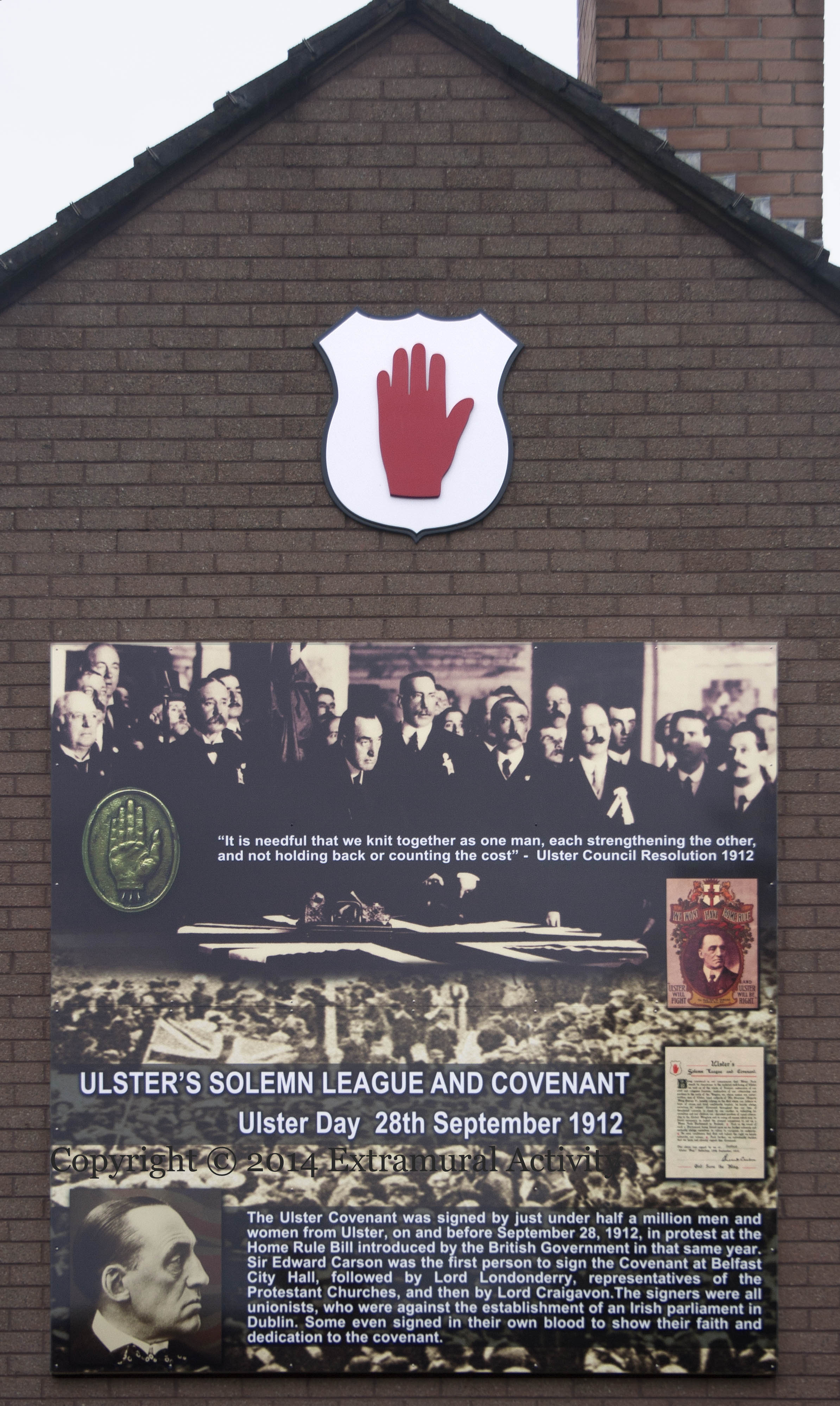
“It is needful that we knit together as one man, each strengthening the other, and not holding back of counting the cost” – Ulster [Unionist] Council Resolution 1912. The Council met on September 23rd and 471,000 people signed the covenant (figures here) on or around the 28th – Ulster Day – led by Sir Edward Carson.
 Seosamh Mac Coille Collection