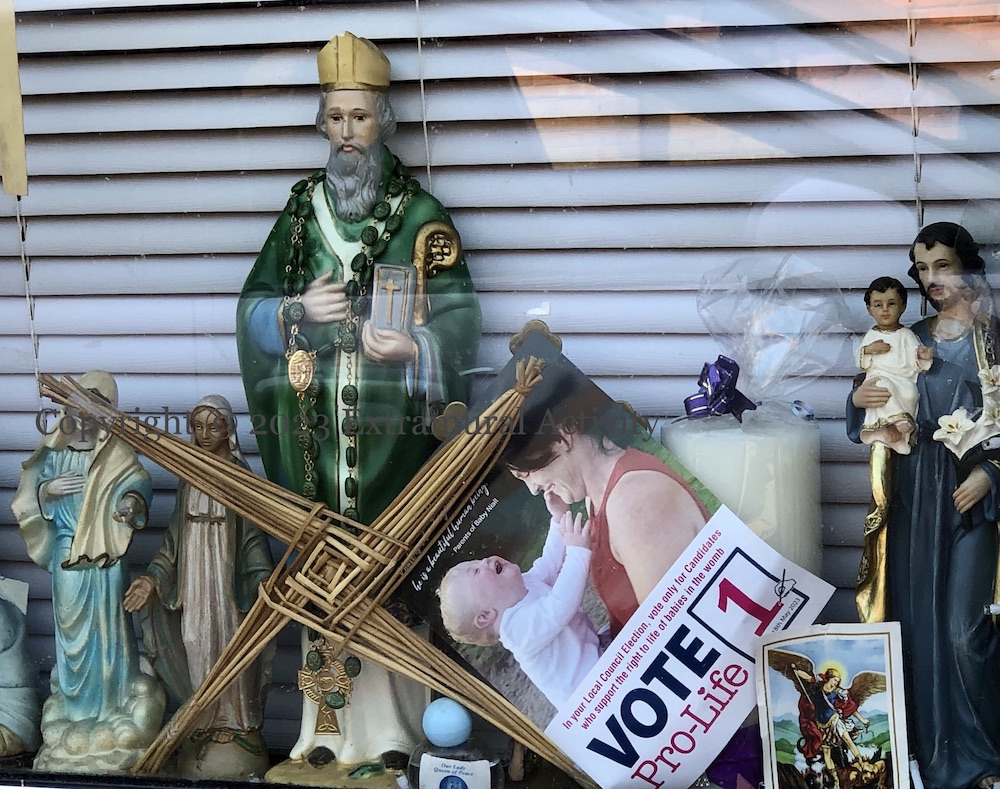
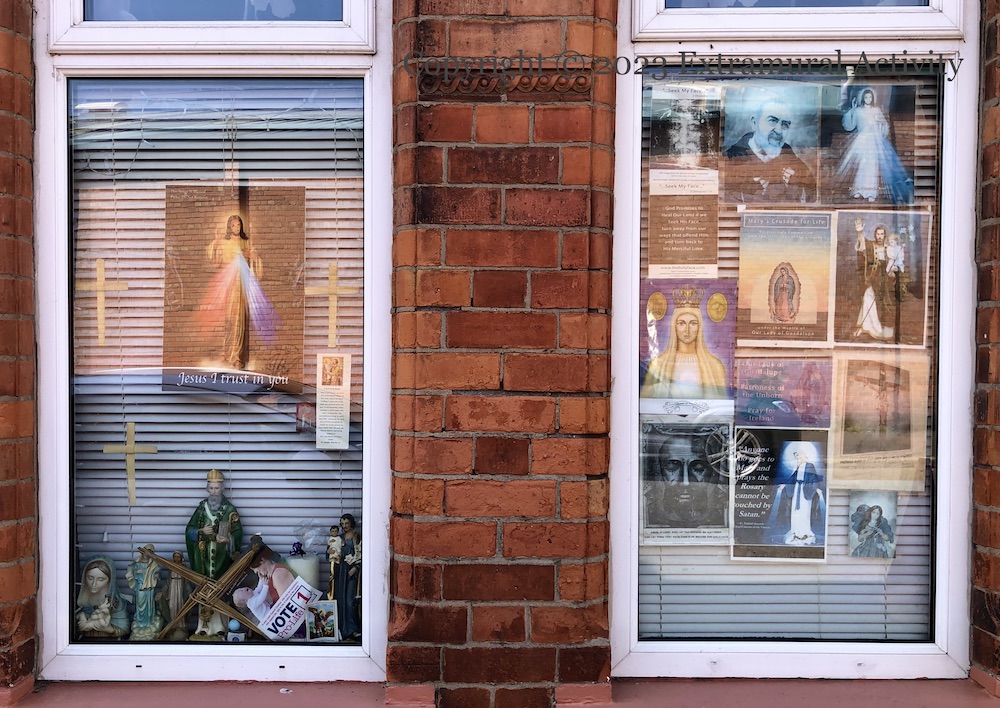
Voters are headed to the polls for the local government elections. Of the parties standing, the TUV, DUP, and – presumably this west Belfast household’s preference – Aontú are against the legal status of abortion in NI.
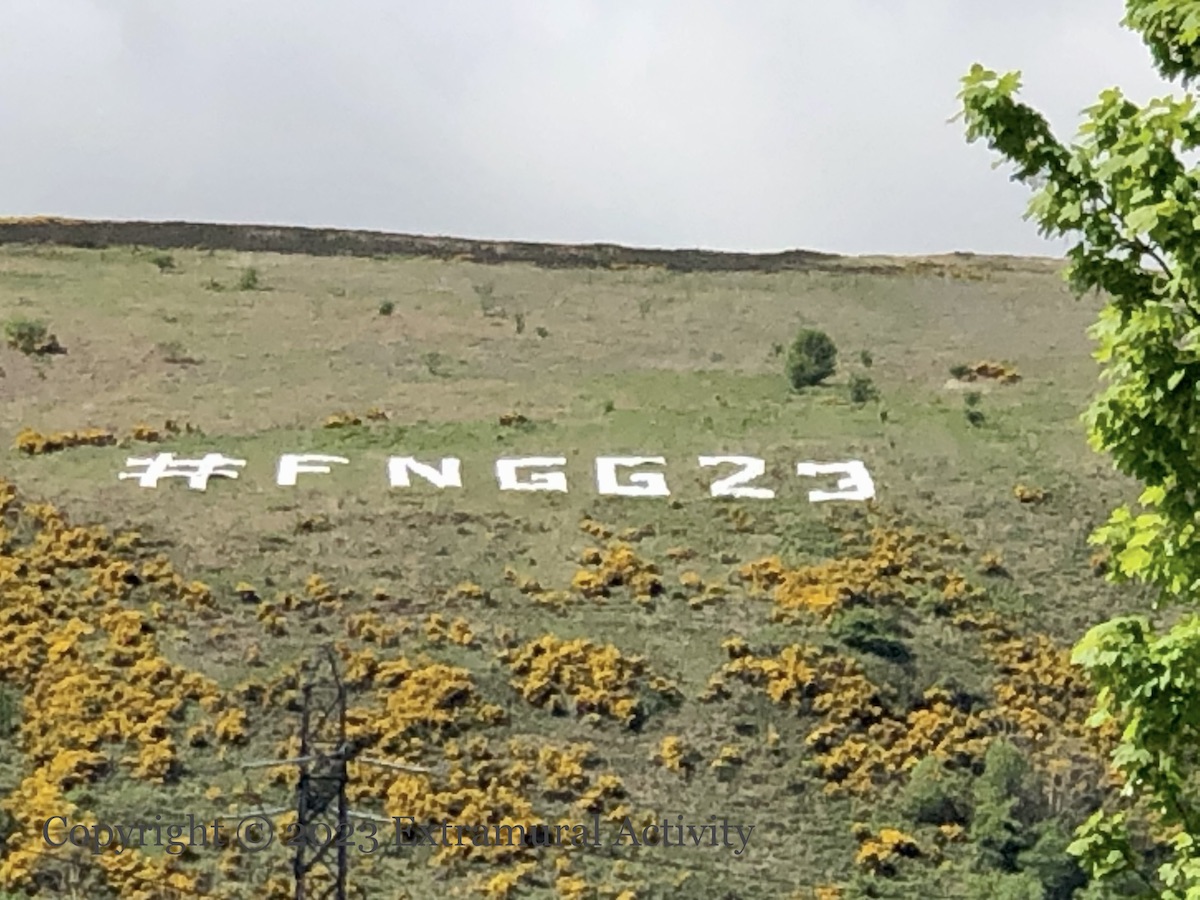
“FNGG” stands for “Féıle Na gCloıgíní Gorma” [Festival Of The Bluebells]. Bluebells – cloıgíní gorma – typically grow in woodlands rather than on open hillsides (Belfast Hills Partnership) but Slıabh Dubh/Black Mountain (site of this latest message on the mountain in support of the festival) is also a blooming ground – images can be seen in the festival’s full programme (at Glór Na Móna). The festival includes plenty of outdoor activities, including a bluebell walk on Friday morning; Damien Dempsey headlines the concert at St Comgall’s on Thursday night.
The title of today’s post [The Magic/Spell/Charm Of Black Mountain] comes from a piece by Feargal Mac Ionnrachtaıgh, writing about his childhood experiences of the upper Springfield area, including the bluebells on the mountain, his father Terry’s love for the hill, and the killing of brother Terry Óg by the LVF. See previously (at Peter Moloney’s site) Save The Black Mountain, and No Such Thing As Failure | Páırc Mhıc Ionnrachtaıgh.
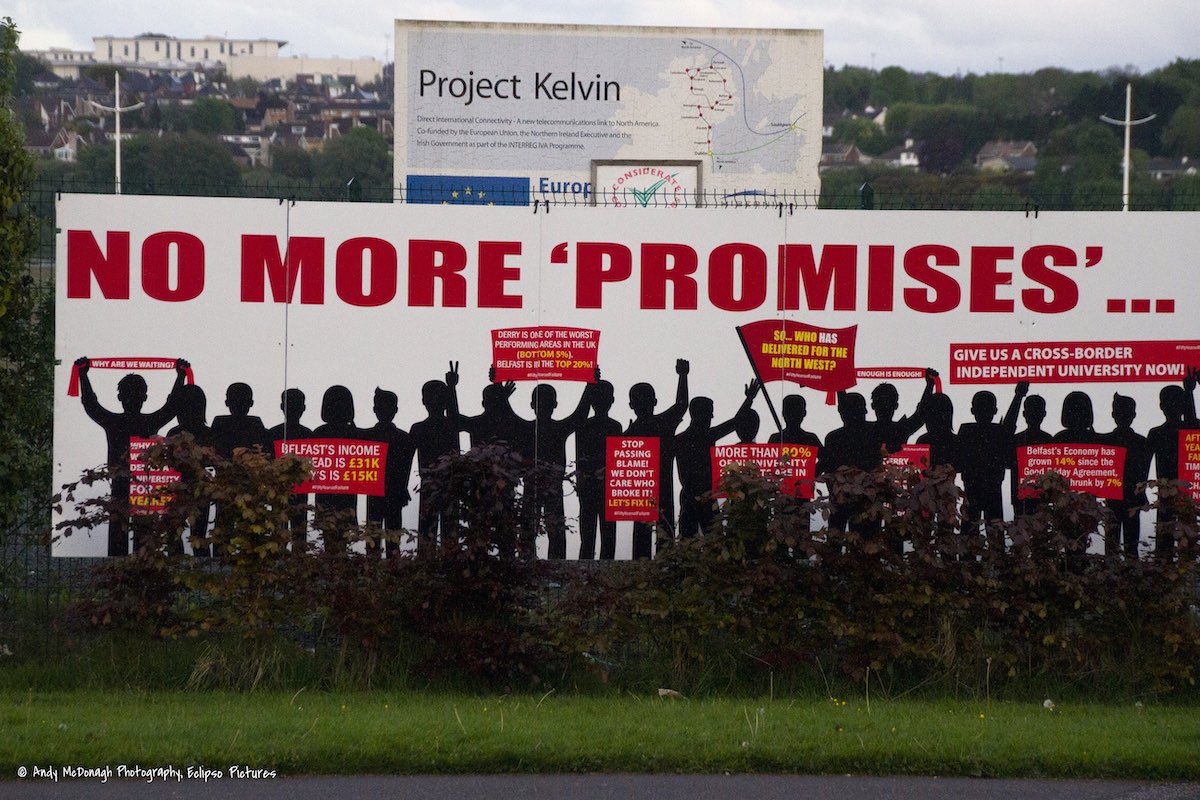
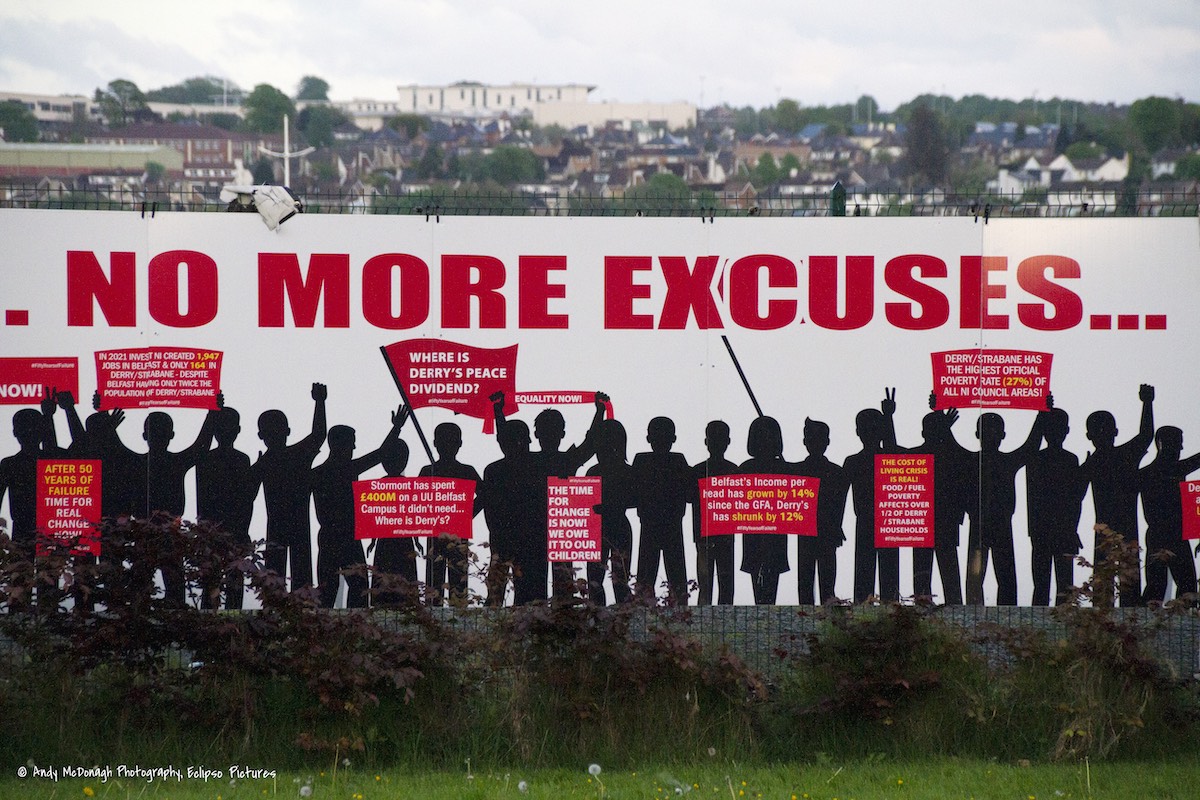
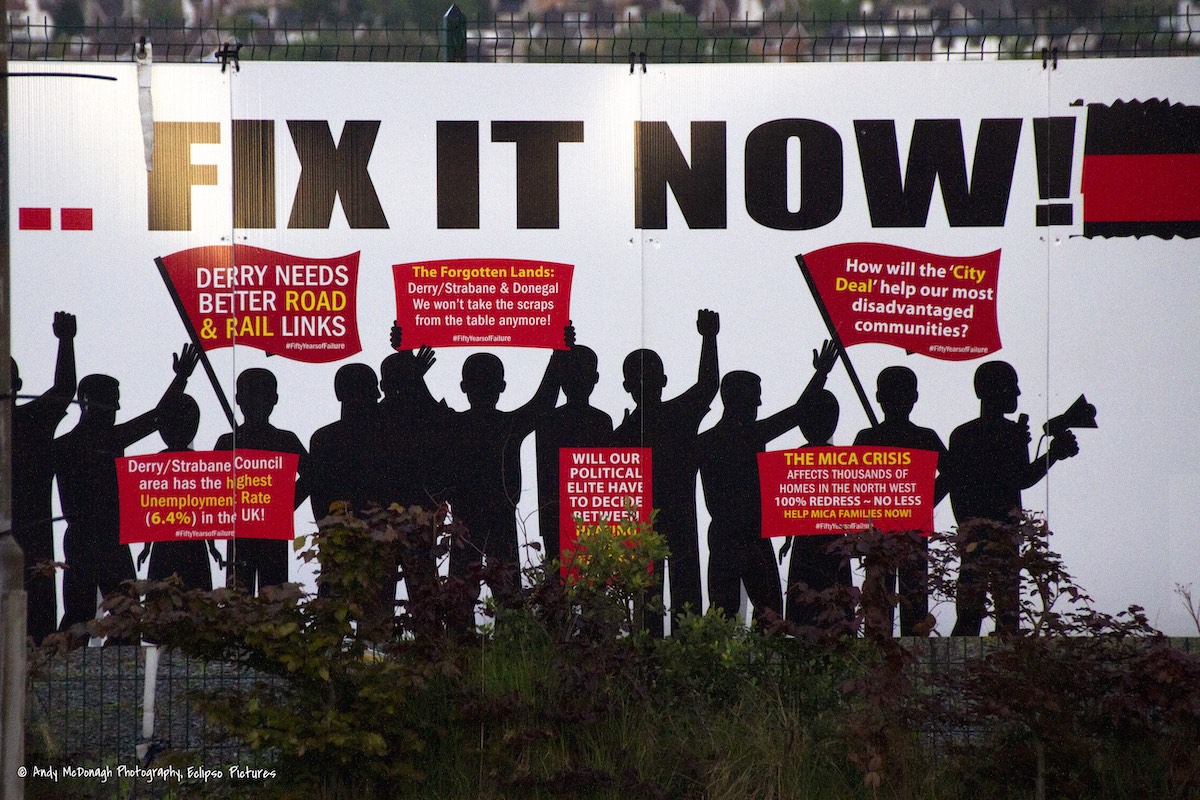
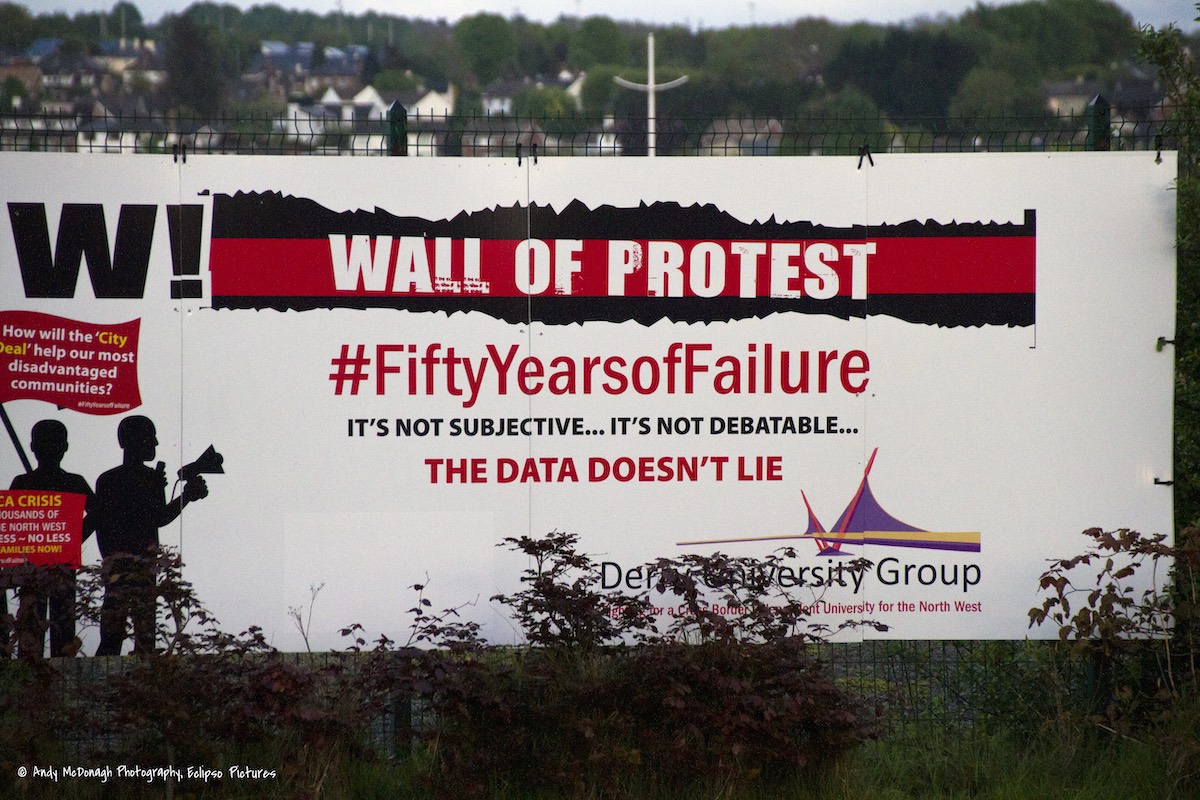
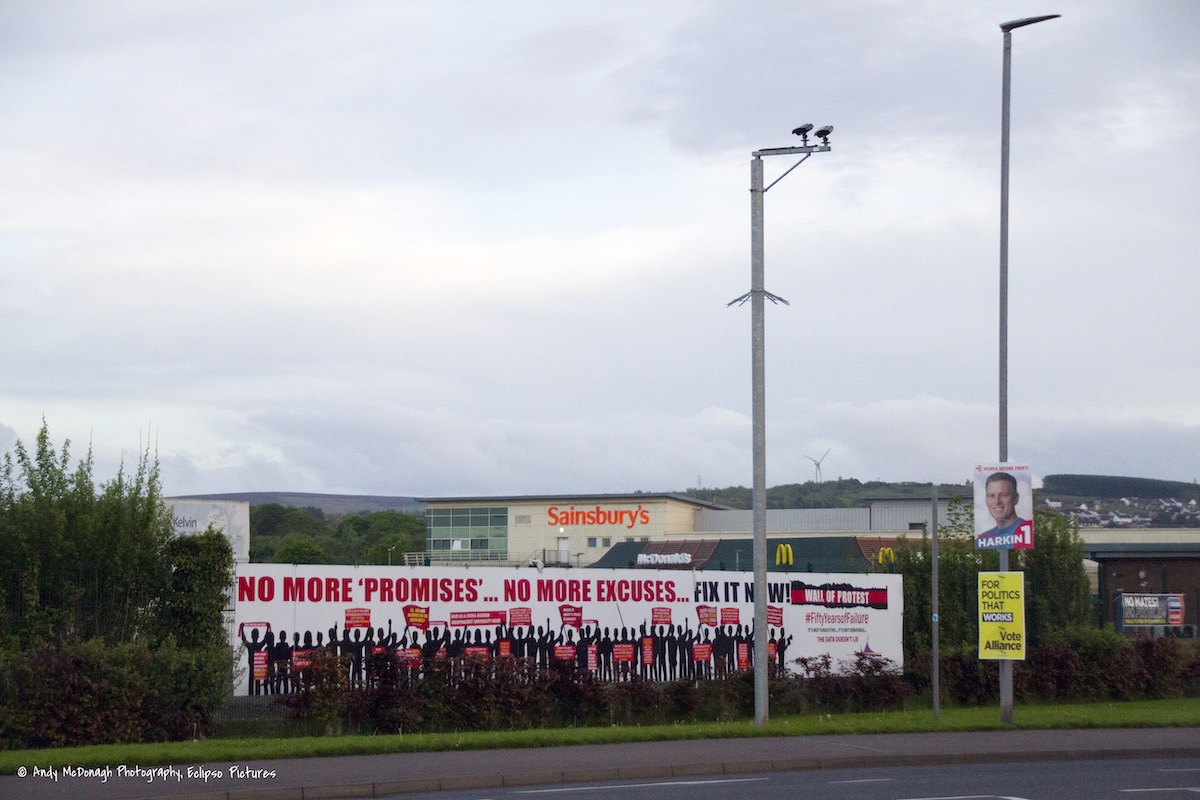
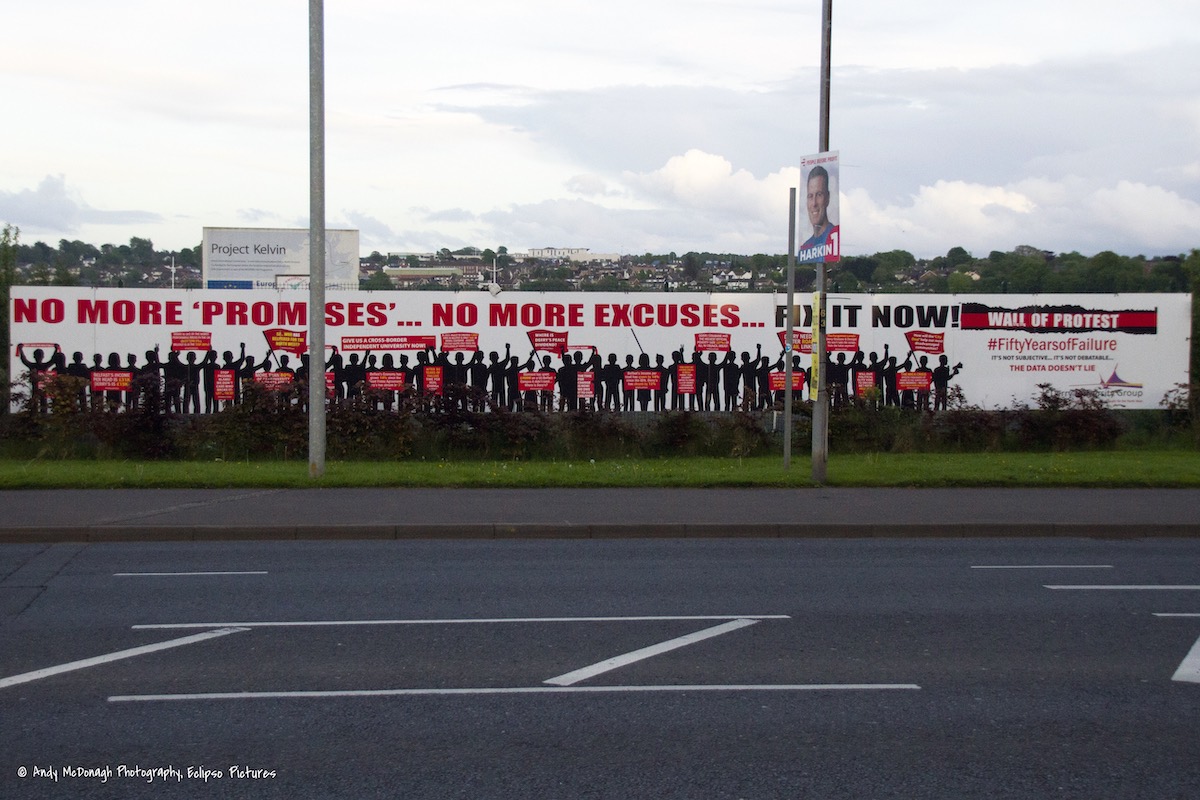
“No more ‘promises’ … No more excuses … Fix it now! Wall of protest #FiftyYearsOfFailure It’s not subjective … it’s not debatable. The data doesn’t lie.”
The general concern of this campaign is persistent under-investment in Derry and the northwest. One of the placards reads carried by a protester reads, “Belfast’s economy has grown 14% since the [1998] Good Friday Agreement, Derry’s has shrunk 7%” but the complaint goes back “fifty years”, based on the approval in 1965 (BBC) and construction by 1968 of what was initially called the “New University Of Ulster” at a new site in Coleraine rather at Magee University College in Derry. The final panel of the long board includes the logo of the Derry University Group “fighting for a cross-border independent university for the north west” (tw). (1965 was also the year that Craigavon was created.)
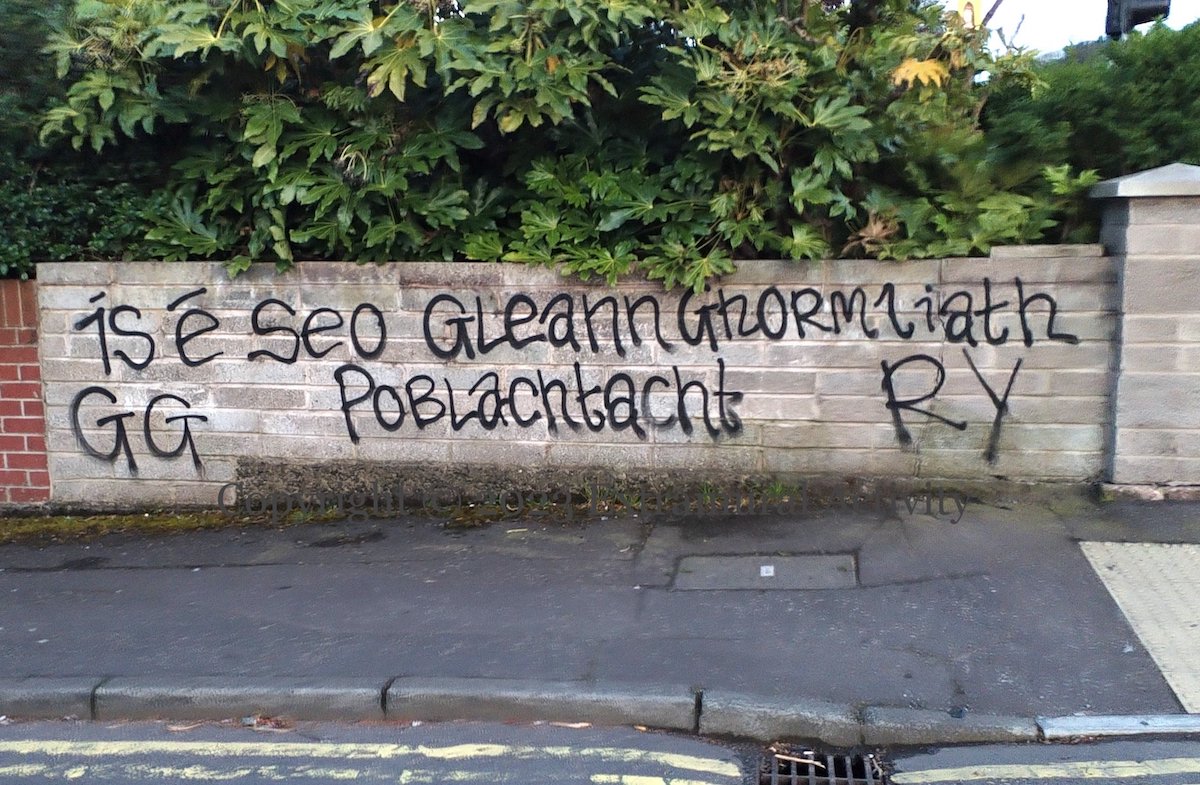
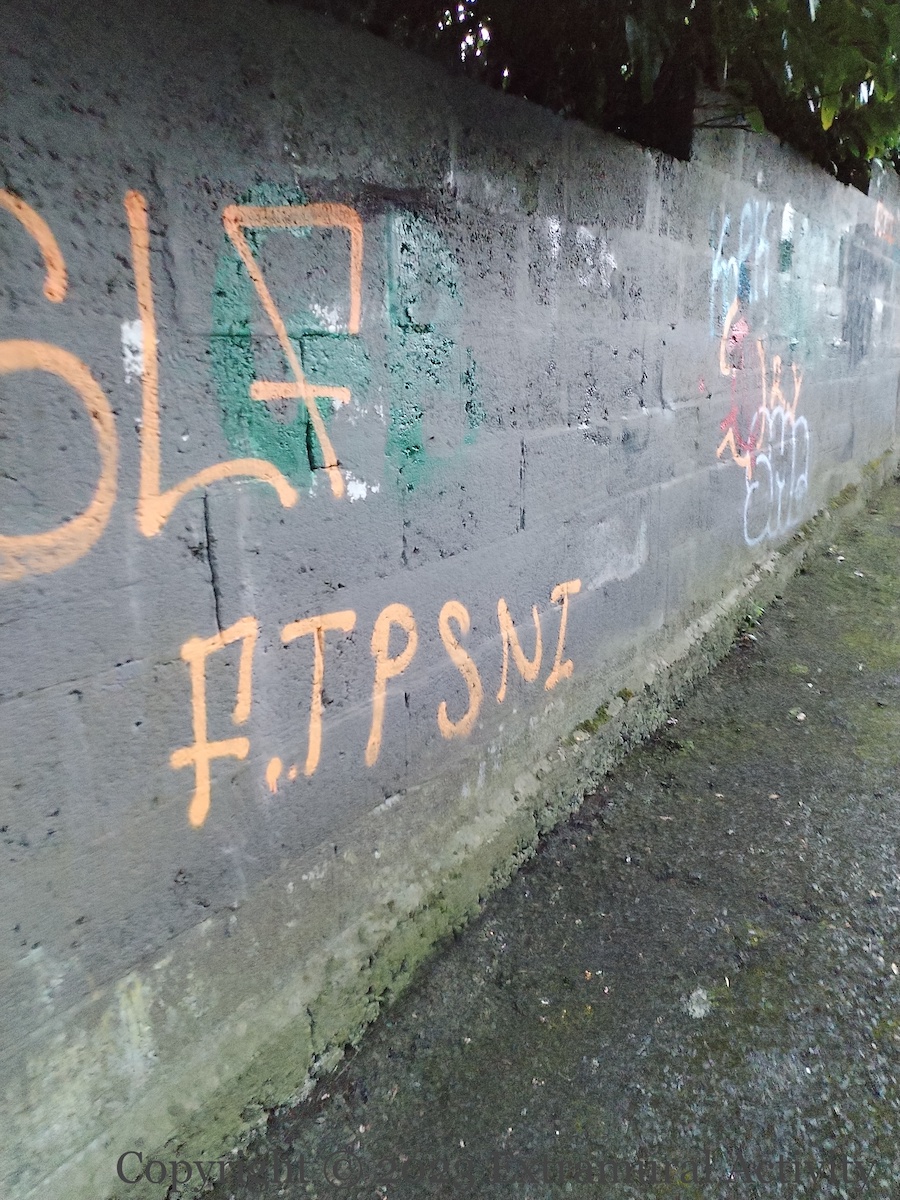
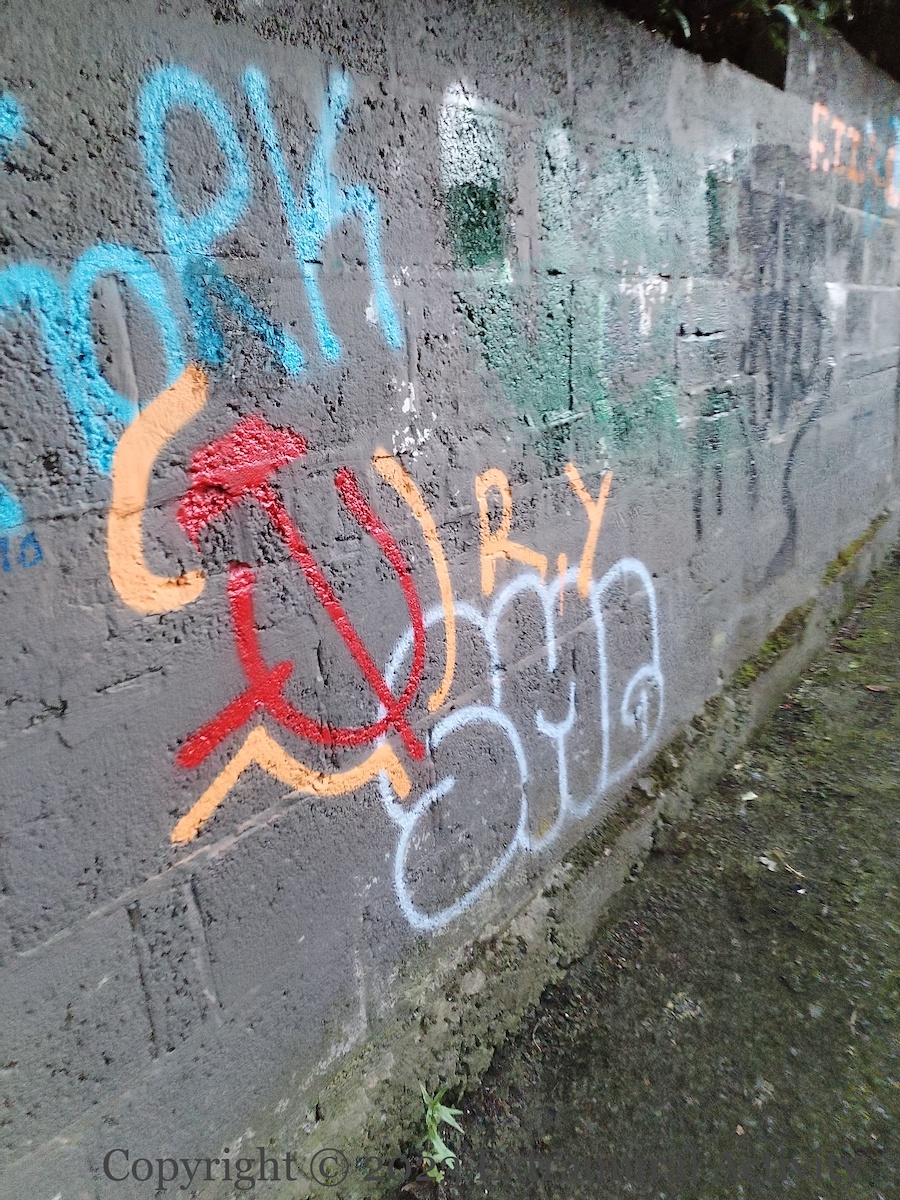
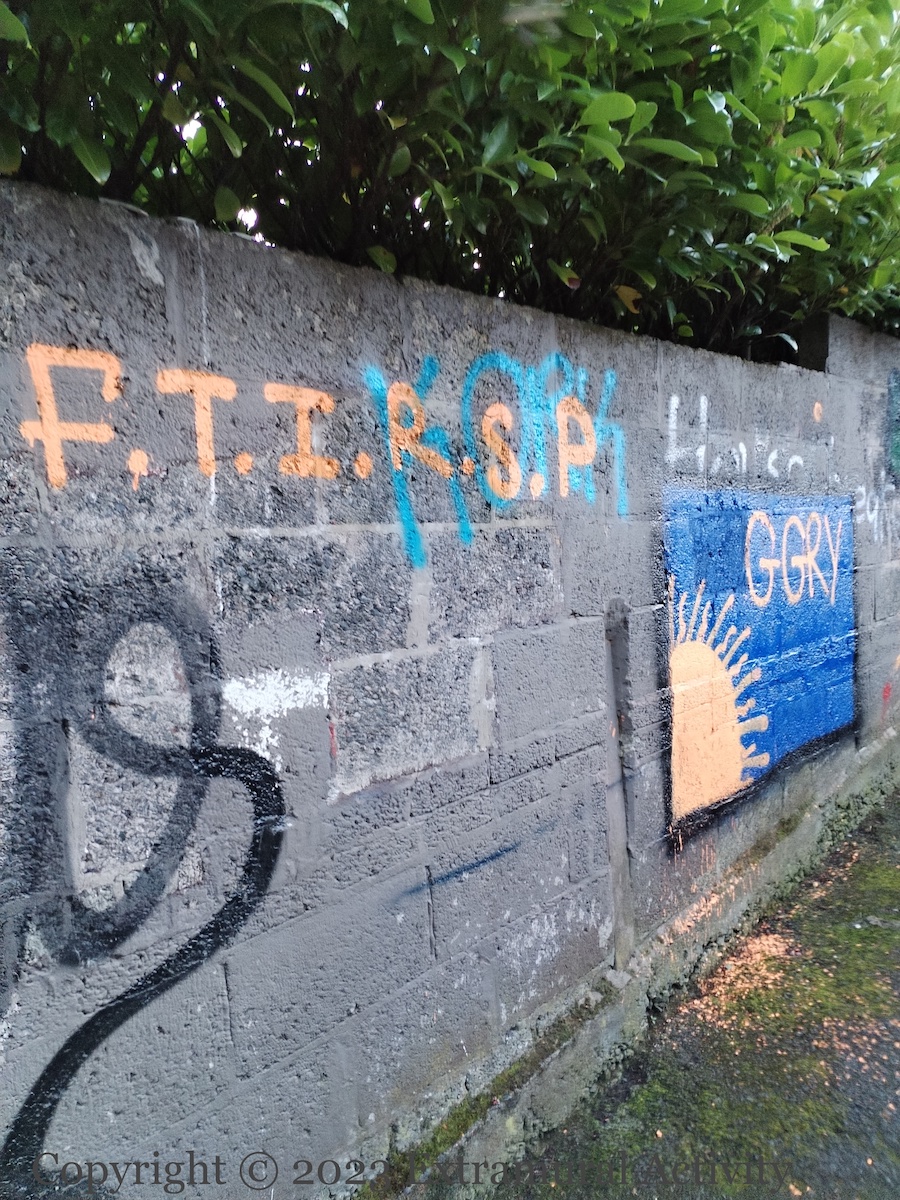
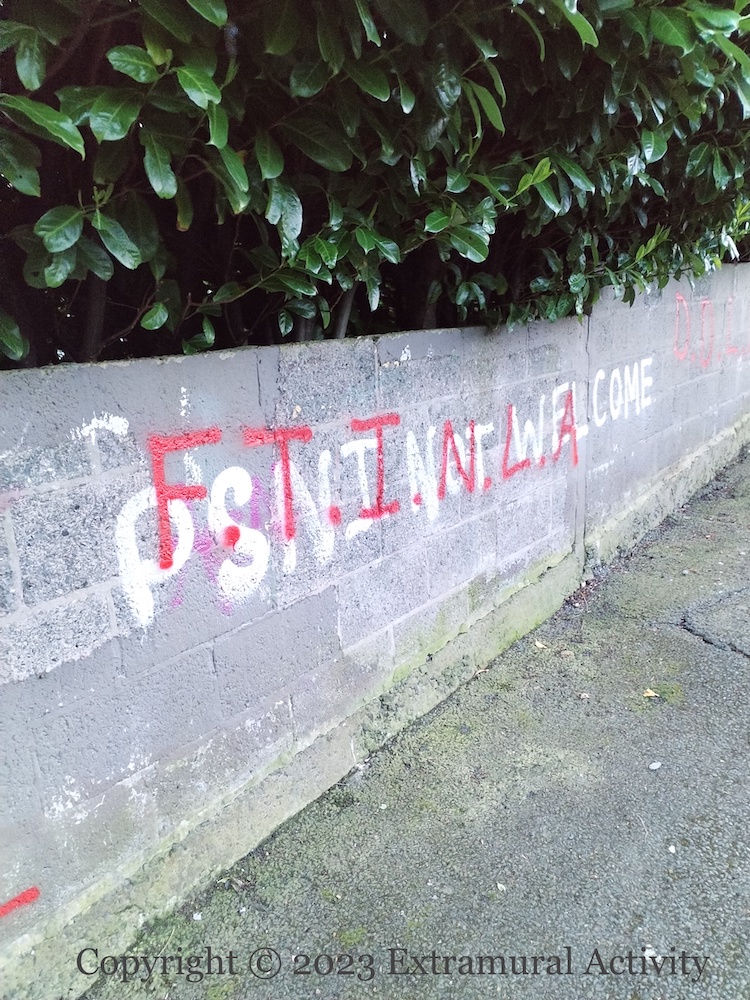
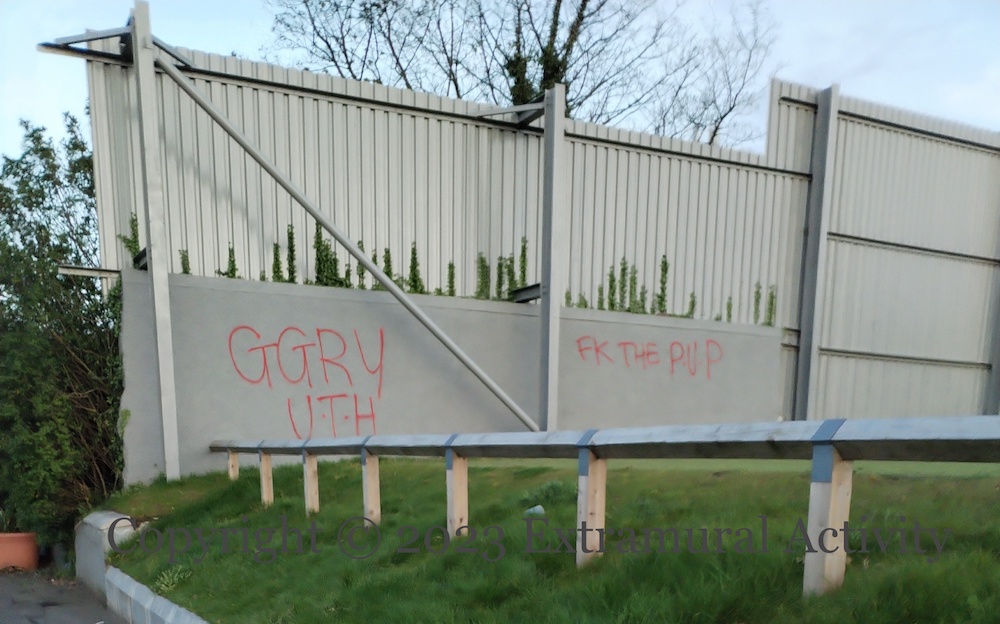
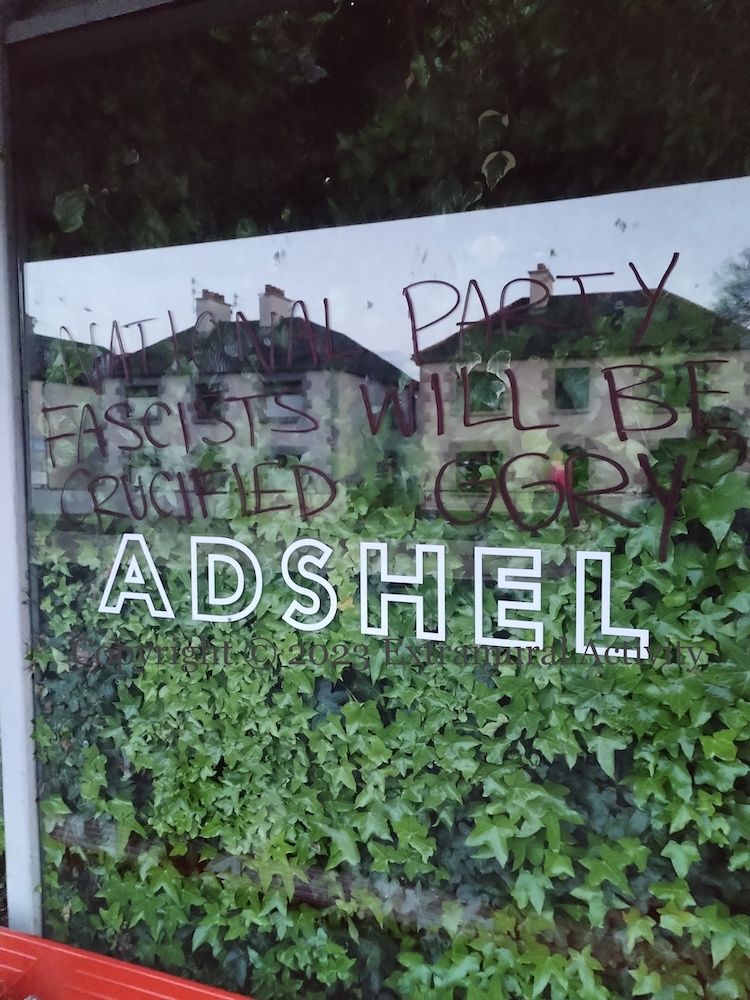
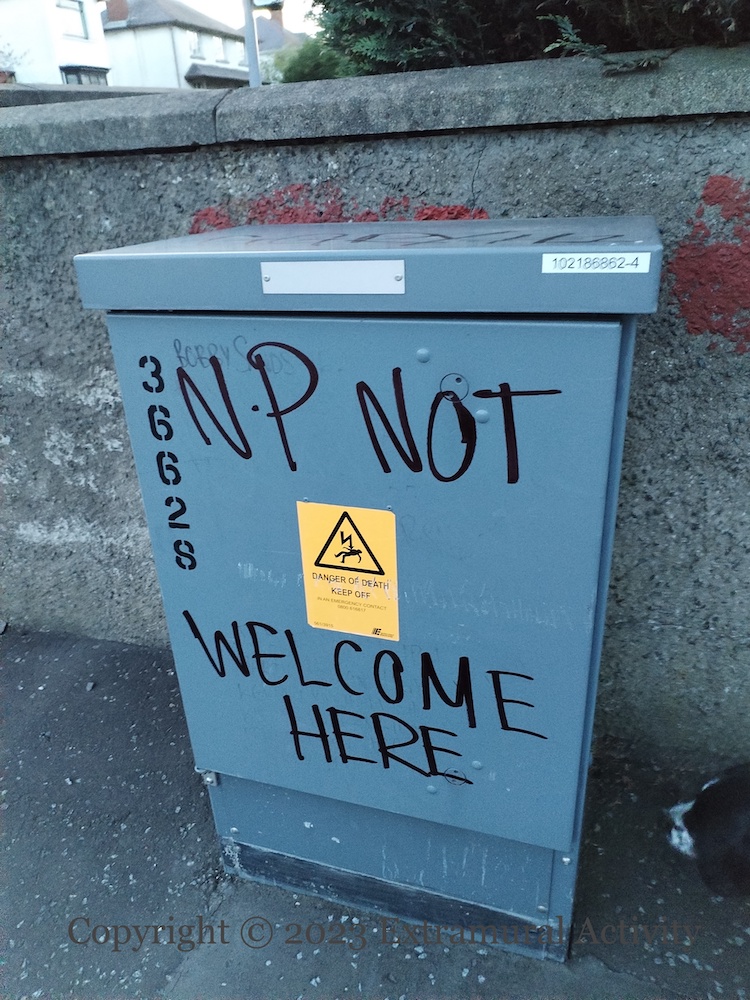
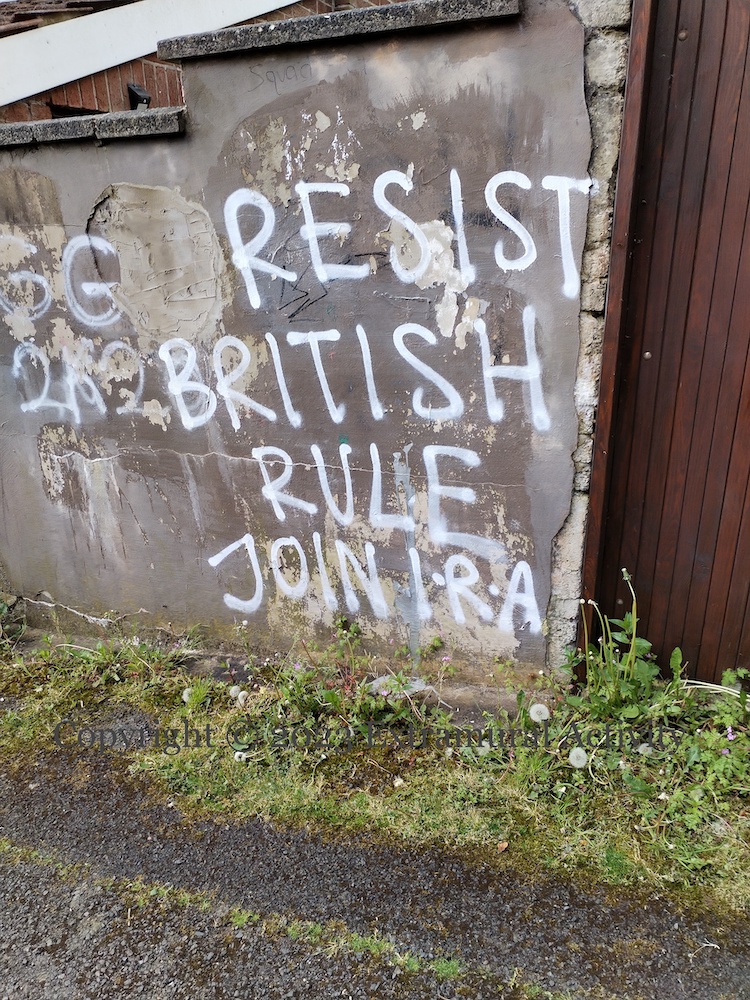
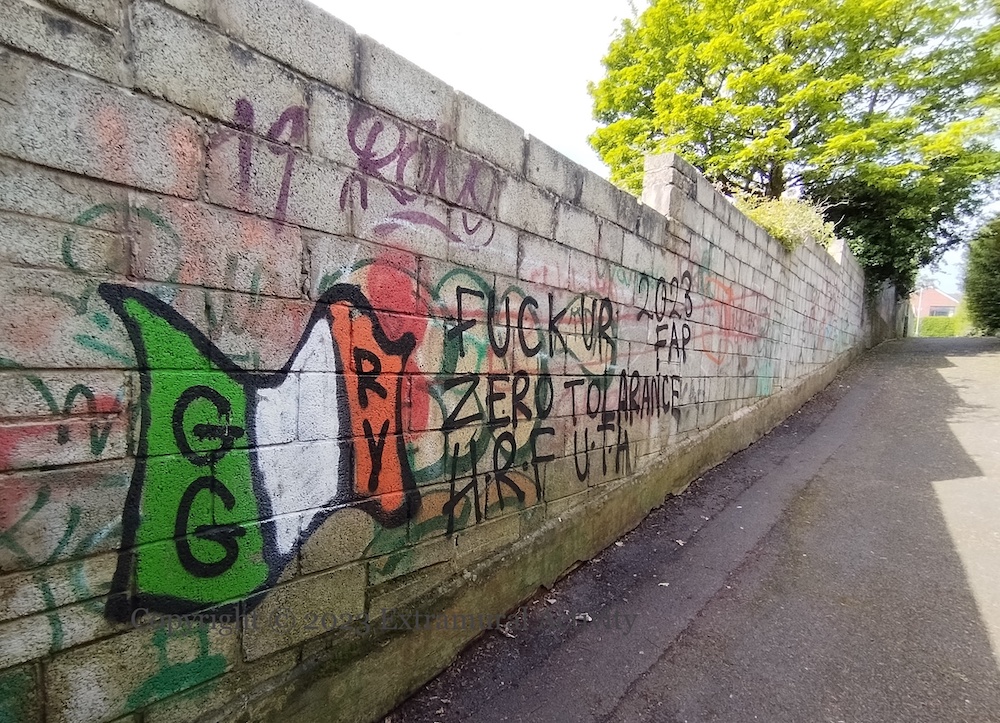
Here is a gallery of ten images of republican graffiti (and some basic muraling) from Glengormley, particularly the Elmfield area (see previously Glengormley Republican Youth).
Above: “This is republican Glengormley – GGRY”/”Is é seo Gleann Ghormlaıthe [mis-spelled in the graffito as “Ghormlıath”, perhaps by attraction to the English “ley” – the Irish ending comes from “flaıth” rather than “lıath”] poblachtach [mis-spelled with a final “t”, perhaps by attraction to the Irish “poblacht”].
Among the various images below: “resist British rule” along with an exhortation to join the IRA and Fianna (the sunburst); attacks on the IRSP/INLA (though a hammer and sickle are included); politically, attacks on the PUP and a threat that the “fascists” in the National Party “will be crucified”.
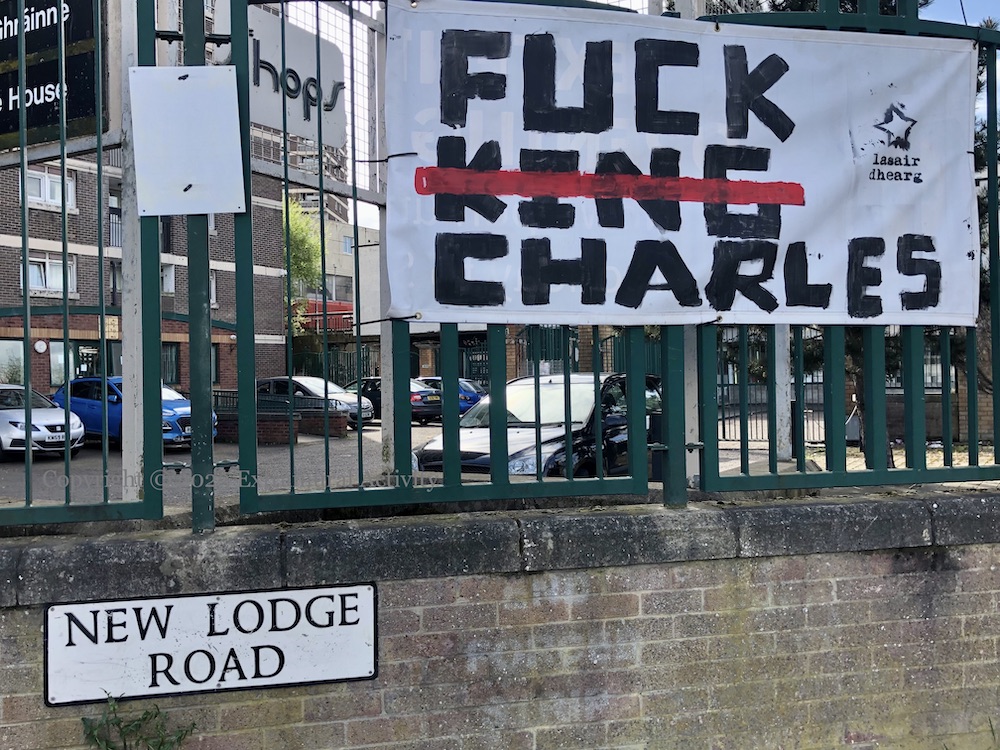
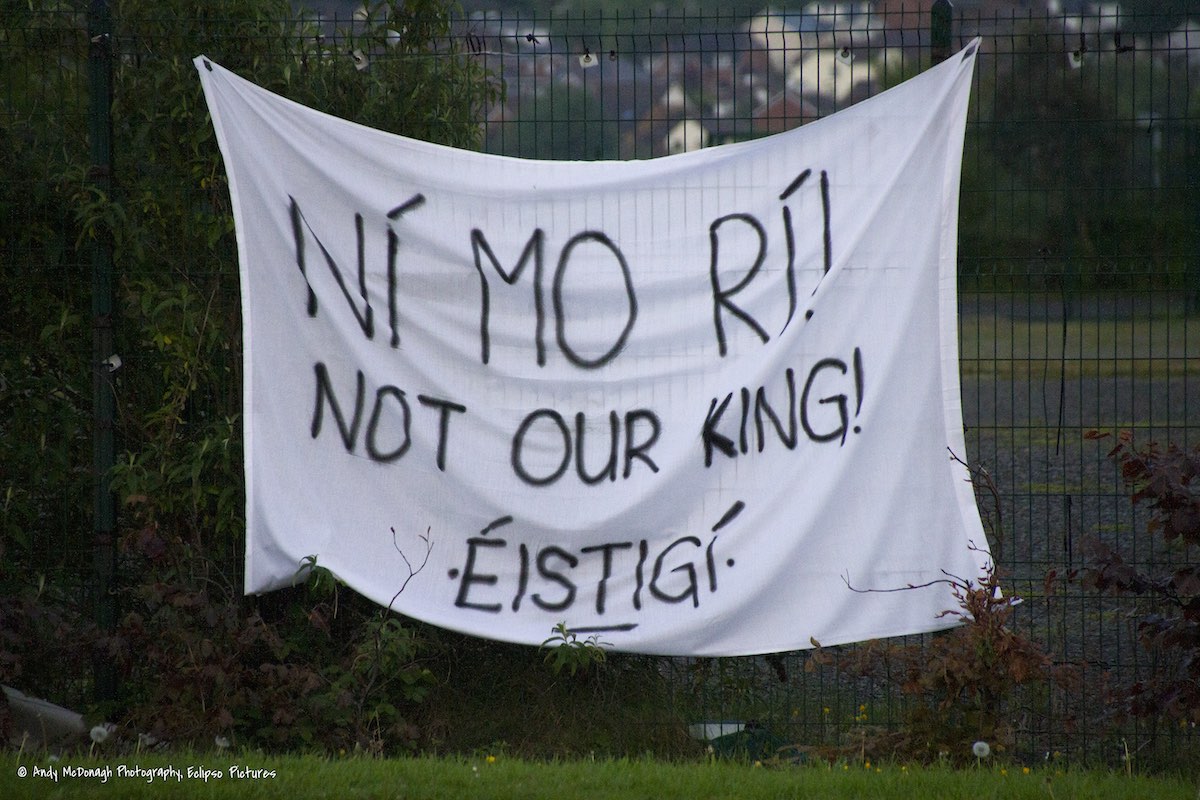
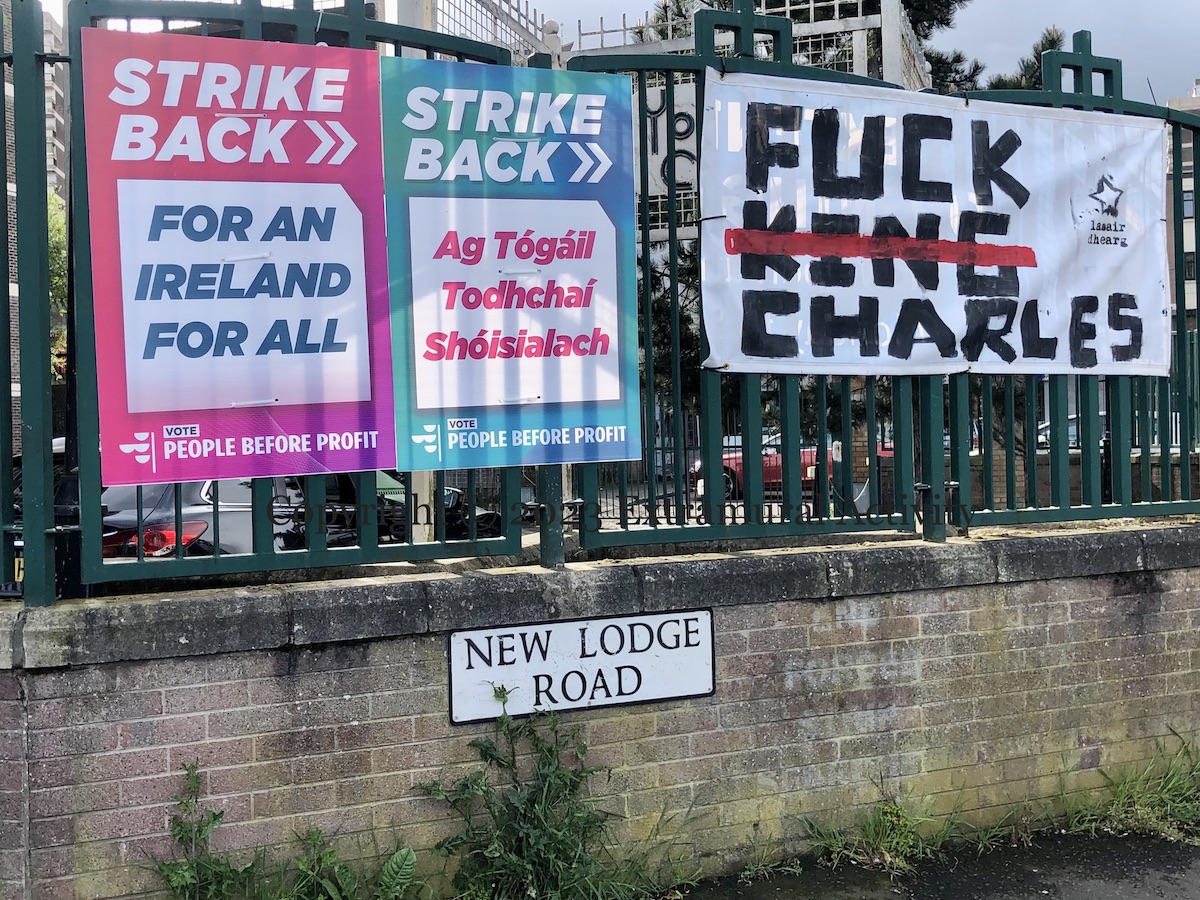
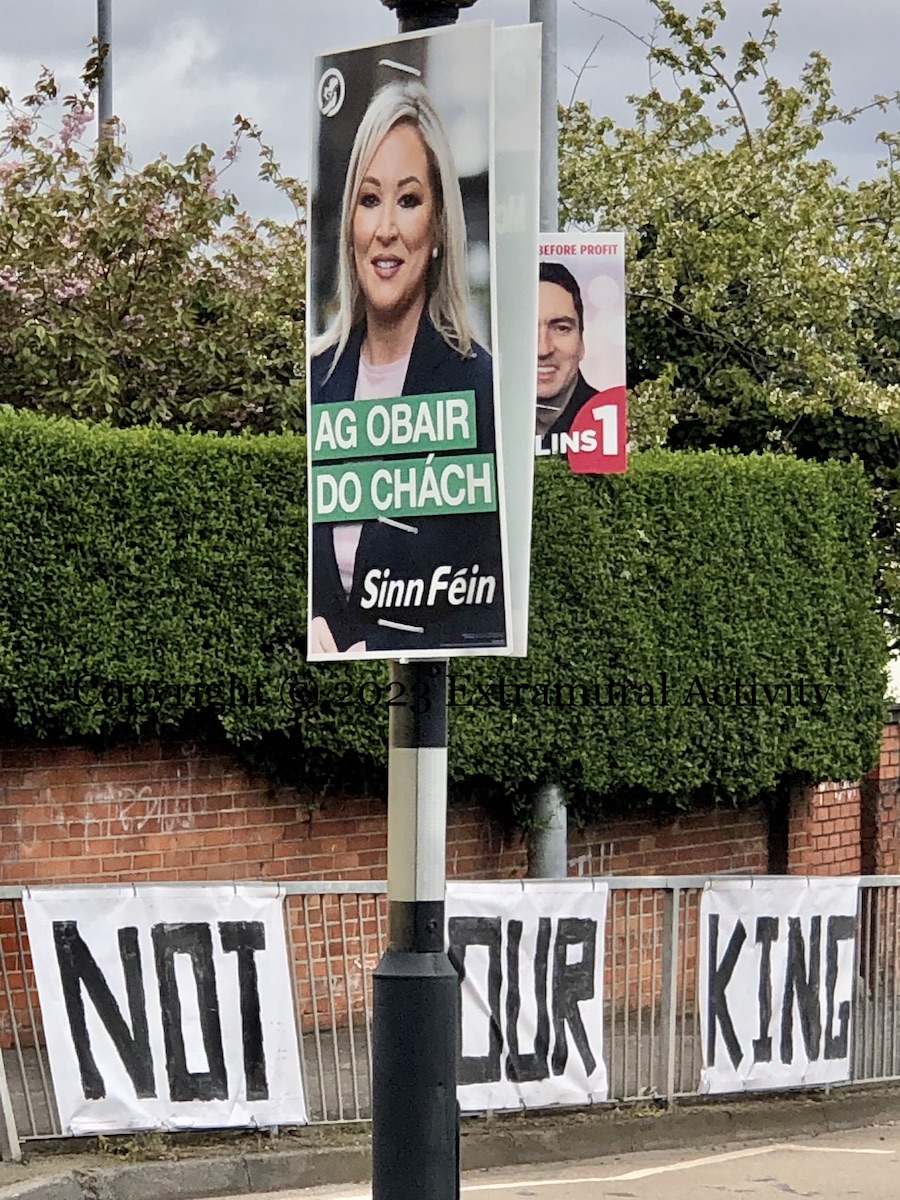
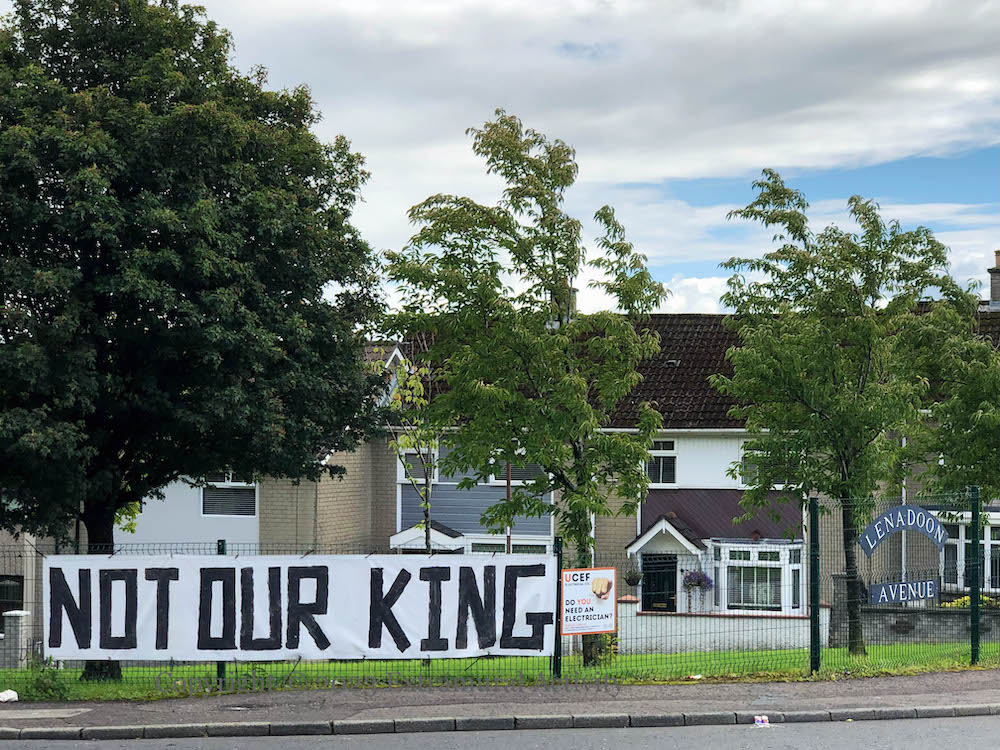
Here are two more responses to the coronation of King Charles last weekend: (above and last) a Lasaır Dhearg (web) tarp in north Belfast reading “Fuck King Charles”; immediately below, an Éıstıgí (web) sheet/flag reading “Ní Mo Rí [Ní hé mo rí é/[he is] not my king]. Not our king.” in Strand Road, Derry.
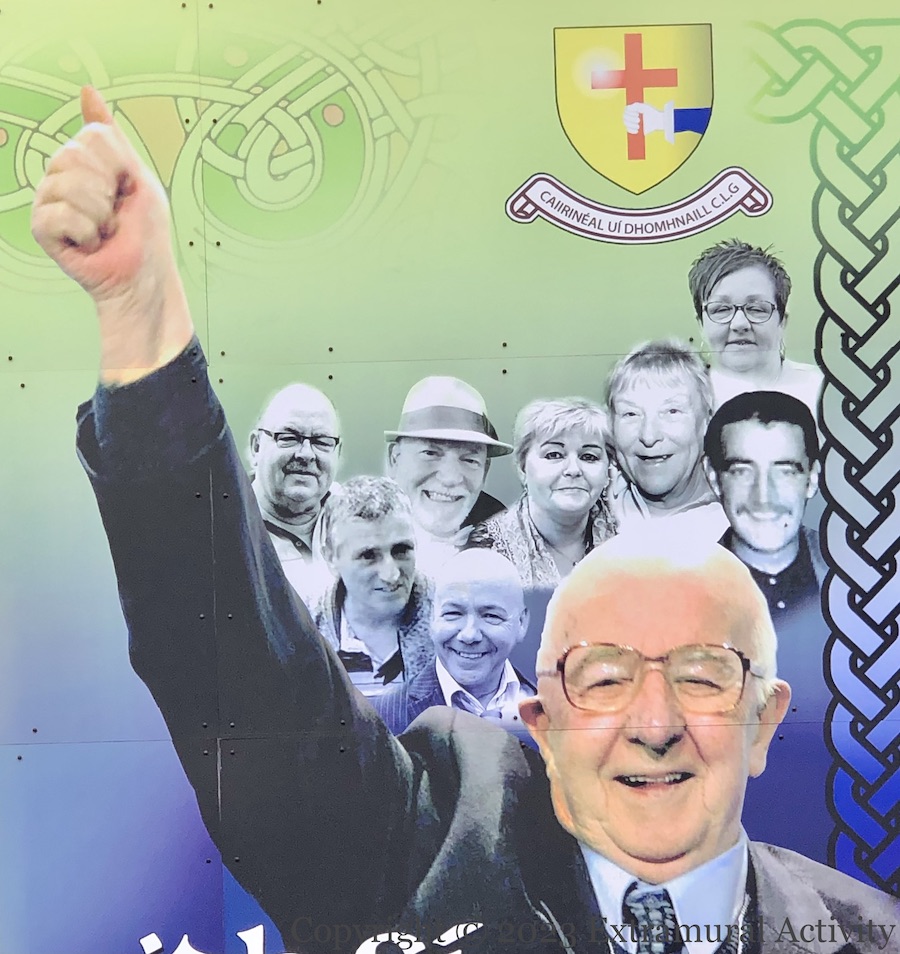
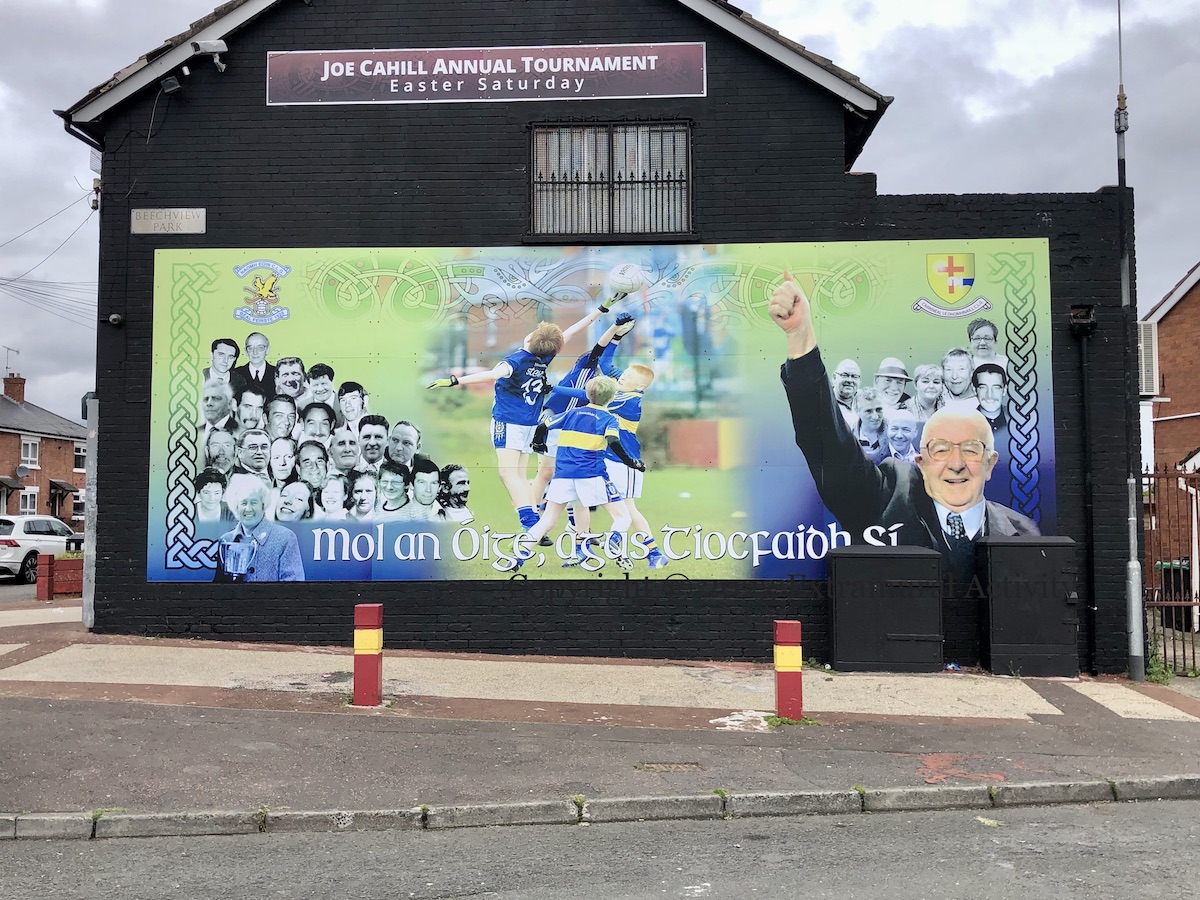
“Mol an óıge agus tıocfaıdh sí [encourage youth and it will flourish, or less literally, youth responds to praise].” The emblems in the corners are of two local GAA clubs “Naomh Eoın” and “Caıırınéal [Caırdınéal] Uí Dhomhnaıll” – the “Joe Cahill Annual Tournament” was held at Easter at their two pitches.
Joe Cahill joined the Fianna in 1937 and was involved in the republican movement from then until his death in 2004, including being in Tom Williams’s company in 1942, and was later a founder member and Chief of Staff of the Provisional IRA.
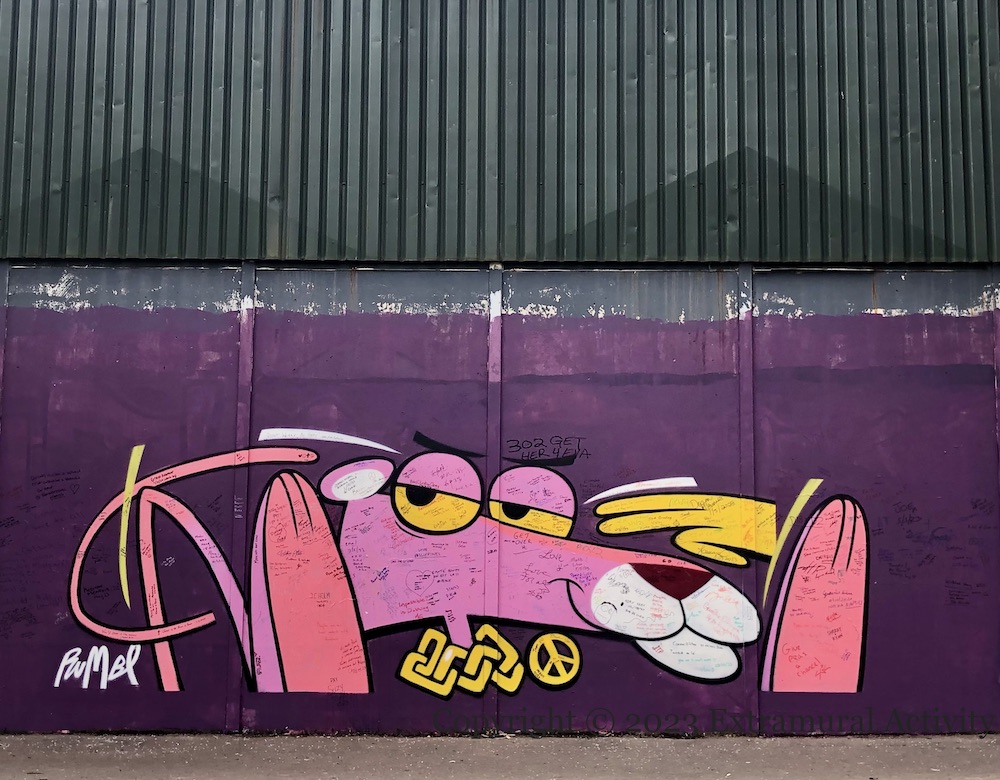
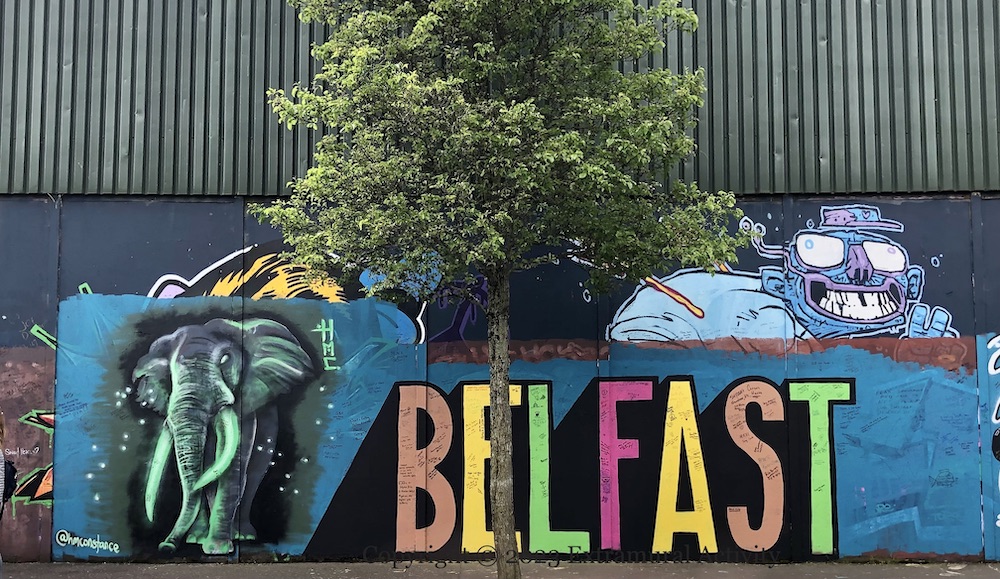
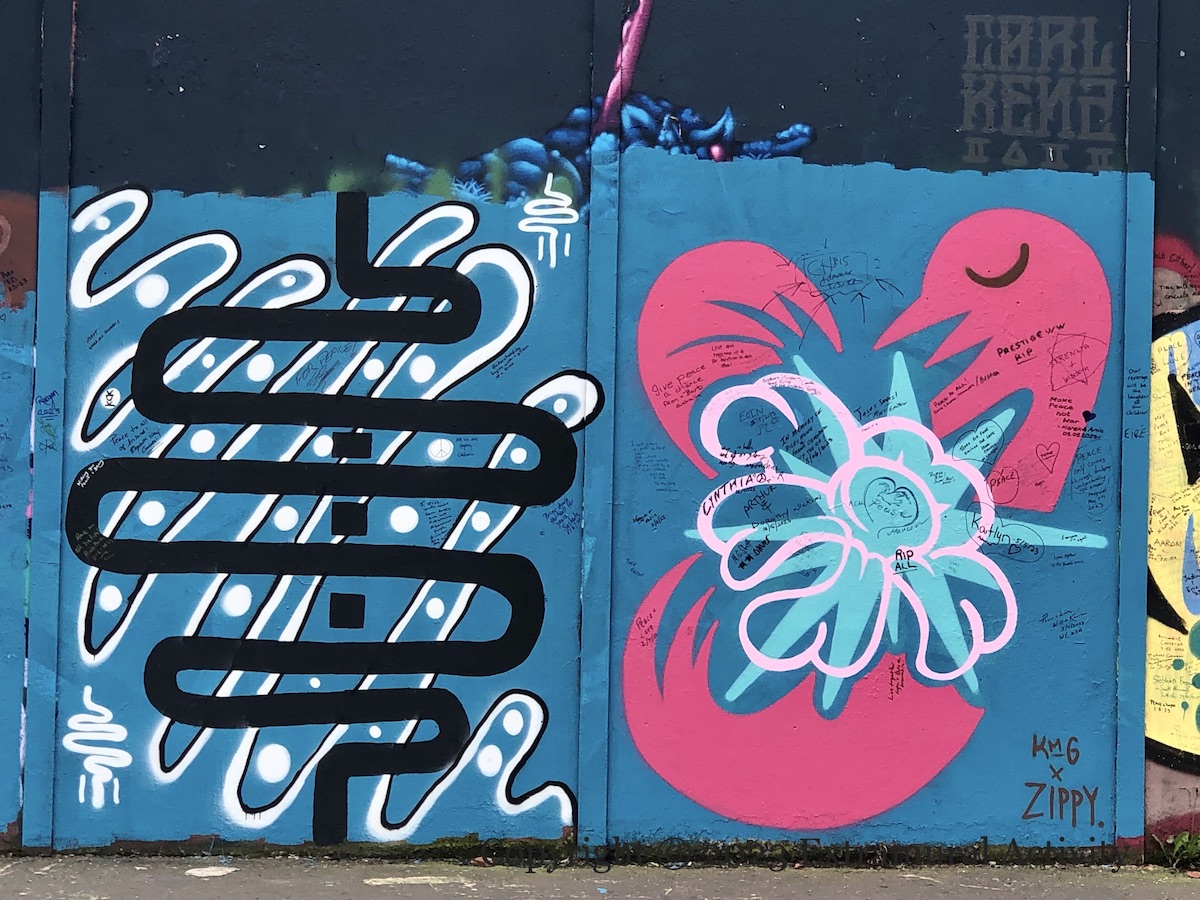
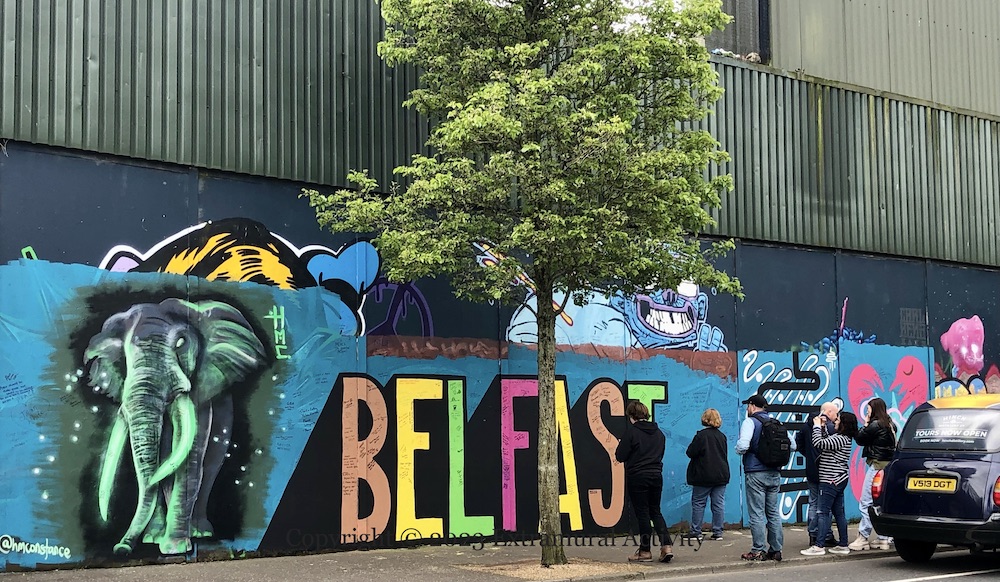
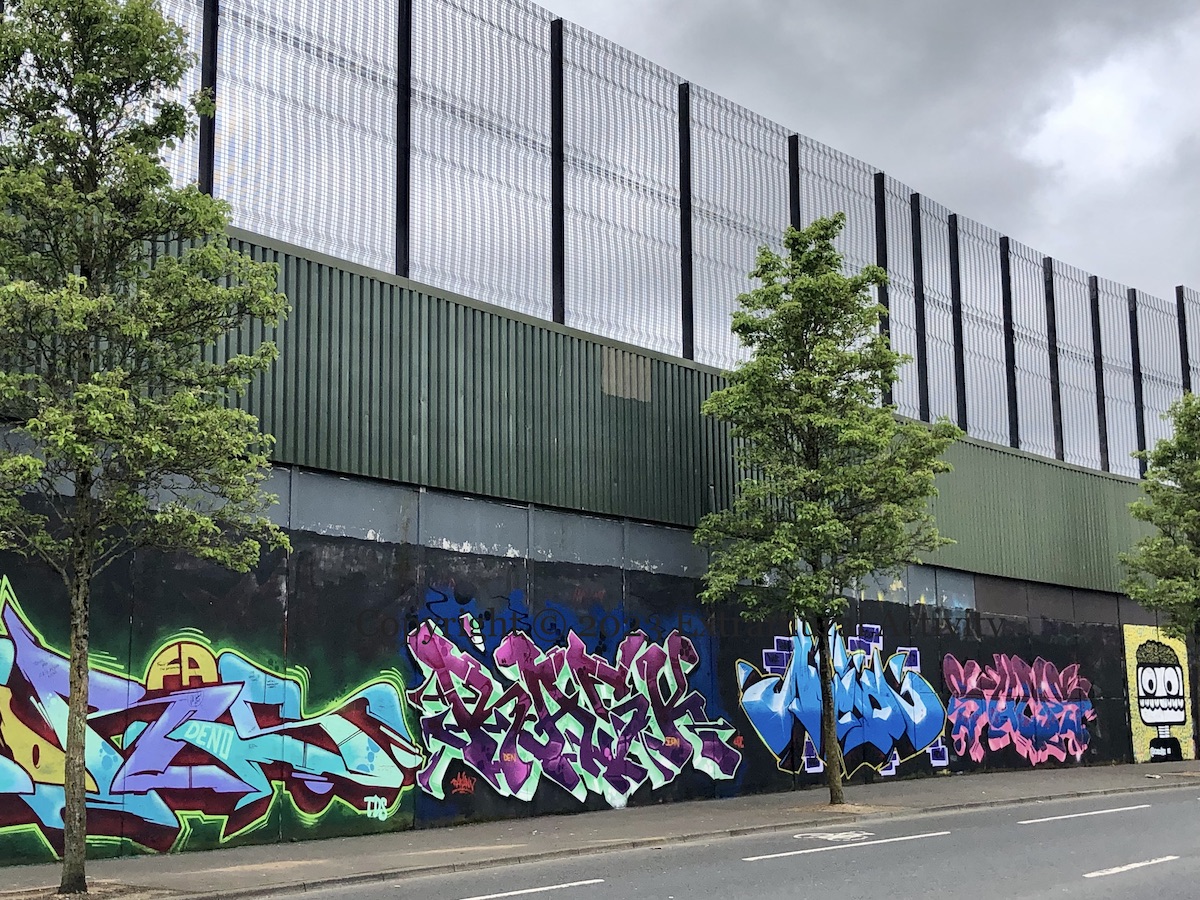
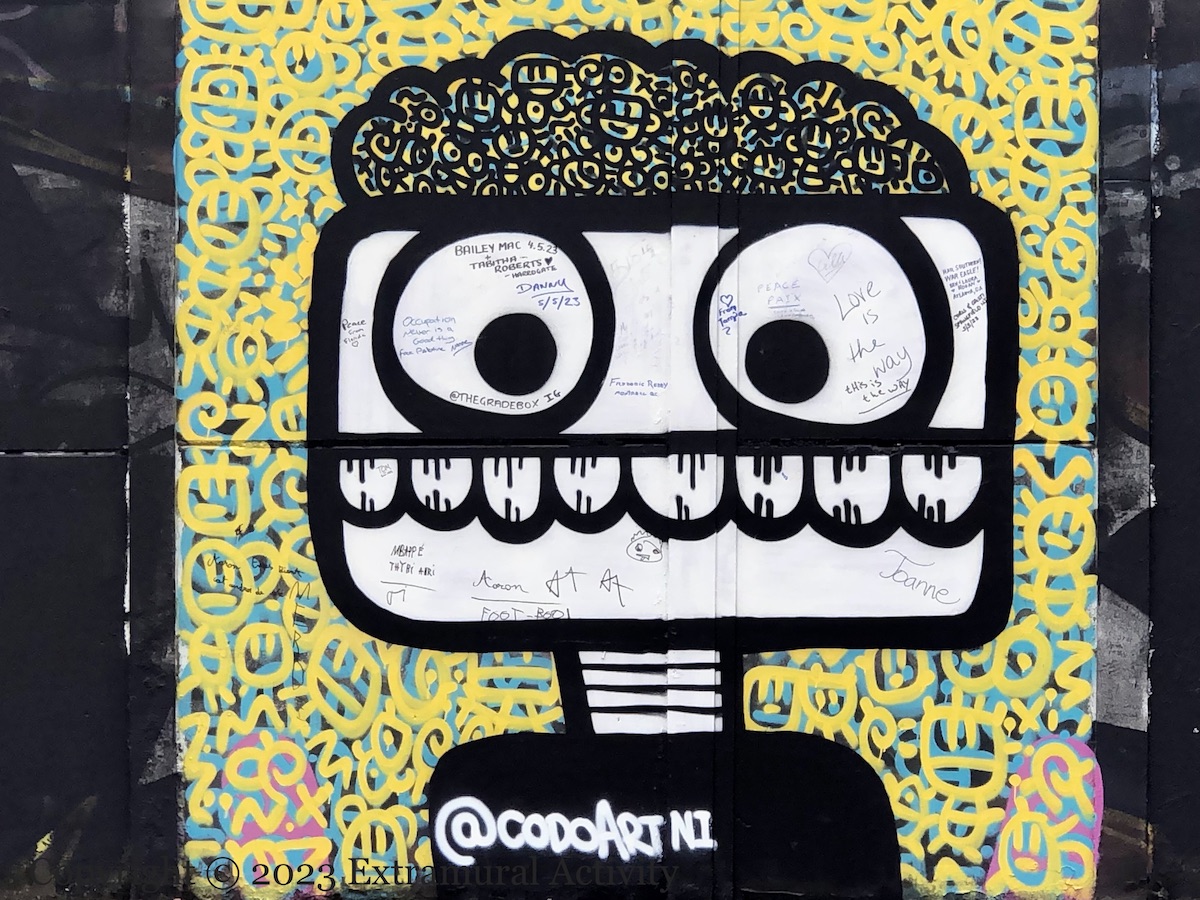
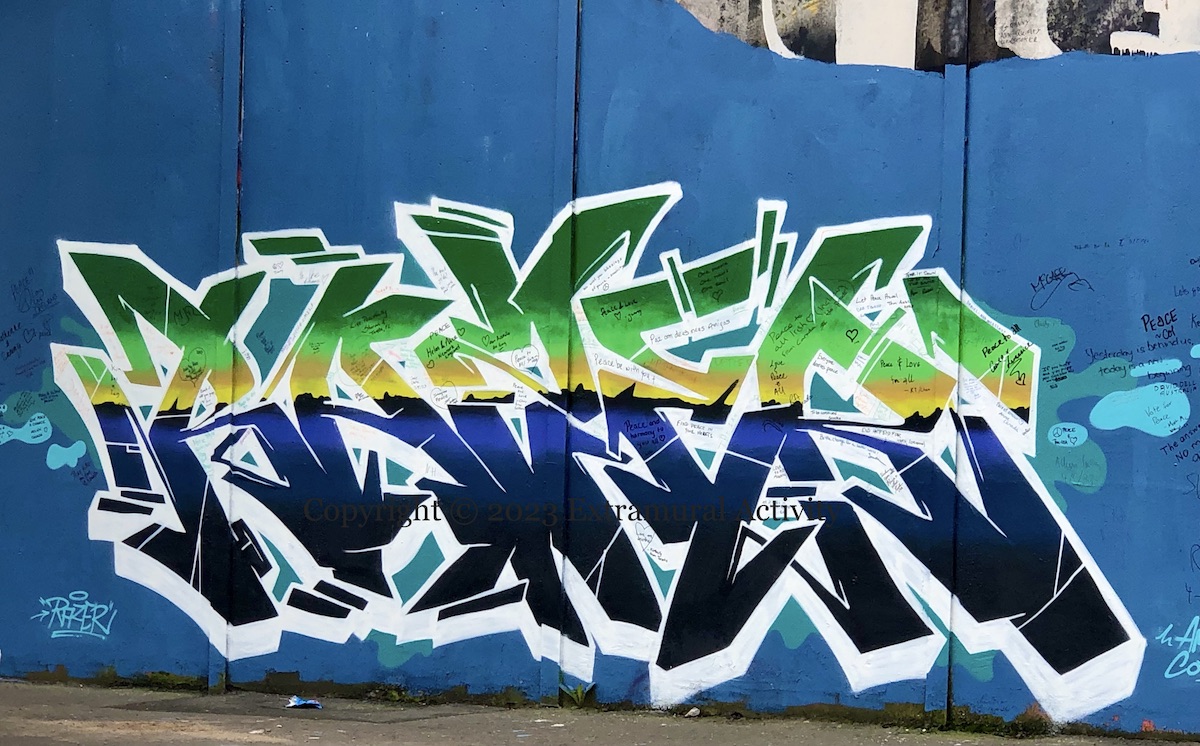
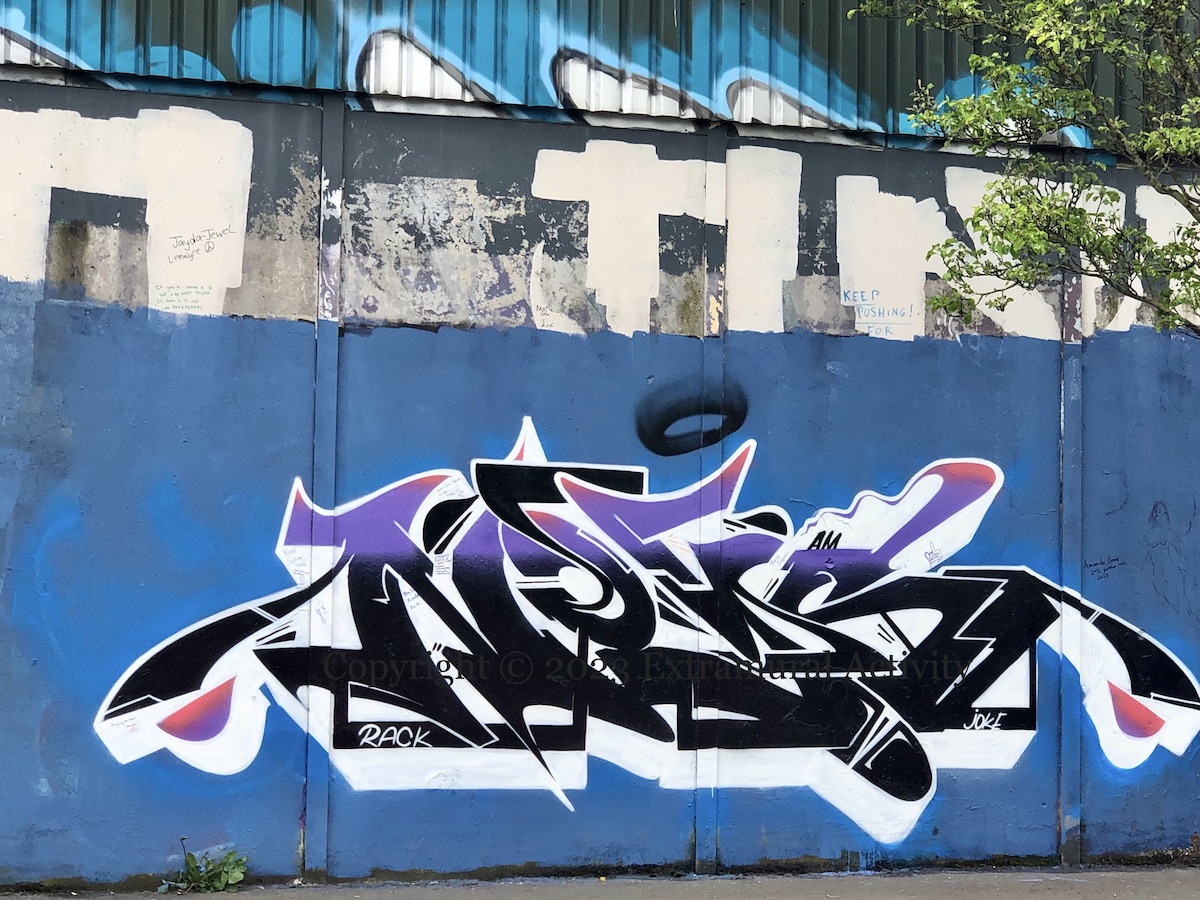
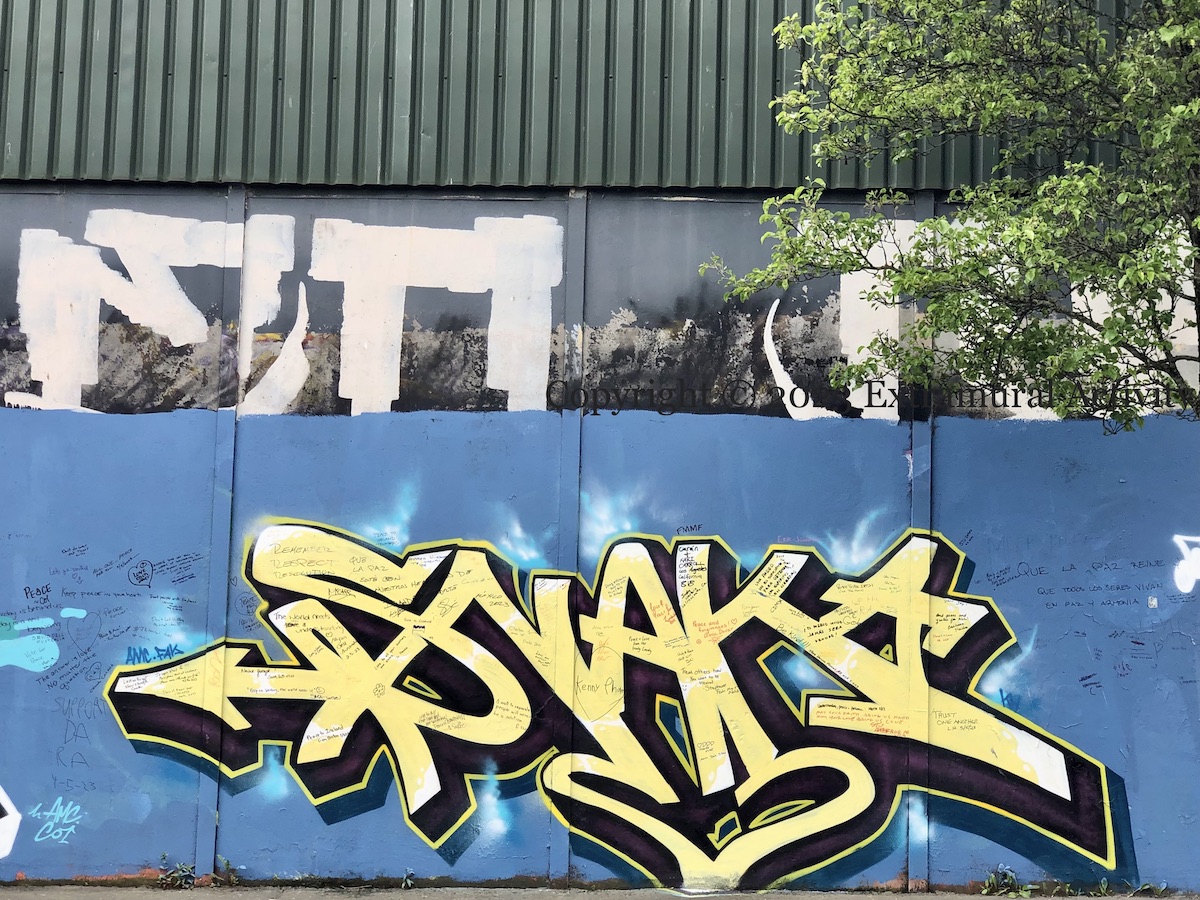
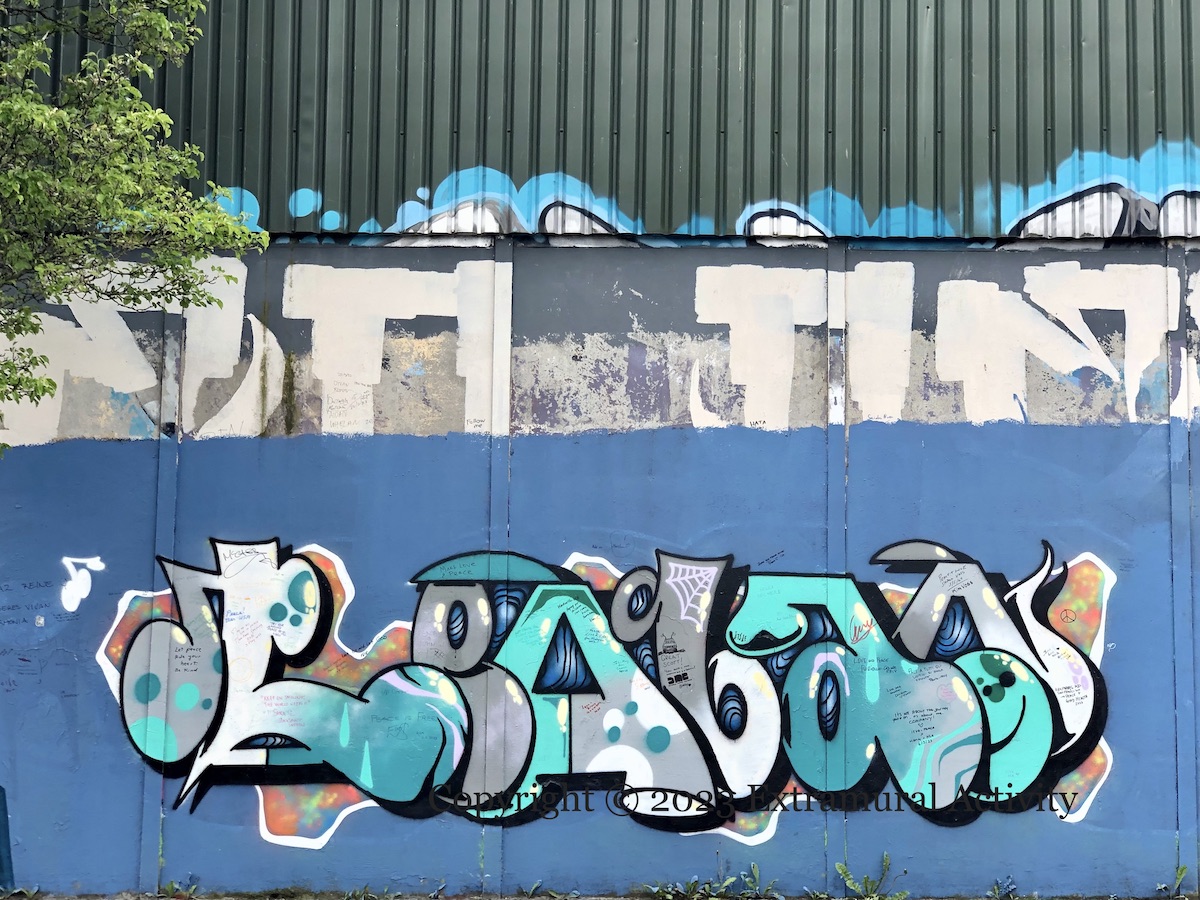
Art by Danny Rumbl (ig), HMConstance (ig), KMG (ig), Zippy (ig), Codo (ig), and various writers on the Cupar Way “peace” line, on top of pieces from last year by Bust, Lobster, and others – New Levels, Same Devils.
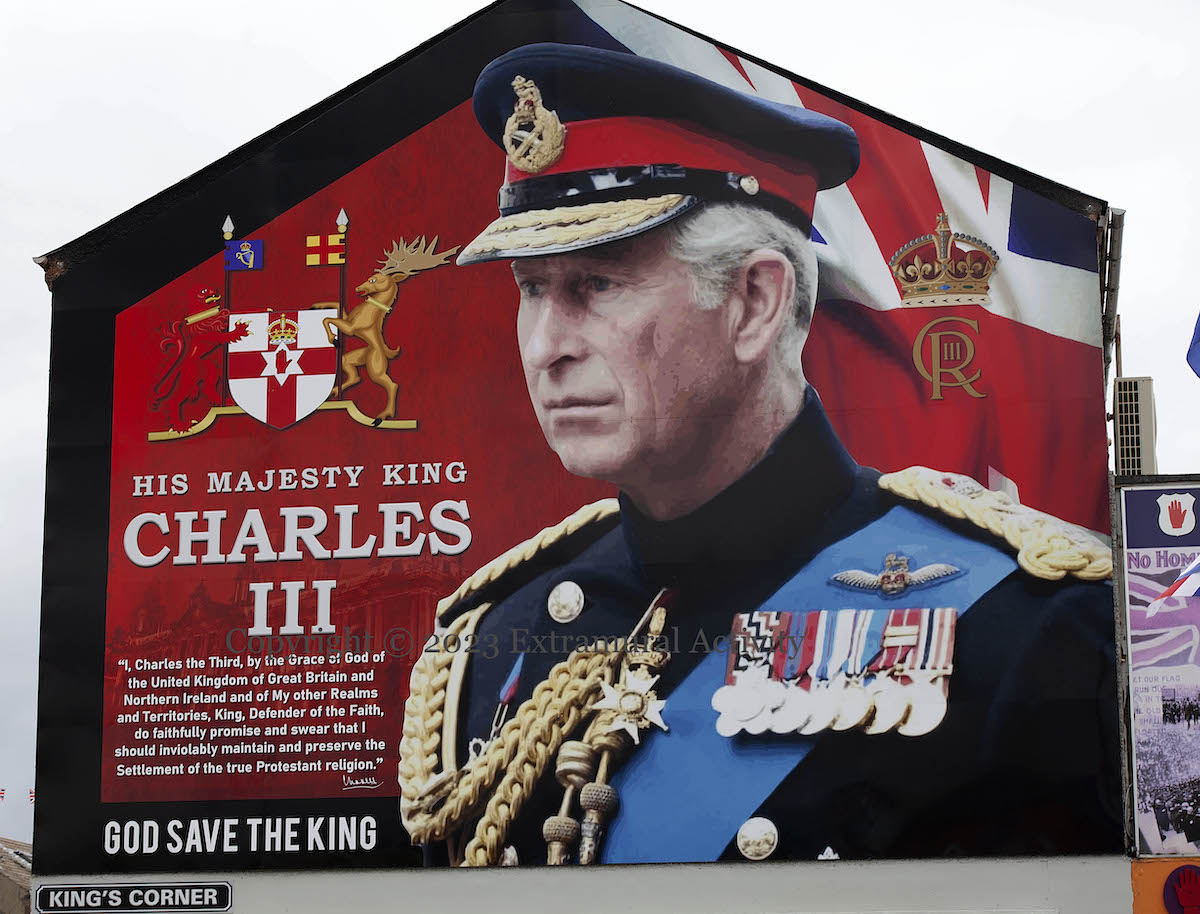
“God save the King.” When Charles acceded to the monarchy last September upon the death of Elizabeth II, he also became head of the Church Of England. Among the first oaths he took as king was one to preserve the Church Of Scotland, which is Presbyerian rather than Anglican. There does not appear to be any oath relating specifically to any denomination in Ireland, and so the Shankill mural above borrows from the Church Of Scotland oath. It stops short of the references to Scotland:
“I, Charles the Third, by the Grace of God of the United Kingdom of Great Britain and Northern Ireland and of my other Realms and Territories, King, Defender of the Faith, do faithfully promise and swear that I should inviolably maintain and preserve the Settlement of the true Protestant religion …” [… as established by the Laws made in Scotland in prosecution of the Claim of Right and particularly by an Act intituled “An Act for securing the Protestant Religion and Presbyterian Church Government” and by the Acts passed in the Parliament of both Kingdoms for Union of the two Kingdoms, together with the Government, Worship, Discipline, Rights and Privileges of the Church of Scotland.] (Royal UK)
At the coronation, Charles swore an oath similar to the above, but referring to the Church Of England, and swore that he was a faithful Protestant (Country Life).
 Seosamh Mac Coille Collection