Celebrating 400 Years

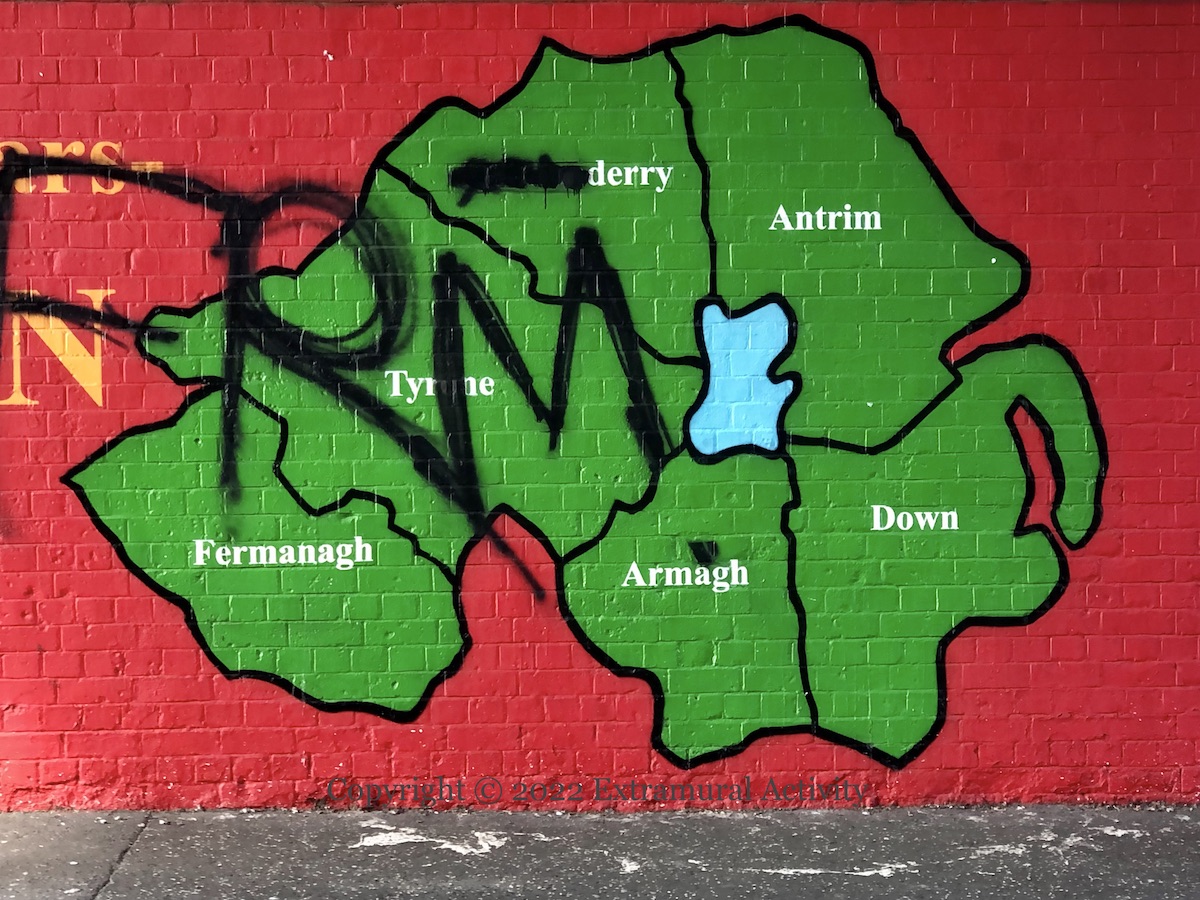
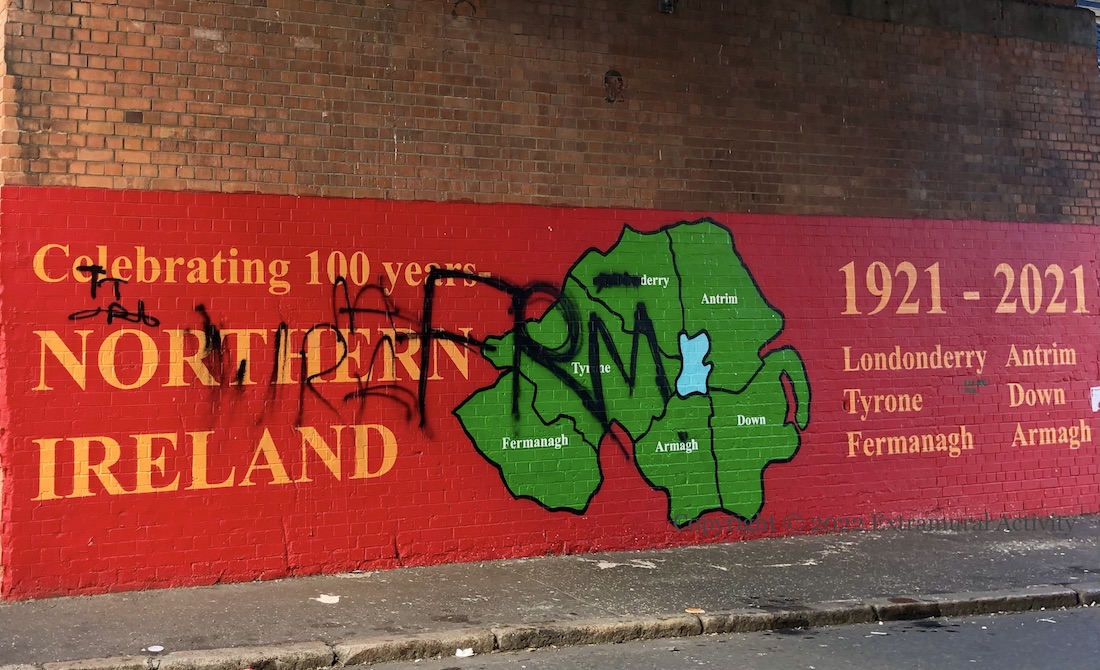
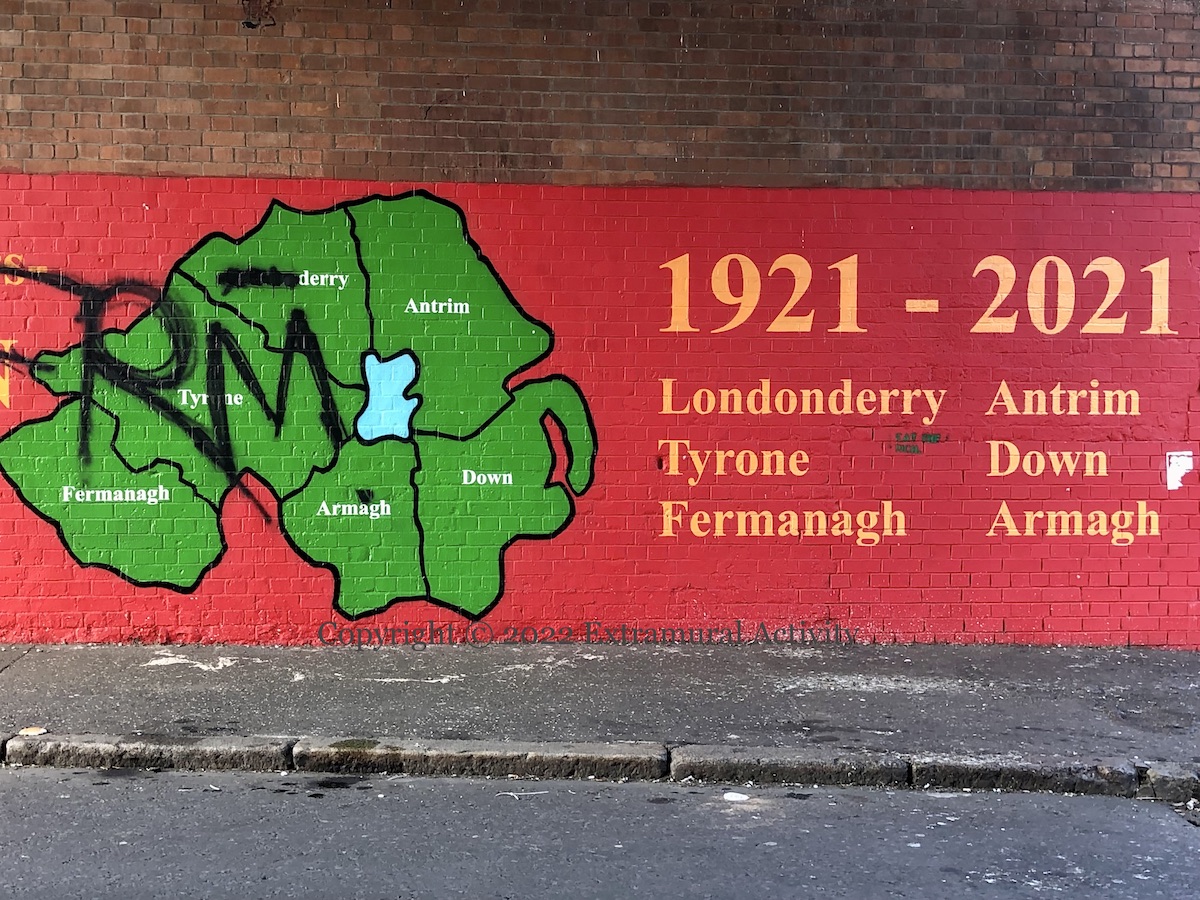
County Londonderry was formed just over 400 years ago, in 1613, comprising the previous County Coleraine (itself formerly O’Cahan’s Country) with parts of Tyrone and the west bank of the Foyle in Donegal (WP). Unlike the city, there has never been a “County Derry” but that has not stopped the graffitist of this Northern Ireland centenary mural in south Belfast from blacking out the “London” in “Londonderry” on the map – in the list of the six counties it remains unscathed. The graffitist presumably came from the Lisburn Road direction rather than the Village.

The “100 years” mural replaces the ‘UDA Lisburn Road’ mural which dated back to at least 2003.

For the dispute over Derry/Londonderry as the name of the city and the council, see Stoop Down Low Party | Do You Live In Londonderry? | Derry Not Londonderry | Vote SDLP For A Better Londonderry | It’s Derry Not Londonderry.
Click image to enlarge
Copyright © 2022 Seosamh Mac Coılle
X09914 X09912 X09913 Fane St
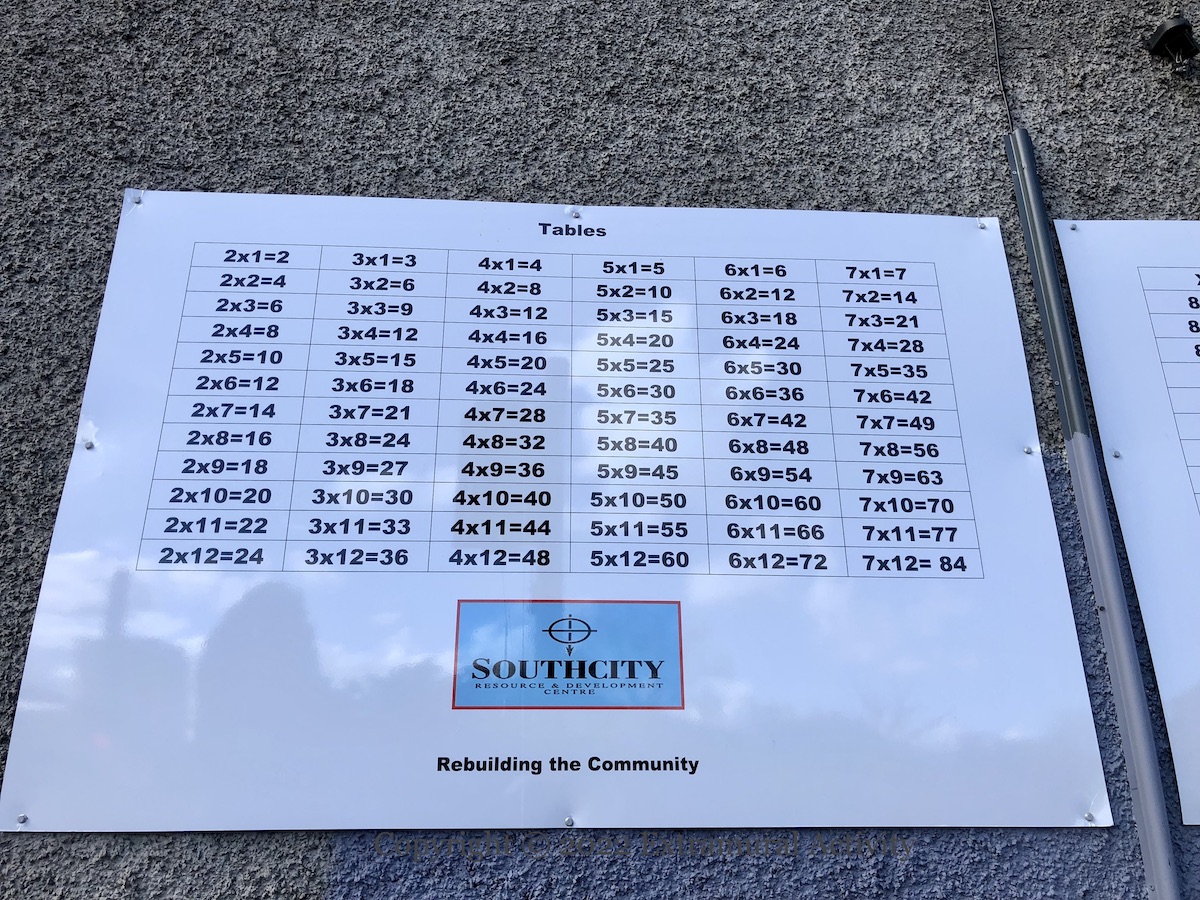
Times Tables

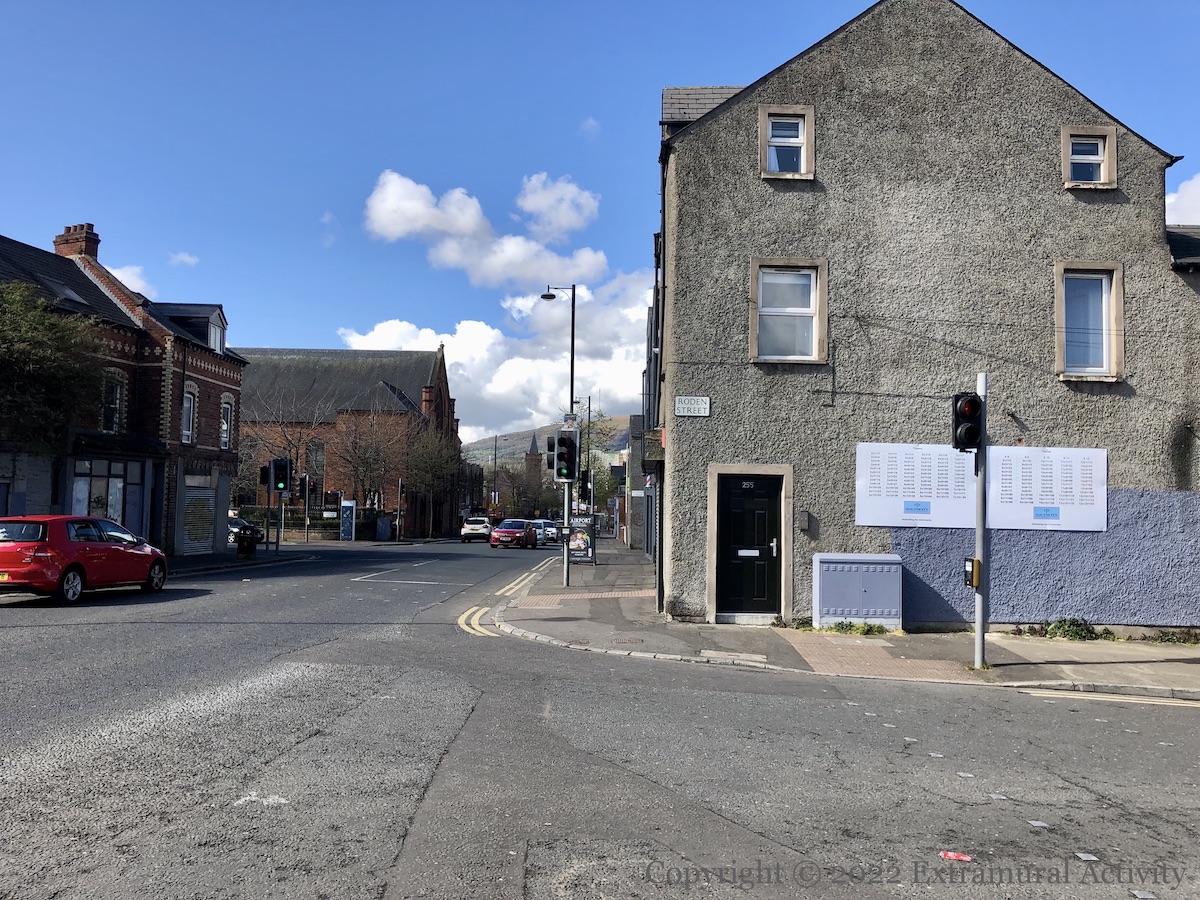
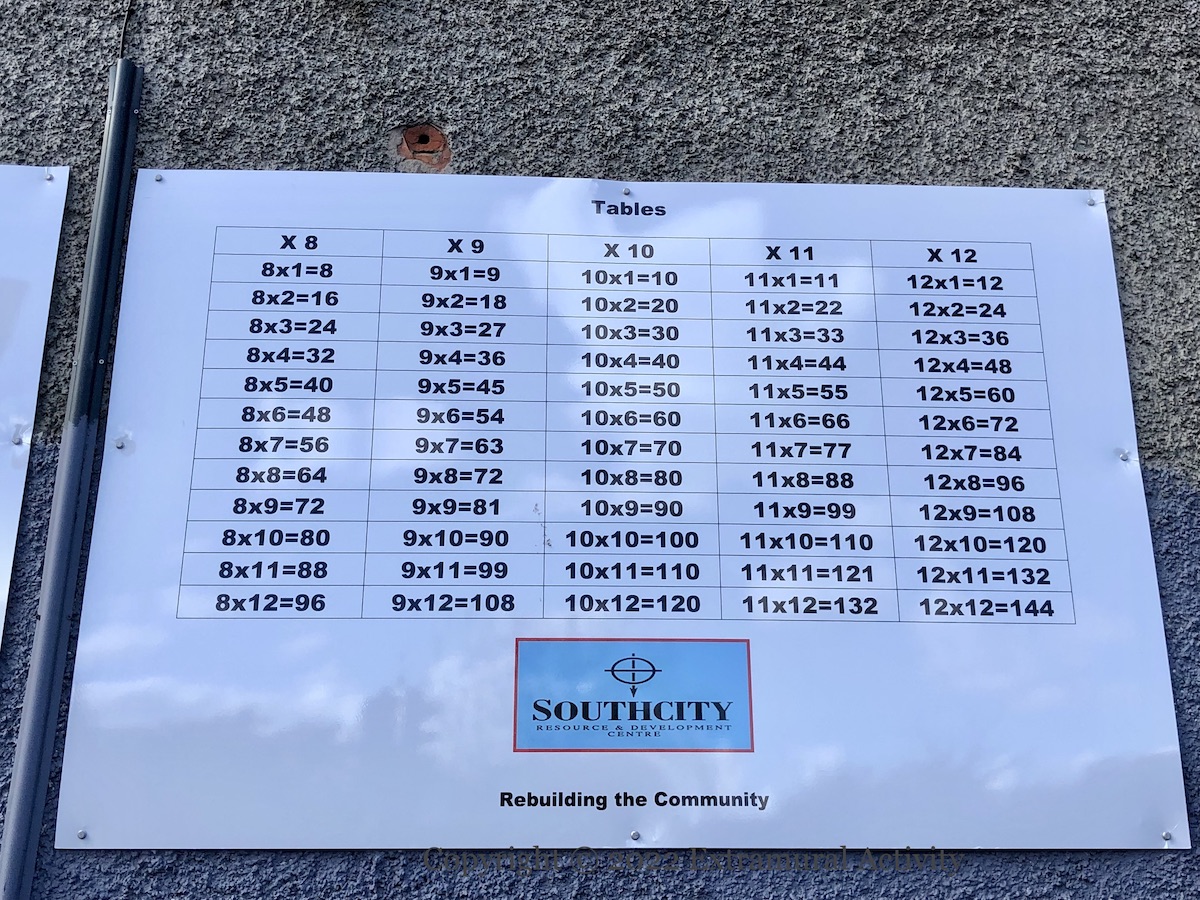
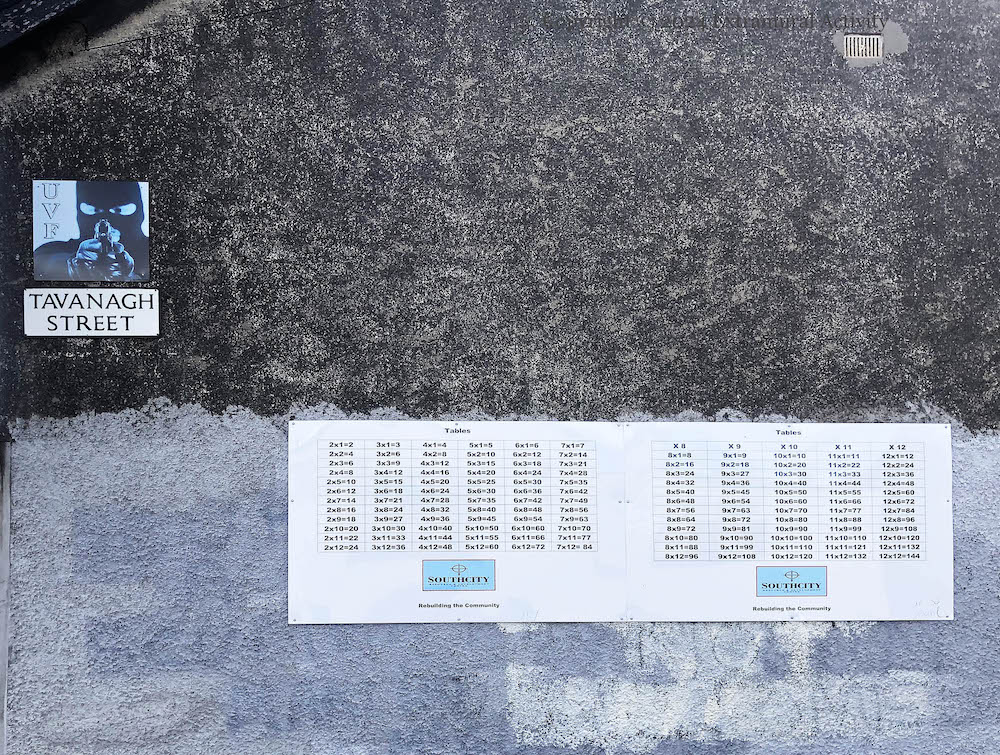
Southcity Resource & Development Centre (Fb) provides (among many other services) a ‘homework club’ on Tuesday afternoons. They have put up the times tables in four locations around the Village that will encourage kids walking to and from school to practice their maths. The set shown here is in Roden Street; the others are in Lemberg Street, Nubia Street, and Tavanagh Street – below this UVF hooded gunman.

Click image to enlarge
Copyright © 2022 Seosamh Mac Coılle
X09909 X09911 X09910
Copyright © 2024 Seosamh Mac Coılle
X15226

Peace Wall Stories

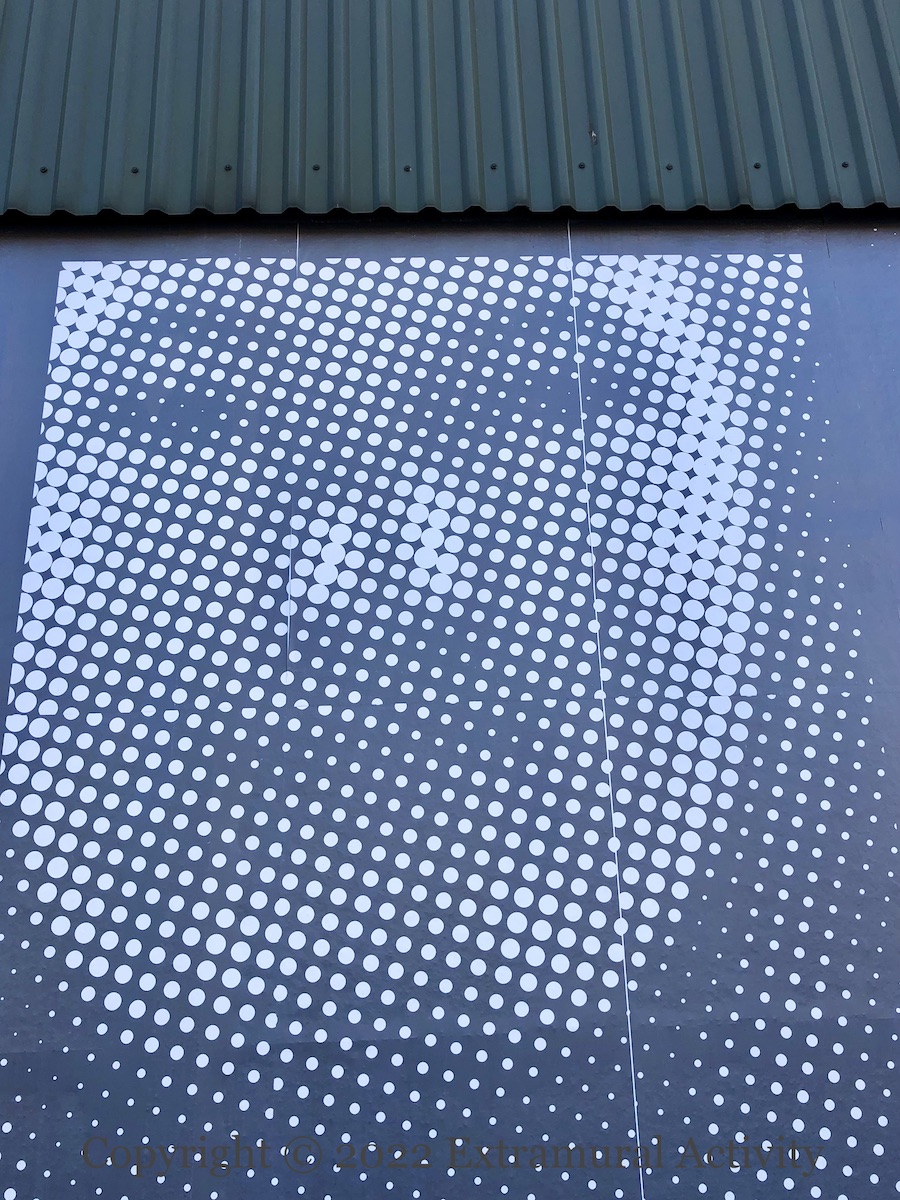
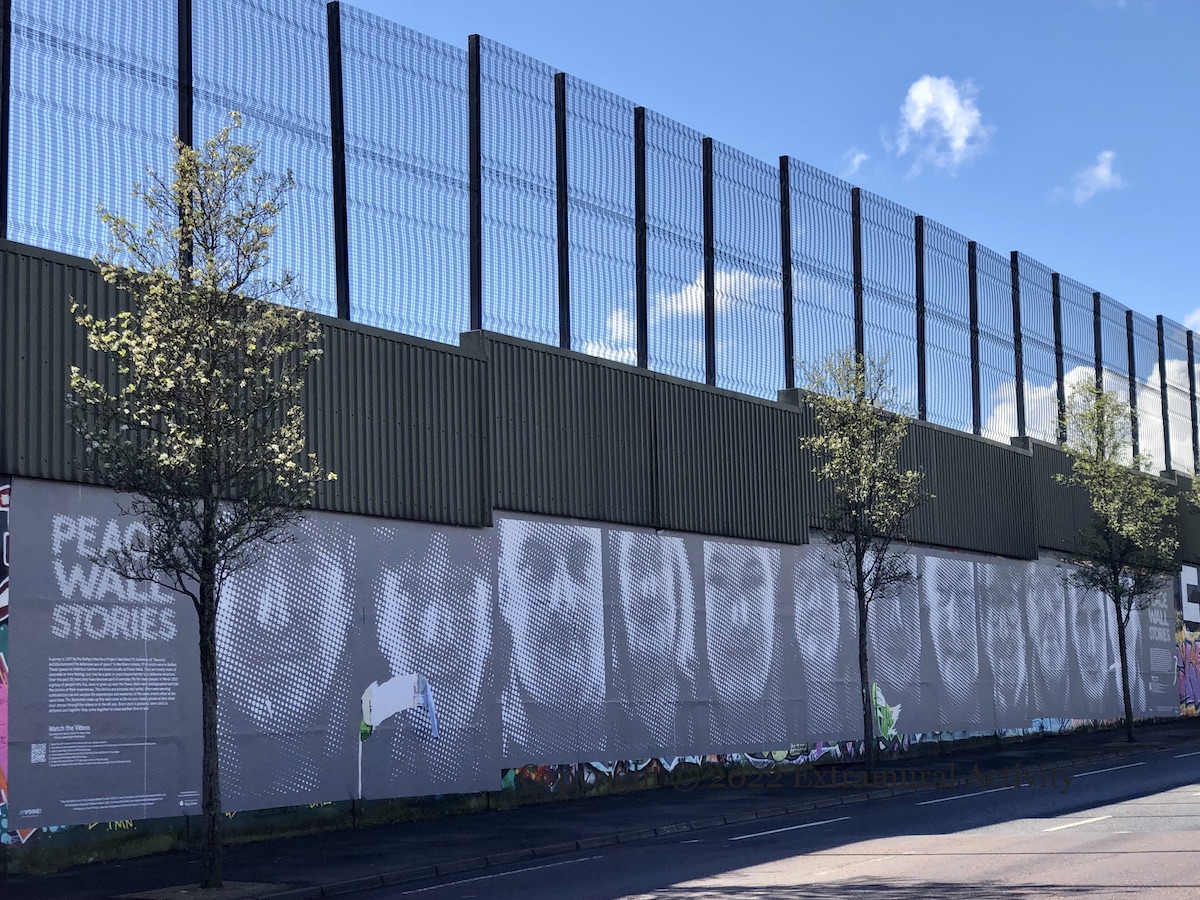
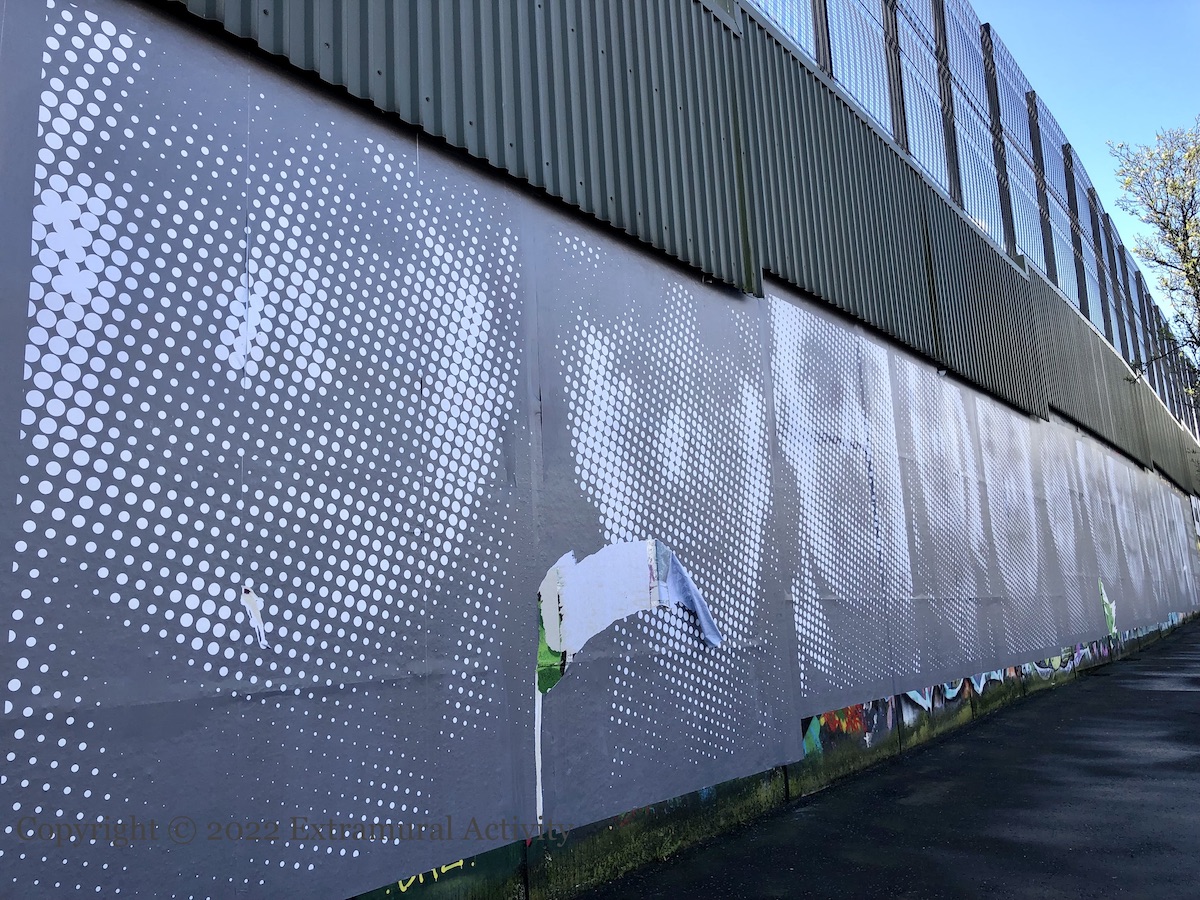
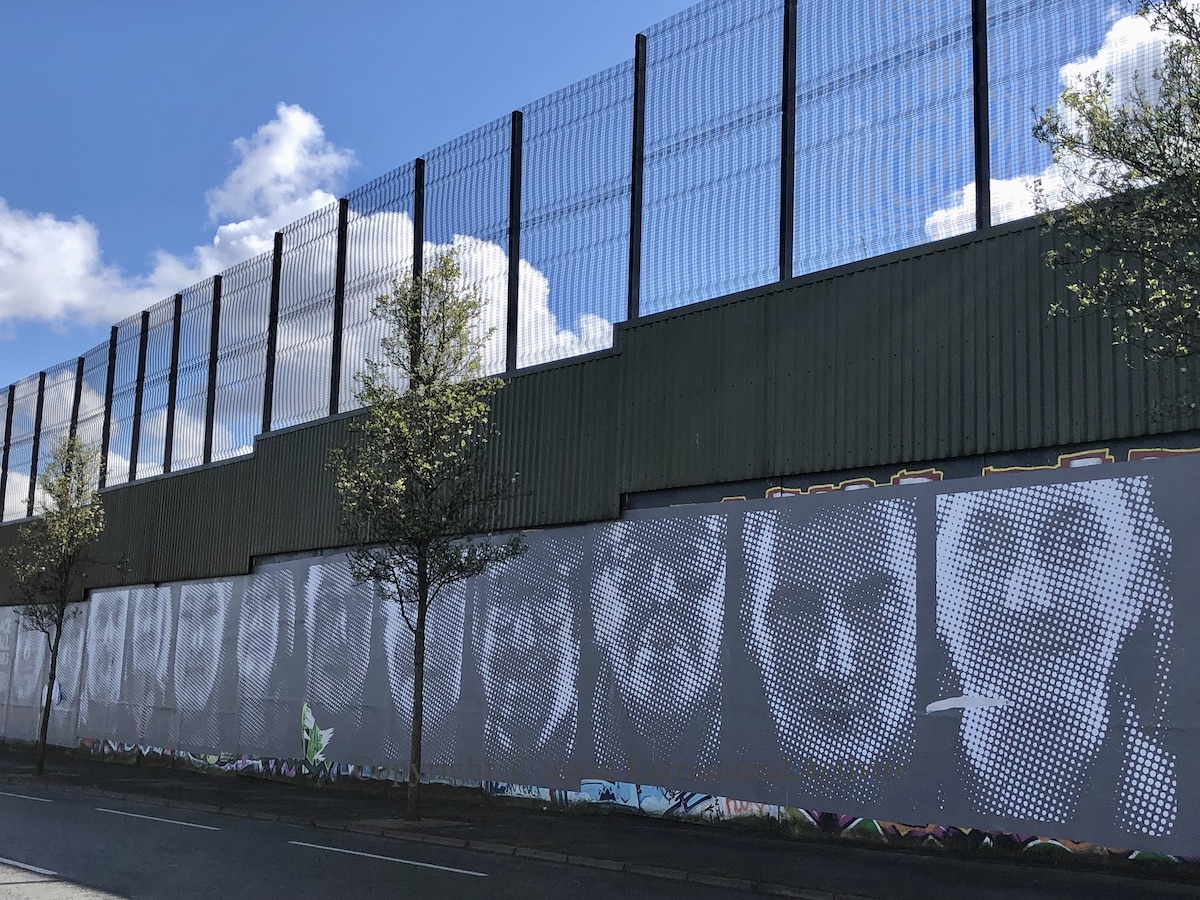
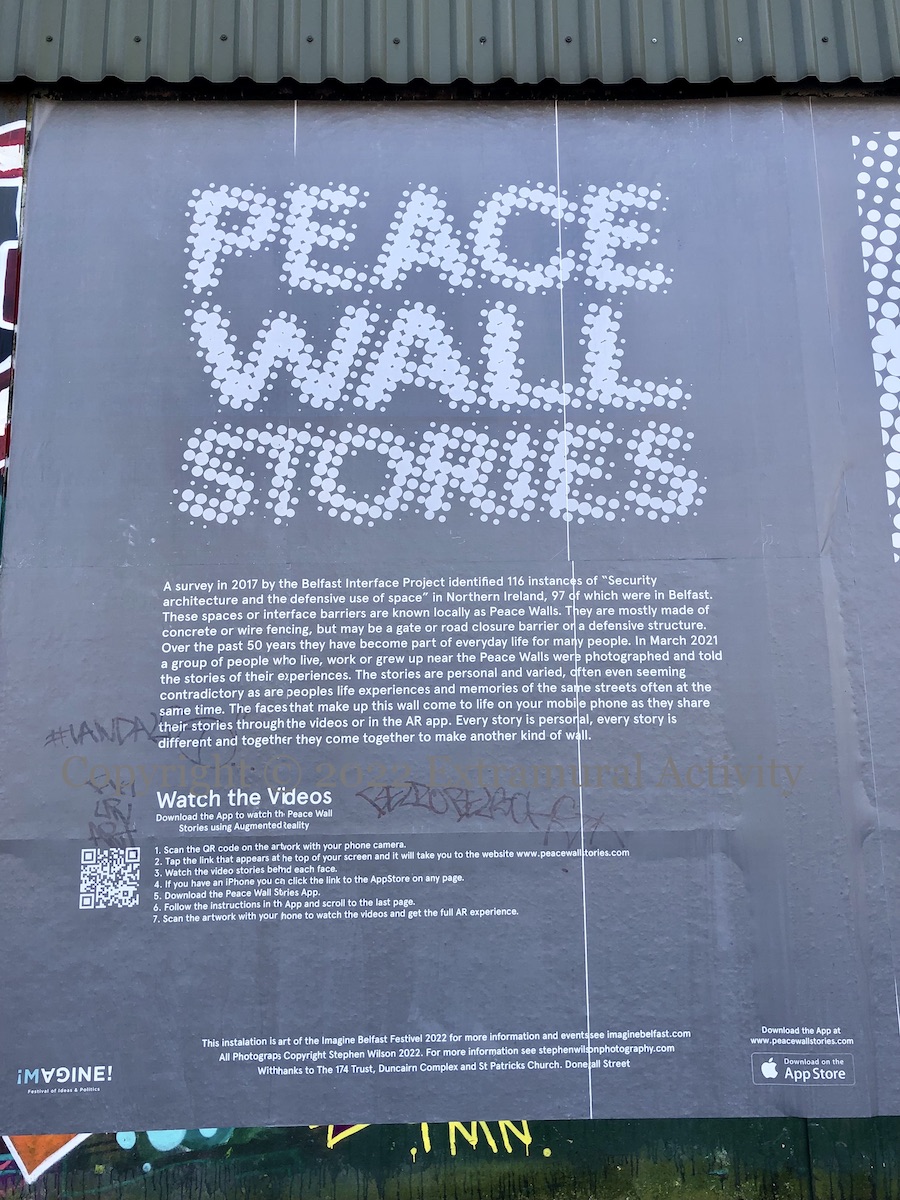
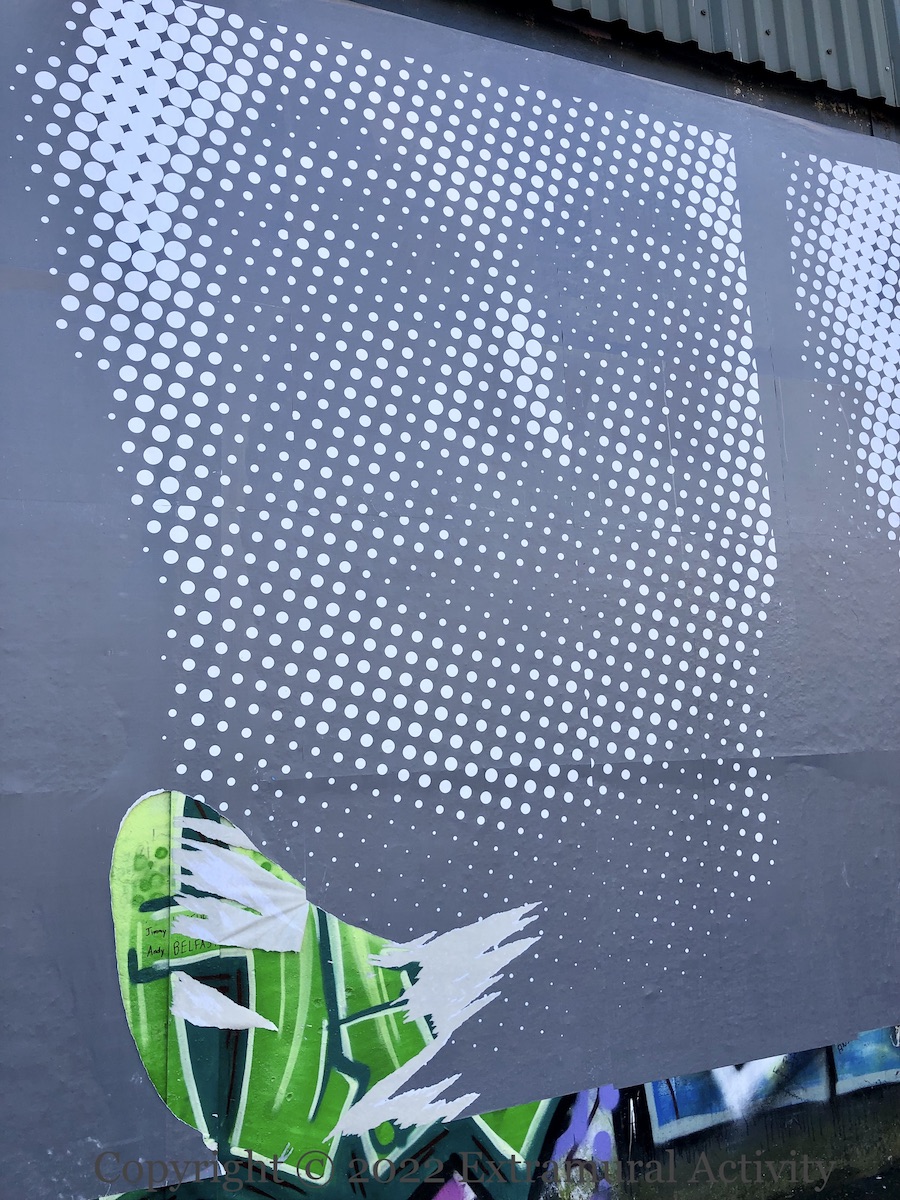
The ‘Peace Wall Stories’ installation along the Cupar Street “peace” line, was launched last Saturday (April 2nd). Photographer Stephen Wilson (web) has produced half-tone portraits in newspaper style, each 2.5 metres tall, of a dozen people from both communities who live near barriers in Belfast.

There is an iPhone/iPad app that goes along with the project, which allows you to point your mobile at a portrait and have the person pictured come alive and speak to you about their experiences; for those without iPhones or the app, the recordings can be heard at the project’s web site.

Part of the Imagine! Belfast Festival, 2022.

Click image to enlarge
Copyright © 2022 Seosamh Mac Coılle
X09921 X09917 X09920 X09923 X09919 [X09918] X09922


Sailortown Dockers

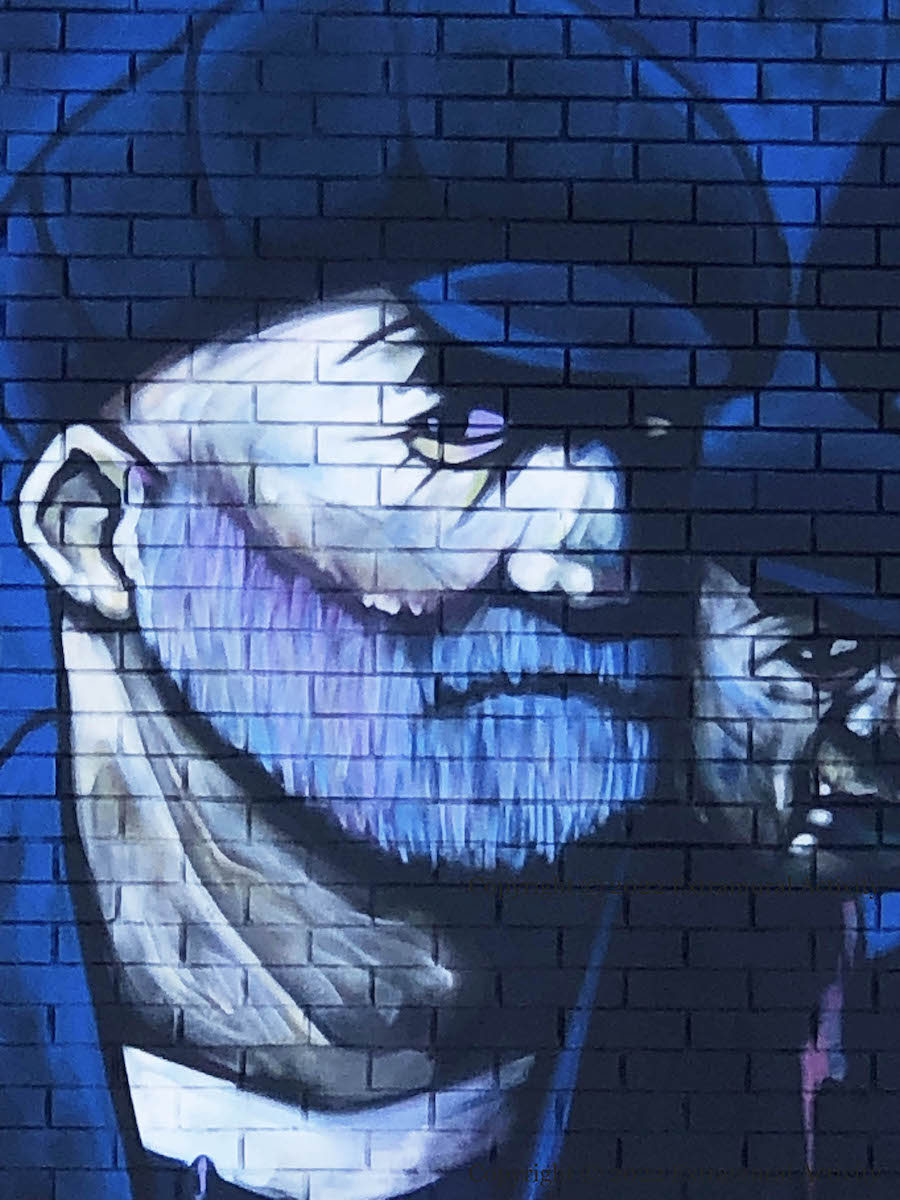
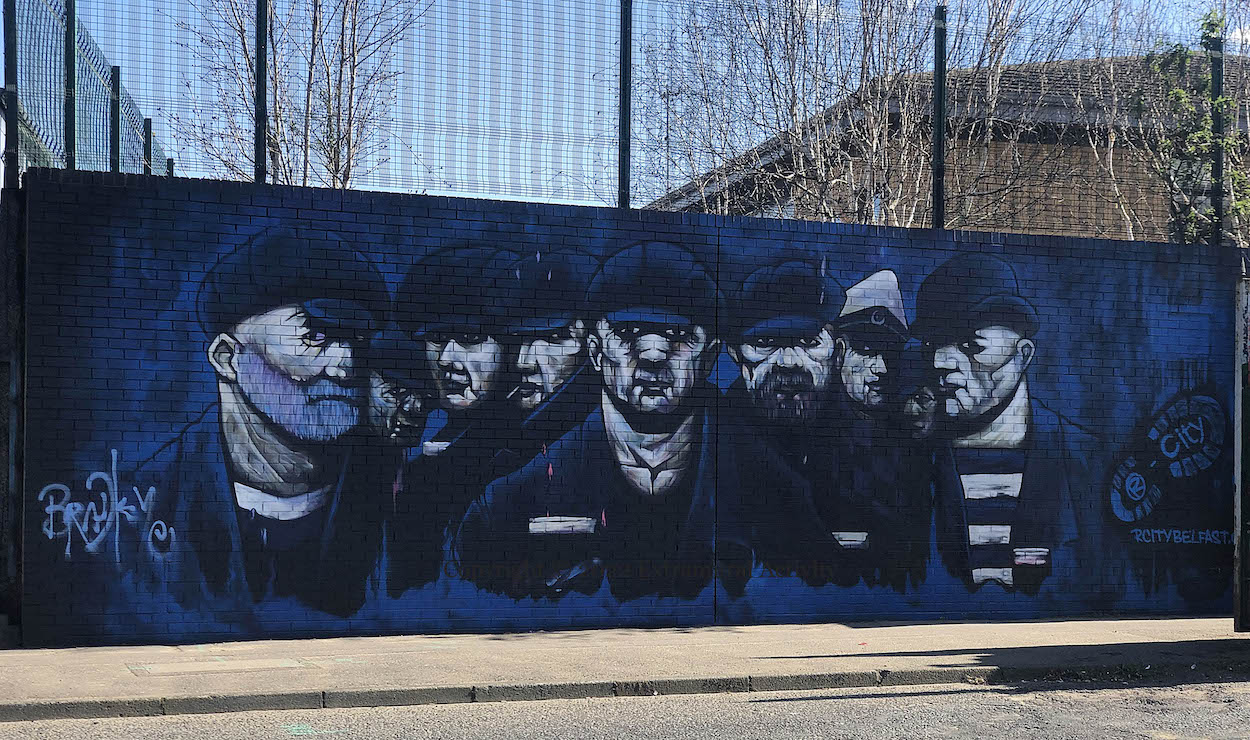
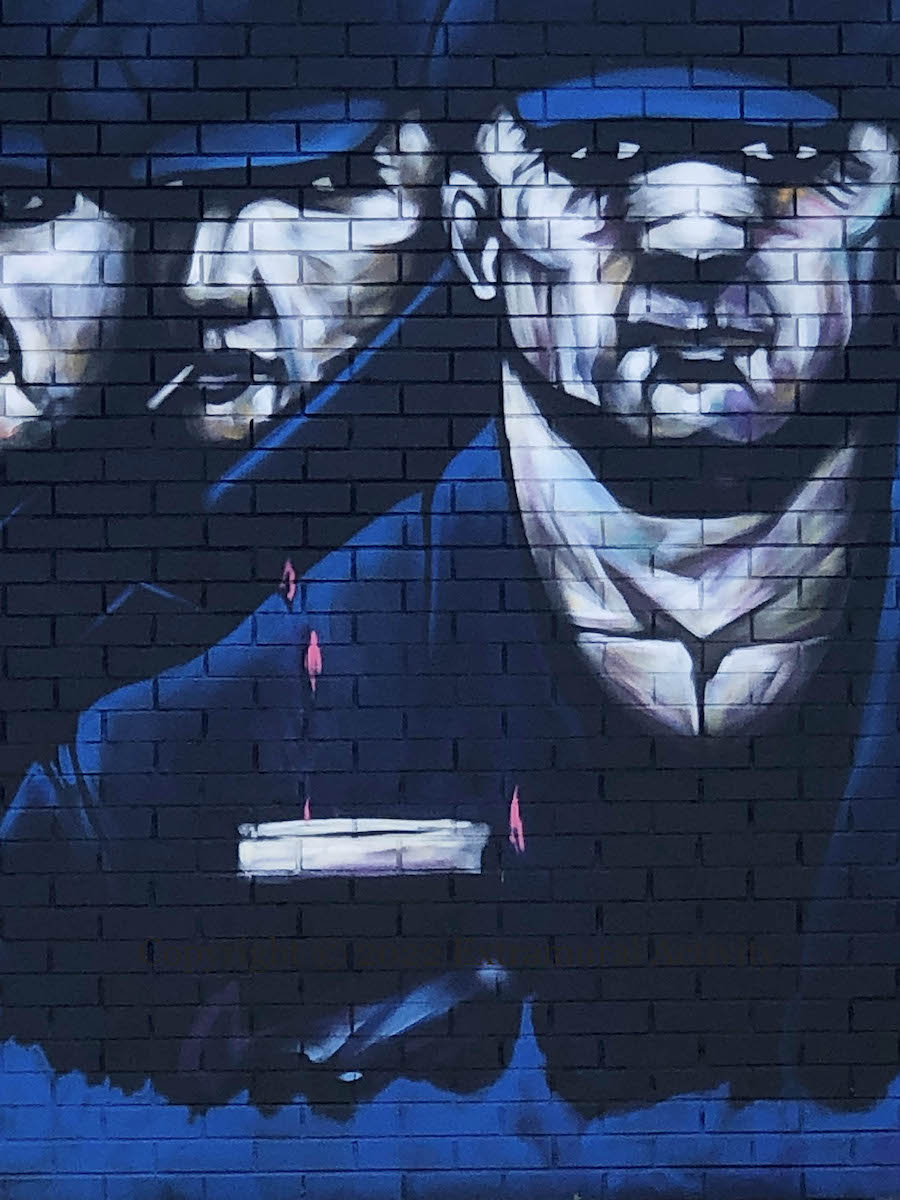
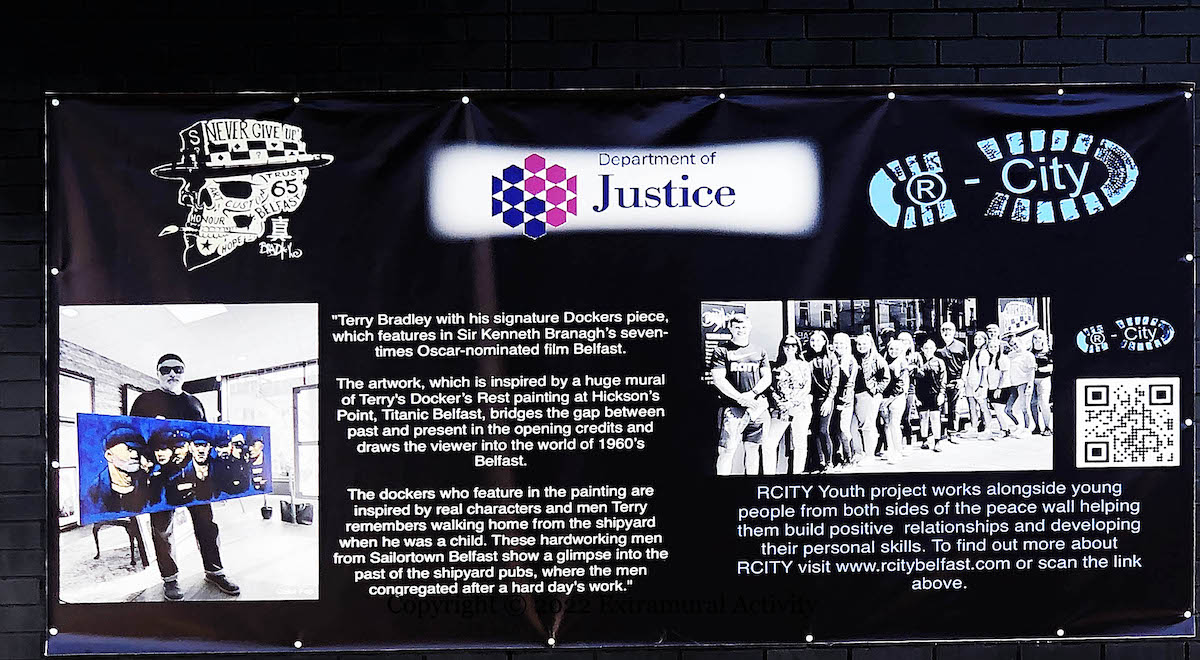
This is a mural of a painting of a mural of a mural. The original is the piece by Terry Bradley (web) and Friz (web) at the Titanic museum’s pub (see Dockers’ Rest), which was then reproduced in a different colour for the opening montage of the Kenneth Branagh film Belfast. The success of the film prompted the Department Of Justice to commission Bradley for a painting that could be turned into a mural and he reproduced the film version (BelTel). The mural that enlarges that painting was painted by DMC on Lanark Way, just above the security gates (Belfast Live).

“The dockers who feature in the painting are inspired by real characters and men Terry remembers walking home from the shipyard when he was a child. These hardworking men from Sailortown, Belfast, show a glimpse into the past of the shipyard pubs, where the men congregated after a hard day’s work.”

With support from R-City (web).

Click image to enlarge
Copyright © 2022 Seosamh Mac Coılle
X09884 X09883 [X09885] X09886 X09887

The Joy Of Our Hearts

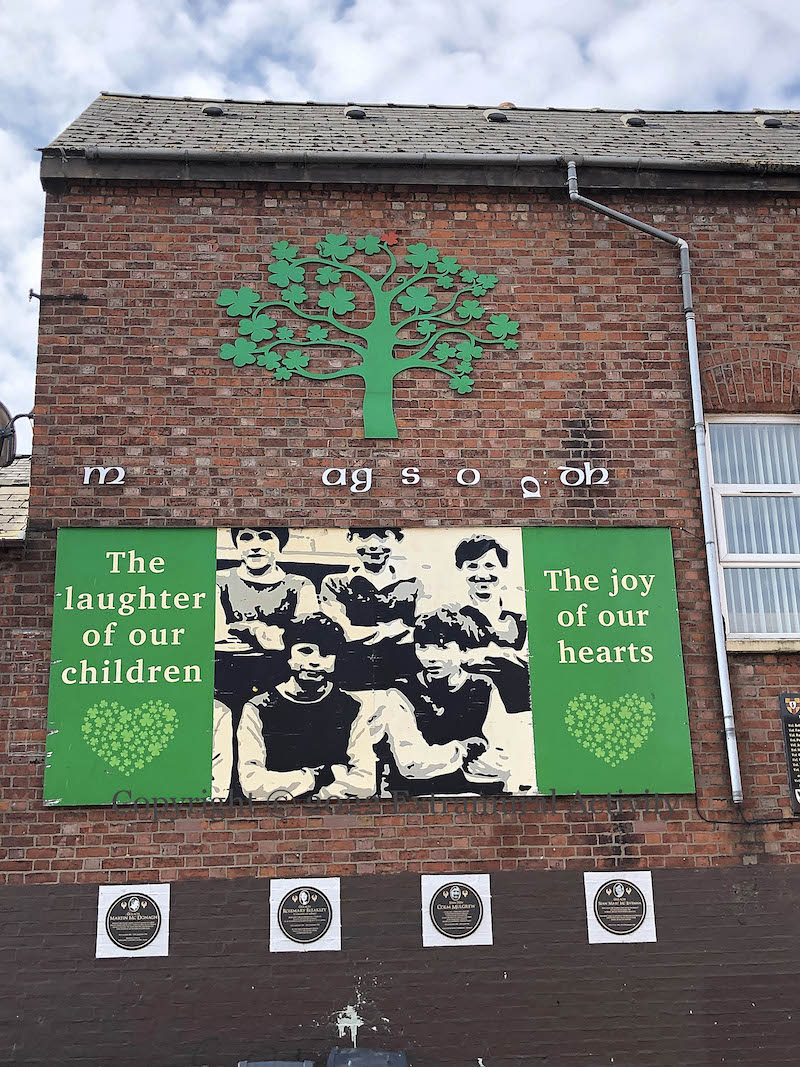
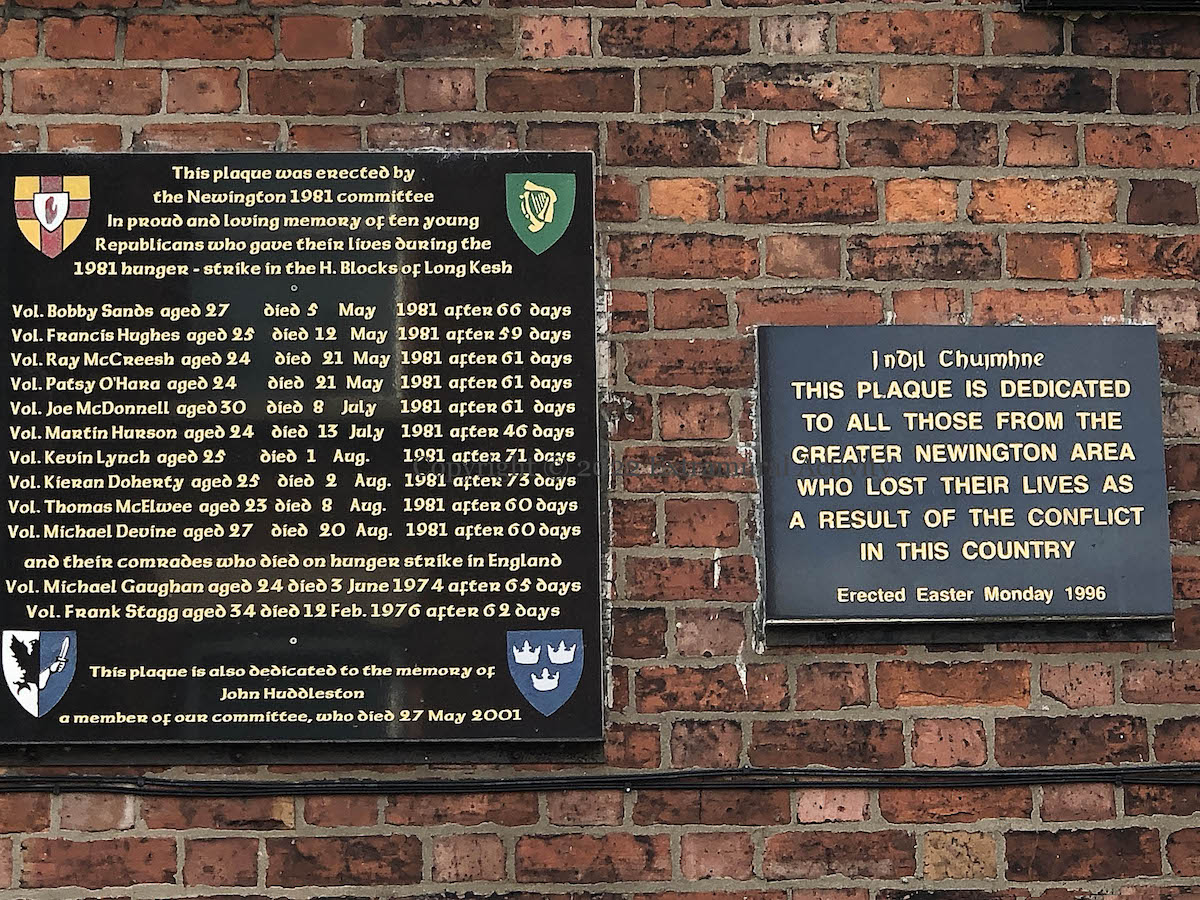
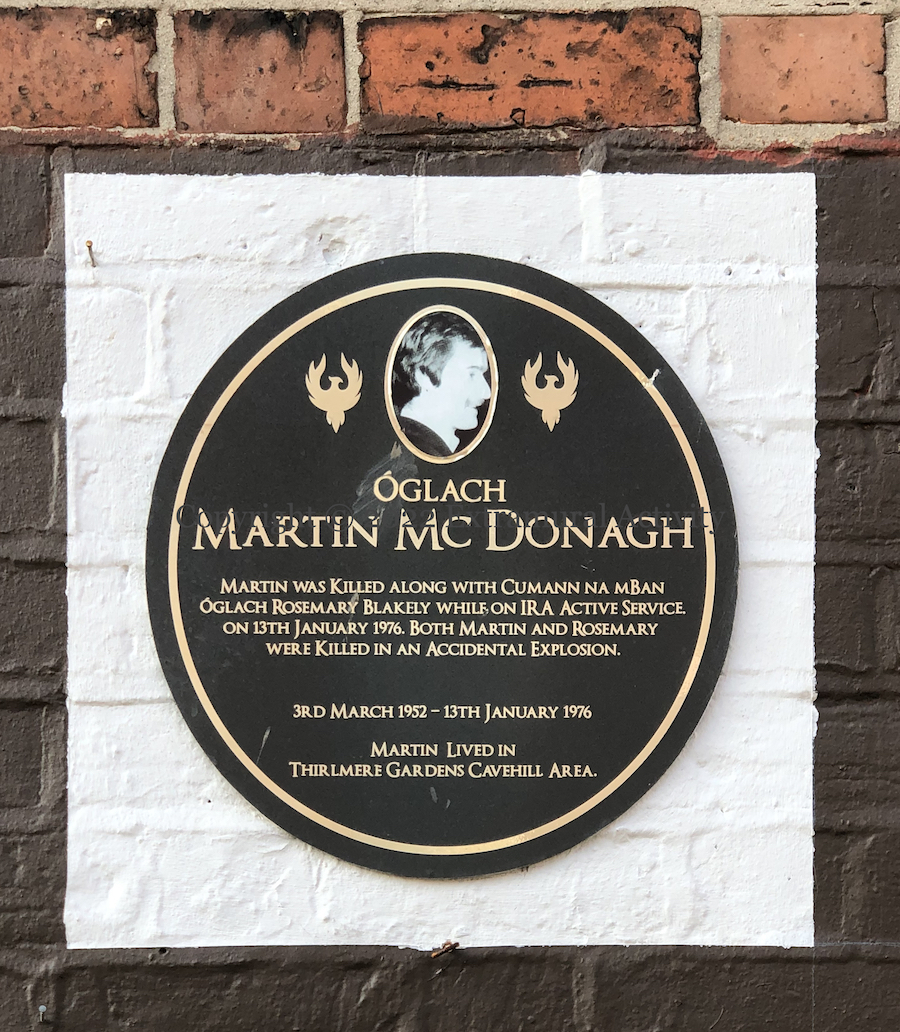
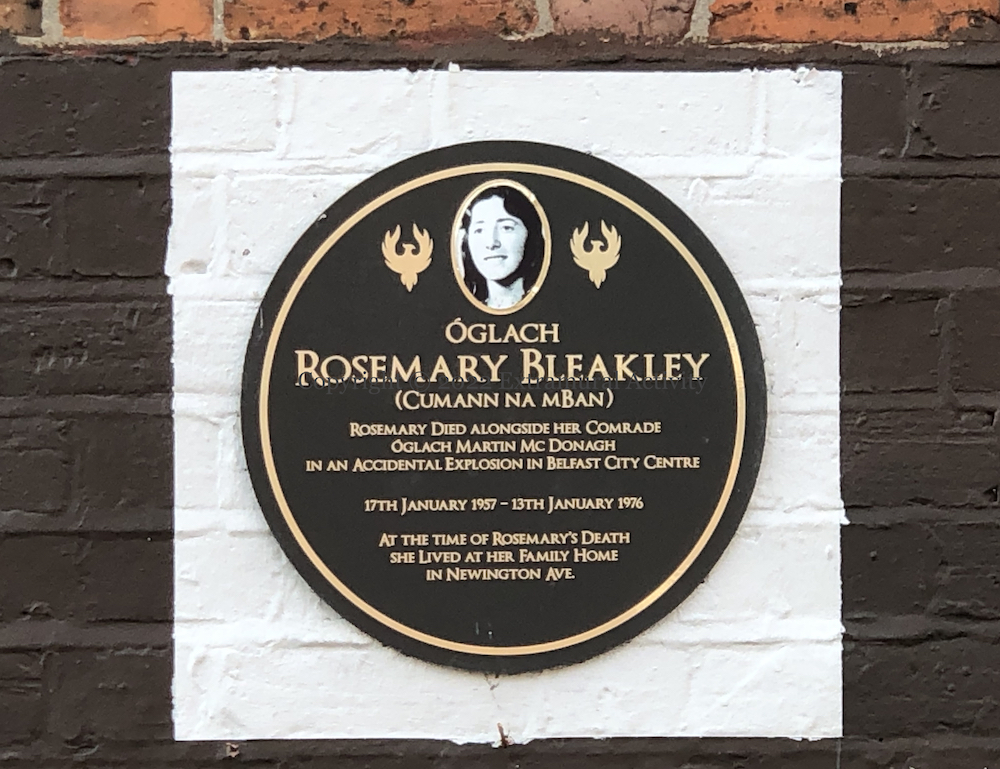
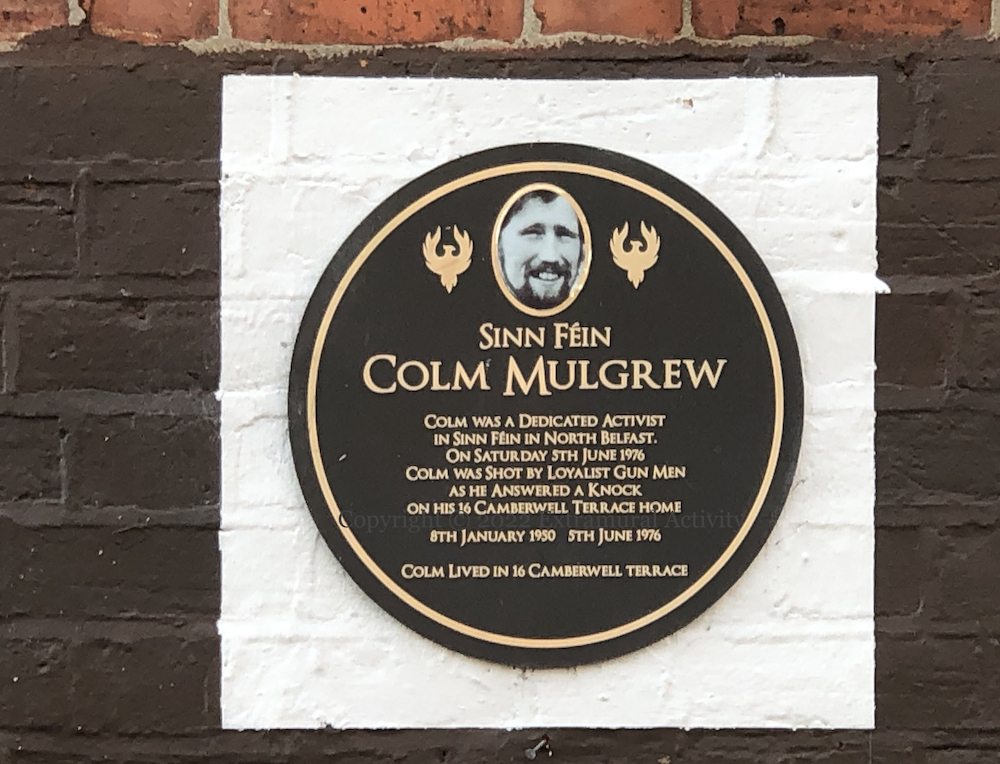
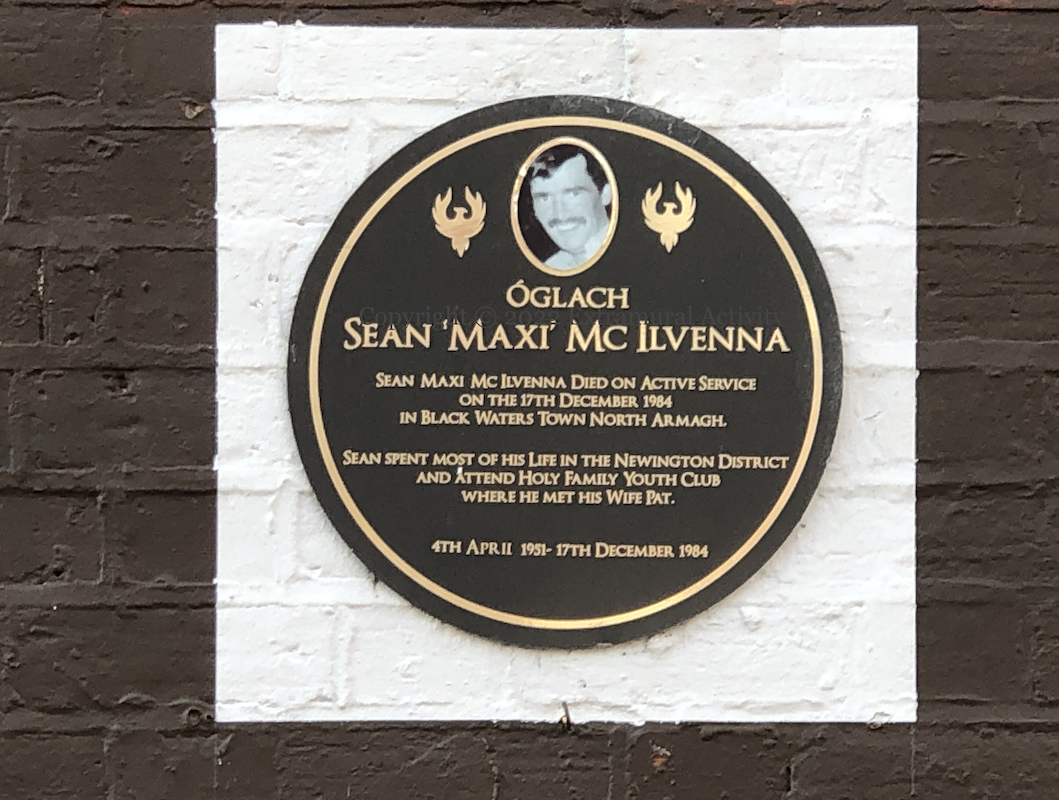
The Newington tribute to Bobby Sands and the other deceased hunger strikers of the 1970s and 80s (see previously: Mol An Óıge Agus Tıocfaıdh Sí) has been augmented with four plaques to republicans from the area who died in the Troubles: (l-r) Martin McDonagh, Rosemary Bleakley, Colm Mulgrew, and Sean ‘Maxi’ McIvenna.

Unbeknowst to her parents (Lost Lives), Bleakley had joined Cumann Na mBan at 18 and was four days short of her nineteenth birthday when she and McDonagh were killed in a premature bomb explosion in the North Street arcade (Victor Patterson image of the blast), along with civilians Ian Gallagher and Mary Dornan (Sutton); 20 others were injured (Fortnight). Bleakley was not buried in the republican plot (in Milltown) but coincidentally in the plot adjacent to Dornan (BBC).

Bleakley was portrayed in the old New Lodge Volunteers mural.

Click image to enlarge
Copyright © 2022 Seosamh Mac Coılle
X09856 X09857 X09858 X09859 X09860 X09861

One Boy, One Voice

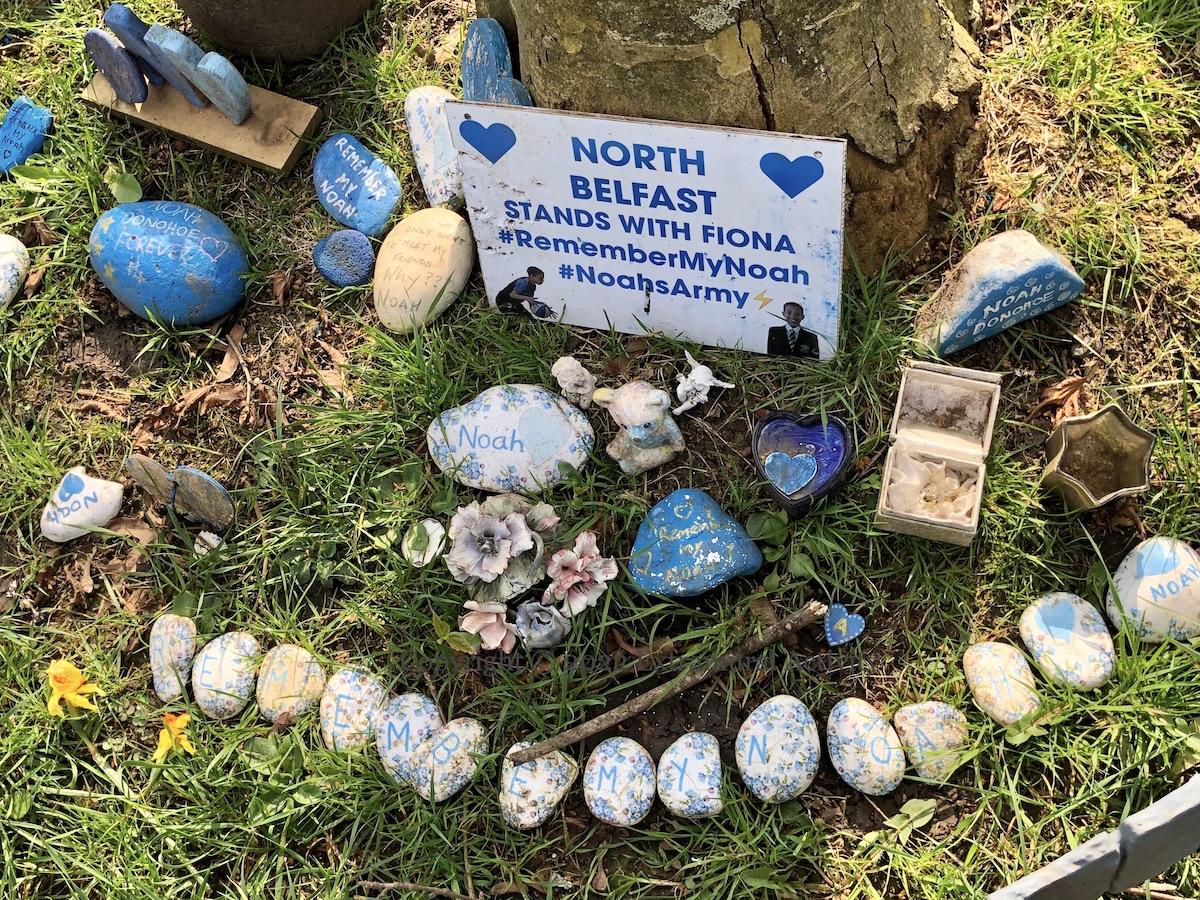
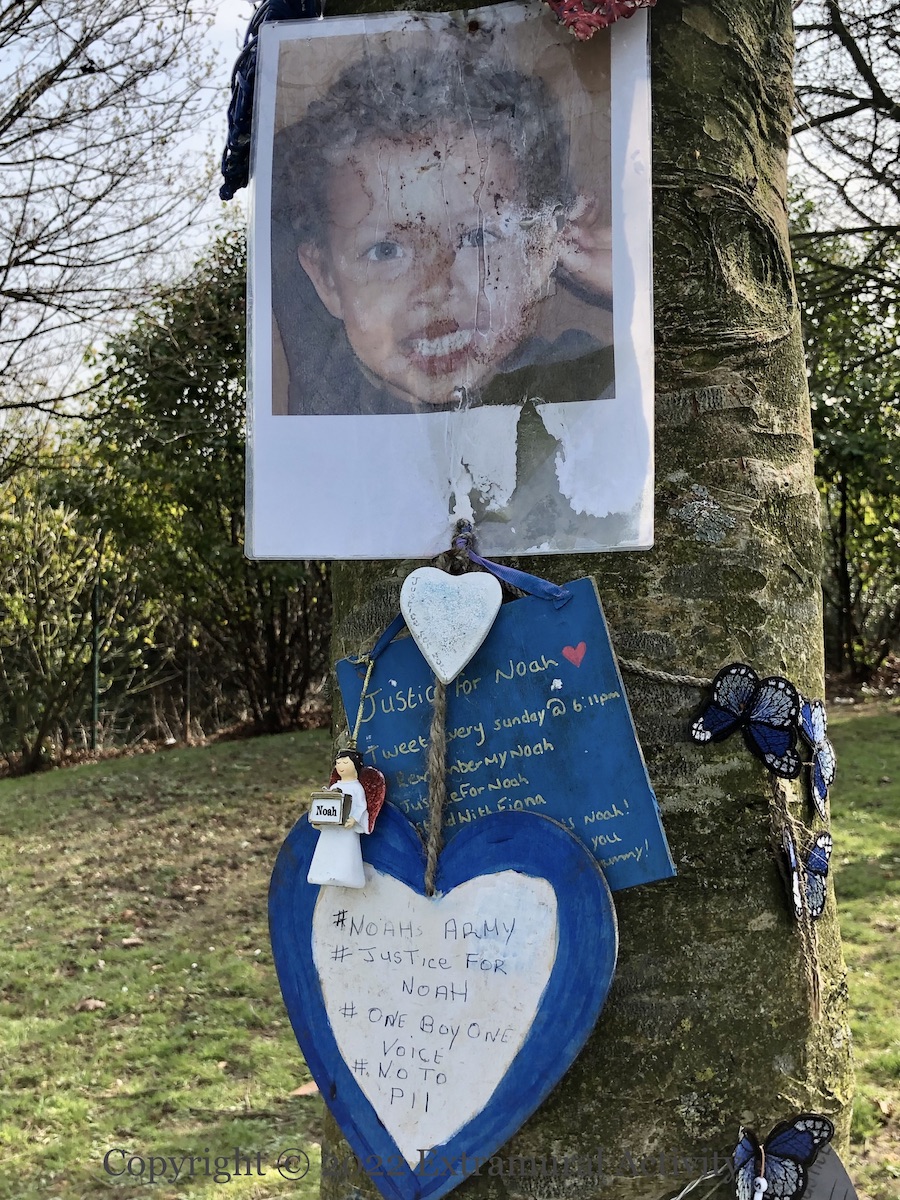
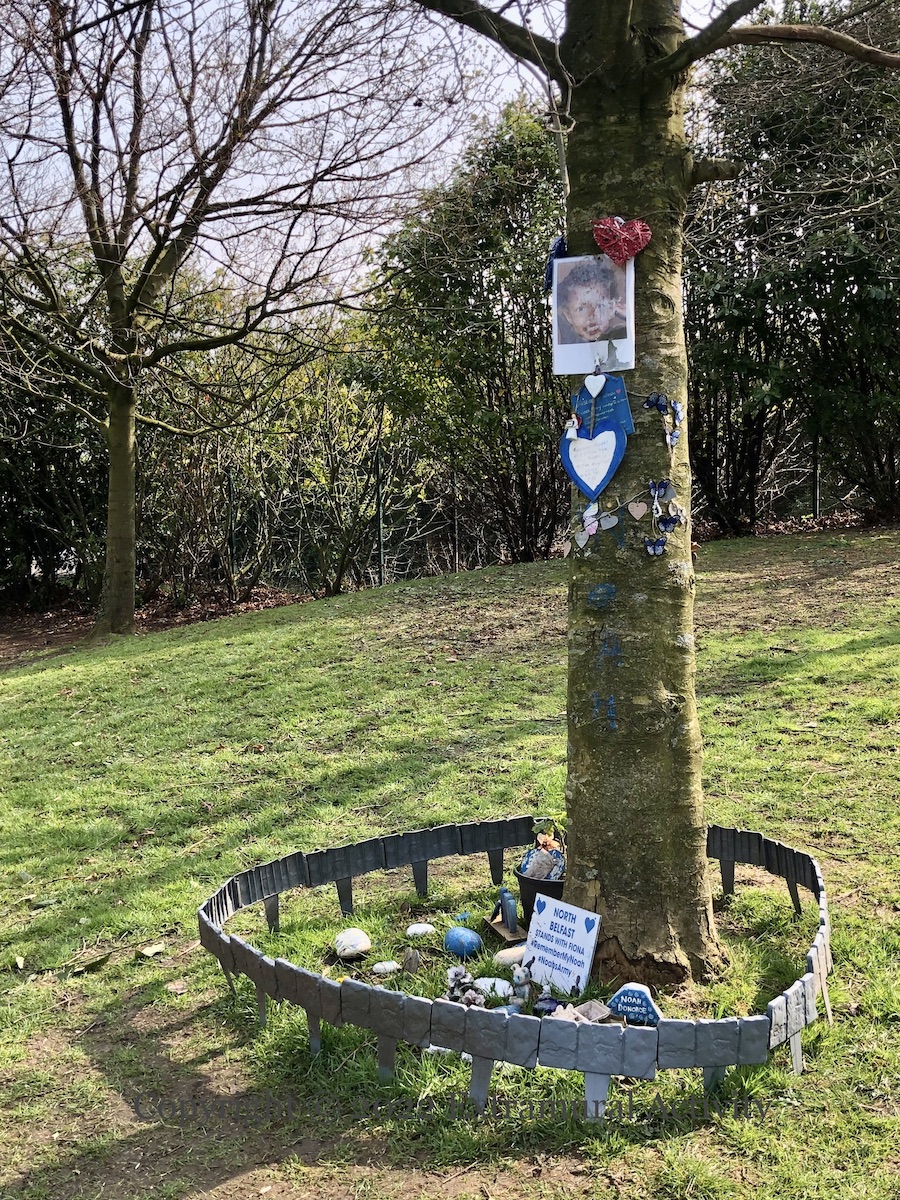
“North Belfast stands with Fiona [Donohoe]”. This is a shrine to Noah Donohoe and rallying post in the campaign for answers as to how he was found dead in a storm drain near Northwood Road six days after going missing.

The hashtags include #RememberMyNoah and #NoToPII (see No More PSNI Cover Ups).

Waterworks, north Belfast.

Click image to enlarge
Copyright © 2022 Seosamh Mac Coılle
X09854 X09855 X09853

Women’s Hall And Cost Price Restaurant

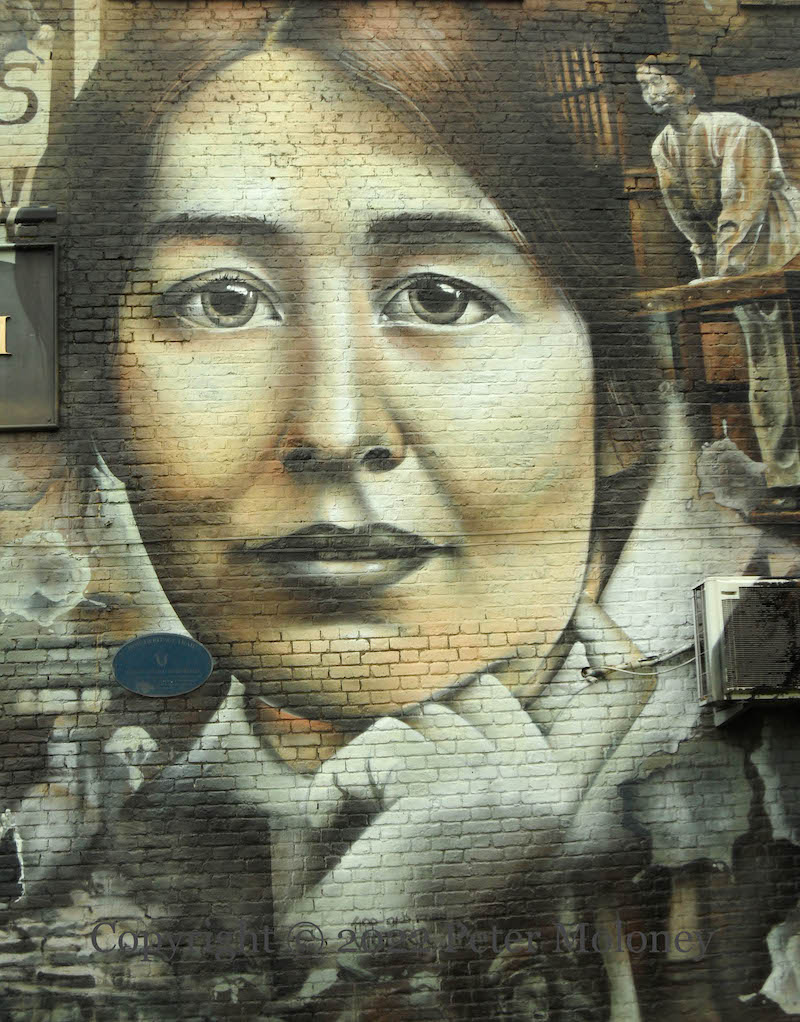
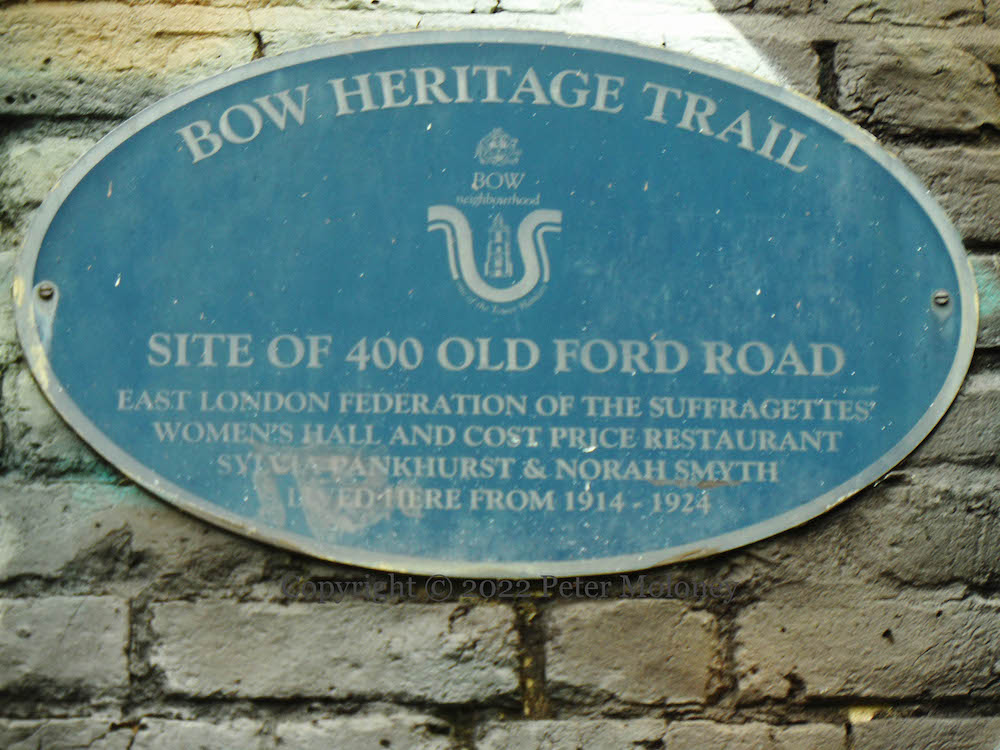
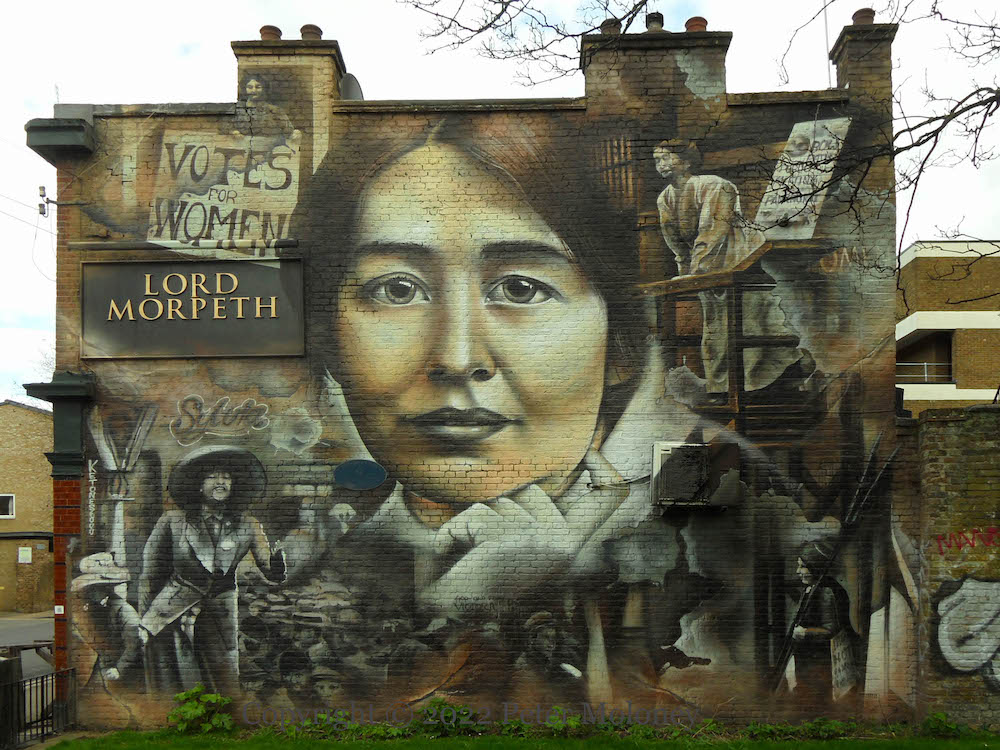
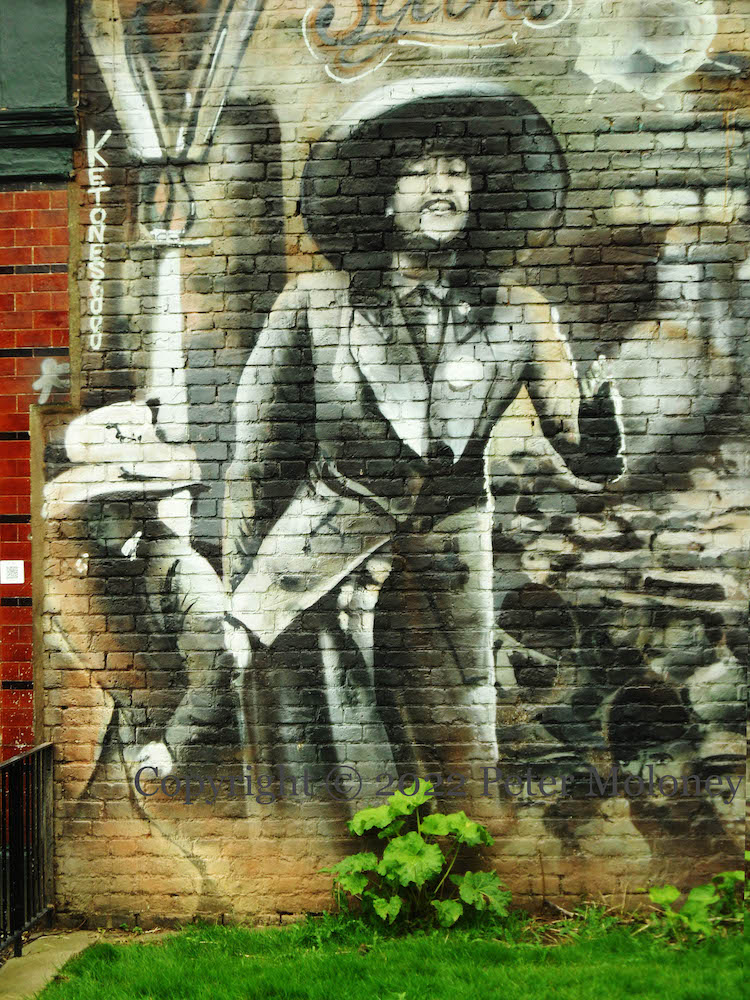
Eight-time hunger-striker Sylvia Pankhurst and the East London Federation Of The Suffragettes [ELFS] provided a cost-price restaurant to provide meals to the poor in the “Women’s Hall” at the back of the house at 400 Old Ford Road in response to the inflation in food prices at the onset of WWI (Inspiring City | East End Women’s Museum).

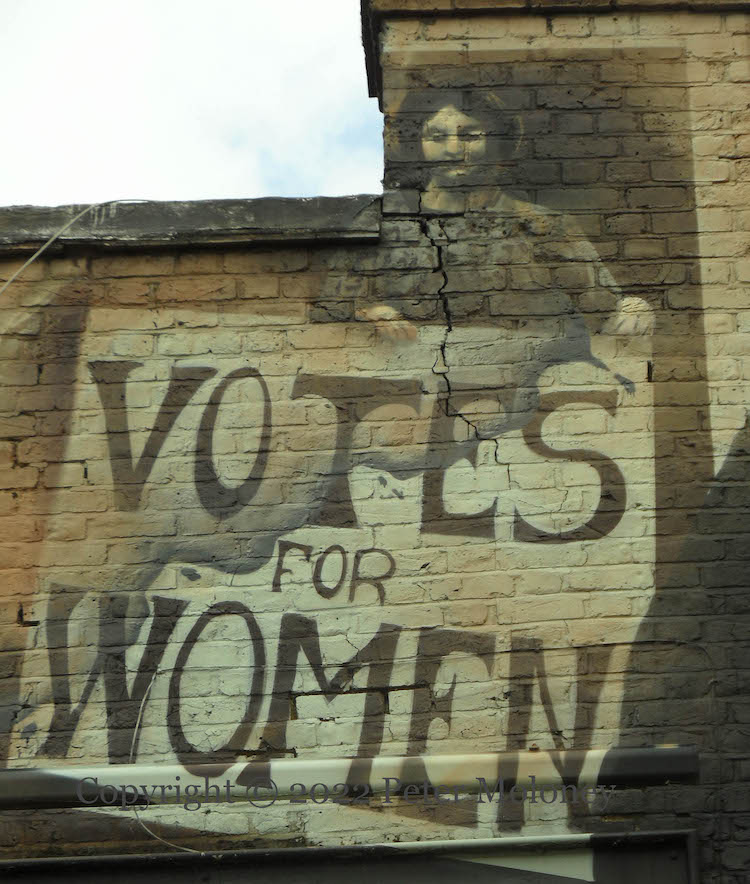
In the top left, with the “Votes For Women” sign, is Christabel Pankhurst, one of Sylvia’s sisters, a co-founder of the Women’s Social And Political Union – motto “Deeds, not words” – and editor of The Suffragette. (Charlotte Despard – recorded separately – was also a member of the WSPU.)

(The third sister, Adela, was founder of the WSPU’s yet more radical sub-group the ‘Young Hot Bloods’ (WP). Their mother was Emmeline Pankhurst, who had founded the WSPU in 1903 (WP); she is featured in a mural on Belfast’s Donegall Road bridge – see Those Days Are Over.)

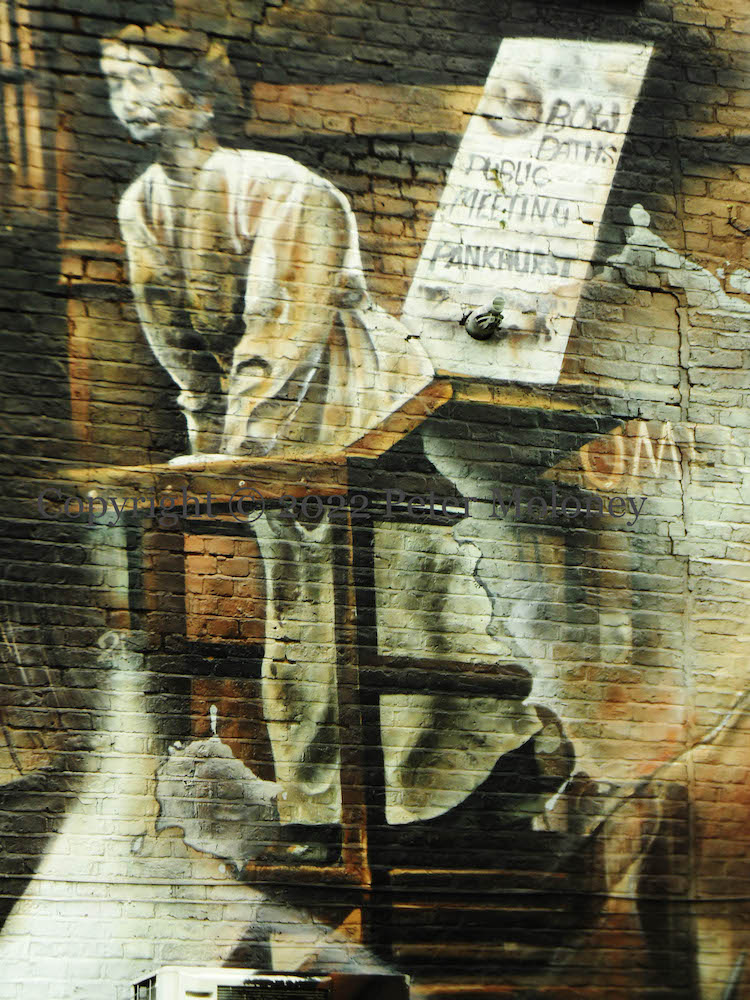
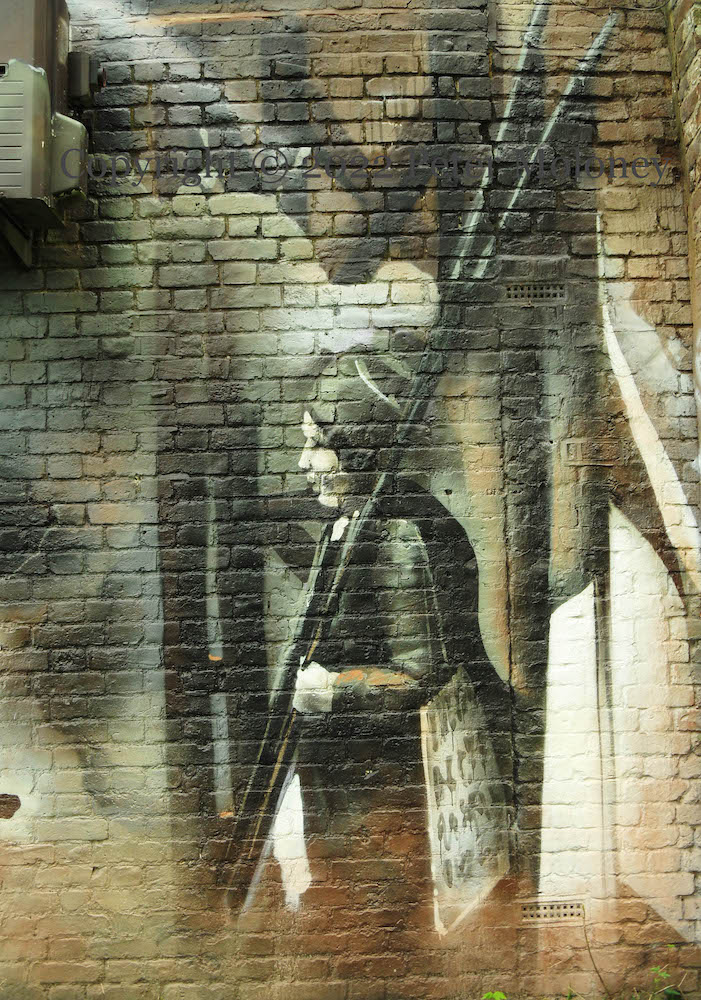
In the top right (shown in close-up in the third image), Sylvia speaks in 1912 from a small platform outside the WPSU office in Bow Road, before the WSPU and ELFS split in 1914.

The mural is by Ketones6000 (ig) in 2018 on the side of the Lord Morpeth pub which was frequented by Pankhurst and the east London suffragettes (web). The pub is at 402 Old Ford Road and the mural thus overlooks the site of the women’s hall.

Click image to enlarge
Copyright © 2011 Peter Moloney
X09868 X09867 X09869 X09870 X09871 X09865 X09866

Take These Seeds

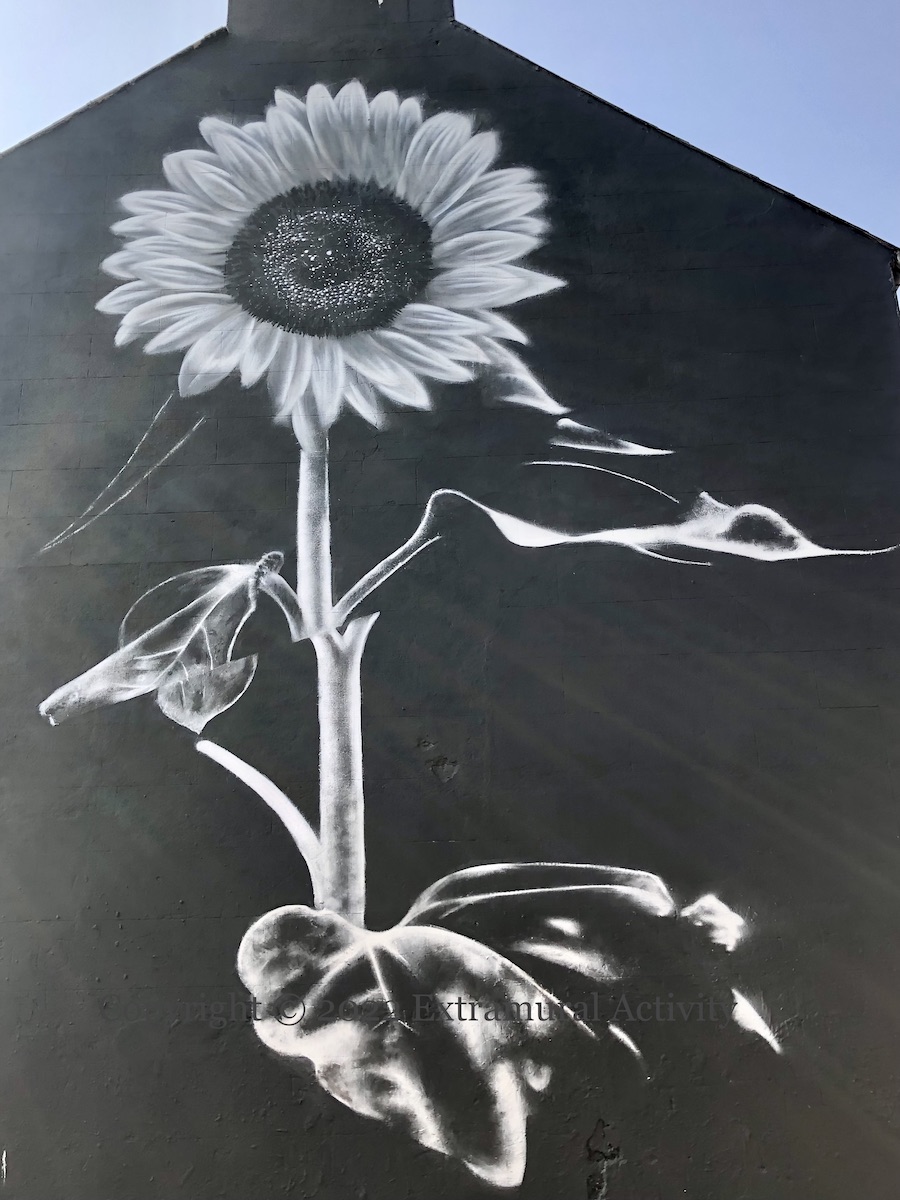
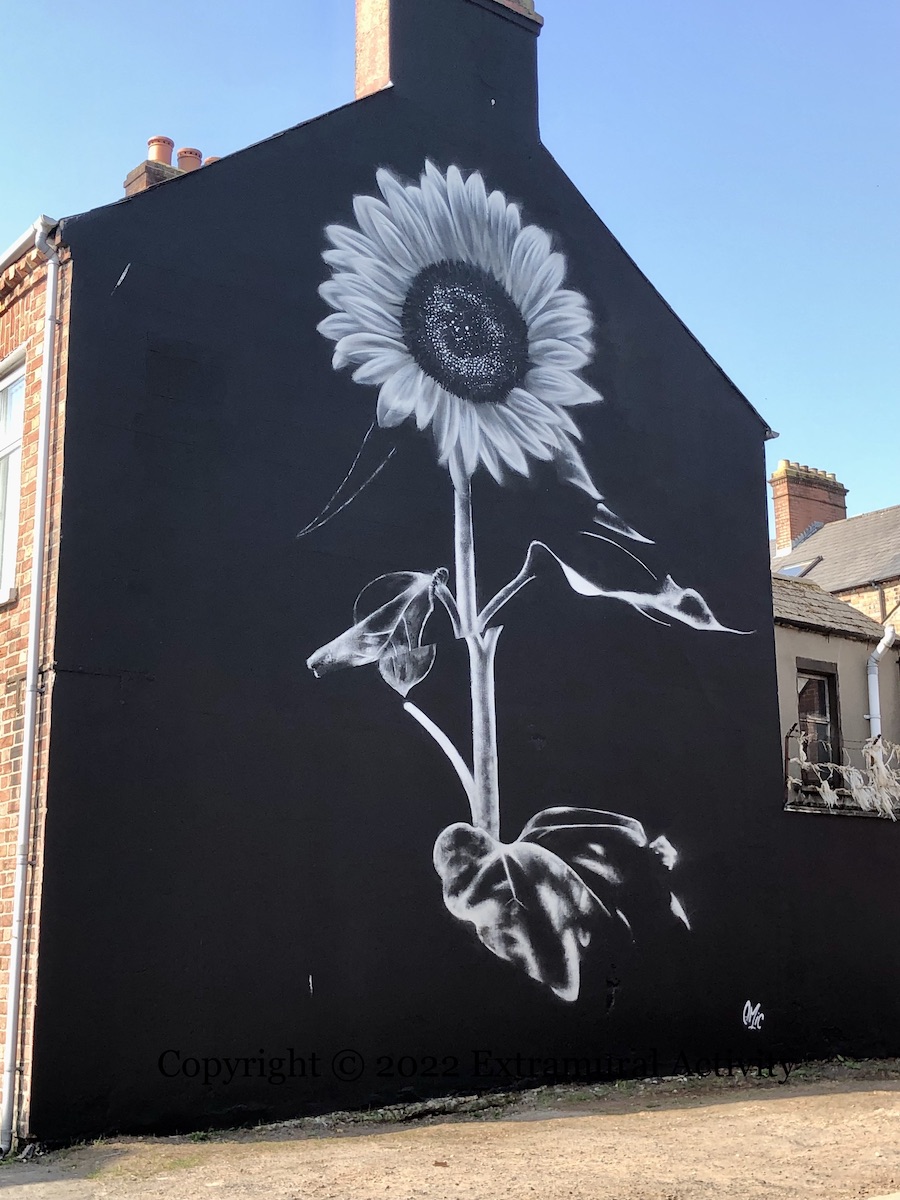
A Ukrainian woman in Heniches’k (just north of Crimea) (video with subtitles) became famous for berating an invading Russian soldier with the words “Take these seeds and put them in your pockets so at least sunflowers will grow here when you all die here.” Ukraine is the world’s largest producer of sunflower oil (WP) and since the Russian invasion began on February 24th, prices have increased – so far – by about 70% (Money Control), sending countries (especially India – Reuters | Bloomberg) and companies around the globe scrambling for alternatives, such as the replacement of sunflower oil by rapeseed oil in the making of crisps in Ireland (The Journal). The sunflower has become a symbol of solidarity with Ukraine, along with the Ukrainian flag. This giant sunflower was painted by emic (web | ig) in Harrow Street.

Update: added to the side wall “Ar scáth a chéıle a mhaıreann na daoıne”, here translated as “People live in each other’s shadows.” See the images in the Paddy Duffy collection.

Click image to enlarge
Copyright © 2022 Seosamh Mac Coılle
X09845 X09844

Stop War

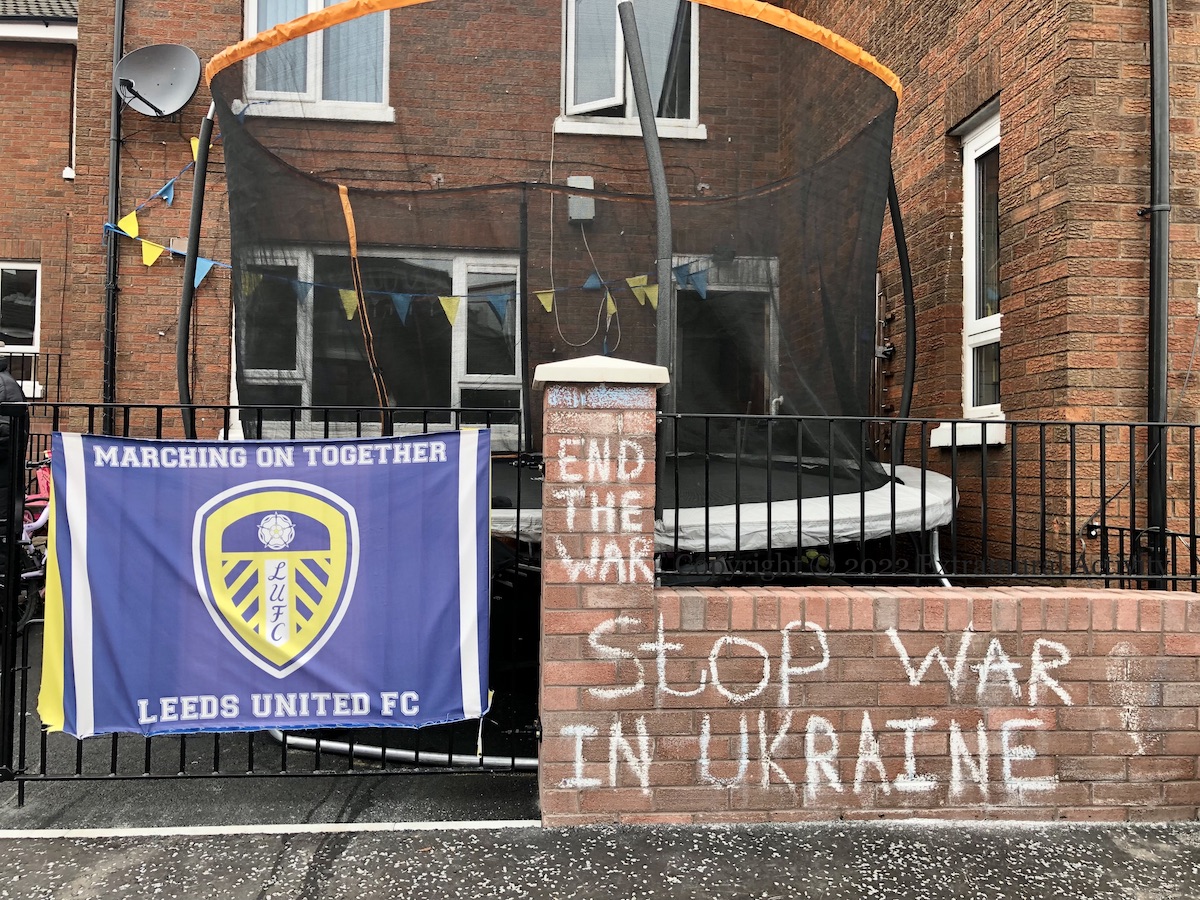
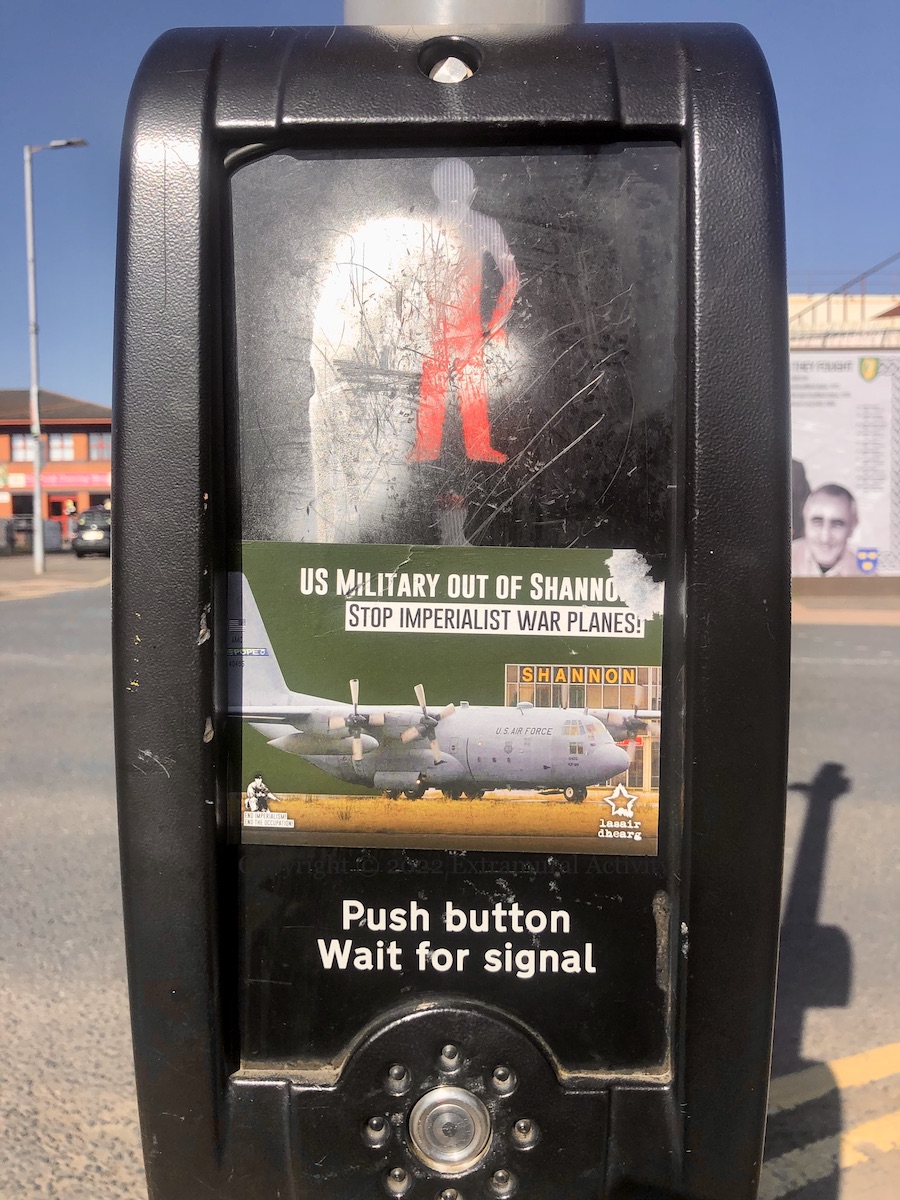
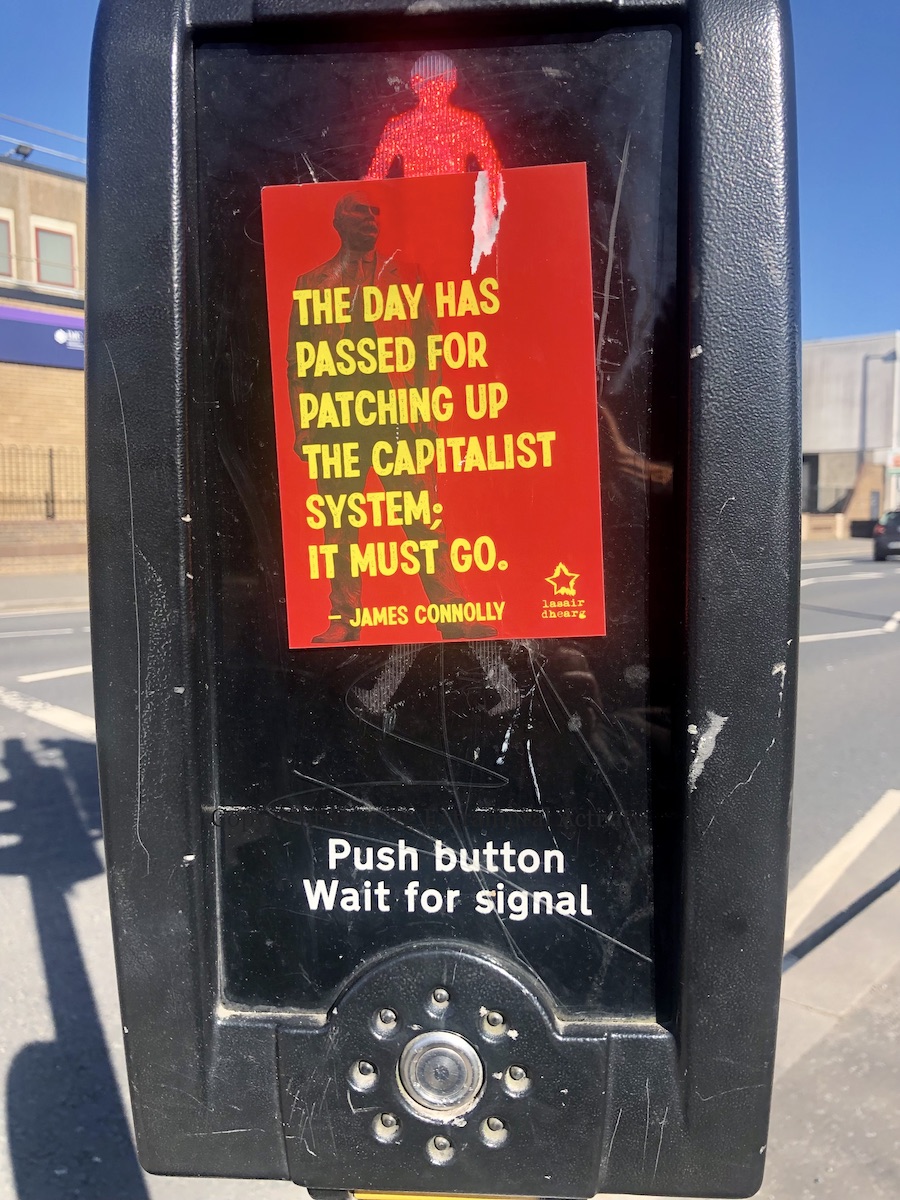
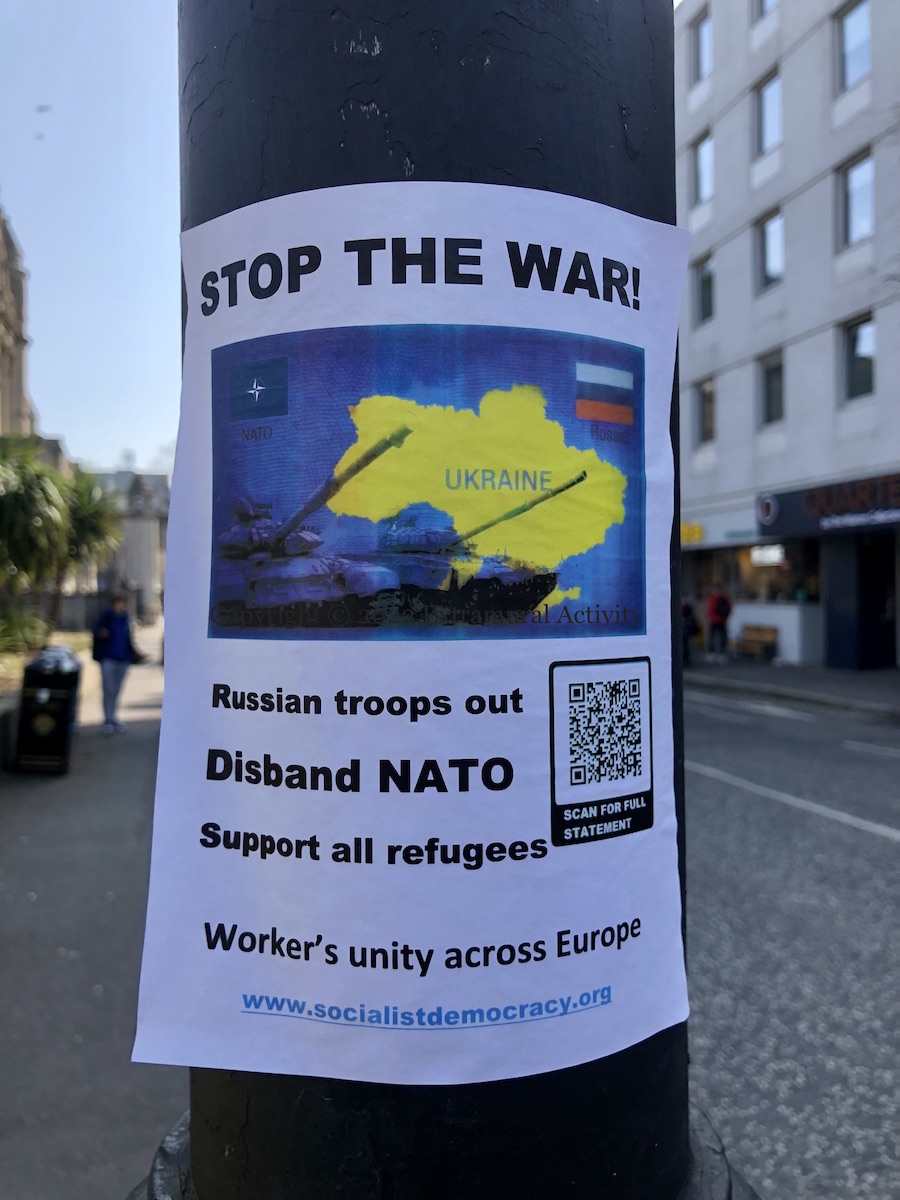
Here are three images from CNR west Belfast commenting on the Russian invasion of Ukraine (plus a bonus one calling for the abolition of capitalism). Above, “End the war” and “Stop war in Ukraine”. The Leeds United flag has presumably been deployed for its blue and yellow colours, rather than for its “Marching on together” slogan. At bottom, “Stop the war! Russian troops out – Disband NATO – Support all refugess – Worker’s [sic] unity across Europe – www.socialistdemocracy.org“. In between, two Lasaır Dhearg (web) stickers on pedestrian crossing boxes: “US military out of Shannon – stop imperialist war planes” and “‘The day has passed for patching up the capitalist system; it must go’ – James Connolly [from Labour, Nationality And Religion]”

Click image to enlarge
Copyright © 2022 Seosamh Mac Coılle
X09831 [X09832] X09810 X09811 X09822

New Development

When Cupar Way was constructed (circa 1984) it was a joining stretch of road put in place where the houses along Ashmore Street had been, and joined up (part of) Cupar Street and the old First Street; the new road in toto was called “Cupar Way”. Ashmore had been left undeveloped after the start of the Troubles and despite the presence of the separating barrier from 1969 onward, many of the houses on both sides of the wall were demolished or left vacant for various lengths of time. Carlow Street, for example, was redeveloped in 1981, even before the modern wall was put in place, while Ashmore and the bottom of the old Sugarfield Street was not redeveloped until the mid-1990s. (For more info and maps see the Visual History page of the Cupar Way “peace” line.)

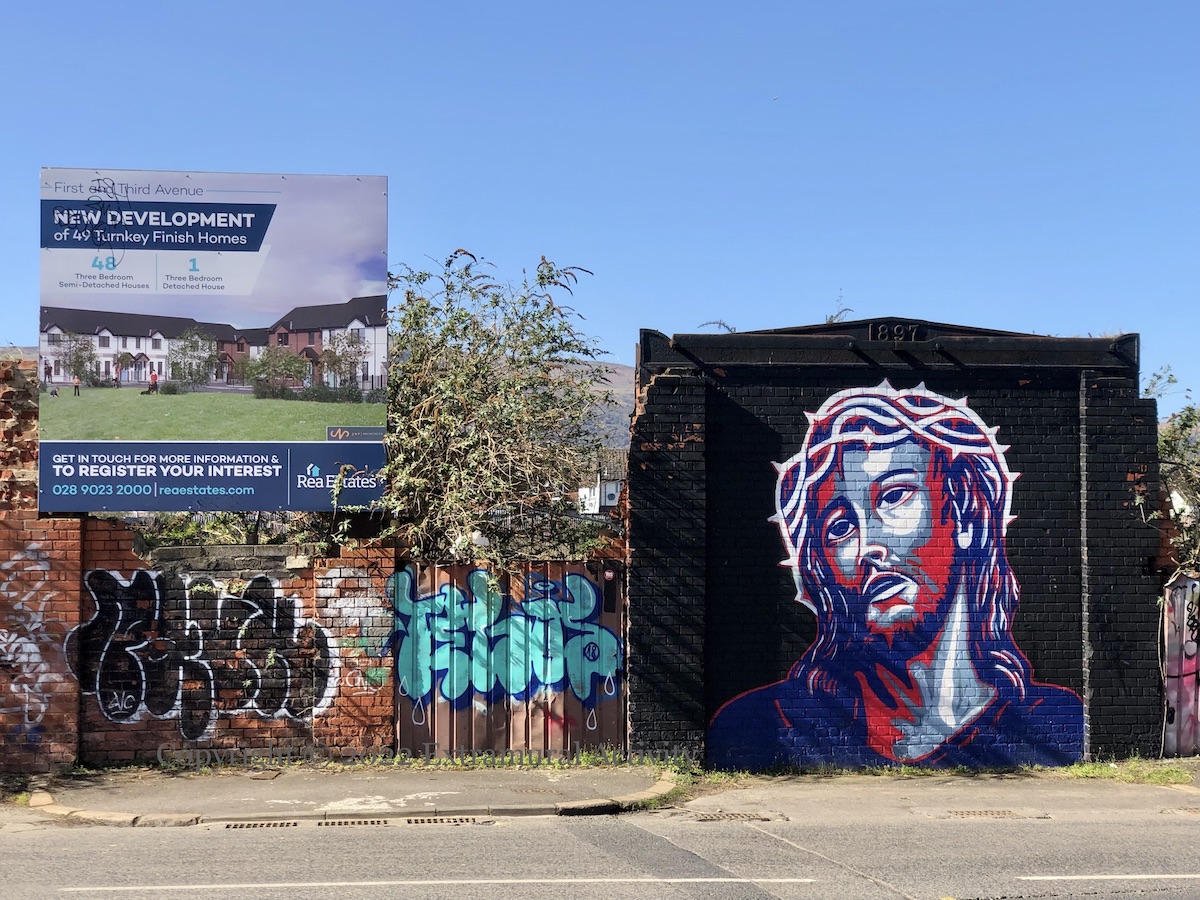
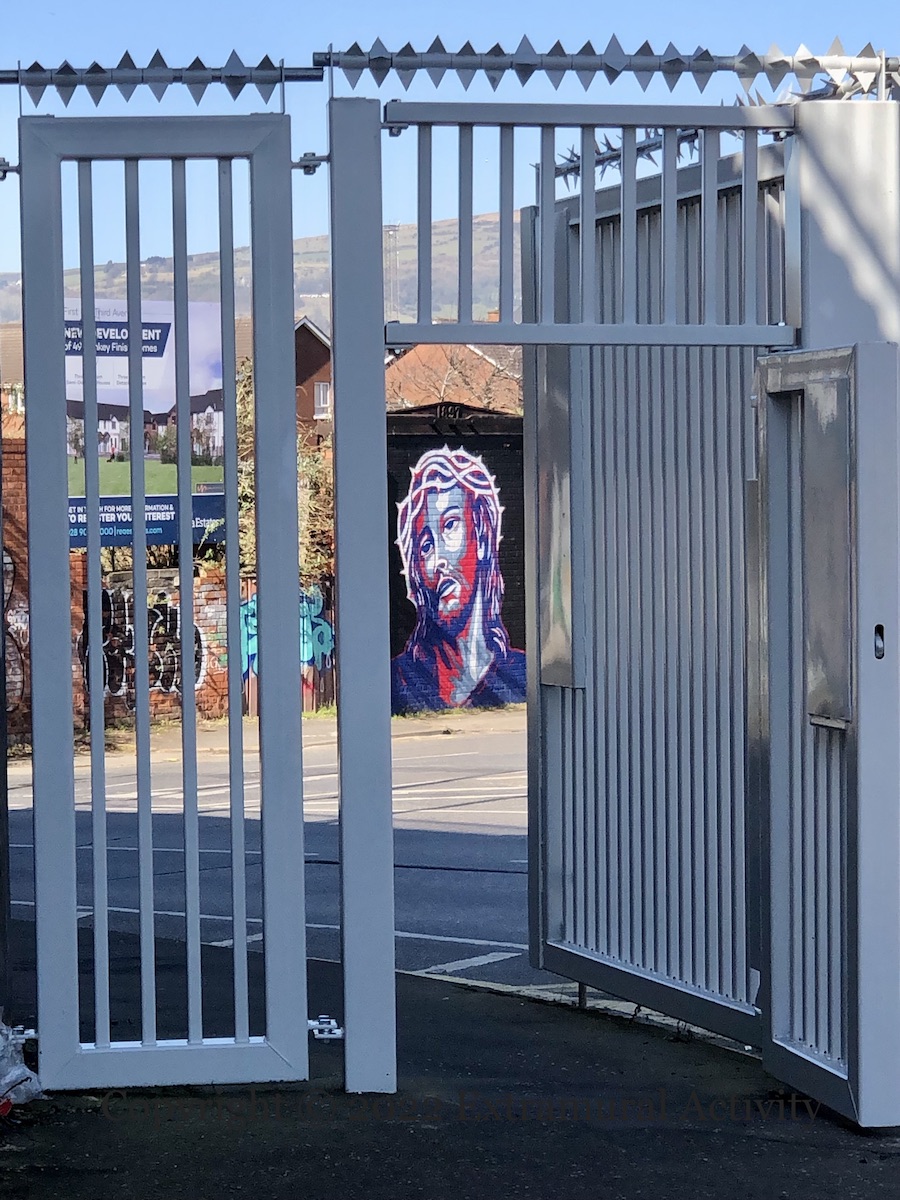
The block between First and Third streets was occupied (from 1956 onward) by a Wellman Smith Owen Engineering factory, which had earlier been the Falls Foundry (History); it’s not clear what the date “1897” refers to (above Jesus’s head – for the mural, see Prince Of Peace Line) as the foundry was established in 1845 (Lindsay 1970, Textile History 1.3). Wellman still exists as a company but the foundry at First Street was closed in 1968 (Grace’s). The site is finally to be redeveloped with 48 semi-detached and one detached house – images of what the houses will look like upon completion can be seen at Rea Estates (web).

The new development is presaged by the (May 2021, but still looking fresh) scaled-down security gate at the junction with North Howard Street – similar to the changes made at Workman Avenue and at Townsend Street – with pedestrian gates on both footpaths and no metal sheeting to obscure the view.

Click image to enlarge
Copyright © 2022 Seosamh Mac Coılle
X09818 X09817